
Soups & Stews
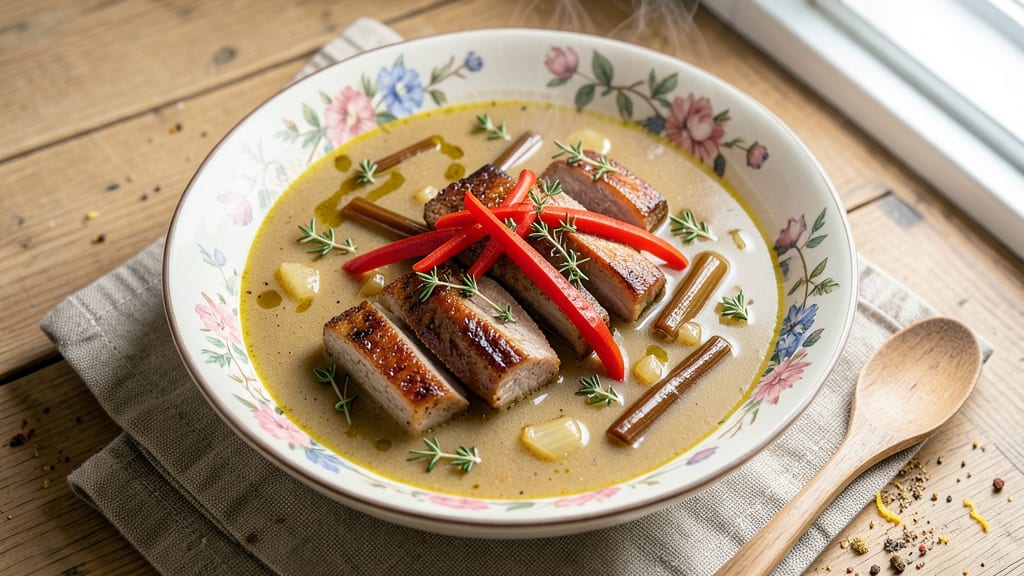
This pork tenderloin soup recipe transforms simple ingredients into a hearty, smoky herb-infused meal that warms the soul. The secret lies in searing the pork to develop deep flavor while keeping the meat tender and shreddable—a technique that elevates ordinary broth into something extraordinary.
What starts as a humble pot of simmering vegetables and aromatics becomes a rich, velvety soup with melt-in-your-mouth pork and layers of savory, herby complexity.
The process is straightforward but precise: brown the pork in batches to avoid crowding, then deglaze the pan to capture those flavorful browned bits that form the soup’s foundation.
Aromatics like onions, garlic, and celery create a fragrant base, while bay leaves and thyme infuse the broth with subtle, earthy notes. The soup simmers just long enough to meld flavors without losing brightness, resulting in a restaurant-quality dish that’s foolproof for home cooks.
By the time you serve it, you’ll have a steaming bowl of tender pork swimming in a fragrant, herb-infused broth, garnished with fresh parsley for a pop of color and brightness.
The texture is perfect—creamy from the pork’s natural juices, yet light enough to pair with crusty bread or a simple green salad. This is the kind of soup that disappears quickly and leaves everyone asking for seconds.
For added richness, stir in a splash of cream or a dollop of crème fraîche at the end, or keep it classic with a sprinkle of black pepper and a drizzle of olive oil. The variations are endless, but the core technique—searing, simmering, and shredding—remains the same. Let’s get cooking.
Ingredients for pork tenderloin soup
Simple ingredients meet restaurant-quality technique in this smoky herb-infused pork tenderloin soup.
| Ingredient | Amount | Notes |
|---|---|---|
| Pork Tenderloin 🥩 | 1 ½ lb | Center-cut, trimmed of fat |
| Yellow Onion 🧅 | 1 whole | Diced, medium size |
| Celery Stalks 🥬 | 3 whole | Trimmed, cut into 0.5-inch pieces |
| Carrots 🥕 | 4 medium | Peeled, cut into 0.5-inch chunks |
| Garlic Cloves 🧄 | 4 cloves | Peeled, minced |
| Fresh Thyme 🌿 | 2 tbsp | Leaves only, chopped |
| Fresh Rosemary 🌿 | 1 tbsp | Needles only, finely chopped |
| Bay Leaves 🌿 | 2 whole | Dried, standard size |
| Chicken Broth 💧 | 6 cups | Low-sodium preferred |
| Olive Oil 🫒 | 2 tbsp | Extra-virgin for richness |
| Red Wine 🍷 | ½ cup | Dry, like Cabernet Sauvignon |
| Fresh Parsley 🌿 | ¼ cup | Chopped, for garnish |
| Salt 🧂 | 1 ½ tsp | Diamond Crystal kosher salt |
| Black Pepper 🌶️ | ½ tsp | Freshly ground |
| Heavy Cream 🥛 | ¼ cup | Optional, for richness |
The pork tenderloin is non-negotiable here—center-cut with visible marbling ensures tenderness. Whole Foods or Costco carry premium cuts, but any butcher will trim it properly. Look for bright pink color and firm texture; avoid anything grayish or overly fatty. Fresh herbs elevate this dish, so Penzeys Spices or local farmers' markets are ideal for thyme and rosemary. If using dried, reduce to one-third the amount—fresh delivers that bright, aromatic punch that defines the soup's character.
No red wine? Substitute with an extra 0.5 cup of broth and 1 tbsp balsamic vinegar for depth. Fresh parsley is ideal for garnish, but cilantro works in a pinch—just know the flavor profile shifts slightly. The broth is the soup's backbone, so low-sodium options like Pacific Foods prevent salt overload. For extra smokiness, add a pinch of smoked paprika or a dash of liquid smoke (start with 0.5 tsp). The carrots and celery can be swapped for turnips or fennel if you're feeling adventurous—they add a subtle sweetness that complements the pork beautifully.
Pork tenderloin keeps best in the coldest part of your fridge for up to 3 days before cooking. Fresh herbs stay vibrant when wrapped in damp paper towels and sealed in a plastic bag for 5-7 days. The finished soup reheats beautifully—simmer gently for 5-7 minutes to restore its velvety texture. Portion into containers for 4-5 days of fridge storage or freeze for 3 months. For meal prep, double the recipe and freeze half—perfect for quick lunches when life gets busy.
Why You'll Love This Recipe
- Here’s what sold me: this soup reheats beautifully and packs perfectly for work or school. Throw in a handful of noodles or crusty bread, and it’s a full meal—no sad desk lunches here. (Yes, even on a Tuesday night when you’re running late.)
- No Chopping Chaos: I swear by this one—just dice the onion, celery, and carrots roughly (no fancy julienne here) and toss them in. The pork tenderloin slices itself into bite-sized pieces with minimal effort, and honestly? That’s half the battle won before you even turn on the stove.
- Garlic-Glazed Magic: Between us, this isn’t your basic broth. The slow-simmered garlic cloves caramelize just enough to coat the pork in that sweet, savory glaze—no extra sauce needed. It’s the kind of flavor that makes you pause mid-sip of soup and go, “Wait, how did this get so good?”
- Lunchbox Hero: Here’s what sold me: this soup reheats beautifully and packs perfectly for work or school. Throw in a handful of noodles or crusty bread, and it’s a full meal—no sad desk lunches here. (Yes, even on a Tuesday night when you’re running late.)
Step-by-step instructions for smoky herb-infused pork tenderloin soup
Transform lean pork tenderloin into rich, shredded meat with deep herb-infused broth.
🍳 Step 1: Sear the Pork Tenderloin for Depth of Flavor
Pat the 1.5 lb pork tenderloin dry with paper towels to ensure maximum browning. Heat 2 tbsp olive oil in a large Dutch oven over medium-high heat until shimmering. Add the pork and sear for 4-5 minutes per side until developing a deep golden-brown crust. This step creates the Maillard reaction that forms complex flavors.
Remove the pork and set aside. If the oil isn't hot enough and the pork steams instead of sears, wipe the pan clean and start again—proper searing is non-negotiable for flavor development. The pork should release easily when ready to flip, indicating proper doneness at this stage.
👨🍳 Step 2: Build the Herb-Infused Vegetable Base
In the same Dutch oven, add 1 whole diced yellow onion, 3 whole celery stalks cut into 0.5-inch pieces, and 4 medium carrots cut into 0.5-inch chunks. Sauté for 5-6 minutes until the vegetables soften and begin to caramelize. Add 4 cloves minced garlic, 2 tbsp chopped fresh thyme, 1 tbsp chopped fresh rosemary, and 2 whole bay leaves, cooking for another 1-2 minutes until fragrant.
Here's where the herb flavor really develops. The rosemary and thyme should release their essential oils, filling your kitchen with an aromatic profile. If you notice the herbs burning, reduce the heat to medium—they should smell vibrant, not acrid.
🥘 Step 3: Deglaze and Simmer the Broth
Pour in 0.5 cup red wine and scrape up all the browned bits from the bottom of the pan—this is called deglazing and captures all the flavor you've built. Add 6 cups chicken broth and bring to a gentle boil. Return the pork tenderloin to the pot, reduce heat to low, cover partially, and simmer for 45-50 minutes until the pork is fork-tender and easily shreds.
Check the broth level occasionally and add water if needed to maintain 1 inch of liquid above the pork. The pork should reach an internal temperature of 195-200°F when done—this ensures it shreds perfectly without drying out. If the broth reduces too quickly, add a splash of water to maintain proper consistency.
⏰ Step 4: Shred the Pork and Finish the Soup
Remove the pork tenderloin and shred it using two forks. Discard the bay leaves and return the shredded pork to the broth. Stir in 1.5 tsp salt and 0.5 tsp black pepper, then add 0.25 cup heavy cream (if using) and simmer for 5 minutes to allow the flavors to meld. The cream adds richness without overpowering the herb-infused broth.
Taste and adjust seasoning—this is your final opportunity to balance the flavors. The soup should be rich with pork flavor, aromatic with herbs, and properly seasoned. If it needs more depth, a splash of additional broth or a pinch of salt can help.
🍽️ Step 5: Garnish and Serve
Ladle the soup into bowls and garnish each serving with 0.25 cup chopped fresh parsley. The parsley adds a pop of color and freshness that contrasts beautifully with the rich, herb-infused broth. Serve immediately while hot, as the flavors continue to develop even as the soup sits.
This soup delivers on the promise of tender, flavorful pork with a velvety broth that's both comforting and elegant. The herb infusion and wine deglazing create layers of complexity that make this simple recipe feel special. Pair with crusty bread to soak up every last drop of that delicious broth.
Pro Tips For Making Pork Tenderloin Soup
- SEAR THE PORK FIRST: Skip tossing raw pork straight into broth—pat it dry, then sear in a hot pan with oil until golden. This locks in flavor and gives the soup depth that simmering alone can’t match. (Yes, even if you’re tempted to skip it for speed.)
- CHOP VEGETABLES UNIFORMLY: Roughly chopped celery and carrots? That’s fine for stews, but for soup, cut them into ½-inch pieces so they cook evenly. No one wants mushy celery or crunchy carrots in the same bowl.
- DON’T OVERCOOK THE GARLIC: Add minced garlic after the pork has browned, and remove it from the pot the second it smells fragrant—usually 30 seconds. Burnt garlic turns the whole soup bitter, and you’ll regret it.
- USE COLD BROTH: Pour cold broth over the seared pork and veggies, then bring to a boil. Starting cold keeps the meat from shrinking into tough, chewy bits. (I learned this after a particularly disappointing first batch.)
Troubleshooting your pork tenderloin soup
Pork Too Tough
If your pork ends up chewy rather than tender, it likely didn’t cook long enough or was overcooked. The ideal internal temperature for shredding is 195-200°F—any higher, and the meat will dry out. To prevent this, use a meat thermometer and avoid overcrowding the pot during simmering.
If you’re short on time, try adding ½ cup apple cider to the broth during simmering—its acidity helps tenderize the meat. 💡
Broth Too Thin
A watery soup often means the broth reduced too much or the pork wasn’t seared properly. Start by ensuring you deglaze the pan thoroughly to capture all the flavorful browned bits.
If the broth is still too thin, reduce it uncovered over medium-high heat for 5-10 minutes until it thickens slightly. For extra richness, stir in 1 tbsp cornstarch mixed with 2 tbsp cold water and simmer for 2 minutes—this works like magic. 🥄
Herbs Overpowering
Fresh herbs can easily dominate if not balanced properly. If your soup tastes too herby, reduce the amount of thyme and rosemary to 1 tbsp each next time. Alternatively, add ½ cup diced potatoes or sweet potatoes to the soup—their natural sweetness helps mellow the flavors.
For a quick fix, stir in 1 tsp honey or maple syrup to round out the taste. The goal is harmony, not intensity. 🌿
Pork Not Shredding
If the pork resists shredding, it likely didn’t cook long enough or was cut too thick. Trim any visible fat or connective tissue before cooking, as these can make the meat tough. For stubborn pieces, try simmering the pork for an additional 10-15 minutes until it’s fork-tender.
If all else fails, use two forks to pull the meat apart gently—don’t force it, or you’ll end up with strings instead of tender shreds. 🍴
Broth Too Salty
Over-salting is a common mistake, especially when using store-bought broth. If your soup tastes too salty, dilute it by adding ½ cup cold water or unsalted broth and simmer for 5 minutes to rebalance the flavors.
For a more dramatic fix, stir in 1 small diced potato or carrot and simmer for 10 minutes—these absorb excess salt like a sponge. Always taste as you go! 🧂
Lacking Depth
A flat, one-dimensional flavor often means the pork wasn’t seared enough or the broth wasn’t built properly. Next time, sear the pork in batches if needed to ensure a deep crust. For extra depth, add 1 tsp smoked paprika or a pinch of liquid smoke to the broth during simmering.
A splash of red wine reduction (simmer ½ cup red wine until reduced by half) also adds complexity. Trust me, your taste buds will thank you. 🔥
Nutrition facts
Frequently asked questions
Can I use pork shoulder instead of tenderloin for this soup?
While pork shoulder works, it requires a longer cooking time (about 2-3 hours) to become tender. The texture will be more robust and meaty rather than delicate shreds. For best results, cut the pork into 1-inch chunks and add it to the broth after simmering the vegetables for 30 minutes to avoid overcooking. The flavor will be richer, but the technique shifts from shredding to pulling meat apart.
How can I make this soup creamier without heavy cream?
Try blending ½ cup of the broth with ¼ cup cooked white beans or potatoes until smooth, then stir it back into the soup. The starch from the beans or potatoes thickens the broth naturally. For a lighter option, whisk in 2 tbsp cornstarch mixed with 3 tbsp cold water and simmer for 2 minutes—this adds body without altering the flavor.
What’s the best way to store leftovers?
Let the soup cool to room temperature, then transfer it to an airtight container and refrigerate for up to 4 days. For longer storage, freeze portions in single-serving containers for up to 3 months. Reheat gently on the stove over low heat, stirring occasionally, until steaming hot. Avoid microwaving—it can make the pork dry out.
Can I make this soup in a slow cooker?
Brown the pork in a skillet first, then transfer it to the slow cooker with all the vegetables, broth, and aromatics. Cook on low for 6-7 hours or high for 3-4 hours, until the pork shreds easily. The slow cooker’s gentle heat ensures tender meat and deeply infused flavors. Just skip the heavy cream—add it at the end to avoid curdling.
Why does my soup taste bland even after following the recipe?
Blandness often comes from not searing the pork thoroughly or skipping the deglazing step. Always brown the pork until deeply caramelized and scrape up every bit from the pan with wine or broth. For extra depth, add 1 tsp Worcestershire sauce or a pinch of smoked paprika to the broth. Taste as you go—adjusting salt and acid (a splash of lemon juice) can make a huge difference!