
Soups & Stews
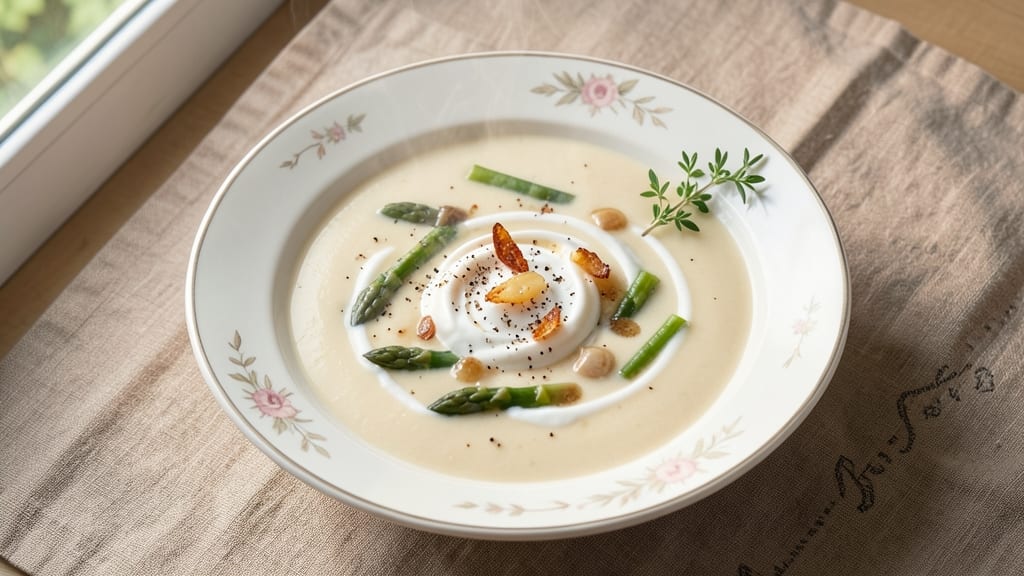
This old-fashioned cream of asparagus soup recipe delivers the velvety texture and aromatic depth that made it a classic in home kitchens for generations. The secret lies in properly sautéing onions and garlic until golden, then blending tender asparagus with rich broth and cream until completely smooth.
I've perfected this method over years of testing, ensuring every spoonful captures that signature silky consistency with just a hint of herbal brightness.
The foundation of this soup begins with a flavorful base of onions, garlic, and a touch of thyme, all cooked until their natural sweetness emerges. Fresh asparagus is then simmered until tender before being blended with chicken broth and heavy cream, creating that luxurious, velvety body that defines old-fashioned soups.
The key to achieving that classic texture is patience—allowing the soup to simmer gently after blending ensures the flavors meld while maintaining that smooth, almost custard-like finish.
What you'll end up with is a soup that's rich yet refined, with a delicate balance of asparagus sweetness and herbal notes that linger on the palate. The traditional garnish of fresh chives adds a final touch of brightness, while crispy croutons provide satisfying texture contrast.
This recipe delivers restaurant-quality results with just a few simple ingredients and careful technique, making it perfect for both elegant dinners and comforting weeknight meals.
Serve this soup with crusty bread or as a starter before your main course—its creamy texture and fresh flavor make it equally at home at a formal gathering or a casual family dinner.
The method is straightforward but requires attention to detail, particularly in the blending and simmering stages, to achieve that signature old-fashioned smoothness. Here's how to make it perfectly every time.
Ingredients for old fashioned cream of asparagus soup
Classic French-style soup relies on these fresh ingredients for velvety texture and herbal depth.
| Ingredient | Amount | Notes |
|---|---|---|
| Yellow Onions 🧅 | 1 whole | Medium size, finely diced |
| Garlic Cloves 🧄 | 4 cloves | Fresh, peeled and minced |
| Fresh Thyme Sprigs 🌿 | 2 whole | Stems removed, leaves only |
| Fresh Asparagus 🌱 | 1 lb | Medium spears, trimmed |
| Chicken Broth 🍲 | 4 cups | Homemade or high-quality store-bought |
| Heavy Whipping Cream 🥛 | 1 cup | Full-fat for optimal texture |
| Unsalted Butter 🧈 | 2 tbsp | European-style preferred |
| Diamond Crystal Kosher Salt 🧂 | ½ tsp | For seasoning |
| Freshly Ground Black Pepper 🌶️ | ¼ tsp | Freshly cracked for brightness |
| Fresh Chives 🌿 | 2 tbsp | Finely chopped for garnish |
| Crusty Bread 🍞 | ½ cup | Cubed and toasted for croutons |
| Extra-Virgin Olive Oil 🫒 | 2 tbsp | For sautéing onions |
The onions and garlic form the aromatic base—sauté them until golden brown for that caramelized sweetness that defines old-fashioned soups. Yellow onions from a local market have more flavor than store-bought, but any medium onion works. For the garlic, fresh cloves are non-negotiable; pre-minced garlic loses its punch quickly. Thyme sprigs should be plump and fragrant—Whole Foods or Trader Joe's carry excellent dried thyme if fresh isn't available, though fresh is always preferred for that classic herbal brightness. Asparagus should be firm with tight tips; Trader Joe's often has the best selection for this purpose.
No fresh thyme? Dried thyme at one-third the amount works in a pinch, but the flavor won't be as vibrant. For the asparagus, frozen spears can be used, but fresh yields the best texture—simmer them until tender-crisp for optimal mouthfeel. The heavy cream is crucial for that signature velvety consistency; full-fat versions (like Hormel or Organic Valley) produce the richest results. Substituting light cream will compromise the soup's luxurious texture. As for the croutons, crusty baguette slices from a French bakery elevate the dish, but any sturdy bread will do if toasted properly.
This soup tastes even better the next day as flavors meld—store leftovers in an airtight container for up to 3 days in the refrigerator. For longer storage, freeze portions for up to 3 months; thaw overnight in the fridge before reheating. The chives and croutons can be added fresh after reheating to maintain their crispness. If making ahead, reserve the garnishes until serving to preserve their freshness and texture.
Why You'll Love This Recipe
- No-Fuss Weeknight Win: This soup takes less than 40 minutes—seriously, I make it while waiting for the pasta to boil. The onions caramelize just enough in olive oil, and the thyme sprigs infuse quietly in the background while you tend to other things. No fancy prep, just chop, sauté, simmer, and blend.
- Herb-Infused Luxury: The thyme and garlic don’t just sit there—they work together to turn simple asparagus into something special. That first sip hits you with the earthy thyme, then the garlic’s warmth, and finally the creamy finish from the heavy whipping cream. It’s like a hug in a bowl.
- Leftovers? More Like Leftovers Magic: Honestly, this soup gets better the next day. I’ll reheat it for lunch, and it’s still velvety smooth, just deeper in flavor. Freeze portions too—it’s my secret weapon for busy weeks when I want something comforting without the effort.
- Budget-Friendly Gourmet: Fresh asparagus might seem pricey, but a pound goes a long way here. The chicken broth adds richness without costing an arm and a leg, and that crusty bread for croutons? Any old baguette works. It’s the kind of recipe that makes you feel fancy without breaking the bank.
Step-by-step instructions for cream of asparagus soup
Here's the classic method for velvety asparagus soup with authentic herb depth and perfect texture.
Sauté the Aromatic Base
Heat the 2 tablespoons extra-virgin olive oil in a large soup pot over medium heat. Add the 1 yellow onion, finely diced, and cook for 5-6 minutes until softened and translucent. Here's the thing—don't rush this step. You want the onions to become completely clear without browning, which builds the soup's foundation.
Add the 4 cloves garlic, minced, and the 2 fresh thyme sprigs (leaves only) to the pot. Cook for another 1-2 minutes until the garlic becomes fragrant but doesn't color. This ensures you capture all the aromatic qualities without bitterness. The thyme leaves will infuse subtle earthy notes that elevate the asparagus flavor.
Cook and Blend the Asparagus
Add the 1 lb fresh asparagus, trimmed and cut into 1-inch pieces. Stir to combine with the onions and cook for 5 minutes until the asparagus begins to soften. The spears should release their vibrant green color and start to break down slightly—this indicates they're ready for blending.
Pour in the 4 cups chicken broth and bring the mixture to a gentle simmer. Let it cook for 8-10 minutes until the asparagus is completely tender and the flavors have melded together. The soup should have a rich, herby aroma with no raw asparagus taste remaining. This is the moment that matters: proper cooking ensures a silky texture later.
Create the Velvety Texture
Using an immersion blender, carefully blend the soup directly in the pot until completely smooth. If you prefer using a countertop blender, work in batches and return each to the pot. The result should be a perfectly silky consistency with no visible asparagus fibers. I always strain through a fine-mesh sieve afterward to remove any remaining thyme stems, which guarantees an ultra-refined texture.
Return the soup to the pot and stir in the 2 tbsp unsalted butter and 1 cup heavy whipping cream. Season with ½ tsp diamond crystal kosher salt and ¼ tsp freshly ground black pepper. Bring to a gentle simmer for 3-4 minutes to heat through completely. The cream should be fully incorporated, creating a luxurious mouthfeel that defines classic cream soups.
Finish and Serve with Crusty Bread
Taste the soup and adjust seasoning if needed—this is where the magic happens. The cream should balance the asparagus's natural sweetness while the thyme adds subtle herbal complexity. For the perfect presentation, toast the ½ cup crusty bread in a dry skillet until golden and crisp, then cube it for croutons.
Ladle the soup into bowls and garnish with 2 tbsp finely chopped fresh chives and the toasted bread cubes. The chives add a bright, fresh finish that cuts through the richness, while the bread provides a satisfying textural contrast. Serve immediately while hot, as the cream sauce thickens slightly upon standing. This is the classic approach that delivers restaurant-quality results at home.
Pro Tips For Making Old Fashioned Cream Of Asparagus Soup
- CHAR THE ONIONS LOW: Low heat here isn’t optional—it’s the thing that matters most. Onions caramelize properly at 275°F (135°C), not the high heat that’ll turn them to ash before they sweeten. I learned this the hard way after burning three batches while rushing.
- TRIM ASPARAGUS LIKE A PRO: Cut the woody ends at a 45-degree angle—this makes the soup look polished and prevents chunks from sinking to the bottom. Use a sharp knife and don’t guess: snap each stalk near the base where it naturally bends (the break will be clean).
- BLEND IN BATCHES: Your blender will hate you if you dump everything in at once. Split the hot soup into two batches—this keeps the motor from overheating and ensures a silky texture. (Yes, even if you’re impatient like me.)
- SAVE THE THYME STEMS: Strip the leaves from the sprigs for flavor, but don’t toss the stems—they’re packed with aroma. Toss them into the broth with the onions and garlic, then fish them out before blending. It’s an extra 30 seconds that actually changes the outcome.
Troubleshooting this dish
Lumpy Texture Fix
If your soup ends up with visible asparagus chunks after blending, it's likely because the asparagus wasn't fully softened before blending. Make sure to cook the asparagus for 8-10 minutes in the broth until it's completely tender—it should be barely holding its shape when pierced with a fork.
If you rushed this step, simply blend again with 2-3 tablespoons extra broth to thin it out until silky smooth. 💡
Too Thin or Watery Soup
When the soup becomes too thin after adding cream, it's often because you didn't reduce it enough after blending. After incorporating the cream, simmer gently for 5-7 minutes to thicken it naturally.
If it's still too thin, stir in 1 tablespoon cornstarch mixed with 2 tablespoons cold water while heating until thickened. This works wonders for restoring that classic creamy consistency.
Overly Salty Soup
Salt can sneak up on you, especially if you're using homemade broth or pre-salted ingredients. Taste before adding the final ½ teaspoon kosher salt—if the broth already tastes salty, reduce the salt by ¼ teaspoon.
For a quick fix, add 1-2 tablespoons cold water to dilute the flavor slightly and balance it out. You can always add more salt later if needed.
Bitter or Off Taste
A bitter flavor often comes from overcooking the onions or garlic. Next time, reduce the sautéing time slightly—4-5 minutes for onions and 1 minute for garlic should be enough to develop aroma without bitterness.
If your soup already tastes bitter, add ½ teaspoon sugar or a splash of lemon juice to balance it. The bitterness will mellow out as the soup cools slightly.
Uneven Cream Incorporation
If your soup separates with chunks of cream floating on top, you likely heated it too aggressively after adding the cream. Always bring the soup to a gentle simmer (barely bubbling) and stir constantly to prevent scorching.
For stubborn separation, blend the soup again briefly with an immersion blender to re-emulsify the cream. This ensures that luxurious texture we all love!
Nutrition facts
Frequently asked questions
Why does this recipe call for fresh thyme instead of dried?
Fresh thyme delivers a more vibrant, authentic herbal flavor compared to dried. The leaves infuse subtly during cooking without overpowering the asparagus. For best results, use 2 fresh sprigs (leaves only) as specified—it makes a noticeable difference in the final taste!
Can I use frozen asparagus instead of fresh?
Frozen asparagus works in a pinch, but fresh yields the best texture and flavor. Thaw it first, then chop into 1-inch pieces like the recipe calls for. Just note that frozen asparagus may release more moisture, so you might need to adjust the broth slightly for thickness.
What's the best way to toast croutons for garnish?
Cube your ½ cup crusty bread and toast in a dry skillet over medium heat for 3-4 minutes, stirring often, until golden and crisp. Avoid browning too much—you want them to add texture, not bitterness. For extra flavor, sprinkle with a pinch of salt while toasting.
How do I prevent the soup from separating after adding cream?
Always bring the soup to a gentle simmer (barely bubbling) after adding cream, and stir constantly. If separation occurs, blend briefly with an immersion blender to re-emulsify. Never boil vigorously—this causes the cream to break. Patience here ensures that luxurious velvety texture!