
Soups & Stews
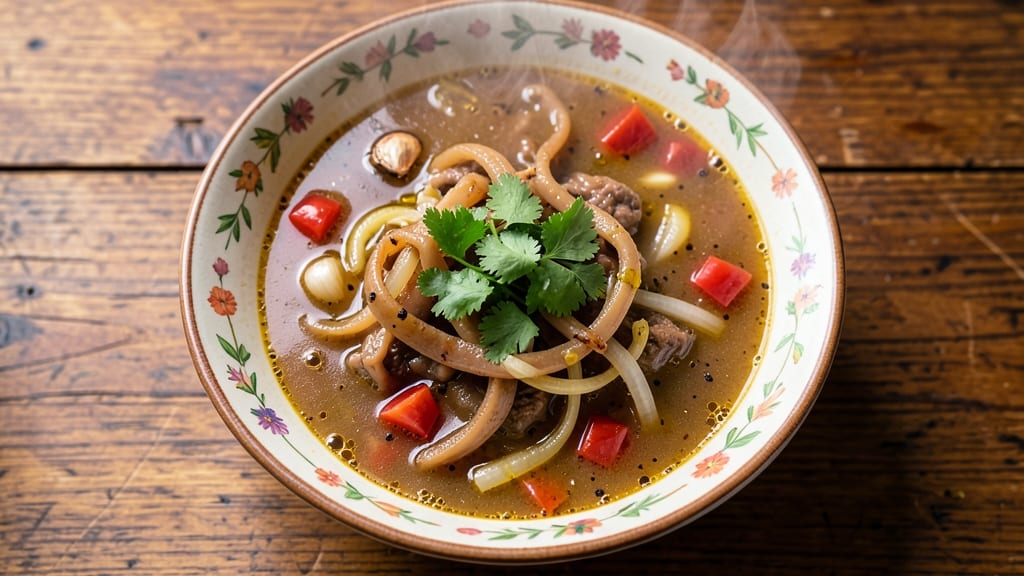
This Mexican beef tripe soup recipe delivers the bold, comforting flavors of traditional Mexican cuisine in a single, hearty pot. The secret lies in properly preparing the tripe—soaking, blanching, and slicing it just right to create tender, flavorful strips that melt into the rich broth.
I first discovered this recipe during a trip to Oaxaca, where it’s served steaming hot with lime wedges and fresh cilantro.
The process begins with a deep, aromatic broth built from onions, garlic, tomatoes, and warm spices like cumin and oregano. Simmering the tripe for hours transforms tough cuts into tender, melt-in-your-mouth bites while infusing the broth with layers of savory depth.
This isn’t just soup—it’s a flavor-packed experience that brings the essence of Mexican home cooking to your table.
By the time you serve it, you’ll have a steaming bowl of soup with tender tripe, vibrant vegetables, and a broth so rich it’ll have everyone asking for seconds. The final touch—bright lime wedges and fresh cilantro—adds a refreshing contrast to the hearty flavors.
Perfect for chilly evenings or family gatherings, this recipe is a testament to how simple ingredients can create something extraordinary.
Ready to dive in? Let’s get cooking—this soup is worth the effort, and the results will leave you craving more.
Ingredients for mexican beef tripe soup
Pantry staples meet Mexican market finds—just a few key ingredients for soul-warming tripe soup.
| Ingredient | Amount | Notes |
|---|---|---|
| Beef Tripe 🥩 | 2 lb | Soaked overnight, blanched |
| Yellow Onions 🧅 | 3 whole | Chopped, medium dice |
| Garlic Cloves 🧄 | 8 cloves | Peeled, minced |
| Roma Tomatoes 🍅 | 4 whole | Ripe, quartered |
| White Wine 🍷 | 1 cup | Dry, like Sauvignon Blanc |
| Chicken Broth 💧 | 6 cups | Low-sodium preferred |
| Ground Cumin 🌿 | 1 tbsp | Toasted for depth |
| Dried Oregano 🍃 | 1 tbsp | Mexican oregano if available |
| Bay Leaves 🌿 | 2 whole | Fresh, removed before serving |
| Carrots 🥕 | 3 whole | Peeled, sliced into rounds |
| Potatoes 🥔 | 2 lb | Russet, cubed |
| Fresh Cilantro 🌿 | ¼ cup | Chopped, for garnish |
| Limes 🍋 | 4 whole | Juiced, wedges for serving |
| Salt 🧂 | 1 ½ tsp | Kosher or sea salt |
| Black Pepper 🌶️ | ½ tsp | Freshly ground |
| Vegetable Oil 🫒 | 2 tbsp | For blanching tripe |
The tripe is the star, so don't skip the soak—it removes that gamy taste. Latin markets usually have it pre-cleaned, but if you're at a regular grocery store, look for the beef tripe in the meat section. I like to soak it overnight in cold water with a splash of vinegar, then blanche it in boiling water for 10 minutes before slicing. The Carrots and potatoes add heartiness, but if you're making this for a crowd, bump those up by half. For the garlic and onions, I always go for the freshest—no powdered shortcuts here. The Roma tomatoes should be ripe but firm; those mealy ones from the back of the produce bin won’t cut it.
No white wine? Chicken broth with a splash of apple cider vinegar works in a pinch. The Mexican oregano is non-negotiable for that authentic flavor—if you can't find it, regular oregano at half the amount is your backup. Fresh cilantro is ideal, but dried at one-third the quantity gets you close. The bay leaves add depth, but if you're out, a pinch of cinnamon or cloves can mimic that earthy warmth. For the potatoes and carrots, baby potatoes or pre-cut veggies save time, but whole ones hold up better during the long simmer. And if you're worried about the tripe being too tough, trust the process—it’ll turn tender with time.
This soup tastes even better the next day, so make a double batch. The broth keeps for 5 days in the fridge, and the tripe reheats beautifully. I like to portion it into containers with a little extra broth on top—prevents drying out. The lime wedges should be added fresh when serving, and the cilantro? Tear it by hand for that perfect garnish. Freezes for 3 months if you want to prep ahead, but I find the texture suffers a little after thawing, so I usually make it fresh for the best experience.
Why You'll Love This Recipe
- Here’s what sold me: that cup of Sauvignon Blanc isn’t just for show. It deglazes the pot after the onions and garlic caramelize, pulling all those sweet, savory bits off the bottom and into the broth. Add the lime juice at the end, and suddenly you’ve got a soup that’s both rich and bright—like a little vacation for your taste buds. The cumin and oregano? They’re just the cherry on top of a flavor bomb.
- Let’s be real: tripe isn’t exactly a grocery cart staple, but it’s way cheaper than steak, and it feeds so much. Two pounds of tripe, a bag of potatoes, and a bottle of wine? That’s a meal that costs less than takeout but tastes like you spent all day slaving in the kitchen. Plus, the broth alone is versatile enough to stretch into tacos or rice bowls later—no waste, just flavor.
Step-by-step instructions for Mexican beef tripe soup
Here's how to build this rich, hearty soup from scratch—layer by layer.
Blanch and Prepare the Beef Tripe
Start by filling a large pot with enough water to cover the 2 lb beef tripe by 2 inches. Add 1½ tsp salt and bring to a boil over high heat. Once boiling, add the tripe and cook for 5 minutes. You'll see impurities rise to the surface—skim these off with a slotted spoon.
Drain the tripe and rinse it under cold water to stop cooking. Then transfer it to a clean pot and cover with fresh cold water. Add 2 tbsp vegetable oil and bring to a gentle simmer. Cook for 1 hour, skimming any foam that rises. This slow cook removes any remaining impurities and makes the tripe tender. Drain again and set aside.
Real talk: If you skipped soaking the tripe overnight, this extra hour of simmering ensures it's ready for the main cook. Don't rush this step—tough tripe ruins the whole dish.
Build the Flavor Base
In a large Dutch oven or heavy pot, heat 2 tbsp vegetable oil over medium heat. Add the 3 chopped yellow onions and cook for 8-10 minutes until soft and translucent. Stir in the 8 minced garlic cloves and cook for 1 minute until fragrant—don't let it brown.
Add the 4 quartered roma tomatoes, 1 tbsp toasted ground cumin, and 1 tbsp dried oregano. Cook for 5 minutes until the tomatoes break down and release their juices. Pour in the 1 cup white wine and scrape up any browned bits from the bottom of the pot. Let it simmer for 3 minutes until the wine reduces by half.
Here's where the magic happens: The wine deglazes the pot, pulling up all those caramelized onion and garlic flavors. If it reduces too quickly, just lower the heat slightly—you want that liquid to work its way into the tripe later.
Simmer the Soup
Add the blanched tripe back to the pot along with 6 cups chicken broth, 2 bay leaves, 3 sliced carrots, and 2 lb cubed potatoes. Bring everything to a boil over high heat, then immediately reduce to a gentle simmer. Cover and cook for 1 hour, stirring occasionally to prevent sticking.
After 1 hour, check the tripe for tenderness. It should be fork-tender but not falling apart. If it's still tough, add ½ cup more chicken broth and simmer another 30 minutes. The potatoes should be soft enough to pierce with a fork, and the carrots should be tender but still hold their shape.
I know it seems like a long cook, but this is what transforms tough tripe into melt-in-your-mouth goodness. Your oven might run hot, so start checking at the 50-minute mark—every pot is different.
Finish and Serve
Once everything is tender, remove the 2 bay leaves and discard them. Stir in the juice of 4 limes and adjust the seasoning with additional salt and ½ tsp black pepper if needed. Taste the broth—it should be bright and tangy from the lime juice, with deep, earthy tripe flavor.
Ladle the soup into bowls and garnish each serving with ¼ cup chopped fresh cilantro. Serve with lime wedges on the side so everyone can squeeze extra juice into their bowls. The cilantro adds a fresh, bright contrast to the rich, hearty soup.
This soup tastes even better the next day as the flavors meld together. Store leftovers in the fridge for up to 3 days or freeze for 3 months. The tripe continues to tenderize over time, making it perfect for meal prep.
Pro Tips For Making Mexican Beef Tripe Soup
- Skim Like a Pro: That first 5-minute boil of the tripe isn’t just about cleaning—it’s where you remove the gunk that’ll make your soup bitter. Use a slotted spoon to pull off every foam bubble, especially in the first 2 minutes. I’ve learned the hard way that skipping this step means scraping sludge off your teeth later.
- Toast the Cumin: Dry-toast that 1 tbsp ground cumin in a separate pan for 30 seconds until it smells nutty and warm before adding it to the onions. Mexican oregano already packs a punch, but toasted cumin adds depth that raw cumin can’t match. (Yes, even if you’re impatient like me.)
- Don’t Crowd the Pot: When you add the potatoes and carrots in Step 3, resist the urge to dump them all in at once. Layer them in—potatoes first, then carrots—so they cook evenly and don’t turn to mush. Overcrowding turns this soup into a sad, watery stew.
- Lime at the End: Save that 4 limes for the very last step, even if the recipe says otherwise. Adding lime too early makes the broth cloudy and dulls the bright, tangy finish. Stir it in right after removing the bay leaves, and your soup will taste like it was made by someone who actually likes flavor.
Health benefits of this dish
Digestive Health Boost
This soup is packed with collagen-rich beef tripe, which supports gut health by promoting a healthy gut microbiome. Collagen helps repair and strengthen the intestinal lining, reducing inflammation and improving nutrient absorption. The carrots and potatoes add fiber, aiding digestion and keeping you feeling full longer. 💪
Rich in Iron and Protein
Beef tripe is one of the most nutrient-dense proteins you can eat, providing high-quality iron and B vitamins essential for energy and red blood cell production. A 1-cup serving delivers nearly 20% of your daily iron needs, making it ideal for combating fatigue.
The chicken broth further enhances protein content without adding excessive calories.
Immune System Support
The garlic and onions in this recipe are natural immune boosters, thanks to their allicin content—studies show they help fight off colds and infections. The lime juice adds vitamin C, which supports immune function and collagen production. Together, these ingredients create a powerhouse for your body’s defenses.
Heart-Friendly Fats
While tripe contains healthy fats, the low-sodium chicken broth and vegetable-based ingredients make this dish heart-healthy. The monounsaturated fats from the tripe support cardiovascular health by lowering LDL cholesterol. Pairing it with fiber-rich veggies like carrots and potatoes helps maintain balanced lipid levels.
Gut-Brain Connection
The combination of probiotic-rich broth (from long simmering) and fiber from vegetables fosters a healthy gut-brain axis. A balanced gut microbiome is linked to improved mood and reduced stress—perfect for winding down after a long day.
The lime and cilantro add refreshing notes that elevate both flavor and wellness benefits. ✨
Nutrition facts
Frequently asked questions
Why does the tripe need so much prep time?
The extra blanching and simmering steps are essential to remove impurities and tenderize the tripe. Skipping these can leave it tough or gamey. The 1-hour simmer with oil and skimming foam ensures it becomes melt-in-your-mouth texture. Trust the process—it's worth the patience!
Can I substitute white wine in this recipe?
Yes! If you don’t have white wine, use 1 cup chicken broth with 1 tablespoon apple cider vinegar to mimic the acidity. The flavor will still be rich and balanced, just with a subtle tang instead of wine notes.
How do I know when the tripe is fully tender?
After 1 hour of simmering, the tripe should be fork-tender but hold its shape. If it’s still firm, add ½ cup more broth and cook another 30 minutes. Overcooking can make it mushy, so check frequently after 50 minutes.
What’s the best way to store leftovers?
Let the soup cool completely, then store in airtight containers. The broth keeps for 5 days in the fridge, and the tripe reheats beautifully. For best texture, freeze portions for up to 3 months—though it’s even tastier fresh!