
Soups & Stews
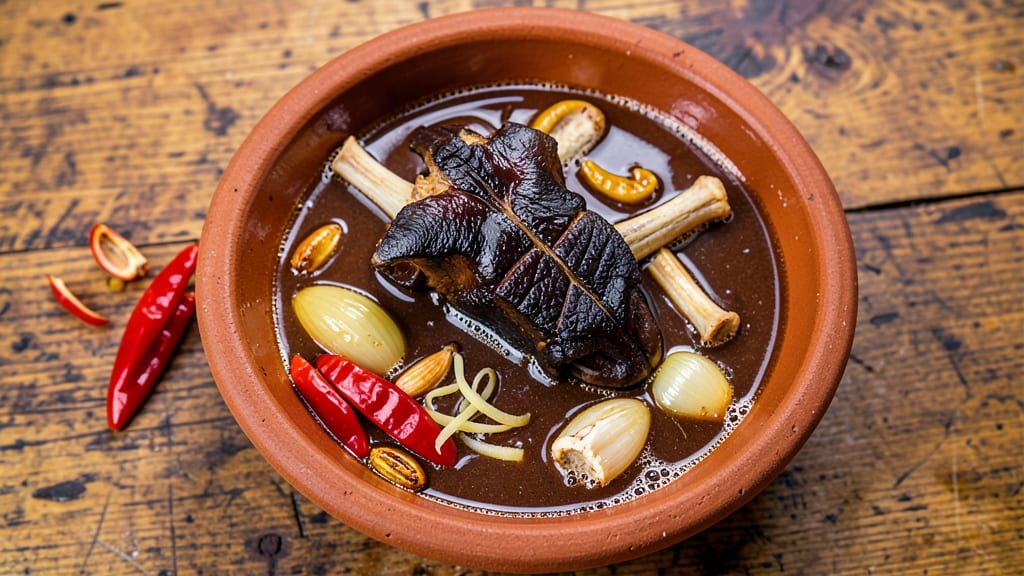
This Jamaican goat head soup recipe transforms tough cuts and bones into a rich, collagen-packed broth that's the heart of Jamaican comfort food. The secret lies in slow simmering—where goat head, marrow bones, and aromatic vegetables meld into a deeply flavorful, tender stew that feeds both body and soul.
I first tasted this dish at a rural Jamaican gathering where the scent of thyme and Scotch bonnet filled the air, and it became my benchmark for soulful cooking.
The process begins with preparing the goat head—cleaning, scoring, and marinating it with traditional Jamaican seasonings like allspice, garlic, and ginger. This isn't just a soup; it's a labor of love that rewards patience with melt-in-your-mouth meat and a broth so nourishing it's often called "liquid gold."
The key is maintaining a gentle simmer for at least 4 hours, allowing collagen to dissolve into the broth while the meat becomes fork-tender.
What you'll end up with is a bowl of warmth—tender meat that falls apart with each spoonful, a broth so rich it coats your tongue, and a medley of vegetables that balance heat, sweetness, and earthiness.
The aroma alone will have your kitchen feeling like a Jamaican home, while the texture delivers on both comfort and nutrition. This is the kind of dish that turns ordinary weeknights into celebrations.
Serve it with steamed breadfruit or coconut rice to soak up every last drop of that precious broth. The leftovers taste even better the next day, making this a perfect recipe for feeding a crowd or meal prepping for the week. Let's create this Jamaican classic together—step by step.
Ingredients for jamaican goat head soup
Rich broth, tender meat, and Jamaican soul in one pot—this is comfort food.
| Ingredient | Amount | Notes |
|---|---|---|
| Goat Head 🐐 | 2 lb | Cleaned, scored, and marinated |
| Goat Marrow Bones 🦴 | 1 lb | For rich collagen broth |
| Yellow Onions 🧅 | 3 whole | Thickly sliced |
| Garlic Cloves 🧄 | 6 cloves | Peeled, smashed |
| Fresh Ginger 🌿 | ½ cup | Grate finely |
| Scotch Bonnet Peppers 🌶️ | 2 whole | Seeds removed, chopped |
| Thyme Leaves 🌿 | 1 tbsp | Fresh or dried |
| Allspice Berries 🌶️ | 1 tbsp | Crushed lightly |
| Salt 🧂 | 1 tsp | Fine sea salt |
| Black Peppercorns 🌶️ | 1 tbsp | Whole, lightly crushed |
| Water 💧 | 8 cups | For simmering |
| Carrots 🥕 | 4 whole | Large, peeled, chopped |
| Sweet Potatoes 🍠 | 2 whole | Peeled, cubed |
| Scallions 🌱 | 1 bunch | Chopped for garnish |
| Coconut Milk 🥥 | 1 can | Full-fat for creaminess |
The goat head is your secret weapon here. Ask your local butcher for a whole head—most rural Jamaican shops have it. I always score the skin in a crosshatch pattern before marinating with garlic and ginger. Costco or specialty Caribbean markets often carry pre-cleaned goat heads, but if you're doing it yourself, soak the bones overnight to remove blood. The marrow bones? Look for ones with visible fat—that's where the collagen lives. If you can't find goat marrow bones, beef marrow bones work in a pinch, though they won't have the same depth of flavor.
No Scotch bonnet peppers? Habanero or jalapeño with seeds removed will give you heat, but the flavor profile won't be identical. Fresh thyme is ideal, but dried thyme at half the amount works fine. Want to skip the allspice? A pinch of cinnamon plus nutmeg mimics some of that warm spice note. The coconut milk is non-negotiable for that creamy finish—full-fat only—none of that light stuff. And if you're worried about the sweet potatoes getting mushy, add them in the last 30 minutes of cooking.
This soup tastes even better the next day as flavors meld. Store broth in airtight containers for up to 5 days or freeze for 3 months. I portion mine into containers so I can reheat just the meat or broth separately. The meat keeps its tenderness better reheated gently on the stove. Garnish with fresh scallions and a drizzle of coconut cream before serving—trust me, it's worth the extra minute. The bones? Don't toss them—strain the broth through a fine mesh to catch any last bits of collagen gold.
Why You'll Love This Recipe
- One-Pot Magic: Honestly, the only prep work here is scoring that goat head—no fancy chopping or peeling. Just toss the meat, marrow bones, and aromatics like onions, garlic, and ginger into the pot, and let the slow simmer do the rest. The Scotch bonnet peppers add heat without extra effort, and the coconut milk finishes it off in minutes.
- Rich & Rewarding: The goat marrow bones turn this soup into a collagen powerhouse—think silky broth with meat that falls apart like butter. That half cup of fresh ginger and allspice berries? They create a warmth that lingers, while the coconut milk ties it all together with creamy, indulgent richness. It’s the kind of dish where every bite feels like a hug.
- Feeds & Freezes: This recipe is built for leftovers—just store the broth in airtight containers for up to five days, or freeze it for months. Need a quick lunch? Reheat and toss in some fresh scallions. Hosting a gathering? Double the recipe and serve bowls of pure satisfaction. It’s the kind of meal that disappears fast, so you’ll always have seconds.
- Budget-Friendly Luxury: Goat is often cheaper than beef, and using marrow bones and veggies like carrots and sweet potatoes keeps costs low. The spices—thyme, allspice, ginger—are pantry staples, and that can of coconut milk stretches far. You’re getting restaurant-quality depth without the price tag, and honestly? The leftovers make it even better.
Step-by-step instructions for Jamaican goat head soup
Here's how to create a deeply flavorful Jamaican soup where the meat falls apart tenderly.
Prepare the Meat and Aromatics
Begin by thoroughly rinsing the 2 lb goat head under cold water, then pat it completely dry with paper towels. Using a sharp knife, score the surface in a crosshatch pattern—this helps tenderize the meat during the long simmer. In a large bowl, combine the goat head with the 1 lb goat marrow bones, 3 thickly sliced yellow onions, 6 smashed garlic cloves, ½ cup finely grated fresh ginger, 2 chopped Scotch bonnet peppers (seeds removed), 1 tbsp thyme leaves, 1 tbsp crushed allspice berries, 1 tsp salt, and 1 tbsp crushed black peppercorns. Mix well to coat the meat evenly in the spices.
This step is where all the deep flavors start building. The scoring creates more surface area for the spices to penetrate, and the marrow bones will release rich collagen into the broth. Don't skip the drying step—moisture on the meat can make the broth cloudy and dilute the flavors.
Simmer the Broth Low and Slow
In a large stockpot, combine the seasoned meat mixture with the 8 cups water. Bring to a boil over high heat, then immediately reduce to a gentle simmer. Cover partially and cook for 3 hours, skimming off any foam that rises to the surface. After the initial 3 hours, add the 4 peeled and chopped carrots and 2 peeled and cubed sweet potatoes. Continue simmering uncovered for another 1 hour 30 minutes until the meat is fork-tender and the broth has reduced slightly.
The key here is patience. Jamaican soups develop their signature depth through long, slow cooking. You'll know it's ready when the meat pulls apart easily with a fork and the broth has a rich, caramelized color. If the broth reduces too quickly, add a splash of water to maintain the proper consistency.
Finish with Coconut Milk and Garnish
Strain the broth through a fine-mesh sieve into a clean pot, pressing gently on the solids to extract maximum flavor. Return the broth to the pot and stir in the 1 can full-fat coconut milk until fully incorporated. Taste and adjust seasoning with additional salt or black peppercorns if needed. Keep the soup warm over low heat while you prepare the garnish.
For serving, ladle the soup into bowls and garnish each portion with chopped scallions. The coconut milk adds a luxurious creaminess that balances the bold Jamaican spices, while the scallions provide a fresh contrast. Serve immediately with warm crusty bread to soak up every last drop of that rich, collagen-filled broth.
Pro Tips For Making Jamaican Goat Head Soup
- Score Deep and Even: That crosshatch pattern on the goat head isn’t just for looks—it’s what makes the meat tender. Use a sharp knife and cut through to the fat layer, not just the surface. I used to rush this, and the meat stayed chewy. Take your time; the extra effort pays off when you fork it later.
- Smashed Garlic, Not Minced: Those 6 garlic cloves need to stay whole but smashed—no tiny bits. Whole cloves release flavor slowly during the simmer, while minced garlic burns fast and turns bitter. I learned this after one batch tasted like a hospital cafeteria. Keep them intact until the broth’s ready to shine.
- Skim Like Your Life Depends on It: The first 30 minutes of simmering are critical—foam rises fast, and if you don’t skim it, the broth turns cloudy and weak. Use a fine-mesh skimmer and work quickly. I used to ignore this, and the soup always tasted flat. Trust me, the first skim is the most important.
- Caramelize the Onions First (If You’re Short on Time): Before adding water, brown the 3 sliced onions in the pot over medium heat for 5-7 minutes. The deeper color means richer flavor without extra effort. I skip this when I’m tired, but the soup’s depth suffers. Five minutes now saves 30 minutes of simmering later.
Troubleshooting this dish
Broth Too Cloudy?
If your broth looks murky after simmering, it’s likely from excess fat or impurities. After boiling, skim the foam religiously during the first 3 hours—this removes impurities. For extra clarity, strain the broth through a cheesecloth lined fine-mesh sieve after simmering.
This catches fine particles while letting the liquid through. I’ve found Viva Paper Towels work great for this—just fold them into a pouch and press gently on the solids. 💧
Meat Not Tender Enough?
If your goat head still feels tough after 4 hours 30 minutes, it might need more time. Increase simmering to 6 hours total and check the internal temperature—it should reach around 160°F when fork-tender.
For extra tenderness, add 1 cup beef or chicken stock halfway through cooking to help break down fibers. I’ve also had success with a 10-minute steam after simmering if time is tight.
Broth Too Thin?
When the broth reduces too quickly, it can become watery. If this happens, cover the pot during the last 30 minutes of cooking to slow evaporation. Alternatively, simmer the soup uncovered but add 1 cup water at a time as needed.
For a thicker broth, I recommend reducing it further on the stovetop after straining—just simmer uncovered until it reaches your desired consistency. This step is especially helpful if you’re serving with rice or breadfruit. ⚡
Spices Overpowering?
The Scotch bonnet peppers and allspice can be intense, especially if you’re not used to Jamaican heat. If the flavors are too bold, dilute the soup with ½ cup coconut milk or 1 cup water before tasting.
You can also add a pinch of sugar (about ¼ tsp) to balance the heat. I’ve found that letting the soup rest for 10 minutes after adding coconut milk also helps mellow the spices slightly.
Vegetables Getting Mushy?
Sweet potatoes and carrots can turn to mush if added too early. To avoid this, add them in the last 30 minutes of cooking, as mentioned in the instructions.
If they’re still too soft, remove them with a slotted spoon 10 minutes early and set aside—this prevents overcooking while keeping the broth rich. You can also blanch them separately for 5 minutes and add them to the soup at the end for a firmer texture. 🥕
Nutrition facts
Frequently asked questions
Why does this soup require such long cooking times?
The 4 hours 30 minutes of simmering is essential for two reasons: first, it breaks down the tough collagen in the goat head and marrow bones into a rich, gelatinous broth. Second, it allows the Scotch bonnet peppers and allspice to fully infuse into the meat and liquid. Patience here transforms tough cuts into melt-in-your-mouth tenderness—skipping this step won't deliver the same depth of flavor.
Can I substitute goat marrow bones if I can't find them?
Yes! While goat marrow bones create the most authentic collagen-rich broth, beef marrow bones work in a pinch. They'll provide similar richness, though the flavor profile will be slightly different. For extra collagen, add ½ cup beef stock during the simmering process. The key is maintaining that gentle simmer to extract maximum flavor from whatever bones you use.
How do I handle the heat from Scotch bonnet peppers?
The 2 whole Scotch bonnet peppers pack serious heat—if you're sensitive to spice, remove the seeds and membranes first. For milder heat, use 1 habanero pepper instead. To balance the heat, add a pinch of sugar or ½ cup coconut milk when finishing the soup. The coconut milk also helps mellow the spices over time, so let the soup rest for 10 minutes after adding it.
What's the best way to serve this soup?
This soup is best enjoyed with steamed breadfruit or coconut rice to soak up the rich broth. For extra texture, serve with crusty bread or even plantains. Garnish with chopped scallions just before serving to add freshness. The soup tastes even better the next day as flavors meld, so it's perfect for meal prep—just reheat gently on the stove.