
Soups & Stews
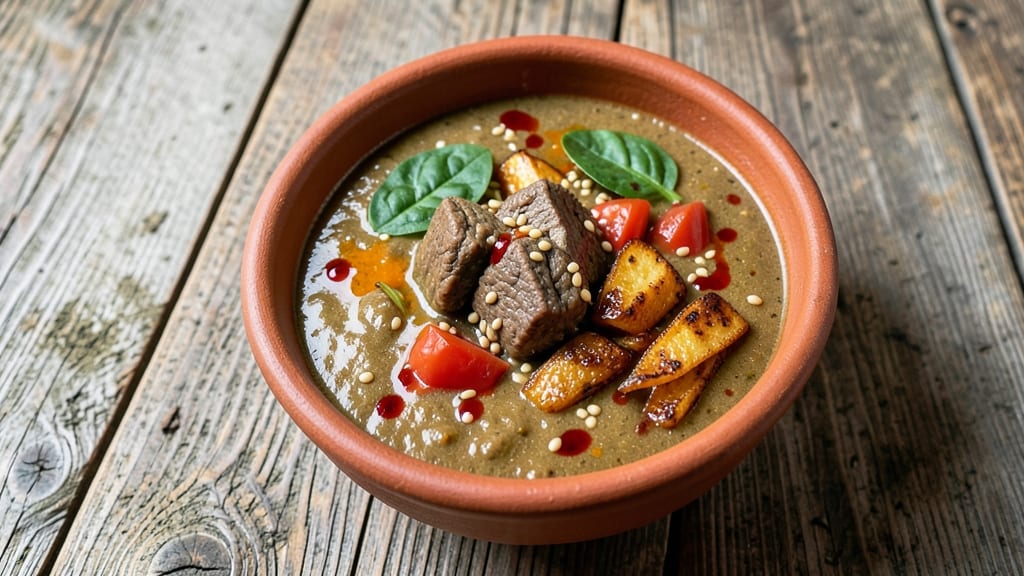
This egusi soup recipe transforms humble ingredients into a rich, nutty masterpiece that carries the warmth of West African tradition. 🌟 The secret lies in blending egusi seeds into a velvety paste that forms the heart of this comforting stew—where earthy flavors meet tender proteins and fresh vegetables in perfect harmony.
What makes this dish special is its balance of textures and flavors: the nutty depth of ground egusi seeds, the tender bite of stewed beef or fried fish, and the bright contrast of leafy greens like utazi or bitterleaf.
I developed this recipe after years of refining my grandmother’s techniques, ensuring every spoonful delivers that satisfying blend of tradition and approachability.
By the time you serve this soup, you’ll have created a meal that’s restaurant-quality at home—steaming bowls of savory goodness that pair beautifully with pounded yam, eba, or even rice. The aroma alone will bring everyone to the table, and the flavors will keep them coming back for more.
Ready to master this West African classic? Let’s get started—your taste buds (and your dinner guests) will thank you.
Ingredients for egusi soup
Rich, nutty flavors transform simple ingredients into West African comfort at home.
| Ingredient | Amount | Notes |
|---|---|---|
| Dried Egusi Seeds 🌽 | 1 cup | Soaked overnight, blended smooth |
| Beef Stew Meat 🥩 | 1 ½ lb | Chuck or round cut, cubed |
| Tomatoes 🍅 | 4 whole | Ripe, peeled and chopped |
| Onions 🧅 | 3 whole | Yellow, finely chopped |
| Garlic Cloves 🧄 | 6 cloves | Fresh, minced |
| Utazi or Bitterleaf 🌿 | 1 cup | Fresh leaves, chopped |
| Palm Oil 🫒 | ½ cup | Red palm oil preferred |
| Fish Stock 🐟 | 4 cups | Homemade or quality canned |
| Salt 🧂 | 1 tsp | Adjust to taste |
| Black Pepper 🌶️ | 1 tsp | Freshly ground |
| Pounded Yam or Eba 🍛 | 4 servings | Traditional side pairing |
| Vegetable Oil 🫒 | 2 tbsp | For frying fish if using |
| Scotch Bonnet Peppers 🔥 | 1 whole | Seeds removed for mild heat |
The egusi seeds are the heart of this soup—soak them overnight for maximum tenderness, then blend until silky smooth. I always use organic seeds from African markets for authentic flavor, but any quality dried egusi works. For the beef, chuck roast gives the best texture—it falls apart beautifully once stewed. If you can't find chuck, round steak is a solid alternative. The palm oil adds that signature red hue and deep richness—red palm oil is ideal, but coconut oil in a pinch works too (though it won't be the same).
No fish stock? Chicken stock plus a splash of soy sauce gets you close. Want less heat? Remove the seeds from the Scotch bonnet or use half a pepper. Fresh utazi leaves are essential for that authentic West African taste, but spinach or collard greens stretched with a pinch of locust beans can work in a pinch. The tomatoes should be ripe and juicy—San Marzano canned tomatoes add great depth if fresh aren't available. For the fish, tilapia or cod fry beautifully in this soup, but skip the oil if you're using the fish as a topping instead of frying it separately.
This soup tastes even better the next day as flavors meld. Store leftovers in airtight containers in the fridge for 4-5 days, or freeze portions for up to 3 months. The pounded yam or eba should be prepared fresh—don't refrigerate it or it gets gummy. For a restaurant-quality touch, garnish with fresh utazi leaves and extra palm oil drizzle before serving. The aroma alone will transport you to West Africa—trust me, it's worth the effort.
Why You'll Love This Recipe
- Let’s be real: beef isn’t cheap, but this recipe stretches it into something stunning. The dried egusi seeds and fish stock keep costs low, and the flavors make it taste like a splurge. I’ve made it on a dime and still felt like I was treating myself. And if you freeze portions? You’ve got a freezer full of instant comfort for weeks.
- No Prep Panic: Honestly, the only real prep here is soaking the egusi seeds overnight—that’s it. Everything else happens in one pot, with just a little chopping of onions and tomatoes. I’ve made it on nights when I was too tired to even think about meal prep, and it still turned out rich and satisfying. The meat browns fast, the tomatoes soften in minutes, and the rest is just simmering.
- Nutty, Rich, Addictive: The way the blended egusi seeds turn that broth into a velvety, nutty dream is chef’s kiss. Add in the smoky palm oil, the garlicky depth from those 6 cloves, and the earthy bite of utazi leaves, and you’ve got a soup that’s bold but balanced. My kids actually ask for seconds—yes, even on a Tuesday night—because it’s that good.
- Feeds a Crowd: This recipe is basically a party in a pot. The 1.5 pounds of beef and 4 cups of stock make it hearty enough to share with friends or leftovers for lunch. I’ve served it at potlucks, game days, and even as a post-church meal, and it’s always a hit. Plus, the pounded yam or eba sides make it feel like a special occasion without any extra effort.
Step-by-step instructions for egusi soup recipe
Here's how to create that rich, nutty West African comfort in your kitchen.
🍳 Step 1: Blend the Egusi Paste
Start by soaking the 1 cup dried egusi seeds overnight in warm water. This softens them for blending. Drain and rinse thoroughly before transferring to a high-powered blender with about ½ cup of the soaking water. Blend until completely smooth—this creates the soup's signature nutty base.
Here's the thing—you want it silky, not grainy. If it's too thick, add more water 1 tablespoon at a time until it reaches a pourable consistency. Set aside; you'll use this immediately after browning the meat. The longer you wait, the more likely it'll thicken and develop a bitter taste.
🔥 Step 2: Brown the Beef Stew Meat
Heat 2 tablespoons vegetable oil in a large pot over medium-high heat. Add the 1½ lb beef stew meat in batches, working in 2-3 minutes per batch to avoid crowding. You're looking for deep, caramelized brown spots—this builds flavor that no seasoning can replicate.
Once all meat is browned, remove it from the pot and set aside. In the same pot, add ½ cup palm oil and swirl to coat the bottom. Immediately add 3 onions and 4 tomatoes, cooking until the onions soften and the tomatoes break down completely—about 5-7 minutes. This creates the soup's aromatic foundation.
🍳 Step 3: Build the Soup Base
Return the browned beef to the pot along with 4 cups fish stock, 1 cup utazi or bitterleaf, 6 minced garlic cloves, 1 Scotch bonnet pepper (seeds removed), 1 teaspoon salt, and 1 teaspoon black pepper. Bring to a gentle boil, then reduce heat to medium-low and let it simmer uncovered for 30 minutes. This allows all flavors to meld while the meat tenderizes.
Here's where it gets good: After 30 minutes, stir in the blended egusi paste. The soup will thicken immediately as the egusi absorbs liquid. If it becomes too thick, add ½ cup hot water to reach your desired consistency. Simmer uncovered for another 20 minutes, stirring occasionally to prevent sticking.
⏰ Step 4: Finish and Serve
Taste and adjust seasoning—you might need a bit more salt or pepper depending on your preferences. The soup should be rich, nutty, and slightly thick but still spoonable. If it's too thin, simmer uncovered for another 5-10 minutes to reduce.
Serve immediately with 4 servings pounded yam or eba to soak up every last bit of that flavorful broth. The contrast between the smooth yam and the hearty soup makes this dish truly comforting. Real talk: Leftovers won't taste the same—egusi soup is best enjoyed fresh.
Pro Tips For Making Egusi Soup
- Soak Egusi Properly: Skip the overnight soak and your egusi paste will taste bitter—trust me, I’ve tried. Warm water for 8+ hours (or overnight) breaks down the seeds just enough to blend smooth without that off-flavor. Rinse well after soaking to wash away any residual bitterness before blending.
- Brown Meat in Batches: Crowd the pot with beef, and you’ll steam instead of sear—no one wants bland, pale meat. Work in 2-3 minute batches on medium-high heat until those edges turn deep brown. That crust? That’s where the flavor hides, and skipping it is like serving soup without salt.
- Swirl That Palm Oil: Dump palm oil in and stir once? Nope. Swirl it around the pot like you’re painting the bottom—coat every inch so the onions and tomatoes caramelize evenly. I used to rush this, and the soup always tasted one-dimensional. Take the extra 30 seconds; your taste buds will notice.
- Simmer Uncovered Always: The second you cover the pot after adding egusi paste, you’re trapping steam and risking a gluey, grainy mess. Let it simmer uncovered for those 20 minutes—it’ll thicken naturally without turning into paste. Stir occasionally, or you’ll end up scraping burnt bits off the bottom.
Troubleshooting your egusi soup
Thickening Too Fast?
If your soup thickens unexpectedly after adding the egusi paste, don’t panic! Simply add ½ cup hot water or fish stock gradually while stirring. This keeps the texture smooth and prevents clumping. I’ve found that simmering uncovered for 5 minutes afterward often helps balance the consistency. 💫
Meat Too Tough?
Undercooked beef is the usual culprit. Ensure your beef cubes reach 165°F internal temperature during the 30-minute simmer. If they’re still firm, extend simmering by 10-15 minutes or add ½ cup water to help tenderize. Chuck roast should fall apart easily—if not, it needs more time.
Soup Tastes Bland
Seasoning is key! Taste before adding the egusi paste and adjust with salt and pepper as needed. A splash of fish stock or soy sauce can brighten flavors if the soup lacks depth. My grandmother always said, “Taste as you go—the soup should dance on your tongue!”
Vegetables Too Bitter
Utazi or bitterleaf can turn bitter if overcooked. Add them 10 minutes before finishing to avoid bitterness. If already bitter, stir in 1 tsp sugar or a pinch of baking soda to neutralize. Fresh leaves are always better than wilted ones—don’t skip rinsing them!
Soup Separates or Splits
This happens when the egusi paste isn’t fully blended or the soup is over-simmered. Always blend the seeds until completely smooth and avoid high heat after adding the paste. If it splits, whisk vigorously and simmer gently to recombine. A hand mixer can help restore smoothness if needed.
Nutrition facts
Frequently asked questions
Why does my egusi soup taste bland?
Seasoning is everything! Make sure to taste before adding the egusi paste and adjust with salt and pepper as needed. A splash of fish stock or a pinch of soy sauce can add depth. Remember, flavors develop as you cook—taste frequently and adjust gradually. The soup should be rich and complex, not just nutty from the egusi!
Can I substitute utazi leaves with other greens?
Yes, but with a twist! While utazi or bitterleaf are traditional, spinach or collard greens work in a pinch—just add them 10 minutes before finishing to avoid bitterness. For extra authenticity, stir in ½ teaspoon locust beans to mimic the earthy depth of utazi. Fresh is always best!
How do I prevent my soup from separating after adding egusi?
Smooth blending is key! Ensure your egusi paste is completely silky with no graininess. Avoid high heat after adding it—simmer gently and stir occasionally. If it splits, whisk vigorously and simmer uncovered for 5 minutes to recombine. A hand mixer can also restore smoothness if needed.
Is it okay to make this soup ahead of time?
Yes, but with caveats! The soup actually tastes better the next day as flavors meld. Store leftovers in airtight containers in the fridge for 4-5 days or freeze for up to 3 months. Just reheat gently on the stove—microwaving can make the texture uneven. Serve with fresh pounded yam for the best experience!
What’s the best way to tenderize tough beef?
Time and technique! Ensure your beef cubes reach 165°F internal temperature during the 30-minute simmer. If they’re still firm, extend simmering by 10-15 minutes or add ½ cup water to help break down the collagen. Chuck roast should fall apart easily—if not, it needs more patience, not more heat!