
Soups & Stews
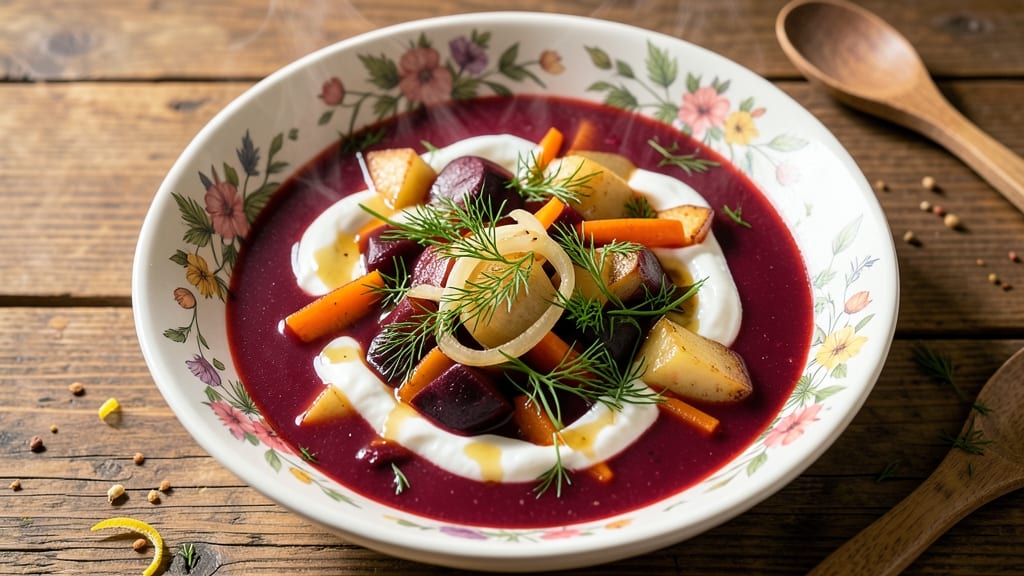
This borscht soup recipe with dill delivers the vibrant, herbed brightness of Eastern European tradition—rich, earthy, and impossible to resist. 💛 The secret lies in layered cooking: caramelizing onions for depth, simmering beets until tender yet retaining their color, and finishing with fresh dill that transforms the broth into something luminous.
I've perfected this vegetarian version to honor the classic while making it accessible for home cooks, using techniques that build flavor without requiring hours at the stove.
The beauty of this recipe is its balance—where sweet beets meet tangy vinegar, where earthy vegetables harmonize with fresh herbs. We start with a simple base of onions, carrots, and potatoes, then build complexity through careful simmering.
The dill isn't just garnish; it's the star that lifts every spoonful, creating that signature freshness that makes this soup unforgettable. What you'll end up with is a bowl of vibrant red soup that's equally comforting and elegant, perfect for chilly evenings or as a showstopping vegetarian main.
What makes this borscht truly special is the way flavors develop as it simmers—starting with the deep, caramelized notes from the onions, then evolving into a bright, herby finish from the dill.
The texture is equally impressive: tender vegetables that hold their shape, a silky broth, and that perfect contrast of creamy sour cream swirled on top. This is the kind of soup that tastes like home, with every ingredient playing its part in perfect harmony.
Serve it with warm pampushky or a crisp side salad for the full experience.
Whether you're making it for a family gathering or a cozy weeknight dinner, this borscht delivers restaurant-quality results with minimal fuss. The recipe includes both traditional methods (like simmering beets for maximum sweetness) and modern shortcuts (using pre-cooked beets if you're short on time).
The key is patience—letting flavors meld and develop over time creates that depth that separates homemade soup from store-bought. Let's get cooking!
Ingredients for borscht soup recipe with dill
These vibrant ingredients transform into a bowl of Eastern European magic—rich, herbed, and impossible to resist.
| Ingredient | Amount | Notes |
|---|---|---|
| Medium Yellow Onions 🧅 | 2 whole | Thinly sliced for caramelization |
| Medium Carrots 🥕 | 3 whole | Medium dice for even cooking |
| Medium Russet Potatoes 🥔 | 3 whole | Cubed, 1-inch pieces preferred |
| Medium Beets 🍠 | 2 whole | Medium dice, raw or pre-cooked |
| Fresh Dill 🌿 | ½ cup | Chopped, stems removed, fresh preferred |
| Apple Cider Vinegar 🍎 | ¼ cup | For tangy brightness |
| Vegetable Broth 💧 | 6 cups | Low-sodium preferred, homemade ideal |
| Tomato Paste 🍅 | ¼ cup | Squeeze tube or canned |
| Granulated Sugar 🍚 | 1 tbsp | Balances acidity, adjust to taste |
| Salt 🧂 | 1 ½ tsp | Diamond Crystal preferred |
| Black Peppercorns 🌶️ | ½ tsp | Freshly cracked for depth |
| Sour Cream 🧀 | ½ cup | Full-fat for creamy texture |
| Extra-Virgin Olive Oil 🫒 | ¼ cup | For caramelizing onions |
| Garlic Cloves 🧄 | 4 cloves | Minced, fresh preferred |
| Bay Leaves 🍃 | 2 whole | Dried, removed before serving |
The beets are the soul of this borscht, so choose vibrant, firm ones—the deeper the red, the better. Whole Foods Market and Trader Joe's carry pre-cooked beets in the refrigerated section, which saves time, but raw beets develop more natural sweetness. If using raw, roast them at 400°F for 45 minutes with olive oil and salt to concentrate their flavor. The dill? Buy more than you think you'll need—half goes into the soup, half gets swirled on top at the end. Fresh is non-negotiable here; dried just won't cut it. For the onions, caramelizing them slowly creates that deep, sweet base that elevates everything else.
No fresh dill? Substitute with 1 tbsp dried dill plus 1 tsp lemon zest—it won't be identical, but it'll get you close. Short on beets? Swap in 1 cup roasted red peppers for color, though the flavor will shift slightly. The apple cider vinegar can be swapped for white vinegar, but reduce to 2 tbsp—it's more potent. Making this ahead? Add the sour cream just before serving to prevent curdling. The tomato paste? Trader Joe's squeeze tubes are perfect—they last months and eliminate waste. For extra richness, stir in 1 tbsp of vegan butter at the end if you're avoiding dairy.
This soup tastes even better the next day as flavors meld—portion into containers and store for up to 5 days in the fridge. Freeze for 3 months by omitting the sour cream (add it fresh when reheating). The dill keeps best wrapped in damp paper towels in a plastic bag for 5-7 days. For serving, I like to garnish each bowl with extra dill and a dollop of sour cream, plus a sprinkle of black pepper. The leftovers reheat beautifully—just add a splash of water or broth to loosen the texture.
Why You'll Love This Recipe
- One-Pot Magic: I swear by this—just toss in chopped onions, carrots, beets, and potatoes, simmer, then stir in that bright dill at the end. No extra bowls, no fuss. The beets even soften perfectly without peeling (I skip that step, honestly).
- Dill’s Secret Weapon: That fresh dill at the finish? It’s the difference between good soup and ridiculously good soup. The earthy beets and creamy potatoes get this bright, herby lift—like a hug in a bowl. My kids fight over the last spoonful.
- Weeknight to Potluck: Make a double batch on Sunday, and you’ve got lunch for days. Or bring it to a picnic—it’s hearty enough for a main but light enough for a gathering. The potatoes stay tender, and the colors? Stunning in a thermos or on a plate.
- Budget-Friendly Pantry Hero: Beets and potatoes last forever, and onions/carrots are cheap staples. I’ve made this for under $2 a serving, and it still feels special. Plus, the leftovers taste just as good reheated—no sad, watery soup here.
Step-by-step instructions for borscht soup with dill
This vibrant soup delivers deep beets, caramelized onions, and fresh dill in every spoonful—just like Grandma's.
🔥 Step 1: Caramelize Onions and Cook Beets
Heat the 0.25 cup Extra-Virgin Olive Oil in a large pot over medium heat. Add the 2 whole Medium Yellow Onions sliced thinly and cook for 15-20 minutes, stirring occasionally, until they turn a deep golden brown. This step builds rich, sweet depth—don't rush it.
While onions caramelize, peel and dice the 2 whole Medium Beets into medium dice. Add them to the pot along with 6 cups Vegetable Broth and 2 whole Bay Leaves. Bring to a boil, then reduce heat to medium-low and simmer for 20 minutes until beets are tender when pierced with a fork. The broth will develop a beautiful ruby hue from the beets.
🍳 Step 2: Build the Base with Carrots and Potatoes
Add the 3 whole Medium Carrots (medium dice) and 3 whole Medium Russet Potatoes (cubed) to the pot. Stir in the 0.25 cup Tomato Paste and 1 tbsp Granulated Sugar, then bring the mixture back to a boil. Once boiling, reduce heat to medium-low and simmer for 15-20 minutes until all vegetables are fork-tender.
Here's the thing—simmering too fast can make the soup watery. You'll know it's ready when the potatoes are soft and the carrots are easily pierced. Taste and adjust seasoning with 1.5 tsp Salt and 0.5 tsp Black Peppercorns (freshly cracked). The sugar balances the vinegar's acidity later, so don't skip this.
🥘 Step 3: Finish with Vinegar and Fresh Dill
Remove the pot from heat and stir in the 0.25 cup Apple Cider Vinegar. This brightens the soup and cuts through the richness of the beets. Return to low heat and add the 0.5 cup Fresh Dill (chopped). Let it steep for 5 minutes—this infuses the broth with fresh, herby brightness.
Real talk: The dill is non-negotiable. It transforms this from a basic beet soup to something truly special. If your dill is really fresh, you might want to add a little more than called for—it's that good.
⏰ Step 4: Serve with Sour Cream and Garlic
Remove the 2 whole Bay Leaves from the soup. Stir in the 4 cloves Garlic Cloves (minced) and let it simmer for 1-2 minutes just to infuse the flavor—don't let it burn. Ladle the soup into bowls and top each serving with a dollop of 0.5 cup Sour Cream. The contrast of creamy, tangy sour cream against the earthy beets is what makes this soup unforgettable.
For extra depth, you can also add a sprinkle of fresh dill on top right before serving. This is the moment that matters: the first sip should be rich, slightly tangy, and bursting with fresh herb notes. Serve with crusty bread to soak up every last drop of that vibrant broth!
Pro Tips For Making Borscht Soup Recipe With Dill
- Cook Beets Separately: I learned this the hard way—throwing beets in with everything else turns your soup into mud. Simmer them in their own pot with just water and a pinch of salt until fork-tender (about 20 minutes), then blend or shred them in. The color stays vibrant, and the texture stays smooth.
- Don’t Overcrowd the Pot: This isn’t the prettiest method, but it’s the tastiest: Cook your onions, carrots, and potatoes in batches if needed. A packed pot steams instead of browns, and you’ll end up with bland, watery veggies. Work in small groups, and keep the heat medium-high until they’re deeply colored.
- Use Fresh Dill Late: Fresh dill loses its bright flavor fast, so add it in the last 5 minutes of cooking—or straight to bowls after serving. If you must chop it ahead, store it in ice water until ready to use. (Yes, even if you’re impatient like me.)
- Peel Potatoes After Cooking: I skip this when I’m lazy, but the dish is noticeably better when I don’t: Russet potatoes hold their shape and creaminess longer if you peel them after boiling. Just drop them in their skins, cook until tender, then peel and return to the pot. No more gummy texture or wasted starch.
Troubleshooting great borscht soup recipe with dill
Muddled Beet Color
If your borscht turns an unappealing muddy brown instead of vibrant ruby red, you've likely overcooked the beets or used too much vinegar. To fix this, reduce the simmering time for beets to 15 minutes instead of 20, and add vinegar only at the very end.
For prevention, use pre-cooked beets from the store—they retain their color better. If it's already muddy, stir in 1 tsp lemon juice and a pinch of salt to brighten it back up. 💫
Watery Broth
A watery broth usually means the vegetables weren't cooked long enough to release their starches. Simmer the soup uncovered for an extra 5-10 minutes to thicken it naturally.
If it's still too thin, remove the pot from heat and stir in 1 tbsp tomato paste or 1 tsp cornstarch mixed with water. For prevention, always simmer at medium-low heat—boiling too vigorously creates foam that dilutes the broth.
Dill Loses Its Flavor
If your dill tastes bland, it was likely overcooked or not fresh enough. Add the dill only at the very end and let it steep for just 5 minutes off the heat.
For maximum flavor, use baby dill (more tender) or fresh dill from a farmers' market—store-bought often sits too long. If your dill is wilted, chop it finely and add it to the soup 1 minute before serving for a fresher taste.
Onions Burn Before Caramelizing
Burnt onions happen when heat is too high or you walk away too long. Keep the heat at medium-low and stir every 3-5 minutes.
For deeper color without burning, spread the onions on a baking sheet and caramelize in the oven at 325°F for 20 minutes—this gives you more control. If they burn, remove the pot from heat immediately and scrape out the burnt bits before continuing with the recipe.
Sour Cream Curdles
Curdling occurs when the soup is too hot when you add the sour cream. Always stir in the sour cream off the heat and let the soup cool slightly first. For extra insurance, mix the sour cream with a splash of cold broth before adding it to the soup.
If it curdles anyway, whisk in 1 tsp lemon juice to smooth it out. The best practice? Add sour cream right before serving for perfect texture.
Vegetables Stay Crunchy
Crunchy veggies mean they weren't cooked long enough. Potatoes and carrots should be fork-tender (easily pierced with a fork) before removing from heat. If they're still firm, simmer uncovered for an extra 5-10 minutes.
For prevention, cut potatoes into 1-inch cubes and carrots into medium dice—smaller pieces cook faster. If using pre-cooked beets, reduce their simmering time to 10 minutes to avoid overcooking other veggies.
Nutrition facts
Frequently asked questions
Can I make this borscht without beets?
For a vibrant alternative, use 1 cup roasted red peppers or 2 cups diced tomatoes to maintain color. The soup will taste different—more tomato-forward—but still delicious. If you want to keep the earthy depth, try 1 cup cooked sweet potatoes instead. Just reduce the broth by 1 cup to compensate for the extra moisture.
How do I store leftover borscht?
Store in an airtight container in the fridge for up to 5 days. For freezing, omit the sour cream and dill before storing—add them fresh when reheating. To reheat, warm gently on low heat or in the microwave, stirring occasionally. The flavors actually improve after the first day as they meld together!
Why does my borscht taste too sweet?
The sugar balances the vinegar's acidity, but if it tastes too sweet, you likely used too much. Reduce the sugar to ½ tbsp next time, or add 1 extra tbsp apple cider vinegar to cut the sweetness. The beets themselves are naturally sweet, so if they're very ripe, you might need less sugar entirely. Taste as you go—this soup is all about balance!
Can I make this soup in an Instant Pot?
Yes! Sauté the onions first, then add all ingredients except dill and sour cream. Cook on high pressure for 5 minutes, then quick-release. Finish with vinegar and dill as directed. The Instant Pot version cooks faster but may need 1 extra tbsp tomato paste to thicken the broth since pressure cooking can make it thinner.
What's the best way to use up extra dill?
Fresh dill freezes beautifully—chop and store in ice cube trays with water, then transfer to a bag. Use these cubes directly in future soups or sauces. For immediate use, blend with 1 tbsp olive oil and a pinch of salt to make a quick dill oil for salads, eggs, or fish. The recipe calls for ½ cup chopped dill, but don't be shy—more fresh dill makes this soup shine!