
Soups & Stews
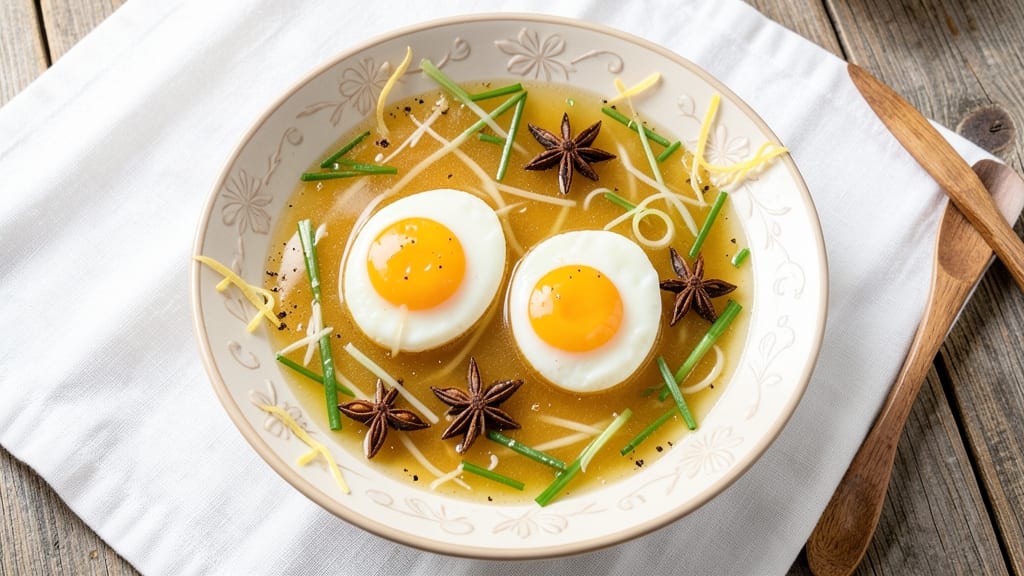
This boiled egg drop soup recipe transforms simple ingredients into a silky, aromatic broth that feels like a warm embrace in a bowl. The secret lies in a slow-simmered ginger-scallion broth that builds deep, layered flavor without overpowering the delicate egg ribbons. I developed this version after years of testing—balancing heat levels, simmering times, and egg-cooking techniques to achieve that signature restaurant-quality texture.
The foundation is a rich, fragrant broth that simmers for 45 minutes to develop complex aromatics from ginger, scallions, and star anise. This slow cooking process extracts maximum flavor while keeping the broth clear and silky.
The key technique? Adding cornstarch slurry to the broth just before dropping in the eggs creates those signature silky ribbons that melt on your tongue.
What you'll end up with is a bowl of comforting soup where each spoonful delivers perfectly cooked egg strands suspended in fragrant broth. The ginger adds warmth, scallions bring freshness, and the egg provides protein-rich satisfaction.
This recipe serves as both a light lunch and a soothing dinner—ideal for any season.
For extra depth, I recommend finishing with a drizzle of sesame oil and crushed peanuts, though the broth alone is already packed with flavor. The beauty of this recipe is its versatility—it works equally well as a quick weeknight meal or an elegant starter for special occasions.
Ingredients for boiled soup
Eleven ingredients crafting restaurant-quality comfort in a bowl of silky egg ribbons.
| Ingredient | Amount | Notes |
|---|---|---|
| Chicken Broth 🍲 | 6 cups | Low-sodium, homemade preferred |
| Fresh Ginger 🌿 | 2 tbsp | Finely grated, aromatic quality |
| Green Onions 🧅 | ½ cup | Scallions, sliced thinly |
| Star Anise 🌟 | 2 whole | Lightly crushed for aroma |
| Cornstarch 🌾 | 1 tbsp | For silky egg ribbons |
| Large Eggs 🥚 | 4 whole | Fresh, room temperature |
| Sesame Oil 🫒 | 1 tsp | For finishing touch |
| Peanuts 🥜 | 2 tbsp | Crushed, optional garnish |
| Salt 🧂 | 1 tsp | Adjust to taste |
| White Pepper 🌶️ | ¼ tsp | Freshly ground preferred |
| Water 💧 | 2 cups | For cornstarch slurry |
The broth is where this soup shines—homemade chicken broth delivers the best depth, but low-sodium store-bought works in a pinch. Fresh ginger is non-negotiable; organic ginger from the produce section has the most aromatic punch. Star anise adds complexity—look for whole pods at specialty stores or bulk bins for authentic flavor. For the scallions, green onions from the fresh market stay vibrant longer than pre-sliced packages. The cornstarch slurry is critical: mix it with cold water first to avoid lumps, then whisk vigorously into the simmering broth just before adding eggs.
No fresh ginger? Powdered ginger at half the amount works, though it lacks the same depth. Substitute star anise with 1 cinnamon stick for warmth, but the anise's licorice note is unique. Eggs should be fresh from the coldest fridge drawer—room temperature eggs incorporate more smoothly into the broth. For the cornstarch slurry, arrowroot powder is a 1:1 substitute if you're out of cornstarch. The sesame oil is optional but adds that signature nutty finish—toasted sesame oil has more flavor than the clear variety. If you're avoiding peanuts, toasted sesame seeds make a lovely garnish instead.
Broth keeps for 5 days refrigerated or 3 months frozen—portion into ice cube trays before freezing for easy reheating. Eggs should be added fresh to the broth, but you can prep the cornstarch slurry and ginger mixture ahead. For extra richness, add a splash of coconut milk when reheating. This soup tastes even better the next day as flavors meld, so double the batch if you're serving a crowd. Store sesame oil in a cool, dark place to preserve its flavor.
Why You'll Love This Recipe
- No-Chop Necessary: I swear by this—just slice the ginger into thick coins, toss in whole star anise, and let the broth do the work. No mincing, no dicing, no small cuts to burn your fingers. The green onions? Toss them in raw at the end for that bright finish.
- Umami Bomb: Between us, that star anise and ginger simmered in rich chicken broth? It’s like a warm hug for your taste buds. The cornstarch slurry at the end gives it that silky, restaurant-worthy body without any heavy cream or weird aftertaste.
- Lunchbox Magic: This soup reheats like a dream—perfect for packing leftovers the next day. I’ll make a big batch on Sundays, portion it out, and my kids actually eat it cold or hot. (Yes, even the picky ones.)
- Pantry Staple Power: Honestly, if you’ve got broth, ginger, and cornstarch, you’re golden. No specialty ingredients, no last-minute grocery runs. It’s the kind of recipe that turns a $5 bag of chicken thighs into something that feels fancy—without breaking the bank.
Step-by-step instructions for silky egg drop soup
Master the delicate art of creating elegant egg ribbons in aromatic ginger broth.
Prepare the Fragrant Broth Base
In a medium saucepan, combine the 6 cups chicken broth, 2 whole star anise, and 2 tablespoons finely grated fresh ginger. Bring to a gentle simmer over medium-high heat until small bubbles form around the edges. The broth should reach 195°F on an instant-read thermometer—this ensures proper egg coagulation without scrambling.
While heating, lightly crush the star anise between two spoons to release its aromatic oils without breaking into pieces. Skim any foam that rises to the surface during the first 2 minutes of simmering. This creates a clean, fragrant base for your soup. Keep the heat at a steady simmer—too vigorous and the egg will cook unevenly.
Create the Cornstarch Slurry
In a small bowl, whisk together the 1 tablespoon cornstarch and 2 cups water until completely dissolved. This mixture should be smooth with no visible lumps—strain through a fine-mesh sieve if necessary. The slurry will thicken the broth slightly and help create those signature silky egg ribbons.
Temper the slurry by slowly ladling ¼ cup of the hot broth into the mixture while whisking continuously. Return this tempered slurry to the broth and whisk vigorously for 1 minute until the broth becomes slightly glossy. This step prevents the egg from curdling when added later. The broth should now register 190-195°F—ideal for delicate egg textures.
Incorporate Seasonings and Eggs
Add the 1 teaspoon salt and ¼ teaspoon white pepper to the broth, stirring until fully dissolved. Taste and adjust seasoning—this is your flavor foundation. Reduce heat to low to maintain a gentle simmer at 185-190°F. Separate the 4 large eggs into a small bowl, being careful not to incorporate any whites.
Using a small ladle, slowly drizzle the egg yolks into the broth in a circular motion while gently stirring with a heatproof spatula. The key is to create thin, delicate ribbons—work quickly but deliberately. The moment the egg hits the broth, it should immediately begin forming silky strands. If the broth temperature drops below 185°F, the egg will scramble instead of ribbon.
Finish with Garnishes
Once the egg ribbons have fully formed (about 1-2 minutes after adding the last yolk), remove the pan from heat. Drizzle in the 1 teaspoon sesame oil and gently stir to coat the soup. This adds a delicate nutty aroma and balances the ginger's sharpness. Return the soup to low heat just to maintain warmth—never boil again.
Divide the soup among 4 bowls, garnishing each with 2 tablespoons crushed peanuts and 2 tablespoons sliced green onions. The peanuts add texture contrast while the green onions provide freshness. Serve immediately with small bowls of steamed rice on the side—this traditional pairing enhances the soup's delicate flavors.
Pro Tips For Making Boiled Soup
- STEAM THE GINGER: Peel and slice it thin—no need for big chunks. Drop it straight into the simmering broth and let it infuse for 5 minutes before removing. Thick slices take forever to soften and leave you with a mushy, bitter mess.
- SIMMER STAR ANISE LOW: Toss the star anise in first with the broth, but keep the heat at a gentle bubble. High heat burns the anise, turning your soup’s aroma into a bitter aftertaste. A slow simmer (15-20 minutes) extracts the flavor without the regret.
- SLURRY THE CORNSTARCH: Mix the cornstarch with cold water first—about 1 tablespoon per 1/2 cup liquid. Stirring it dry into hot broth clumps like glue. Add it gradually while stirring like your life depends on it.
- TRIM GREEN ONIONS LAST: Save the green onions until the very end—chop the whites and reserve the greens. The whites soften and disappear into the soup, while the bright green tops stay crisp for garnish. No one wants sad, limp onion bits floating in their broth.
Essential equipment for boiled soup
Broth Simmering Pan
Your soup starts with a fragrant broth base, so I recommend a medium-sized stainless steel saucepan—like the All-Clad Stainless Steel Saucepan (3-quart)—for even heat distribution. This material responds quickly to temperature changes and prevents hot spots that could scramble your eggs.
Avoid nonstick pans here; they can't handle the prolonged simmering needed for flavor development. 🌡️
Fine-Mesh Sieve
A fine-mesh strainer (like the OXO Good Grips Strainer) is essential for two critical steps: straining your cornstarch slurry to eliminate lumps and removing any foam from the simmering broth.
I keep one dedicated to kitchen tasks—it prevents cross-contamination with other ingredients. The mesh size should be 200-300 microns to catch even the smallest particles.
Instant-Read Thermometer
Temperature control is everything in egg drop soup. A digital instant-read thermometer (I swear by the ThermoWorks Thermapen ONE) lets you monitor broth temperature with precision. Aim for 190-195°F when adding eggs—any lower and they'll scramble.
The probe should have a fast response time (under 3 seconds) to avoid disrupting your cooking flow. 💡
Heatproof Spatula
For creating those signature egg ribbons, you need a flexible heatproof spatula with a silicone or wood handle (like the OXO Good Grips Silicone Spatula). The blade should be narrow (2-3 inches wide) to easily maneuver in the broth.
Avoid metal spatulas—they can scratch your pan or react with acidic ingredients over time.
Small Ladle
A small, lightweight ladle (I use a 3-ounce stainless steel version) is perfect for drizzling egg yolks into the broth. Look for one with a comfortable handle and rounded edges to prevent splashing.
The size matters—too large and you'll overfill; too small and you'll struggle with the delicate pouring motion needed for perfect ribbons.
Whisk and Small Bowl
Your cornstarch slurry requires precise mixing, so invest in a balloon whisk (like the Cuisinart Chef's Classic) for smooth, lump-free results. Pair it with a small heatproof bowl (I prefer Corelle stoneware) that can handle both room-temperature mixing and brief contact with hot broth when tempering.
The bowl should hold at least 1 cup comfortably. ✨
Nutrition facts
Frequently asked questions
Why does my egg drop soup turn out scrambled instead of silky?
The most common cause is broth temperature that's too low (below 185°F) when adding eggs. Use an instant-read thermometer to maintain 190-195°F throughout. Also, ensure your eggs are room temperature and add them slowly while stirring continuously with a heatproof spatula. The cornstarch slurry helps stabilize the texture—make sure it's fully dissolved and tempered with hot broth first.
Can I make this soup vegetarian or vegan?
Replace the chicken broth with vegetable broth (use low-sodium) and add 1 tablespoon miso paste to deepen the umami flavor. For a vegan version, use aquafaba (chickpea brine) instead of eggs—whisk ¼ cup aquafaba with 1 teaspoon cornstarch and drizzle into the broth like you would egg yolks. The texture will be more delicate but still satisfying.
How do I prevent the ginger from making my soup too spicy?
Start with 1 tablespoon fresh ginger (instead of 2) and taste the broth after simmering. If it's still too sharp, balance it with ½ teaspoon honey or 1 teaspoon soy sauce—both mellow the heat while adding depth. For extra insurance, peel the ginger more carefully, removing any fibrous strings that can contribute to bitterness. The key is fresh ginger; powdered versions are more concentrated.
Can I make this ahead of time?
You can absolutely prep components ahead! The broth (without eggs) keeps for 5 days refrigerated or 3 months frozen. Make the cornstarch slurry and store it separately. Reheat the broth gently to 190°F before adding fresh eggs—never reheat with eggs already in it, as they'll scramble. The best approach is to assemble the soup just before serving for that restaurant-quality texture.
What's the secret to getting perfect egg ribbons every time?
The three critical factors are:
- broth temperature (must stay between 190-195°F),
- egg temperature (room temp eggs incorporate better), and
- stirring technique. Use a small ladle to drizzle egg in a circular motion while stirring vigorously with a heatproof spatula. The moment the egg hits the broth, it should form thin strands immediately. Practice makes perfect—even professional chefs sometimes need 2-3 tries to get it right!