
Soups & Stews
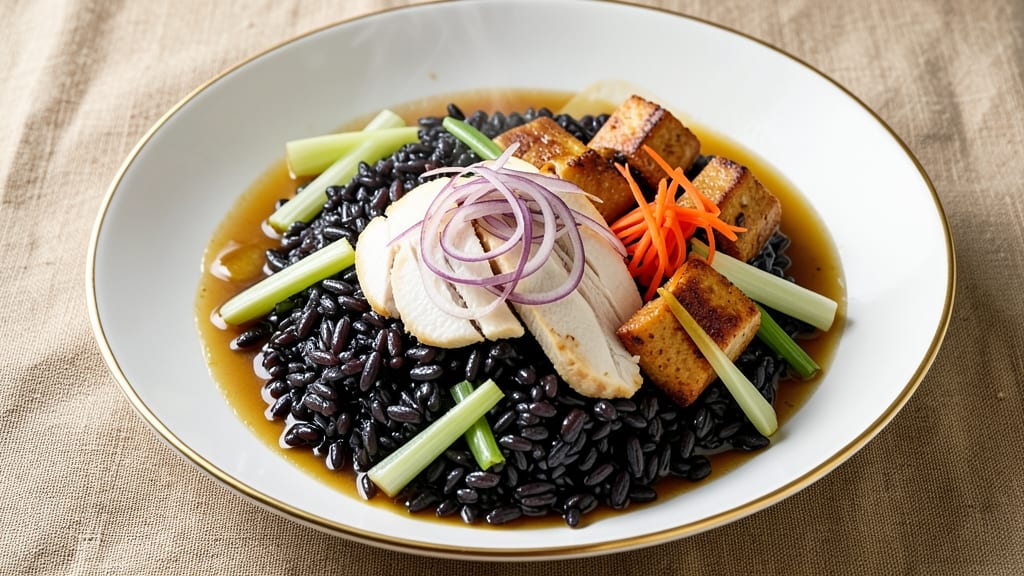
This black rice soup recipe transforms nutrient-dense black rice into a velvety, antioxidant-rich bowl that balances earthy depth with comforting warmth. The key lies in proper soaking and slow simmering, which unlocks the rice's natural nuttiness while creating a silky broth that clings to every spoonful. I've refined this method over years to ensure the rice stays tender without turning mushy—critical for achieving that perfect creamy yet distinct texture.
What makes this recipe stand out is its versatility—build it with chicken or tofu for protein, or keep it vegetarian for a plant-forward meal. The broth develops layers of flavor as it simmers, absorbing the rice's earthy notes while remaining light enough to let the ingredients shine.
Whether you're serving it as a light lunch or a nourishing dinner, this soup delivers both nutrition and satisfaction in every bowl. Ready to create your own?
Ingredients for black rice soup
Transform simple ingredients into a velvety black rice soup bursting with antioxidant-rich depth and comforting warmth.
| Ingredient | Amount | Notes |
|---|---|---|
| Black Rice 🍚 | 1 cup | Uncooked, rinsed thoroughly |
| Chicken Breast 🍗 | 1 ½ lb | Boneless, skinless, cubed |
| Firm Tofu 🥬 | 14 oz | Extra-firm, pressed and cubed |
| Carrots 🥕 | 3 medium | OR 1 cup diced |
| Celery Stalks 🧅 | 3 whole | Diced, about 1 cup |
| Onion 🧅 | 1 large | Yellow or white, chopped |
| Garlic Cloves 🧄 | 4 cloves | Minced, about 1 tbsp |
| Fresh Ginger Root 🌿 | 2 tbsp | Grated, about 1-inch piece |
| Vegetable Broth 💧 | 6 cups | Low-sodium preferred |
| Coconut Milk 🥥 | ½ cup | Full-fat for creaminess |
| Sesame Oil 🫒 | 1 tbsp | For finishing |
| Diamond Crystal Kosher Salt 🧂 | 1 tsp | Adjust to taste |
| Fresh Cilantro 🌿 | ¼ cup | Chopped, for garnish |
| Lime 🍋 | 1 whole | Juiced, for serving |
The black rice is the star—look for jewel rice or forbidden rice at specialty stores like Whole Foods or Asian markets. It's pricier than white rice but packs a nutritional punch with its deep purple hue. For the broth, low-sodium vegetable stock is non-negotiable—it lets the rice's earthy notes shine without overwhelming saltiness. The tofu should be extra-firm and pressed for texture; I grab mine from Trader Joe's or Costco for consistency. Fresh ginger and garlic are worth the effort—pre-minced jars lack the bright punch of freshly grated.
No chicken? Double the tofu or swap for shitake mushrooms for umami depth. Short on carrots? Substitute sweet potatoes or zucchini—just adjust cooking time slightly. The coconut milk adds creaminess without heaviness; if you prefer lighter, use half the amount. For a nutty finish, toast sesame seeds separately instead of using oil. The lime juice at the end is essential—it brightens the dish and balances the earthiness. Need a shortcut? Pre-diced frozen veggies work perfectly; just thaw before adding.
This soup tastes even better the next day as flavors meld. Store in an airtight container for up to 5 days in the fridge or freeze portions for 3 months. For meal prep, I double the batch—one for lunch, one for dinner. The rice stays firm when reheated gently; avoid microwaving uncovered. Garnish with cilantro and lime wedges just before serving to keep it vibrant. Leftovers reheat beautifully in a pot with a splash of water or broth.
Why You'll Love This Recipe
- One-Pot Magic: Honestly, I love recipes that don’t require a million dishes—this soup simmers everything in one pot. Black rice soaks while you prep, chicken and tofu cook together, and the carrots and celery soften into perfect bite-sized pieces without watching like a hawk.
- Earthy Depth: That first spoonful of black rice? Rich, nutty, almost like a dark chocolate note in your broth. The tofu absorbs the flavors beautifully, and the chicken stays juicy—no dry, sad bites here. (Yes, even on a Tuesday night.)
- Leftover Goldmine: Between us, this soup only gets better the next day. The rice plumps up even more, the broth thickens just enough, and I’ve reheated it three times with zero complaints. Pack it for lunch or freeze portions—it’s my go-to for lazy days.
- Budget-Friendly Powerhouse: Black rice might look fancy, but it’s cheaper than quinoa and packs way more flavor. Chicken breast stretches further than you’d think when braised, and tofu adds protein without breaking the bank. Plus, carrots and celery last forever in the fridge.
Step-by-step instructions for earthy black rice soup
This method balances rich textures and vibrant flavors for a soup that's both nourishing and elegant.
Prep and Parboil the Black Rice
Rinse the 1 cup black rice thoroughly under cold water until the water runs clear—this removes excess starch that can make the soup gummy. In a medium saucepan, combine the rinsed rice with 3 cups of the 6 cups vegetable broth. Bring to a boil over high heat, then immediately reduce to a simmer and cook uncovered for 15 minutes.
Here's the thing—black rice needs partial cooking before joining the main pot. This prevents it from absorbing all the broth later. After 15 minutes, drain the rice in a fine-mesh strainer and rinse briefly with cold water to stop the cooking process. The grains should be tender but still slightly firm to the tooth.
Sear Protein and Build the Base
Heat a large Dutch oven over medium-high heat. Add the 1.5 lb cubed chicken breast and cook for 4-5 minutes until the edges are golden brown. Remove and set aside. In the same pot, add 1 tablespoon sesame oil and swirl to coat.
Add the 14 oz cubed firm tofu and cook for 3 minutes until lightly browned on all sides. Remove and set aside with the chicken. Here's where the aromatics come in—add the chopped 1 large onion, diced 3 medium carrots, and diced 3 whole celery stalks. Cook for 5 minutes until softened.
Develop Flavor with Aromatics
Add the minced 4 cloves garlic and grated 2 tbsp fresh ginger root. Cook for 1 minute until fragrant—this is your flavor foundation. Pour in the remaining 3 cups vegetable broth and bring to a gentle simmer. Return the chicken and tofu to the pot, along with the parboiled black rice.
The reason we simmer gently now is to let the rice absorb just enough broth to soften completely without breaking down. Simmer uncovered for 20 minutes, stirring occasionally, until the rice is tender and the broth has reduced slightly. You'll know it's ready when the rice grains are plump and the broth coats the back of a spoon.
Finish with Creamy Texture
Reduce heat to low and stir in the 0.5 cup coconut milk. This adds luxurious creaminess without overpowering the earthy black rice flavor. Add the 1 tsp Diamond Crystal kosher salt and adjust to taste—black rice has a naturally nutty flavor that pairs beautifully with the umami from the chicken and tofu.
Simmer for an additional 5 minutes, allowing the flavors to meld. The soup should have a velvety consistency with distinct pieces of chicken, tofu, and vegetables. If it's too thick, add a splash of hot broth to reach your desired texture.
Garnish and Serve
Ladle the soup into bowls and finish each serving with 1 tablespoon sesame oil drizzled on top. This adds a nutty aroma and visual appeal. Garnish with the chopped 0.25 cup fresh cilantro and a squeeze of the juiced 1 whole lime. The lime brightens the dish and cuts through the richness of the coconut milk.
Serve immediately with crusty bread on the side. The contrast between the earthy black rice, silky broth, and crisp bread makes this soup truly special. Each spoonful delivers a balance of protein, fiber, and antioxidants that makes it more than just a comforting bowl.
Pro Tips For Making Black Rice Soup
- SOAK THE RICE OVERNIGHT: Black rice stays stubbornly hard if you rush it—trust me, I’ve tried the 30-minute soak. Toss it in cold water (about 3 parts liquid to 1 part rice) and let it sit 12+ hours. The extra time breaks down the bran, so it cooks into a creamy, not gritty, base. (Yes, even if you’re impatient like me.)
- SEAR CHICKEN IN BATCHES: Crowd the pan, and you’ll steam the chicken instead of sear it. Cut the breast into even 1-inch chunks, then work in two batches over medium-high heat with 1 tablespoon oil. The Maillard reaction needs space—golden crust means real flavor, not sad, pale bites.
- CUT TOFU THIN AND SALTY: Skip the pre-packaged cubes—they turn to mush. Slice firm tofu into ¼-inch sheets, then pat dry with a towel. Sprinkle generously with salt (½ tsp per cup) and let sit 10 minutes. This firms it up and makes it absorb the broth like a sponge, not a soggy sponge.
- ADD CELERY LAST MINUTE: Celery gets bitter and limp if it simmers too long. Toss in the stalks (roughly chopped) with the carrots, but pull them out after 5 minutes. Return them just before serving—crisp texture keeps the soup from feeling like a vegetable purée. (Your future self will notice the difference.)
Essential equipment for perfect results
Dutch Oven Essentials
A 5-7 quart Dutch oven is your best friend for this recipe—it holds all the ingredients while allowing even heat distribution. I swear by the Le Creuset signature (it's pricey but lasts forever) or the Lodge pre-seasoned cast iron for a budget-friendly alternative.
The deep sides prevent spills when stirring, and the heavy base maintains steady temperatures. Avoid non-stick pans—they can't handle the prolonged simmering this soup requires. 🔥
Fine-Mesh Strainer
After parboiling the black rice, you need a fine-mesh strainer (like the OXO Good Grips) to drain it thoroughly. A regular colander won't catch the tiny rice grains, leaving your soup gummy.
Rinse the drained rice briefly under cold water to stop cooking—this is non-negotiable for texture. I keep one dedicated to rice cooking in my kitchen.
Immersion Blender
For a silky broth without breaking the rice, an immersion blender (I use the Ninja CB101) is a game-changer. After simmering, blend about half the soup for 10-15 seconds—just until smooth.
This creates a velvety base while keeping the rice intact. No blender? Strain the soup through a nut milk bag for a similar effect, though it takes more effort.
Measuring Tools
Precision matters with black rice—use a stainless steel measuring cup (like Kitchenaid) for accurate portions. The rice absorbs liquid differently than white rice, so don't eyeball it. A digital kitchen scale (I love the OXO Good Grips) helps too, especially for tofu and broth measurements.
Trust me, these small tools make a big difference in texture.
Lid with Vent
A vented lid (like the one that comes with Dutch ovens) is crucial for the simmering stage. It traps steam while allowing excess moisture to escape, preventing a soggy rice texture.
If your lid isn't vented, prop it open slightly with a wooden spoon. Never skip this—it's what keeps the rice tender without mushing.
Sesame Oil Dropper
For the finishing drizzle of sesame oil, a small squeeze bottle or baste brush ensures even distribution. I use a glass dropper bottle (like Kosher Tools) because it's easy to clean and precise.
The oil should coat the surface lightly—too much makes the soup taste bitter. A few drops per bowl is perfect for that nutty aroma. 🌟
Nutrition facts
Frequently asked questions
Why does black rice turn purple in the soup?
The deep purple color comes from anthocyanins, the same antioxidants that give black rice its vibrant hue. When cooked properly, these compounds infuse the broth with earthy depth while maintaining their nutritional benefits. The partial parboiling method preserves the color better than fully cooking the rice in the pot.
Can I make this soup without chicken or tofu?
For a vegetarian version, double the tofu to 28 oz or add 8 oz shiitake mushrooms for umami. You could also include 1 cup chickpeas for extra protein. The key is maintaining the same volume of protein to keep the soup satisfying. Just adjust cooking times—mushrooms need 8-10 minutes while chickpeas should simmer for 15 minutes with the rice.
How do I prevent the black rice from getting mushy?
The secret is the two-stage cooking method: first parboil the rice separately for 15 minutes, then drain and rinse it before adding to the main pot. This prevents over-absorption of broth. Also, use a vented lid during simmering to let excess steam escape—this keeps the rice tender without turning to mush. Stir occasionally to distribute heat evenly.
What if my soup turns out too thick?
Add ½ cup hot vegetable broth at a time while stirring, letting it simmer for 2-3 minutes between additions. For extra creaminess without thinning, stir in 1-2 tablespoons coconut milk instead. The soup should coat the back of a spoon but still allow the rice and vegetables to be easily identifiable. If it's too thin, simmer uncovered for 5-10 minutes to reduce naturally.
Can I make this soup in an Instant Pot?
Yes, but with adjustments! First, sauté the aromatics and protein as directed. Then add the parboiled rice, broth, and coconut milk. Cook on high pressure for 10 minutes, then quick-release. The rice may need 5 extra minutes on low heat to finish cooking. Skip the immersion blender—hand-blend or strain for a smooth texture. The Instant Pot version finishes in 30 minutes instead of 1 hour.