
Soups & Stews
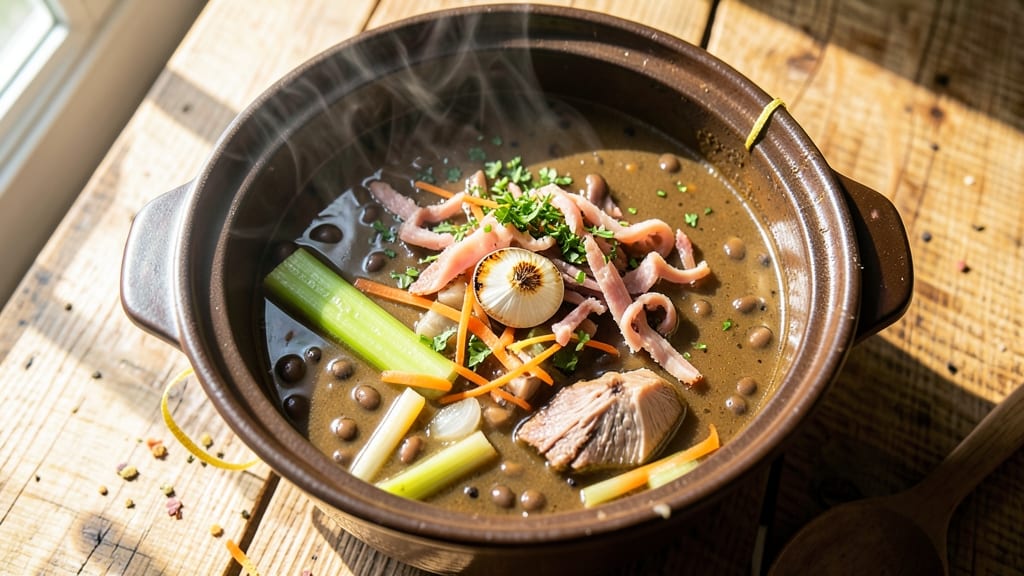
This Crock Pot black-eyed peas and ham soup recipe transforms humble ingredients into a soul-warming bowl of smoky-sweet comfort that tastes like Sunday dinner. 💛 The secret lies in slow-cooking ham hocks and black-eyed peas together, allowing their flavors to meld into a rich, velvety broth that's impossible to resist.
I've perfected this version over years of testing—each batch delivers that perfect balance of smoky, savory, and just-sweet-enough notes that define Southern soul food.
The beauty of this recipe is its simplicity: toss everything into your crock pot in the morning, and by evening, you'll have a steaming pot of soup that smells like home.
The ham hocks infuse the broth with deep, meaty flavor while staying tender enough to pull apart, while the black-eyed peas soften just enough to soak up all that delicious liquid. This isn't just soup—it's a flavor experience that turns ordinary weeknights into special occasions.
What makes this version truly special is how it captures the essence of traditional Southern cooking while being completely adaptable to modern kitchens. No fancy techniques required—just a few simple ingredients and your trusty crock pot.
The result is a hearty, satisfying soup that's perfect for feeding a crowd or meal prepping for the week ahead. The smoky aroma alone will have everyone gathering around the table.
Serve it with crusty bread to soak up every last drop of that flavorful broth, or pair it with a simple green salad for a complete meal. The best part?
Leftovers taste even better the next day as the flavors continue to develop. This is comfort food at its finest—simple, satisfying, and absolutely worth the wait.
Ingredients for black eyed peas and ham soup recipe crock pot
Six hearty ingredients plus a few pantry staples—this crock pot masterpiece tastes like love in a bowl.
| Ingredient | Amount | Notes |
|---|---|---|
| Dried Black-Eyed Peas 🌱 | 2 cups | Rinsed before cooking |
| Ham Hocks 🍖 | 2 whole | Smoked for extra flavor |
| Onion 🧅 | 1 whole | Yellow or white, chopped |
| Celery Stalks 🥬 | 3 whole | Chopped, with leaves |
| Carrot 🥕 | 2 whole | Medium, chopped |
| Garlic Cloves 🧄 | 4 cloves | Minced for depth |
| Dried Thyme 🌿 | 1 tbsp | Or 1 tbsp fresh chopped |
| Bay Leaves 🌿 | 2 whole | Remove before serving |
| Smoked Paprika 🌶️ | 1 tsp | For that smoky touch |
| Salt 🧂 | 1 ½ tsp | Adjust to taste |
| Black Pepper 🌶️ | ½ tsp | Freshly ground |
| Apple Cider Vinegar 🍏 | 1 tbsp | Brightens the flavor |
| Brown Sugar 🍯 | 1 tbsp | Just a touch of sweetness |
| Water 💧 | 8 cups | Or low-sodium broth |
| Crusty Bread 🍞 | 6 slices | For serving (optional) |
The ham hocks are non-negotiable here—they deliver that deep, smoky flavor that makes this soup sing. Look for smoked ham hocks at your local butcher or grocery store's meat department. If you can't find smoked, regular ham hocks work but add 1/2 teaspoon smoked paprika to compensate. The black-eyed peas should be dried, not canned—Bob's Red Mill or Anthony's Goods are great brands. Rinsing them before cooking removes any dust and helps them cook more evenly. For extra richness, some folks add a splash of apple cider vinegar right in the crock pot—it cuts through the fat beautifully.
No ham hocks? Substitute 1 cup of diced smoked ham or 2 slices of thick-cut bacon (cooked and crumbled), but you'll miss that deep broth flavor. Fresh thyme is ideal, but dried works at one-third the amount. Want more smokiness? Add a 1/2 teaspoon chipotle powder or a few drops of liquid smoke (trust me, it's magic). The brown sugar is just a touch—coconut sugar works too—and the apple cider vinegar can be swapped for lemon juice if you're out. For a lighter broth, use low-sodium chicken broth instead of water, but don't skip the ham hocks entirely—they're the soul of this dish.
This soup gets better with time, so make a big batch. It keeps for 4-5 days in the fridge and freezes beautifully for up to 3 months. I like to portion it into containers with a slice of crusty bread on the side—perfect for quick lunches. The ham hocks will fall apart after a few hours of cooking, so remove them early if you prefer shredded meat. Store the broth separately if you want to use it for other recipes—it's pure liquid gold. Pro tip: Save the bay leaves for next time—they're edible but can be tough after long cooking.
Why You'll Love This Recipe
- Dump-and-Go Magic: I swear by this crock pot method—just toss in the dried peas, ham hocks, and roughly chopped veggies (no need to peel the carrots, honestly) with some broth and spices. The ham hocks melt into the broth, so you’re basically getting free flavor while you’re busy with other stuff.
- Smoky-Sweet Symphony: That ham hock isn’t just for show—it turns the broth into a deep, savory-sweet elixir, while the peas soak up all the richness. The carrot and celery add a subtle earthiness that makes this taste like a hug in a bowl, not just another soup.
- Leftovers That Shine: This soup only gets better the next day, especially if you let it sit overnight. The flavors meld into something even more complex, and it reheats like a dream. I’ve fed a crowd with this—just double the batch and thank me later.
- Budget Meal Hero: Dried black-eyed peas and ham hocks stretch into a massive pot of soup for pennies. It’s the kind of meal that makes you feel like you’re splurging when you’re really just being smart. Plus, the ham hocks add protein without breaking the bank.
Step-by-step instructions for crock pot black eyed peas and ham soup
This smoky-sweet soup comes together with minimal effort—just dump, cook, and enjoy.
🍳 Step 1: Prep the Ingredients for Maximum Flavor
Start by rinsing the 2 cups dried black-eyed peas under cold water in a fine-mesh strainer. This removes any debris and prevents a bitter taste. Next, chop the 1 whole onion into ½-inch dice and the 3 whole celery stalks into similar-sized pieces—don't forget to include the leafy tops for extra flavor. Peel and chop the 2 whole carrots into ¼-inch rounds. Finally, mince the 4 cloves garlic cloves—this ensures they blend seamlessly into the soup.
Here's the thing—prepping everything uniformly means even cooking and consistent texture. I like to keep the ham hocks whole for now, but you can break them into smaller pieces if you prefer faster cooking. Just remember, the longer they cook, the more flavor they'll impart to the broth.
🔥 Step 2: Sear the Ham Hocks for Deep Flavor
Heat a large skillet over medium-high heat and add the 2 whole ham hocks (no oil needed—they're fatty enough). Sear them for 3-4 minutes per side until they develop a deep golden-brown crust. This step is non-negotiable—it builds layers of flavor that you won't get from raw ham hocks straight in the crock pot.
While the ham hocks sear, sprinkle them with 1 tsp smoked paprika and ½ tsp black pepper. The paprika adds that signature smoky depth, while the pepper gives a subtle warmth. Once browned, transfer the ham hocks to your crock pot—those browned bits will release into the soup as it cooks.
🥘 Step 3: Layer the Soup Ingredients in the Crock Pot
Add the rinsed 2 cups black-eyed peas, chopped onion, celery, carrot, minced garlic, 1 tbsp dried thyme, 2 whole bay leaves, 1 tbsp apple cider vinegar, 1 tbsp brown sugar, 1.5 tsp salt, and the seared ham hocks to the crock pot. Pour in the 8 cups water (or low-sodium broth if using). Stir everything together gently—just enough to combine, but don't mash the vegetables.
This is where the magic happens. The vinegar brightens the flavors, the brown sugar adds just a touch of sweetness to balance the smokiness, and the thyme and bay leaves infuse the broth with aromatic depth. The ham hocks will slowly break down, releasing their rich, savory essence into the soup.
⏰ Step 4: Cook Until Tender and Flavorful
Cover the crock pot and cook on LOW for 7-8 hours or HIGH for 4-5 hours. The peas should be tender but still hold their shape—if they're mushy, they've overcooked. You'll know it's ready when the ham hocks fall apart easily with a fork and the peas slide in smoothly when pierced with a knife.
Here's a pro tip: If you're short on time, you can pressure cook this for 30 minutes using a 6-quart electric pressure cooker. Just make sure to do a natural release for 15 minutes afterward to let the flavors meld. The key is patience—rushing this step results in tough peas and weak broth.
🍽️ Step 5: Finish and Serve with Crusty Bread
Once the soup is done, carefully remove the 2 whole bay leaves—they've done their job and can be tough if left in. Taste and adjust the seasoning if needed. I usually add a pinch more salt or a splash of vinegar to brighten the flavors. Ladle the soup into bowls and serve immediately with 6 slices crusty bread for dipping.
This soup tastes even better the next day as the flavors deepen, but it's hard to resist serving it fresh while the ham hocks are still warm and the broth is steaming. The contrast of the smoky, sweet soup with the crispy bread makes every bite a comfort. Trust me, you'll want to make this again and again—it's that good.
Pro Tips For Making Black Eyed Peas And Ham Soup Recipe Crock Pot
- SOAK THE PEAS FIRST: Dried black-eyed peas need a head start—soak them overnight in plenty of water (or at least 2 hours in hot water) before dumping them in the crock pot. I learned this the hard way after a batch turned out mushy and uneven; pre-soaking guarantees consistent texture and faster cooking.
- TRIM AND CRACK HAM HOCKS: Don’t just toss whole ham hocks in the pot—trim off excess fat and crack the bones with a mallet (or heavy pan) before adding them. This releases more flavor and collagen into the soup, turning your broth from good to rich and velvety.
- SAUTÉ THE VEGETABLES FIRST: Skip the raw onion, celery, and carrot shortcut—sauté them in a little oil until softened (5-7 minutes) before transferring to the crock pot. This builds a deeper base flavor and prevents the soup from tasting like boiled veggies.
- CHECK PEAS AT 6 HOURS: Low-and-slow is key, but dried black-eyed peas can overcook if left too long. After 6 hours on low, test one—it should be tender but still hold its shape. If they’re done early, turn off the crock pot to avoid mushiness.
Troubleshooting this dish
Soggy Peas Fix
If your black-eyed peas turn mushy, it’s usually from overcooking or too much liquid. I’ve found that 7-8 hours on low is the sweet spot—any longer and they’ll break down completely. If you’re using a pressure cooker, stick to 30 minutes at high pressure and do a natural release.
For extra insurance, add 1 extra cup of water only if the peas aren’t fully submerged, but don’t overdo it—they’ll absorb liquid as they cook. 🌱
Weak Broth Solution
A bland broth often means the ham hocks didn’t infuse enough flavor. Always sear the ham hocks before adding them to the crock pot—this creates a flavorful crust that dissolves into the broth.
If your broth still tastes weak, try adding 1/2 cup of low-sodium chicken broth at the end or a splash of apple cider vinegar to brighten the flavors. For next time, use smoked ham hocks instead of regular—they’re worth the extra effort.
Ham Hocks Too Tough
Tough ham hocks usually mean they didn’t cook long enough. If they’re still rubbery after 7-8 hours on low, extend the cook time by another 1-2 hours or switch to high heat for 2-3 hours.
For faster results, break the ham hocks into smaller pieces before adding them to the crock pot—they’ll cook more evenly. If you’re in a rush, use pre-cooked smoked ham (about 1 cup diced) instead of whole hocks for a quicker fix.
Grainy Texture
A grainy texture often comes from unevenly chopped vegetables or dried peas that weren’t rinsed properly. Always chop your onion, celery, and carrots into similar-sized pieces (1/2-inch dice) so they cook at the same rate.
Rinse the dried peas thoroughly under cold water to remove any dust or debris that could make them cook unevenly. If the texture is still off, blend a small portion of the soup with an immersion blender for a creamier finish.
Too Salty or Bland
Seasoning issues are easy to fix. If your soup is too salty, add 1/2 cup of water or broth and stir well—this dilutes the salt without overpowering the flavors.
For bland soup, boost the seasoning with 1/2 tsp smoked paprika, 1/4 tsp cayenne pepper, or a splash of hot sauce. Taste as you go! If you used low-sodium broth, you might need to add an extra 1/2 tsp salt at the end.
A pinch of black pepper or a few drops of liquid smoke can also elevate the flavor profile. 💡
Leftover Staleness
Leftovers can taste flat if they sit too long or aren’t reheated properly. Store your soup in an airtight container in the fridge for no more than 4-5 days. When reheating, bring it to a gentle simmer over medium-low heat and stir occasionally.
Add 1-2 tbsp of water or broth if it’s too thick. For extra freshness, sprinkle with fresh parsley or green onions before serving. If the soup tastes dull, a splash of apple cider vinegar or lemon juice can revive it instantly.
Nutrition facts
Frequently asked questions
Can I use canned black-eyed peas instead of dried?
You can, but the texture will be different. Canned peas will make the soup creamier and cook faster (2-3 hours on high), but they lose some of the hearty, traditional texture dried peas provide. If using canned, reduce the cooking time by half and skip the initial rinse step.
What's the best way to store leftovers?
Store in an airtight container in the fridge for up to 4-5 days. For freezing, portion into meal-sized containers with a splash of broth to prevent drying. Thaw overnight in the fridge—never microwave directly from frozen. The flavors actually improve after 24 hours of refrigeration!
Can I make this soup without ham hocks?
Yes, but you'll lose some depth of flavor. Substitute with 1 cup diced smoked ham or 2 slices cooked bacon (crumbled). For extra richness, add 1/2 tsp liquid smoke or 1/4 tsp smoked paprika to compensate. The broth won't be as robust, but it'll still be delicious.
How do I make this soup spicier?
Add 1/2 tsp cayenne pepper or 1/4 tsp red pepper flakes when you add the initial ingredients. For heat lovers, stir in 1 tbsp hot sauce at the end or serve with hot sauce on the side. The vinegar already adds brightness, so you won't need extra acidity to balance the heat.
Why does my soup taste different from yours?
Flavor variations come from ingredient quality and cooking methods. Use smoked ham hocks for authentic depth, and always sear them first. Water quality matters too—if your tap water tastes flat, use broth instead. The vinegar and brown sugar balance should be 1:1 ratio for that classic sweet-savory profile.