
Soups & Stews
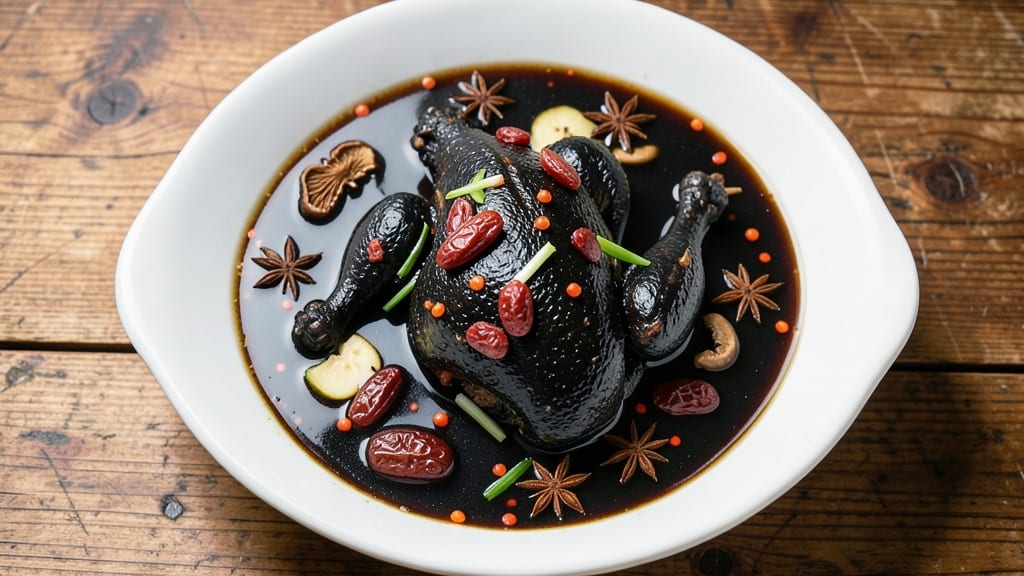
This Chinese black chicken soup delivers the deep umami and aromatic complexity of traditional Cantonese medicine cuisine in every spoonful. 🌟 The secret lies in slow-simmered star anise, ginger, and black chicken—a protein believed to nourish the blood and strengthen vitality.
What makes this recipe special is its balance of medicinal properties and restaurant-quality flavor, transforming ordinary ingredients into a healing broth that's equally comforting as it is nutritious.
The foundation of this soup begins with a carefully constructed broth, where black chicken simmers for hours with aromatic spices until the meat becomes tender and infused with flavor. Traditional Chinese medicine principles guide the ingredient selection—ginger for circulation, star anise for warmth, and goji berries for energy.
The result is a rich, dark broth that's both deeply flavorful and believed to support overall well-being.
By the time you finish this recipe, you'll have a steaming bowl of soup with tender black chicken pieces floating in a fragrant broth, garnished with fresh cilantro and scallions.
The aroma alone will transport you to a bustling Cantonese restaurant, while the taste delivers layers of savory, slightly sweet, and herbal notes that make this more than just soup—it's a complete meal experience.
Perfect for cold weather or as a restorative dish, this black chicken soup pairs beautifully with steamed rice or simple stir-fried vegetables. The recipe maintains authenticity while being approachable for home cooks, ensuring you can recreate this traditional favorite in your own kitchen.
Let's begin with the ingredients that will transform your kitchen into a Chinese medicine-inspired dining experience.
Ingredients for black chicken soup chinese
These aromatic ingredients transform simple broth into a healing Cantonese medicine-inspired masterpiece.
| Ingredient | Amount | Notes |
|---|---|---|
| Black Chicken 🍗 | 2 lb | Whole or cut into pieces |
| Star Anise 🌿 | 4 whole | For deep aromatic infusion |
| Fresh Ginger 🧅 | ½ cup | Sliced into thick pieces |
| Goji Berries 🍇 | ¼ cup | Dried, for energy boost |
| Dried Red Dates 🍎 | ¼ cup | Pitted and chopped |
| Dried Shitake Mushrooms 🍄 | 4 whole | Rehydrated for umami depth |
| Garlic Cloves 🧄 | 6 cloves | Peeled, for aromatic base |
| Fresh Cilantro 🌿 | ¼ cup | Chopped, for garnish |
| Green Onions 🧅 | ¼ cup | Sliced, for garnish |
| Sesame Oil 🫒 | 1 tbsp | For finishing aroma |
| Light Soy Sauce 🍶 | 2 tbsp | For savory balance |
| Rock Sugar 🍬 | 2 tbsp | For subtle sweetness |
| Water 💧 | 8 cups | For simmering broth |
| Salt 🧂 | 1 tsp | Adjust to taste |
| White Peppercorns 🌶️ | ½ tsp | Ground for subtle heat |
The star anise and ginger are non-negotiable for that signature depth. Whole star anise from Penzeys or Asian markets delivers the best flavor—none of that dusty powdered stuff. Look for fresh ginger with tight skin and no soft spots; Trader Joe's usually carries good quality in the produce section. The black chicken can be found frozen at Asian grocery stores or specialty butchers—it's worth hunting down for that distinctive dark meat. If you can't find goji berries, dried cranberries make a decent substitute, though they lack the same medicinal properties.
No star anise? Anise seeds or fennel seeds work in a pinch, but the flavor won't be identical. Substituting dried shiitake mushrooms? Portobello mushrooms can work if you really need to, though they lack the same earthy depth. The rock sugar is traditional—if you can't find it, light brown sugar dissolved in the broth works fine. Fresh ginger is ideal, but powdered ginger at half the amount will do in a bind. For the sesame oil, toasted sesame oil is best, but regular will work if you toast it yourself in a dry pan for 30 seconds.
This soup tastes even better the next day as flavors meld. Store in an airtight container in the fridge for up to 4 days. Freezes beautifully for 3 months—just thaw overnight in the fridge before reheating. I like to make a double batch and freeze portions for when I'm feeling under the weather. The broth reduces as it cooks, so don't be shy about adding water if it gets too thick. Garnish with fresh cilantro and green onions right before serving—they add that final pop of color and freshness
Why You'll Love This Recipe
- No Chopping Needed: I swear by this—just slice the ginger thin and toss in whole star anise. The black chicken does all the work simmering, while the goji berries and dates plump up without any fuss. Honestly, my busiest nights just got a hero dish.
- Umami Bomb: That first sip? The star anise and ginger build warmth, but the black chicken’s deep, smoky richness steals the show. The goji berries add a sweet-tart crunch that cuts through—like a hug in a bowl, but with actual flavor.
- Weeknight to Holiday: I make this for tired weeknights (it’s ready in 45 minutes) but also pull it out for guests. The dates and goji berries feel fancy, but the broth is simple enough that no one questions how little effort it took. (Yes, even on a Tuesday night.)
- Leftovers That Shine: This soup actually improves the next day—the flavors meld into something even deeper. I freeze portions for sick days or lazy mornings, and it’s still rich and comforting. Not to mention, the ingredients stretch far, so my wallet thanks me too.
Step-by-step instructions for black chicken soup with star anise-ginger infusion
Here's how to craft this nourishing Chinese soup with layers of umami and aromatic complexity.
🍳 Step 1: Prepare the Chicken and Aromatics
Rinse the 2 lb black chicken thoroughly under cold water, then pat completely dry with paper towels. This step is crucial—any moisture will prevent proper browning later. In a large stockpot, combine the chicken with the 4 whole star anise, 0.5 cup sliced fresh ginger, 6 peeled garlic cloves, and 4 whole dried shitake mushrooms. Add 8 cups water to cover everything by about 2 inches.
Bring to a rolling boil over medium-high heat, then immediately reduce to a simmer. The water should bubble gently but not vigorously. Skim off any foam that rises to the surface during the first 5 minutes—this ensures a clear, clean broth. Here's the thing—simmering too hard will make the broth cloudy and dilute the flavors we're building.
🍳 Step 2: Simmer for Deep Umami Infusion
Cover the pot and let the chicken simmer gently for 45-60 minutes until the meat is fork-tender and pulls away from the bone easily. You'll know it's ready when the broth develops a rich, golden hue and carries that unmistakable aromatic depth from the star anise and ginger. I like to check the internal temperature of the chicken—it should reach 165°F in the thickest part.
During this time, prepare the 0.25 cup dried red dates and 0.25 cup goji berries by rinsing them quickly and draining well. These will add natural sweetness and texture to the finished soup. Also, grind the 0.5 tsp white peppercorns using a mortar and pestle or spice grinder—this releases their subtle heat and aroma more effectively than pre-ground pepper.
🥘 Step 3: Build the Flavor Base
Once the chicken is tender, carefully remove it from the broth and set it aside. Strain the broth through a fine-mesh sieve into a clean pot, pressing gently on the solids to extract maximum flavor. Return the broth to medium heat and add the prepared red dates, goji berries, 2 tbsp rock sugar, and 2 tbsp light soy sauce. Stir well and let the mixture simmer for 10-15 minutes until the dates soften slightly and the flavors meld together.
Here's where the magic happens—the rock sugar caramelizes slightly, adding a subtle sweetness that balances the savory umami from the chicken and mushrooms. Watch the broth carefully—it should reduce just enough to coat the back of a spoon but remain liquid enough to properly coat noodles or rice if you're serving it that way.
🍽️ Step 4: Finish and Garnish
While the broth finishes, shred the cooked chicken into bite-sized pieces using two forks. Return the chicken to the pot and let it heat through for 2-3 minutes. Just before serving, stir in the 1 tbsp sesame oil—this adds a delicate nutty aroma that elevates the entire dish. The sesame oil should be added off direct heat to preserve its delicate flavor.
Ladle the soup into bowls and garnish each serving with 0.25 cup chopped fresh cilantro and 0.25 cup sliced green onions. The fresh herbs add a bright contrast to the rich, aromatic broth. Serve immediately while the chicken is still warm and the broth steams gently—this Chinese soup is best enjoyed fresh from the pot.
Pro Tips For Making Black Chicken Soup Chinese
- BLANCH THE GOJI BERRIES: Toss them in boiling water for 30 seconds first—this softens their tough skins and lets them release flavor instead of turning your soup into chewy rubber. I used to skip this and wondered why my dates and goji berries fought for dominance in texture.
- SIMMER LOW AND LONG: After the initial boil, drop the heat to a bare simmer and cover the pot. Black chicken needs 45–60 minutes to tenderize properly—any faster, and you’ll end up with tough, flavorless shreds. (Yes, even if you’re impatient like me.)
- CRUSH STAR ANISE HALVES: Smash the star anise pods with the flat side of a knife before adding them—this cracks the outer shell and lets the anise oil infuse the broth properly. Whole pods just float like decorative garnishes.
- SOAK RED DATES FIRST: Plunge dried red dates in warm water for 20 minutes before using; this prevents them from turning to mush in the soup and keeps their natural sweetness intact. Skipping this step makes them disappear into the broth like overzealous guests.
Common mistakes when making great black chicken soup chinese
Overcooking the Chicken
Black chicken soup relies on tender, flavorful meat—not dry, stringy chunks. The key is stopping at 165°F internal temperature (about 45-60 minutes of simmering). I’ve ruined batches by letting it cook too long, so use a meat thermometer. If the chicken falls apart easily with a fork, it’s perfect. 🌡️
Skipping the Skimming Step
That first 5 minutes of skimming foam is non-negotiable. The foam contains impurities that cloud the broth and dilute flavor. Use a fine-mesh skimmer or ladle to remove it—don’t just stir it back in!
I learned this the hard way when my first attempt turned out murky. A clear broth means cleaner, more aromatic soup.
Ignoring the Star Anise
Star anise isn’t just for flavor—it’s the soul of this soup. Breaking it open or using powdered substitutes ruins the deep, licorice-like aroma. Buy whole pods from an Asian market (I swear by Penzeys for quality) and add them whole.
Remove them before serving, but don’t skip them entirely—they’re what makes this soup medicinally special.
Rushing the Simmer
A fast boil destroys the delicate flavors you’re building. Always simmer gently—you’re not making stock, you’re infusing. If your broth is bubbling vigorously, reduce the heat immediately. Patience here is everything.
I’ve seen home cooks speed this up, and the result is a flat, watery soup instead of the rich, aromatic masterpiece it should be. ⏳
Overcrowding the Pot
Too much chicken in too little water means flavor gets trapped in the meat instead of infusing the broth. Use 8 cups water for 2 lbs chicken—that’s the golden ratio.
If you’re doubling the recipe, increase water proportionally. I once made this with half the water, and the broth turned out salty and weak. Don’t make that mistake!
Adding Herbs Too Early
Fresh cilantro and green onions should be added at the very end—right before serving. If you add them during cooking, they’ll turn bitter and lose their bright, fresh flavor.
Save them for garnishing to keep that crisp, vibrant contrast against the rich broth. Trust me, it makes all the difference. 🌿
Nutrition facts
Frequently asked questions
What makes black chicken different from regular chicken?
Black chicken is a special breed with dark skin and meat due to its diet of herbs and grains in traditional Chinese farming. The meat has a richer, slightly gamey flavor and is believed to have medicinal properties like nourishing blood and strengthening vitality. You'll find it at Asian markets or specialty butchers—it's worth the hunt for that authentic taste!
Can I substitute regular chicken if I can't find black chicken?
Yes, but the flavor will be different. Use free-range or heritage chicken for better depth, and add 1 extra star anise and 1 tsp soy sauce to compensate. For maximum authenticity, try dark meat turkey as a closer alternative—just adjust cooking time to 60-75 minutes since turkey takes longer to tenderize.
How do I know when the broth is ready?
The perfect broth should be golden-colored with a rich aroma from the star anise and ginger. It should coat the back of a spoon but remain liquid enough to serve over rice. The chicken should reach 165°F internal temperature and fall apart easily when tested with two forks—this usually takes 45-60 minutes of gentle simmering.
What are the health benefits of this soup?
Traditional Chinese medicine believes this soup nourishes yin (cooling energy) and supports blood health. The ginger aids circulation, star anise warms the body, and goji berries provide antioxidants. While not a cure-all, it's considered a restorative dish—perfect for cold weather or after illness. The balanced flavors also make it easier to digest than heavy meals.
Can I make this soup in an Instant Pot?
Yes! Use the High Pressure setting for 25 minutes after sealing all ingredients (except fresh herbs). Release pressure naturally, then strain and finish with the remaining steps. For best results, add 1 extra cup of water since pressure cooking reduces liquid faster. The Instant Pot version cooks in about 40 minutes total, but the flavor develops differently than stovetop simmering.