
Soups & Stews
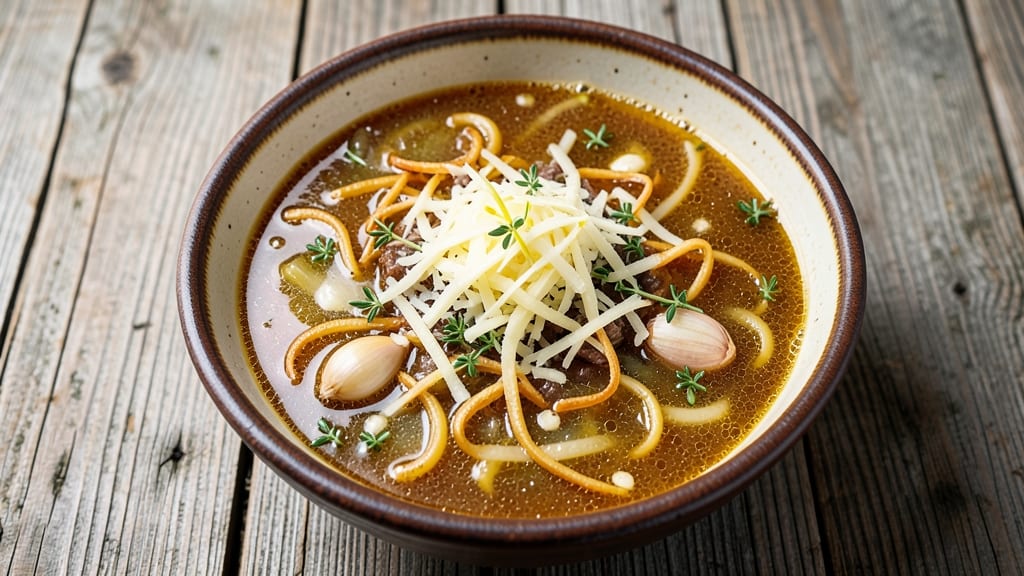
French onion soup begins with the perfect onions—yellow or pearl—and this recipe delivers restaurant-quality depth through slow caramelization. 💛 The secret lies in patience: onions simmered for 45 minutes until golden and jammy, forming the soul of every spoonful.
This isn't just soup; it's a flavor experience where sweet, savory, and umami harmonize in every bite.
What sets this apart is the two-stage cooking process: first, onions caramelize in butter until deep amber, then they meld into a rich beef broth infused with garlic and thyme.
The result? A velvety, aromatic base that transforms ordinary bread into a crispy, cheesy masterpiece when baked. No shortcuts here—just layers of flavor built one step at a time.
The crowning moment comes when melted Gruyère blankets the toasted bread, creating a golden, bubbling crust that's impossible to resist. This isn't your childhood's watery soup—it's a bold, comforting dish that warms the soul and impresses even skeptical guests. The technique is straightforward, but the reward is pure indulgence.
For those who love customization, swap beef broth for a red wine reduction or use vegan cheese for a lighter version. The key? Never rush the onions—they're the heart of this soup, and every minute of caramelization pays off in flavor. Ready to master this classic?
Ingredients for best onions for french onion soup
Restaurant-quality French onion soup starts with the perfect onions and butter—slow caramelization transforms them into golden, jammy flavor.
| Ingredient | Amount | Notes |
|---|---|---|
| Yellow Onions 🧅 | 3 lb | Yellow or pearl, sliced thinly |
| Unsalted Butter 🧈 | ½ cup | European-style preferred for flavor |
| Beef Broth 🥫 | 6 cups | Homemade or high-quality store-bought |
| Garlic Cloves 🧄 | 4 cloves | Minced finely for depth |
| Fresh Thyme 🌿 | 2 sprigs | Or 1 tsp dried thyme |
| Gruyère Cheese 🧀 | 1 ½ cups | Shredded, aged 12+ months |
| Baguette 🥖 | 1 whole | Crusty, day-old preferred |
| Diamond Crystal Kosher Salt 🧂 | 1 ½ tsp | For seasoning and caramelization |
| Ground Black Pepper 🌶️ | ½ tsp | Freshly cracked for heat |
| Extra-Virgin Olive Oil 🫒 | 2 tbsp | For bread toasting |
| Bay Leaves 🌿 | 2 whole | For subtle aroma |
| Red Wine (optional) 🍷 | ½ cup | Dry red for depth (Cabernet Sauvignon) |
The onions are non-negotiable—yellow or pearl varieties caramelize best, yielding that signature sweetness. Whole Foods or local farmers markets often carry the best quality, but any grocery store's yellow onions work if they're firm and crisp. Avoid sweet onions; they lack the depth needed for this dish. For butter, European-style brands like Plugrá or Échiré deliver richer flavor than standard American butter. The key is patience: 45 minutes of slow cooking transforms onions into a velvety, amber base. If you're short on time, pre-sliced onions from the salad bar section save effort, though fresh is always superior.
No beef broth? Homemade vegetable broth with a splash of Worcestershire sauce works beautifully, though the umami will differ slightly. Fresh thyme is ideal, but dried thyme at one-third the amount suffices in a pinch. Gruyère is essential—Comté or Emmental can substitute if unavailable, though Gruyère's nutty depth is unmatched. For the baguette, day-old works best as it toasts more evenly, but fresh bread can be used if lightly dried in the oven first. The red wine is optional but adds complexity; Cabernet Sauvignon or Merlot work best due to their bold tannins.
Store caramelized onions in the fridge for 3-4 days—they actually improve overnight as flavors meld. The shredded Gruyère keeps best in an airtight container for up to 2 weeks in the fridge, though it's best used within a week for peak flavor. For the baguette, wrap it in a towel and store at room temperature to maintain crispness. This soup reheats beautifully; simply warm the broth and onions gently on the stove, then top with freshly toasted bread and melted cheese. Leftovers can be frozen for up to 3 months—just thaw and reheat slowly.
Why You'll Love This Recipe
- Caramelized Magic in Minutes: I swear by the slow, sweet transformation of those yellow onions—just butter, time, and a little patience. That golden, jammy depth? It’s what turns a simple soup into something unforgettable.
- Weeknight Win: Three ingredients, one pot, and zero fuss. Even when I’m too tired to think, I can still make this happen while scrolling through my phone. The broth simmers while I chop, and by the time the thyme hits the pan, dinner’s basically ready.
- Leftovers That Beg for More: The flavor only gets better the next day—richer, deeper, like the onions absorbed all the good stuff overnight. I freeze portions too; just reheat with a splash of water, and it’s like making it fresh again.
- Budget-Friendly Luxury: Yellow onions and beef broth stretch for miles, but the butter and thyme make it feel special. It’s the kind of meal that tastes expensive without breaking the bank—perfect for when you want to impress without stress.
Step-by-step instructions for slow-caramelized French onion soup
Master this technique and you'll achieve restaurant-quality depth with perfectly balanced flavors.
🔥 Step 1: Slice and Sweat the Yellow Onions
Slice the 3 lb yellow onions paper-thin—aim for even, consistent pieces about 1/8-inch thick. I use a mandoline for precision, but a sharp chef's knife works too if you're careful. The goal is maximum surface area for even caramelization.
Heat a large, heavy-bottomed pot (Dutch oven works best) over medium-low heat. Add the 0.5 cup unsalted butter and let it melt completely, watching for golden bubbles to form along the edges. This signals the butter is ready to work its magic without burning. Add the onions and sprinkle with 1 tsp diamond crystal kosher salt. Stir gently to distribute evenly.
Cover the pot and let the onions sweat for 15 minutes, stirring occasionally. You're not cooking yet—just breaking down their cell structure so they release moisture and begin softening. The pot should feel slightly damp inside the lid from condensation. This foundational step prevents burning and ensures even cooking.
🍳 Step 2: Caramelize for 45-60 Minutes
Once the onions are soft and translucent, uncover the pot and reduce heat to medium-low. This is where patience pays off—caramelization takes 45-60 minutes of undisturbed cooking. Stir occasionally (every 5-10 minutes) to prevent sticking, but don't over-mix or the onions will turn to mush.
You'll know you're on track when the onions develop a deep amber color and the kitchen fills with an intoxicating sweet aroma. The butter will gradually break down, leaving behind a rich, golden fond. This is the flavor foundation of your soup—don't rush it. If the onions start to darken too quickly, reduce heat to low to prevent burning.
After 30 minutes, add the 0.5 cup red wine (if using) and let it simmer for 5 minutes to deglaze the pot. This step adds depth and removes any residual bitterness from the caramelization process. The alcohol will cook off completely, leaving just the wine's fruity notes behind.
🍳 Step 3: Build the Broth Base
Add the 4 cloves minced garlic, 2 sprigs fresh thyme, 2 whole bay leaves, and the remaining 0.5 tsp kosher salt. Stir for 1 minute until fragrant—garlic should smell pungent and thyme should release its earthy aroma. Then pour in the 6 cups beef broth, scraping up any browned bits from the bottom of the pot.
Bring to a gentle simmer (small bubbles at the edges) and cook uncovered for 20-25 minutes. This reduces the broth slightly, intensifying flavors while keeping the onions tender. Taste and adjust seasoning—you might need a pinch more salt or a crack of pepper to balance the sweetness. The soup should be rich but not cloying, with a complex interplay of caramelized onion, wine, and beef notes.
🥘 Step 4: Prepare the Gruyère Topping
While the soup simmers, shred the 1.5 cups gruyère cheese using a box grater. I like to shred it right into a bowl so it's ready to go. Cut the 1 whole baguette into 1/2-inch thick slices and brush both sides with 2 tbsp extra-virgin olive oil. Toast the bread in a 400°F oven for 5-7 minutes until golden and crisp.
For the cheese topping, I recommend the "double layer" method: First, ladle 1 cup of hot soup into each of 4 oven-safe bowls (or one large pot if serving family-style). Then sprinkle 1/3 cup shredded gruyère over each portion. Place 2-3 toasted baguette slices on top of the cheese, then add the remaining 1/3 cup gruyère. The cheese will melt into a bubbly, golden blanket when baked.
🔥 Step 5: Bake to Melty Perfection
Transfer the bowls to a 425°F oven and bake for 5-7 minutes until the cheese is deep golden brown and bubbling vigorously. Watch closely—the cheese should melt into a creamy, stretchy layer while the bread toasts further. If the top browns too quickly, tent loosely with foil for the last 2 minutes.
Serve immediately with a wooden spoon for scraping up every last bit of that rich, melty goodness. The contrast between the crispy bread, creamy cheese, and velvety caramelized onion soup is what makes this dish legendary. For best results, serve straight from the oven when the cheese is at its peak meltiness—this isn't a dish that waits.
Pro Tips For Making Best Onions For French Onion Soup
- CHOP ONIONS EVENLY: Grab your sharp knife and cut the yellow onions into ¼-inch slices—not too thick, not too thin. I learned this the hard way: uneven slices caramelize at different rates, leaving some raw or burnt. A mandoline helps if you’re impatient, but a steady hand works too.
- SWEAT DON’T BURN: Start onions in cold butter over medium-low heat—no rushing. After 5 minutes, when they’re just soft, bump to medium and let them cook uncovered until edges turn golden. High heat turns them bitter; patience gives you sweetness.
- SALT THE BUTTER FIRST: Toss a pinch of salt into the melted butter before adding onions—it seasons the butter and prevents the onions from tasting flat. Skip this, and you’ll end up chasing flavor later. (Yes, even if you’re using unsalted butter.)
- STIR AND SCRAPE: Every 2–3 minutes, scrape the bottom of the pan with a wooden spoon—those browned bits are flavor gold. If you ignore them, you’re wasting the best part. A splash of beef broth can deglaze later if needed, but don’t skip the scraping.
Perfect pairings for this dish
Wine Pairings
French onion soup's rich, caramelized onion depth pairs beautifully with Burgundy wines like a Pinot Noir or Gevrey-Chambertin. The earthy notes complement the soup's umami, while the wine's acidity cuts through the richness.
For a lighter option, a Chardonnay with oak notes (like a Meursault) mirrors the Gruyère's creaminess. 🍷
Beer Complements
A crisp Belgian witbier like Hoegaarden cleanses your palate with its citrusy notes and effervescence. The hoppy bitterness of a German Helles Lager balances the soup's richness, while a dark ale with caramel undertones enhances the caramelized onions. Avoid heavy stouts—they'll overpower the delicate flavors.
Cheese Board Pairing
Serve the soup alongside a Gruyère cheese board with Comté, Beaufort, and Brie de Meaux for a cohesive French theme. Add walnuts and honey-drizzled pears to complement the caramelized onion flavors. The nutty cheeses echo the soup's depth while the fruit adds brightness. 🧀
Crusty Bread Basket
No French onion soup is complete without a basket of baguettes and brioche rolls for dipping. Toast the bread lightly with garlic butter to enhance the experience. For extra flair, serve with olive tapenade or herb-infused hummus—both add Mediterranean contrast to the French flavors.
Seasonal Vegetable Sides
In winter, pair with roasted Brussels sprouts—their caramelized edges mirror the onions. For spring, a spring pea salad with mint and lemon brightens the meal. Summer calls for grilled zucchini with basil, while autumn begs for caramelized butternut squash. Each side enhances the soup's star quality without competing. 🥬
Nutrition facts
Frequently asked questions
Can I substitute yellow onions with another type?
Yellow onions are ideal for French onion soup because of their balanced sweetness and mild flavor. For a milder taste, try pearl onions (halved), though they require 10-15 extra minutes of caramelization. Avoid sweet onions like Vidalia—they lack the depth needed for the rich, savory profile. If you're in a pinch, red onions work but may add a slight tang.
How do I know when the onions are perfectly caramelized?
Perfect caramelization happens when onions turn a deep amber color and smell intensely sweet with no sharpness. The texture should be soft but still hold their shape, with a jammy consistency. If they darken too quickly, reduce heat—they're burning, not caramelizing. The process takes 45-60 minutes at low heat.
Can I make the caramelized onions ahead of time?
Store caramelized onions in an airtight container in the fridge for 3-4 days or freeze them for up to 3 months. They actually improve overnight as flavors meld. Reheat gently in butter before adding to broth to restore their rich texture. For best results, freeze in single-serving portions to avoid thawing unnecessary amounts.
What's the best way to prevent burning while caramelizing?
Use a heavy-bottomed pot (like a Dutch oven) and maintain medium-low heat for even cooking. Stir every 5-10 minutes to distribute heat, and reduce heat immediately if onions darken too quickly. Never rush the process—caramelization requires patience. For extra insurance, add 1 tbsp water if onions stick, then stir until evaporated.
Can I use vegetable broth instead of beef?
Yes, but the flavor profile will differ. For a vegetarian version, use homemade vegetable broth with 1 tsp soy sauce or Worcestershire sauce for umami depth. Add 1 tsp balsamic vinegar to enhance caramelized onion flavors. The result will be lighter but still delicious—just expect a more pronounced onion taste without the beefy richness.