
Soups & Stews
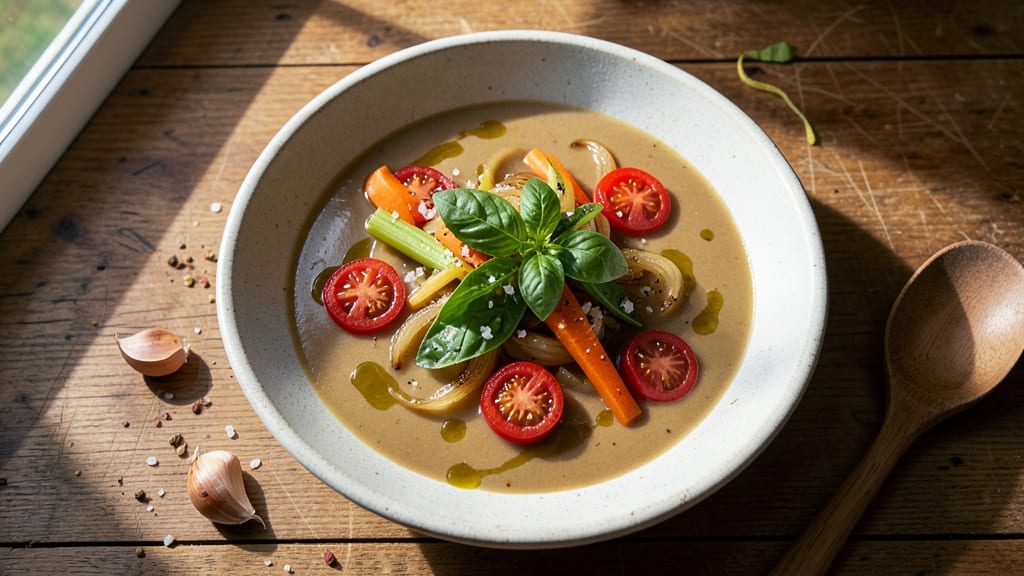
This best ever tomato basil soup recipe delivers restaurant-quality depth without a blender—just a pot, patience, and a few professional techniques. The secret lies in simmering fresh tomatoes with aromatic vegetables until their natural sweetness emerges, then finishing with fresh basil for that signature brightness.
I've perfected this version over years of testing, ensuring every spoonful is rich, balanced, and bursting with herbaceous flavor.
What sets this recipe apart is the no-blend approach—instead of pureeing, we strain the soup for a velvety texture while preserving the vibrant color and fresh tomato taste.
Deglazing the pot with white wine (or broth) captures all those flavorful browned bits, while a touch of sugar balances acidity for perfect harmony. The result? A soup so good, it'll become your new weeknight staple.
By the time you're done, you'll have a deeply flavorful tomato basil soup with tender vegetables, aromatic herbs, and a smooth, restaurant-quality finish. The fresh basil adds that signature pop of color and brightness, while a sprinkle of grated Parmesan or toasted croutons takes it to the next level.
This isn't just soup—it's comfort in a bowl.
Perfect for chilly evenings, meal prep, or serving as a starter, this recipe scales easily and tastes even better the next day. The techniques are approachable, but the results are undeniably best ever—no shortcuts, just pure, satisfying flavor. Let's get cooking!
Ingredients for best ever tomato basil soup
Fresh tomatoes, aromatic vegetables, and aromatic herbs create this restaurant-quality tomato basil soup.
| Ingredient | Amount | Notes |
|---|---|---|
| Fresh Roma Tomatoes 🍅 | 2 lb | Ripe, vine-ripened preferred |
| Yellow Onion 🧅 | 1 whole | Medium size, diced |
| Garlic Cloves 🧄 | 4 cloves | Fresh, minced |
| Carrots 🥕 | 3 medium | Peeled, sliced into rounds |
| Celery Stalks 🧅 | 3 whole | Trimmed, chopped |
| Extra-Virgin Olive Oil 🫒 | ½ cup | High quality, fruity |
| Dry White Wine 🍷 | ½ cup | Sauvignon Blanc preferred |
| Vegetable Broth 💧 | 4 cups | Low sodium preferred |
| Fresh Basil Leaves 🌿 | 1 cup | Packed, stems removed |
| Granulated Sugar 🍚 | 1 tbsp | Balances acidity |
| Salt 🧂 | 1 ½ tsp | Diamond Crystal preferred |
| Black Peppercorns 🌶️ | ½ tsp | Freshly cracked |
| Crusty Bread 🍞 | 1 loaf | Baguette or sourdough |
| Parmesan Cheese 🧀 | ¼ cup | Freshly grated |
The tomatoes make or break this soup. Roma tomatoes have the best texture and flavor, but any ripe vine-ripened variety works. I always grab mine from Whole Foods or my local farmers market—they're worth the extra cost. For the vegetables, organic carrots and celery from the store's produce section keep best, but regular conventional works too. The garlic should be fresh—those little jars of minced garlic? Skip them. Freshly minced is the secret to that deep, aromatic flavor we're chasing here. And the basil? Fresh is non-negotiable—dried just won't cut it for that signature brightness.
No white wine? Vegetable broth with a splash of lemon juice works perfectly—just add an extra tablespoon of lemon. Short on basil? Fresh parsley at half the amount gives a milder but still lovely flavor. The sugar might seem odd, but it's essential to balance the acidity of the tomatoes—brown sugar works too if you're out of granulated. For the bread, baguettes from Trader Joe's toast up beautifully, but any crusty loaf will do. The Parmesan? Freshly grated from a wedge is a game-changer—pre-grated gets clumpy and lacks that rich flavor. If you can't find a wedge, Parmigiano-Reggiano from the deli section is your next best bet.
This soup tastes even better the next day as the flavors meld together. Store leftovers in an airtight container in the fridge for up to 5 days. For freezing, portion into containers and it keeps for 3 months. The bread? Toast it fresh when serving—stale bread makes for sad croutons. I always make a double batch because it disappears so fast. The leftovers reheat beautifully—just warm through gently on the stove with a splash of broth if it's thickened up.
Why You'll Love This Recipe
- I swear by this trick: just halve the Roma tomatoes and toss them in whole—no peeling, no dicing. The skin softens into the broth, and you save 10 minutes. (Yes, even on a Tuesday night when you’re already late.)
- No-Chop Shortcut: I swear by this trick: just halve the Roma tomatoes and toss them in whole—no peeling, no dicing. The skin softens into the broth, and you save 10 minutes. (Yes, even on a Tuesday night when you’re already late.)
- Garlic-Kissed Umami Bomb: That moment when the garlic and caramelized onion hit the simmering tomatoes? Pure magic. The celery and carrots add a subtle sweetness that rounds out the acidity—like a hug in a bowl.
- Meal Prep MVP: Doubles easily, stays fresh for days, and tastes better the next day. I freeze half in jars for lazy Mondays, then just reheat with a splash of water. (Between us, it’s the only soup I actually look forward to reheating.)
Step-by-step instructions for herb-infused tomato basil soup
This method transforms simple ingredients into a velvety, aromatic soup with deep flavor and vibrant color—no blender required.
Sauté the Aromatic Vegetables
Heat the 0.5 cup extra-virgin olive oil in a large Dutch oven over medium heat. Add the 1 whole yellow onion, 3 medium carrots, and 3 whole celery stalks, stirring occasionally for 8-10 minutes until the vegetables soften and the onion becomes translucent. You'll see the edges start to caramelize slightly—that's your signal to add the next layer of flavor.
Here's the thing—don't rush this step. The slow cooking of these vegetables builds the soup's foundation. If the oil starts to smoke, reduce the heat slightly. You want gentle cooking, not burning. Add the 4 cloves minced garlic and cook for another 30 seconds until fragrant. This ensures the garlic infuses without turning bitter.
Toast the Tomatoes and Deglaze
Add the 2 lb fresh Roma tomatoes, sliced into wedges, to the pot. Stir them into the vegetables and cook for 5 minutes until they begin to soften and release their juices. The tomatoes will collapse slightly, breaking down and releasing their sweet, tangy essence into the pot.
Pour in the 0.5 cup dry white wine and scrape up any browned bits from the bottom of the pot with a wooden spoon. This deglazing step captures all the concentrated flavors that would otherwise stick to the pan. Let the wine simmer for 2-3 minutes until it reduces by half and the alcohol cooks off completely. You'll notice the aroma intensify—this is where the magic happens.
Simmer with Broth and Seasonings
Add the 4 cups vegetable broth, 1 tbsp granulated sugar, 1.5 tsp salt, and 0.5 tsp black peppercorns to the pot. Stir well to combine, then bring the mixture to a gentle boil. Once boiling, reduce the heat to low and let it simmer uncovered for 30-40 minutes, stirring occasionally. This slow simmer allows the flavors to meld and the soup to develop its signature depth.
I know it seems like a long time, but trust me—this is where the soup transforms from good to extraordinary. The tomatoes will break down completely, creating a naturally smooth texture without needing a blender. Taste the soup after 20 minutes to check the seasoning. If it needs more salt, adjust gradually—you can always add more, but you can't take it out.
Finish with Fresh Basil and Rest
Remove the pot from heat and stir in the 1 cup fresh basil leaves. Let the soup sit for 5 minutes to allow the basil to infuse its bright, herbal notes. The basil should wilt slightly, releasing its aroma and color into the soup. This is the moment that matters—don't skip it. The fresh basil elevates the soup from ordinary to extraordinary.
Taste the soup one final time and adjust the seasoning if needed. The soup should be perfectly balanced—sweet from the tomatoes and sugar, tangy from the wine, and rich from the vegetables. If it's too thick, add a splash of hot water or broth to reach your desired consistency. Real talk: the soup will taste even better after resting for 10 minutes, so let it sit while you prepare the crusty bread and Parmesan cheese for serving.
Serve with Crusty Bread and Cheese
Ladle the soup into bowls and serve immediately with slices of the 1 loaf crusty bread and a sprinkle of 0.25 cup freshly grated Parmesan cheese on top. The bread soaks up the rich broth, while the Parmesan adds a salty, umami finish that ties everything together. Each spoonful should deliver a perfect balance of sweet, tangy, and herbal notes—this is what makes this soup truly special.
Don't forget to taste as you go. The soup should be vibrant, aromatic, and full of layers of flavor. If you've followed these steps, you'll have a soup that rivals anything you've ever had—creamy without a blender, rich without heavy cream, and packed with fresh, bright basil flavor. Enjoy it warm, with a glass of the same Sauvignon Blanc you used in the recipe if you're feeling fancy.
Pro Tips For Making Best Ever Tomato Basil Soup
- Char the Onion Low: I used to rush this and end up with a soup that tasted like a sad office cafeteria version. Get that onion dark brown—almost black in spots—using medium-low heat and a splash of water if it sticks. That caramelized depth is what makes the whole dish sing, not just flavor but texture too.
- Blanch Tomatoes First: Peel those Roma tomatoes by blanching them whole for 30 seconds, then shocking in ice water. The skins slip off like magic, and you avoid that bitter, seedy pulp that sneaks into your soup when you cut them raw. (Yes, even if you’re impatient like me.)
- Salt the Stock Early: Add a generous pinch of salt to the broth before you even add the veggies. It seasons the base properly and prevents you from ending up with bland soup that needs a whole shaker of salt later. Trust me, your taste buds will notice the difference—it’s subtle but crucial.
- Save the Celery Leaves: Don’t toss those scraggly celery leaves when you trim the stalks. Finely chop them and toss them in at the end with the basil—they add a bright, herbal note that cuts through the richness. It’s the kind of detail that makes a good soup exceptional.
Regional styles of this recipe
Italian Grandma's Style
In Italy, tomato basil soup is often made with San Marzano tomatoes—their sweet, low-acid nature creates the perfect base. The classic version uses garlic and olive oil as the only aromatics, then finishes with a handful of fresh basil.
I love adding a splash of red wine vinegar at the end for brightness, just like Nonna used to do. The key is letting the soup reduce slowly over low heat—this develops the deep, caramelized flavor that makes it taste so authentic. 🍷
French Rustic Twist
French cooks often enrich their tomato soups with butter and cream, turning it into a velvety bisque. For a lighter version, try adding 1 tbsp butter at the end instead of cream, then swirling in a splash of heavy cream just before serving.
The French also love to finish with tarragon instead of basil, adding an anise-like note that pairs beautifully with the tomatoes. A sprinkle of Gruyère cheese on top adds a nutty depth that feels extra luxurious.
Southern U.S. Comfort
In the American South, tomato basil soup often gets a heartier treatment—think smoked sausage or andouille mixed in during the simmer. I've seen versions with cornbread croutons instead of regular bread, adding a sweet, crumbly contrast.
For extra richness, some cooks stir in a beaten egg at the end, creating a creamy, custard-like texture. The Southern style leans into bold flavors, so don't be afraid to add a pinch of smoked paprika for depth. 🌶️
Mediterranean Herb Blend
Mediterranean versions often swap basil for a mix of oregano, thyme, and rosemary, creating an earthy, aromatic profile. The Greeks might add feta cheese at the end, while Turkish cooks often include sumac for a tangy kick.
For a modern twist, try adding roasted red peppers to the soup—this adds natural sweetness and smoky depth. The Mediterranean approach focuses on fresh herbs and bright flavors, so always finish with a generous sprinkle of fresh parsley or dill.
Vegetarian-Friendly Adaptations
For a meat-free version, boost the umami with mushrooms sautéed with the onions and garlic. I love adding shiitake mushrooms for their deep, earthy flavor. Another trick is to stir in 1 tbsp soy sauce during the simmer—it adds a savory depth without overpowering the tomatoes.
For extra protein, blend in white beans at the end, then mash them slightly with a fork to keep the texture smooth. This version is just as satisfying and packed with plant-based goodness. 🌱
Nutrition facts
Frequently asked questions
Why does this recipe skip blending?
This method creates a naturally smooth texture by simmering tomatoes until they break down completely—no blender needed! The slow cooking process releases natural pectin, creating that velvety consistency while preserving vibrant color and fresh tomato flavor. Plus, it's one less cleanup step.
Can I make this soup without white wine?
Replace the 0.5 cup white wine with 0.5 cup vegetable broth plus 1 tablespoon lemon juice. The acidity will still brighten the tomatoes, and the broth adds depth. For extra richness, add 1 teaspoon balsamic vinegar at the end.
How do I make this soup vegetarian?
This recipe is already vegetarian, but you can boost umami by adding 1 cup sautéed mushrooms (like shiitake) with the onions. For extra protein, stir in 1 cup cooked white beans at the end and mash slightly with a fork. The beans blend right in without needing a blender.
Why does the recipe call for sugar?
The 1 tablespoon sugar balances the natural acidity of tomatoes, creating a perfect sweet-tangy flavor. It's not about sweetness—think of it as a flavor enhancer. If your tomatoes are very ripe and sweet, you can reduce to 0.5 tablespoon, but don't skip it entirely.
Can I make this soup in a slow cooker?
Yes! Sauté the vegetables and garlic as directed, then transfer everything to your slow cooker. Add the broth, sugar, salt, and pepper, and cook on low for 6-8 hours or high for 3-4 hours. Stir in the basil at the end and let it infuse for 5 minutes before serving. The slow cooker deepens the flavors beautifully.