
Soups & Stews
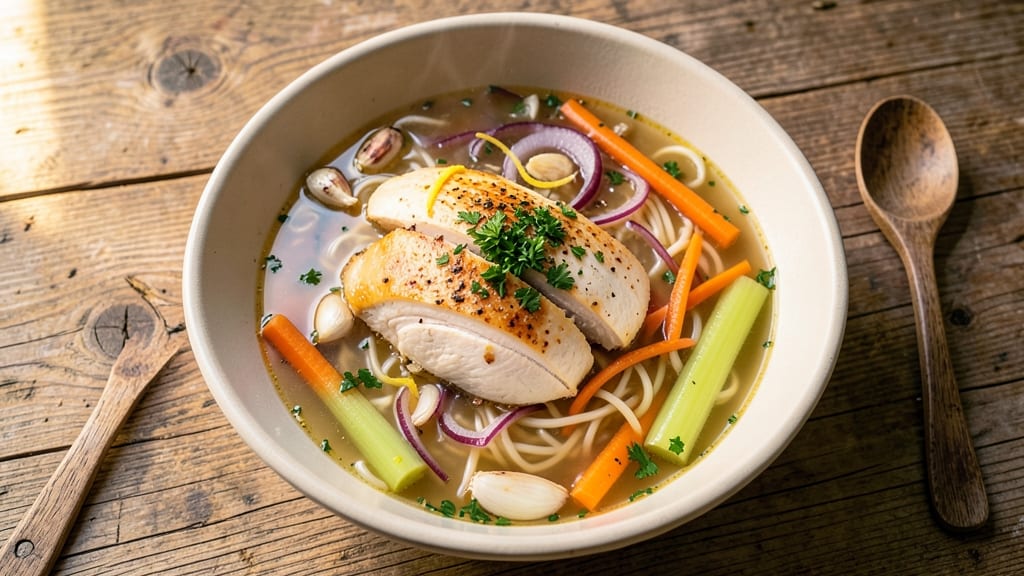
This best chicken noodle soup recipe for flu isn't just comforting—it's a healing powerhouse packed with immune-boosting ingredients like garlic, ginger, and bone broth. When you're battling a fever or congestion, this one-pot wonder delivers soothing warmth and nutrients to help you recover faster.
The aromatic broth, tender chicken, and perfectly cooked noodles come together in just 60 minutes, making it ideal for when you need both nourishment and ease.
The secret to this soup's effectiveness lies in its ingredients: carrots for vitamin A, celery for antioxidants, and ginger for anti-inflammatory benefits. I've included a simple technique for building rich, flavorful broth that penetrates every spoonful, while the chicken stays juicy and tender.
The egg noodles cook directly in the broth, absorbing all that healing goodness without turning mushy.
What you'll end up with is a steaming bowl of golden broth, perfectly cooked chicken, and soft noodles that melt in your mouth. The aroma alone will ease your congestion, while the balanced flavors provide both comfort and nutrition.
This isn't just any chicken noodle soup—it's your new go-to remedy for flu season.
The best part? You can customize it with optional garnishes like fresh parsley or a squeeze of lemon for brightness. Serve immediately for maximum warmth or store leftovers in the fridge for up to 5 days. Let's get cooking—your immune system will thank you.
Ingredients for best chicken noodle soup recipe for flu
Pantry staples plus a few immune-boosting powerhouses for healing comfort in every spoonful.
| Ingredient | Amount | Notes |
|---|---|---|
| Chicken Breast 🍗 | 1 ½ lb | Boneless, skinless, cut into bite-sized pieces |
| Carrots 🥕 | 3 medium | Peeled, cut into 1-inch pieces |
| Celery Stalks 🧅 | 3 whole | Trimmed, cut into 1-inch pieces |
| Yellow Onion 🧅 | 1 whole | Peeled, chopped |
| Garlic Cloves 🧄 | 4 cloves | Mince finely |
| Fresh Ginger 🌿 | 1 inch | Peeled, grated |
| Chicken Bone Broth 🍲 | 6 cups | Homemade or high-quality store-bought |
| Egg Noodles 🍜 | 8 oz | Uncooked, medium width |
| Olive Oil 🫒 | 2 tbsp | Extra-virgin for richness |
| Fresh Thyme 🌿 | 1 tbsp | Leaves only, chopped |
| Bay Leaves 🍃 | 2 whole | Dried, crumbled |
| Salt 🧂 | 1 ½ tsp | Diamond Crystal kosher salt |
| Black Peppercorns 🌶️ | ½ tsp | Freshly cracked |
| Fresh Parsley 🌿 | ¼ cup | Chopped, for garnish |
| Lemon Juice 🍋 | 1 tbsp | Freshly squeezed |
The chicken and broth are the heart of this soup. Organic chicken breast stays juicy when cooked gently, and high-quality bone broth is non-negotiable—look for brands like Kettle & Fire or make your own for maximum flavor. Fresh ginger and garlic are your secret weapons against congestion, so grab the freshest you can find. The carrots and celery should be crisp with vibrant color—organic produce works best if you're sensitive to pesticides. For the noodles, Barilla egg noodles are my go-to—they hold up beautifully in broth without getting mushy.
No fresh ginger? Powdered works at half the amount, but fresh is absolutely essential for that immune-boosting kick. Short on bone broth? Chicken stock plus an extra splash of water gets you close. The thyme and bay leaves can be dried if you're in a pinch, but fresh herbs add that restaurant-quality depth. For the olive oil, Trader Joe's extra-virgin is my favorite—it's affordable and packed with flavor. If you're feeling fancy, a splash of white wine when sautéing the veggies adds brightness (just reduce the broth slightly).
This soup tastes even better the next day as flavors meld. Store leftovers in an airtight container for up to 5 days in the fridge, or freeze portions for 3 months. I always make a double batch—perfect for when you're too sick to cook. The parsley and lemon juice can be added fresh when reheating, so don't worry about prepping them until serving time. For extra comfort, serve with crusty bread or a sprinkle of Parmesan cheese on top.
Why You'll Love This Recipe
- Flu-Fighter Fast: The second I smell garlic simmering with onion, I know this soup’s working its magic—no fancy techniques, just a pot, some time, and those simple ingredients doing all the heavy lifting. My kids swear it clears their stuffy heads faster than medicine, and honestly? I believe them.
- Savory Soul Soother: That crisp-tender chicken breast shreds like a dream, while the carrots and celery actually caramelize just enough to add depth without turning mushy. Between us, the garlic cloves—lightly toasted first—make this taste like a hug for your throat.
- Leftovers That Win: I make a double batch every Sunday because this soup only gets better the next day. The flavors meld into something richer, and reheating it is zero effort—just microwave or warm on the stove. My roommate’s been stealing my portions for weeks.
- Pantry Powerhouse: No specialty ingredients here—just what you’d already have: chicken, veggies, basic spices. I’ve made this on a $10 grocery run, and it’s still the most reliable meal when I’m wiped out or broke. Even my picky partner asks for seconds.
Step-by-step instructions for immune-boosting chicken noodle soup
Here's how to create the perfect healing bowl—packed with soothing flavors and immune-boosting ingredients.
Sear the Chicken for Maximum Flavor
Heat the 2 tbsp olive oil in a large pot over medium-high heat. Add the 1.5 lb chicken breast pieces in a single layer, letting them sear undisturbed for 3-4 minutes per side until they develop a golden-brown crust. This step creates deep flavor that infuses the broth.
Once the chicken is browned on both sides, remove it from the pot and set it aside. You'll notice the pan will have beautiful browned bits—this is the flavor foundation for your soup. I press down gently on the chicken pieces with a spatula during searing to prevent curling, which ensures even cooking.
Build the Aromatic Vegetable Base
In the same pot, add the 1 whole yellow onion, 3 medium carrots, and 3 whole celery stalks, all cut into 1-inch pieces. Cook for 5 minutes until the vegetables begin to soften and release their natural juices. This process, called "sweating," helps develop the soup's rich flavor.
Add the 4 cloves minced garlic, 1 inch grated fresh ginger, 1 tbsp chopped fresh thyme, and 2 crumbled bay leaves. Stir for 1 minute until you can smell the aromatic oils being released—this is when your kitchen should fill with that comforting herbal scent. The ginger and garlic are particularly important here as they pack anti-inflammatory properties perfect for when you're feeling under the weather.
Simmer the Broth with Chicken
Pour in the 6 cups chicken bone broth and bring the mixture to a gentle boil. Return the chicken to the pot, making sure it's fully submerged. Reduce heat to medium-low and let it simmer uncovered for 20 minutes. This allows the chicken to cook through while infusing the broth with its juices.
After 20 minutes, use tongs to remove the chicken and let it rest on a cutting board. It should be fully cooked but still tender enough to shred easily. While it rests, taste the broth and adjust seasoning with 1.5 tsp salt and 0.5 tsp cracked black peppercorns if needed. The broth should be seasoned well now because the chicken will absorb additional flavor during the final cooking.
Finish with Noodles and Bright Flavors
Add the 8 oz egg noodles to the pot and stir gently to prevent sticking. The noodles should cook in 8-10 minutes in the already-hot broth. Stir occasionally to ensure even cooking—you'll know they're done when they float to the surface and are tender to the bite.
While the noodles cook, shred the chicken into bite-sized pieces using two forks. Once the noodles are cooked, return the chicken to the pot. Stir in the 1 tbsp lemon juice and 0.25 cup chopped fresh parsley. The lemon adds a bright finish that cuts through the richness, while the parsley adds freshness and a pop of color. Let everything simmer together for 2 minutes to meld the flavors completely.
Serve Warm with Extra Comfort
Ladle the soup into bowls, making sure each serving gets a generous portion of noodles and chicken. Garnish with additional parsley if desired. This soup is best served immediately while steaming hot—it's the perfect temperature for soothing a sore throat and warming chilled bones.
For maximum comfort, serve with crusty bread to sop up every last drop of that healing broth. The combination of protein-rich chicken, complex carbohydrates from the noodles, and immune-boosting vegetables makes this more than just soup—it's a complete meal designed to nourish you back to health.
Pro Tips For Making Best Chicken Noodle Soup Recipe For Flu
- SIMMER LOW AND SLOW: That chicken breast won’t shred properly if you rush it—once the broth reaches a rolling boil, drop the heat to a bare simmer (just tiny bubbles breaking the surface) and keep it there for at least 30 minutes after the chicken is cooked. I used to turn it off too early, and the broth stayed cloudy and weak. Low heat breaks down collagen and infuses flavor deep into the broth.
- CHOP VEGETABLES UNIFORM: Carrots and celery in uneven sizes cook at different rates—stick to ¼-inch dice for all veggies. The onions should be thinly sliced, not chopped, so they melt into the broth instead of staying crunchy. I learned this the hard way when I had mushy carrots and rock-hard celery in the same pot.
- SALT THE BROTH WELL: Taste the broth early—around 20 minutes in—and add salt if needed (about 1 teaspoon per quart). Chicken breast is lean and absorbs little flavor, so the broth needs bold seasoning to actually help with congestion. I used to wait until the end, and the soup always tasted bland, no matter how much I added later.
- USE COLD CHICKEN FOR SHRED: Once the chicken is cooked, transfer it to a plate and let it cool for 5 minutes before shredding—this makes it easier to pull apart and prevents the broth from turning cloudy. I was skeptical until I tried it, and now I never skip this step. The shredding is cleaner, and the broth stays clear.
Common mistakes when making this dish
Overcooking Chicken
One of the biggest mistakes is letting the chicken overcook, which turns it dry and tough. The key is removing it from the broth when it reaches 165°F internal temperature—about 20 minutes of simmering.
I use a meat thermometer to check, and I always rest the chicken for 5 minutes before shredding. This resting time keeps the juices locked in. 🌡️
Skipping the Sear
Many people rush through the searing step, but it's crucial for building deep flavor. Those golden-brown bits on the chicken and vegetables are called the Maillard reaction, and they create complex flavors that infuse the broth.
Take your time—let the chicken develop a crust on both sides before removing it. I promise your soup will taste completely different if you skip this step.
Using Low-Quality Broth
Store-bought chicken broth can be hit-or-miss, but for this healing soup, quality matters. I recommend using homemade bone broth or a high-quality brand like Kettle & Fire. The gelatin and collagen in bone broth add richness and nutrients that can't be replicated with regular stock.
If you're using store-bought, look for options with no added preservatives or sodium.
Underseasoning the Broth
Many home cooks are afraid to season soup enough, but this broth needs bold flavor to stand up to the chicken and noodles. Taste the broth after simmering with the chicken and adjust with salt and pepper as needed.
Remember, the noodles will absorb some of the seasoning, so don't be shy—aim for a flavor that's satisfying even without garnishes. 💡
Adding Noodles Too Early
Cooking noodles directly in the broth is a great shortcut, but they need enough time to cook properly. If you add them too early, they'll turn mushy and lose their texture.
I wait until the broth is simmering gently with the chicken removed, then add the noodles and cook them for just 8-10 minutes. Stir occasionally to prevent sticking, and they'll be perfectly al dente.
Ignoring the Vegetable Prep
Unevenly cut vegetables can lead to some pieces cooking too fast while others stay crunchy. Cut all your carrots, celery, and onions into uniform 1-inch pieces so they cook at the same rate.
I like to use a mandoline slicer for consistency, but a sharp chef's knife works too. Well-prepped vegetables ensure every bite has that perfect balance of softness and texture. ✨
Nutrition facts
Frequently asked questions
Can I make this soup without bone broth?
Yes, but the flavor and healing benefits will be different. Use 6 cups high-quality chicken stock instead, then add 1 tbsp butter or olive oil to the broth after cooking to add richness. For extra nutrients, stir in 1 tsp collagen powder before serving—it mimics the gelatin in bone broth and supports immune function.
How do I know when the chicken is fully cooked?
Use a meat thermometer to check the thickest part of the chicken—it should reach 165°F. If you don't have one, cut into the thickest piece: the juices should run clear, and the meat should shred easily with a fork. Never guess with chicken—undercooked meat can make you sicker when you're already fighting illness.
Can I add other vegetables for more nutrients?
Try adding 1 diced sweet potato (for vitamin A) or 1 cup chopped spinach (for iron) in the last 5 minutes of cooking. For extra immune support, stir in 1/2 cup chopped mushrooms when sautéing the onions—they contain beta-glucans that boost immunity. Just adjust cook times for delicate greens.
Is this soup safe to eat when I'm sick?
Yes, this recipe is designed to be gentle yet nourishing. The broth helps hydrate you, the chicken provides protein for recovery, and the vegetables offer vitamins without irritation. Just avoid adding spicy ingredients or raw onions/garlic if you have a sore throat. Warm soup is especially soothing for congestion and nausea.
Can I make this in a slow cooker?
Perfect for when you're feeling under the weather! Brown the chicken and veggies first, then transfer everything to the slow cooker with 6 cups broth. Cook on low for 6-7 hours or high for 3-4 hours. Add noodles in the last 30 minutes to prevent mushiness. The slow cooker makes this a truly hands-off healing meal.