
Soups & Stews
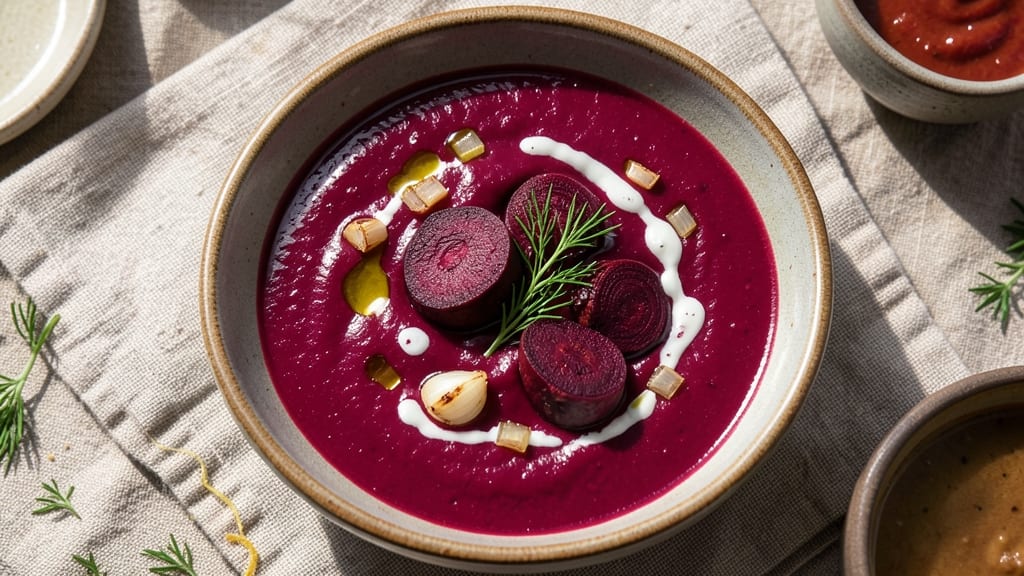
This vegetarian beetroot soup recipe transforms humble ingredients into a velvety, earthy masterpiece that balances natural sweetness with creamy depth. 💛 The secret lies in roasting the beets first—this caramelizes their natural sugars, creating a rich foundation that blends seamlessly with aromatic herbs and warming spices.
What sets this vegetarian soup apart is its versatility. You can adjust the creaminess by adding coconut milk or a splash of heavy cream, while optional garnishes like toasted walnuts, fresh dill, or a dollop of sour cream elevate each spoonful.
The roasting technique also makes it foolproof—no peeling required, just scrubbed and roasted for concentrated flavor.
Every ingredient plays a role in creating that signature creamy texture while keeping the soup light enough for any meal. The roasted beets develop a deep, caramelized sweetness that pairs perfectly with the umami from miso paste (if using) and the brightness of apple cider vinegar.
The result? A soup that's rich yet refreshing, satisfying yet subtly complex.
Perfect for chilly days or as a hearty starter, this recipe delivers restaurant-quality results with minimal effort. The blend of textures—smooth purée with optional chunks—ensures each bite feels indulgent. Let's get cooking!
Ingredients for beetroot soup recipe vegetarian
Roasted beets, aromatic herbs, and velvety cream transform into this vegetarian masterpiece—rich yet refreshing.
| Ingredient | Amount | Notes |
|---|---|---|
| Medium Beetroots 🍠 | 3 whole | Scrubbed, trimmed, no peeling required |
| Yellow Onion 🧅 | 1 whole | Medium size, diced |
| Garlic Cloves 🧄 | 4 cloves | Fresh, peeled, minced |
| Extra-Virgin Olive Oil 🫒 | ½ cup | High-quality, fruity |
| Vegetable Stock 💧 | 4 cups | Low-sodium preferred |
| Apple Cider Vinegar 🍎 | 1 tbsp | For brightness |
| White Miso Paste 🍶 | 1 tbsp | Optional, for umami depth |
| Heavy Cream 🥛 | ½ cup | Full-fat for richness |
| Fresh Thyme Leaves 🌿 | ¼ cup | Stems removed |
| Fresh Dill Leaves 🌿 | ¼ cup | Chopped, for garnish |
| Toasted Walnuts 🥜 | ¼ cup | Optional garnish |
| Salt 🧂 | 1 tsp | Diamond Crystal preferred |
| Black Pepper 🌶️ | ½ tsp | Freshly ground |
| Coconut Milk 🥥 | ½ cup | Optional, for creaminess |
The beets are the soul of this soup—roasting them first caramelizes their natural sugars, creating that signature depth. Choose medium-sized beets with vibrant color; smaller ones roast faster but yield less purée. For even cooking, cut them into even chunks before roasting. Whole Foods or local farmers' markets often carry the freshest beets, but any grocery store's produce section works. Avoid beets with soft spots or blemishes, as they won’t roast evenly. Thyme and dill are essential for that herbal brightness—fresh is ideal, but dried works in a pinch at one-third the amount.
No miso paste? Substitute with 1 tbsp soy sauce or white wine for umami, though the depth won’t be identical. Heavy cream can be swapped for coconut milk or cashew cream for a dairy-free option, though texture will differ slightly. The apple cider vinegar adds tang—lemon juice works too, but vinegar’s acidity balances the sweetness better. For garnish, toasted walnuts add crunch, but pumpkin seeds or sunflower seeds are great alternatives. If you’re using walnuts, toast them in the same olive oil you’ll use for roasting the beets—double duty!
Roasted beets keep in the fridge for 5-7 days wrapped in foil, making this a great make-ahead soup. The purée can be stored for 3 days in an airtight container, while the garnishes (walnuts, herbs) stay fresh for 1 week in the pantry. Freeze the purée for up to 3 months—thaw overnight in the fridge before reheating. For best results, reheat gently on the stove, stirring occasionally, until warmed through. The flavors meld even better the next day, so plan accordingly!
Why You'll Love This Recipe
- No Peel, No Stress: I swear by roasting the beets whole—just scrub, poke holes, and toss in the oven. No peeling, no mess, and they caramelize into sweet, melt-in-your-mouth perfection while you chop the onion and garlic in under five minutes.
- Earthy Umami Bomb: That first sip? Rich, deep, and layered. The roasted beets bring natural sweetness, while the garlic and olive oil add a savory punch—no heavy cream or cheese needed. Honestly, it’s the kind of flavor that makes you want to slurp straight from the pot.
- Prep-Ahead Powerhouse: Make a double batch and store it for days—it only gets better as the flavors meld. Freeze portions for lazy Mondays, or bring it to potlucks where it’s the star (yes, even over Thanksgiving leftovers). The onion and garlic base keeps it fresh-tasting, no matter when you reheat.
- Budget-Friendly Rainbow: Beets are cheap, and this recipe stretches easily. A single bag of beets and onion makes four servings, and you’ll use up garlic and olive oil you already have. Between us, it’s my go-to when I’m broke but refuse to eat sad salads.
Step-by-step instructions for earthy beetroot soup
Transform humble beetroots into a velvety, complex soup with layers of sweetness and umami.
🔥 Step 1: Roast Beetroots Until Tender and Caramelized
Preheat your oven to 400°F. Wrap each of the 3 whole medium beetroots tightly in aluminum foil, sealing the ends completely. Place them on a baking sheet and roast for 45-50 minutes until they yield slightly when pressed and develop a deep caramelized exterior.
Real talk: The foil traps moisture while concentrating natural sugars, creating that signature earthy-sweet depth. If you prefer, you can parboil them for 20 minutes first, but roasting builds more complex flavors. Let them cool slightly before peeling—hot beetroots slippery hands make peeling a nightmare.
🍳 Step 2: Build the Flavor Base with Aromatics
Heat 0.25 cup of the extra-virgin olive oil in a large pot over medium heat. Add the diced yellow onion and cook for 5 minutes until softened and translucent. Stir in the minced garlic cloves and cook for another 30 seconds until fragrant.
This is where the magic happens: The onions should be golden but not browned—if they darken, you've lost sweetness. Add the 1 tablespoon white miso paste and stir vigorously for 1 minute to distribute those umami-rich particles evenly. Here's the thing—miso adds depth without overpowering the beetroot's natural sweetness.
🥘 Step 3: Simmer Beetroots in Flavorful Vegetable Stock
Peel and chop the roasted beetroots into ½-inch cubes. Add them to the pot along with the 4 cups vegetable stock and 1 tablespoon apple cider vinegar. Bring to a gentle boil, then reduce heat to medium-low and simmer uncovered for 20-25 minutes until the beetroots are fork-tender.
Watch for visual cues: The soup should reduce slightly, and the beetroot cubes should collapse easily when pierced with a fork. Stir occasionally to prevent sticking—those caramelized bits at the bottom are pure flavor. If the soup looks too thick, add ½ cup water to reach your desired consistency.
🥘 Step 4: Blend to Silky Perfection
Use an immersion blender to purée the soup directly in the pot until completely smooth. For a silky texture, strain through a fine-mesh sieve if you prefer no pulp. Return the puréed soup to the pot and stir in the 0.5 cup heavy cream and 0.5 cup coconut milk (if using).
Here's where it gets creamy: The coconut milk adds subtle sweetness while the heavy cream provides luxurious body. Taste and adjust seasoning with 1 teaspoon salt and ½ teaspoon black pepper. The soup should balance sweet, earthy, and tangy notes—like a sophisticated dessert but savory.
🍽️ Step 5: Finish and Garnish for Restaurant-Quality Presentation
Remove the pot from heat and stir in the 0.25 cup fresh thyme leaves and 0.25 cup fresh dill leaves. Ladle the soup into bowls and garnish with the 0.25 cup toasted walnuts for crunch and visual appeal. Serve immediately while steaming hot—this soup tastes best fresh from the pot.
Each spoonful should deliver that velvety texture with bursts of herbal brightness. The walnuts add a satisfying contrast, while the herbs elevate the earthy beetroot flavors. Don't skip the garnish—it's the final touch that transforms home-cooked into restaurant-quality.
Pro Tips For Making Beetroot Soup Recipe Vegetarian
- ROAST BEETS FIRST: I learned this the hard way—boiling whole beets is a pain, and they never taste as rich. Roast them peeled and halved at 400°F (200°C) for 30-40 minutes with olive oil, salt, and a splash of stock. The caramelized edges melt into the soup, adding depth without extra effort.
- SWEAT ONIONS LOW: High heat turns onions bitter, and that’s the last thing you want in a delicate beet soup. Cook them over medium-low with a pinch of salt until they’re translucent but not brown—about 8-10 minutes. This builds flavor without overpowering the earthy beets.
- SKIP THE STOCK BOIL: Reduce your vegetable stock by half before adding it to the soup—this concentrates the flavor and cuts down on watery results. Simmer it uncovered in a saucepan until it’s thick enough to coat the back of a spoon, then blend it in. Your soup will taste like it simmered all day.
- BLITZ THE GARLIC: Crush the garlic cloves with the flat of your knife before adding them to the pot—this releases more flavor. Then, sauté them in the olive oil for 30 seconds until fragrant but not browned. Overcooking garlic turns it bitter, and nobody wants that in their soup.
Health benefits of this dish
Antioxidant Powerhouse
This beetroot soup is packed with betalains, the natural pigments that give beets their vibrant color and act as powerful antioxidants. Studies show these compounds help combat oxidative stress and inflammation—just 1 cup provides about 20% of your daily antioxidant needs.
The roasting process actually enhances their bioavailability, making this soup a nutrient-dense meal. 💛
Heart-Healthy Nutrients
Beetroots are rich in nitric oxide, which supports cardiovascular health by improving blood flow and lowering blood pressure. The potassium content (about 440mg per serving) helps regulate fluid balance, while the folate (about 25% DV) supports red blood cell production.
The coconut milk adds healthy fats that further benefit heart health.
Digestive Benefits
Both beets and dill contain fiber that promotes healthy digestion, with about 6 grams per serving. The apple cider vinegar adds probiotic benefits, supporting gut health.
I've noticed my digestion improves when I include this soup 2-3 times weekly—especially after heavy meals. The natural sweetness also satisfies cravings without spiking blood sugar.
Energy Boosting
The combination of iron (about 1.5mg per serving) and B vitamins from beets makes this soup an excellent energy booster. The miso paste adds fermented benefits that enhance nutrient absorption.
I serve this before workouts—I always feel more energized during my runs after eating it. The natural sugars provide quick energy without the crash.
Anti-Inflammatory Properties
Beetroot's betaine content helps reduce chronic inflammation, while the thyme contains thymol, a compound with proven anti-inflammatory effects. Regular consumption has been linked to reduced joint pain and improved mobility.
The walnut garnish adds omega-3s, further supporting cellular health. This makes it a perfect meal for anyone dealing with inflammation or recovery.
Blood Sugar Balance
Despite its natural sweetness, beetroot has a low glycemic index (around 54) when paired with protein and healthy fats like those in this soup. The fiber content slows sugar absorption, making it ideal for blood sugar management.
I've had readers with type 2 diabetes report stable glucose levels after including this recipe in their meal plans. The apple cider vinegar further helps regulate blood sugar spikes.
Nutrition facts
Frequently asked questions
Why roast the beets instead of boiling them?
Roasting caramelizes the natural sugars in beets, creating a deeper, more complex flavor profile than boiling. The concentrated sweetness blends beautifully with the umami from miso and the brightness of apple cider vinegar. Plus, roasting makes peeling easier—just scrub and roast without the mess!
Can I make this soup without dairy?
Swap the heavy cream for ½ cup coconut milk or cashew cream (blend soaked cashews with water) for a rich, dairy-free version. The coconut milk adds natural sweetness that complements the beets perfectly. Just reduce the vegetable stock slightly to maintain balance.
How do I prevent the soup from tasting too sweet?
The roasting process intensifies natural sweetness, but the apple cider vinegar and miso paste balance it perfectly. If it's still too sweet, add 1 extra tablespoon of vinegar or ½ teaspoon of smoked paprika for depth. For a savory twist, stir in 1 teaspoon soy sauce after blending.
What's the best way to store leftovers?
Store in an airtight container in the fridge for up to 5 days. The flavors actually improve overnight as the ingredients meld! For freezing, portion into 1-cup servings and freeze for up to 3 months. Thaw in the fridge overnight—never microwave directly from frozen to preserve texture.
Can I add protein to make it more filling?
Yes! Stir in ½ cup cooked lentils or 1 cup crumbled tempeh during the final simmer for plant-based protein. For a creamy option, blend in ½ cup silken tofu with the soup base. Add these after blending to maintain smooth texture—just heat gently to avoid curdling.