
Soups & Stews
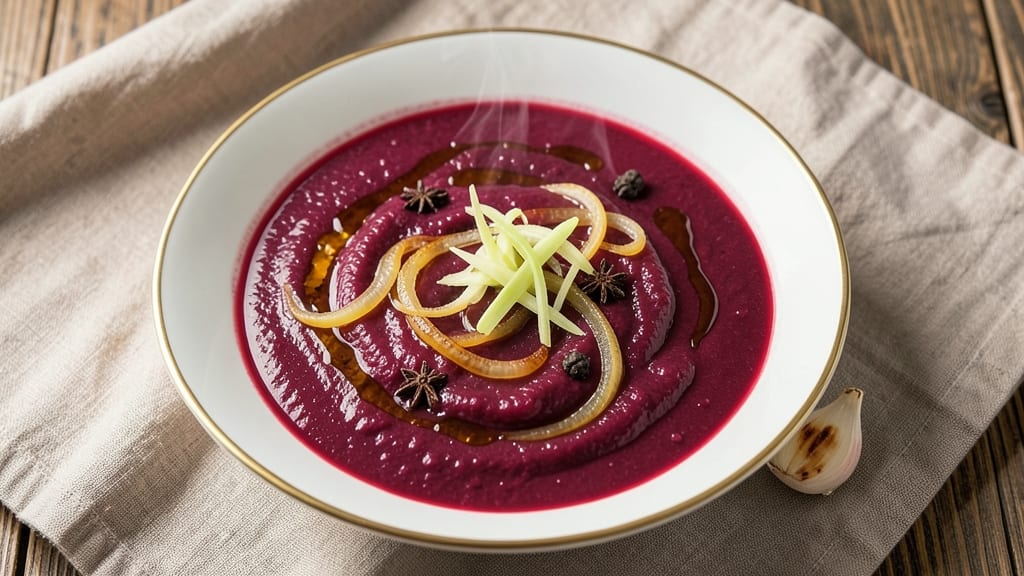
This Chinese-style beetroot soup transforms humble beets into a vibrant, aromatic ruby broth infused with star anise and ginger—where earthy sweetness meets comforting warmth. 💫 The secret lies in slow-simmering the broth to deepen flavors while keeping the beets tender, not mushy, creating a velvety texture that’s both nourishing and restaurant-worthy.
Unlike Western beet soups, this version balances natural sweetness with savory depth, using traditional Chinese techniques like charring aromatics for complexity.
The recipe builds on classic Chinese soup principles: a rich, well-seasoned broth forms the foundation, while optional proteins like tofu or mushrooms add substance without overpowering the beets.
Vegetarian versions still deliver hearty satisfaction through umami-packed mushrooms and silken tofu, while non-vegetarian adaptations incorporate tender pork or chicken for added richness. The star anise and Sichuan peppercorns create that signature Chinese warmth, elevating simple ingredients into something extraordinary.
What you’ll end up with is a soup that’s as visually stunning as it is flavorful—deep ruby hues swirling with fragrant steam, garnished with crisp scallions and a drizzle of sesame oil for brightness.
The texture is silky yet substantial, with beets that hold their shape just enough to add satisfying bite. This isn’t just a soup; it’s a comforting bowl of medicine that warms you from the inside out, perfect for chilly evenings or as a healing meal.
Whether you’re serving it as a light lunch or a soothing dinner, this recipe adapts effortlessly to dietary needs while staying true to its cultural roots. The broth freezes beautifully, making it ideal for meal prep, and the flavors only deepen with time.
Let’s create something that feels both familiar and entirely new—Chinese-style beetroot soup that steals the show.
Ingredients for beetroot soup recipe chinese style
Transform humble beets into a velvety ruby broth with these aromatic, earthy ingredients—where traditional Chinese technique meets comforting warmth.
| Ingredient | Amount | Notes |
|---|---|---|
| Medium Beets 🍠 | 1 ½ lb | Organic preferred, trimmed and quartered |
| Yellow Onion 🧅 | 1 whole | Chopped, charred for depth |
| Fresh Ginger 🌿 | 2 tbsp | Minced, peeled, organic preferred |
| Star Anise Pods 🌟 | 2 whole | Whole pods for infusion |
| Sichuan Peppercorns 🌶️ | 1 tsp | Lightly toasted for aroma |
| Garlic Cloves 🧄 | 4 cloves | Minced, charred for complexity |
| Silken Tofu 🍲 | 8 oz | Cubed, for protein richness |
| Shiitake Mushrooms 🍄 | 4 whole | Stems removed, sliced |
| Vegetable Broth 💧 | 4 cups | Low-sodium, homemade preferred |
| Sesame Oil 🫒 | 1 tbsp | Toasted, for finishing |
| Green Onions 🧅 | 3 whole | Thinly sliced, for garnish |
| Kosher Salt 🧂 | 1 ½ tsp | Diamond Crystal preferred |
| White Pepper 🌶️ | ½ tsp | Freshly ground for finish |
| Rice Vinegar 🍶 | 1 tbsp | For brightness, optional |
The beets are the heart of this soup, so choose organic varieties when possible—their natural sweetness shines through. Whole Foods or Asian markets often carry the best quality, with deep ruby hues and firm texture. For the star anise and Sichuan peppercorns, Penzeys Spices or bulk bins at specialty stores ensure maximum potency. Char your onions and garlic in a dry pan before adding—the Maillard reaction creates that smoky depth essential to Chinese soup traditions. Fresh ginger is non-negotiable; dried lacks the bright, zesty punch this recipe demands.
No silken tofu? Extra-firm tofu pressed for 30 minutes works in a pinch, but the texture won’t be as silky. Substitute shiitake mushrooms with cremini or oyster mushrooms for similar umami impact. Running low on sesame oil? Toasted peanut oil at half the amount mimics the nutty warmth. For the broth, homemade is ideal, but low-sodium store-bought (like Pacific Foods) suffices if you boost flavor with an extra pinch of salt. The rice vinegar adds brightness—skip it if you prefer a more neutral profile, but it’s worth the tang.
This soup freezes beautifully—broth and beets only (without tofu or mushrooms) for up to 3 months. Reheat gently to preserve texture. For meal prep, portion into glass containers with a layer of oil on top to prevent surface oxidation. Garnish with green onions and a drizzle of sesame oil just before serving—this isn’t just decoration; it’s the final flavor bridge. Leftovers? The broth deepens overnight, making it even more comforting the next day.
Why You'll Love This Recipe
- One-Pot Magic: I swear by this recipe—just chop, simmer, blend. No fancy steps, no extra pots, and that deep earthiness from the beets blends seamlessly with the star anise’s warmth. Honestly, I’ve made it while scrolling through emails.
- Sichuan-Kissed Depth: Between us, the Sichuan peppercorns and ginger add a layer—that subtle numbing heat lingers like a secret. It’s not just sweet; it’s complex, the kind of flavor that makes you pause mid-sip.
- Leftover Hero: This soup tastes even better the next day (yes, really). I double the batch on Sundays—perfect for lunches, potlucks, or when I’m too tired to cook. The ginger’s sharpness mellows into something richer overnight.
- Pantry Staple Power: Star anise and Sichuan peppercorns? Probably already in your spice drawer. Beets are cheap, onions are cheap, and ginger lasts forever. It’s the kind of recipe that turns grocery money into actual meals without breaking the bank.
Step-by-step instructions for Chinese style beetroot soup
Master this aromatic fusion where earthy beets meet star anise and Sichuan warmth.
🔥 Step 1: Char and Sauté the Aromatics
Heat a dry skillet over medium-high heat and add the whole yellow onion and 4 cloves garlic. Cook, stirring occasionally, until the onion is deeply charred in spots and the garlic turns golden brown—about 8-10 minutes. This charring adds a smoky depth that's essential for authentic flavor.
Transfer the charred onion and garlic to a cutting board and roughly chop them. In the same skillet, add 1 tablespoon sesame oil and toast the 1 teaspoon Sichuan peppercorns for 30 seconds until fragrant. Immediately add the chopped onion, garlic, and 2 tablespoons minced fresh ginger. Sauté for 2 minutes until everything is aromatic and slightly softened—this forms the flavor base for your soup.
🍳 Step 2: Build the Ruby Broth
In a large pot, combine the sautéed aromatics with the 1.5 lb trimmed and quartered medium beets and 4 cups vegetable broth. Bring to a boil over high heat, then reduce to a simmer. Add the 2 whole star anise pods and 1.5 teaspoons kosher salt—these spices will infuse the broth with their signature warmth.
Simmer uncovered for 25-30 minutes until the beets are fork-tender and the broth has reduced slightly, deepening in color to a rich ruby hue. The star anise should be easily pierced with a knife—if not, simmer 5 minutes longer. Remove the star anise pods before proceeding; they've done their job infusing flavor.
👨🍳 Step 3: Incorporate Shiitake and Tofu
Add the 4 whole shiitake mushrooms (stems removed and sliced) to the pot and cook for 5 minutes until they've absorbed the beet broth and softened. Then gently fold in the 8 oz cubed silken tofu—its delicate texture will absorb the flavors without breaking. Simmer together for 3-4 minutes just to warm through.
Here's the thing—silken tofu needs gentle handling. Don't stir vigorously or it will disintegrate. Instead, use a silicone spatula to fold it in just until heated through. The tofu should be warm but still hold its shape, creating pockets of creamy texture in the vibrant broth.
🥘 Step 4: Finish with Brightness and Garnish
Remove the pot from heat and stir in the 1 tablespoon rice vinegar—this adds a bright, tangy contrast that cuts through the richness of the beets and tofu. Taste and adjust seasoning with additional kosher salt or 0.5 teaspoon white pepper as needed. The soup should balance sweet, earthy, and slightly spicy notes.
Ladle the soup into bowls and garnish with thinly sliced green onions. The contrast of fresh green against the ruby broth creates a visually stunning presentation. Serve immediately while the star anise aroma is still vibrant—this soup tastes best fresh from the pot.
Pro Tips For Making Beetroot Soup Recipe Chinese Style
- ROAST THE BEETS FIRST: I used to boil them whole like a rookie—wasted time and ended up with watery soup. Roast them at 400°F (200°C) for 45-50 minutes until fork-tender, skin crispy. The caramelized edges add depth, and they slide right off the peel. (Yes, even if you’re impatient like me.)
- CRUSH SICHUAN PEPPERCORNS: Whole Sichuan peppercorns just float—you’ll miss their numbing kick. Lightly toast them first, then crush with a mortar or rolling pin until they break open. Toss them in at the end so they release flavor without bitterness. (Your future self will notice the difference.)
- SWEAT THE ONION LOW AND SLOW: High heat turns onions bitter, and this soup needs their sweetness. Cook them over medium-low for 8-10 minutes until translucent but not browned. Add a splash of water if they stick—better to deglaze now than later.
- STRAIN THE STAR ANISE: Star anise is for aroma, not texture. Simmer it in the broth for 20 minutes, then strain it out before blending. Leaving it in makes the soup taste like a spice cabinet exploded. (I learned this after one very polarizing batch.)
Creative variations of beetroot soup recipe chinese style
Cantonese-Inspired Adaptation
Transform this soup into a Cantonese-style version by replacing star anise with 1-inch cinnamon stick and 1 tsp five-spice powder. Add a splash of light soy sauce (1 tbsp) when incorporating the mushrooms and tofu for that signature umami depth.
Garnish with crispy fried shallots instead of green onions for a textural crunch that’s quintessential in Hong Kong-style soups. 🌶️
For an extra layer of authenticity, stir in 1 tsp hoisin sauce at the end—it balances the earthy beets with a touch of sweetness. Serve with steamed jasmine rice on the side, a common pairing in Cantonese meals.
This version keeps the ruby hue but adds complexity through the five-spice blend and soy’s savory punch.
Sichuan Spicy Twist
Elevate the soup with Sichuan heat by adding 1 tbsp chili bean paste (like Lao Gan Ma) when sautéing the aromatics. Boost the Sichuan peppercorns to 1.5 tsp and add 1 tbsp doubanjiang (fermented chili bean paste) when incorporating the tofu.
Finish with a drizzle of chili oil (1 tsp) and extra green onions for a fiery, aromatic kick. 🔥
For a smoky depth, char the shiitake mushrooms directly over a gas flame before adding them to the pot. This technique, called "pao" in Sichuan cuisine, intensifies their umami flavor. Balance the heat with a splash of rice vinegar (2 tbsp) to keep the soup from becoming overwhelmingly spicy.
Vegetarian Umami Boost
Maximize umami in vegetarian versions by adding 1 tbsp soy sauce and 1 tsp miso paste when building the broth. Swap silken tofu for extra-firm tofu pressed for 1 hour, then pan-fry until golden before adding to the soup.
Include dried shiitake mushrooms (soaked and sliced) for an extra layer of earthy depth. 🍄
For a nutty crunch, top with toasted sesame seeds (1 tbsp) and a sprinkle of furikake (Japanese seasoning blend). This combination adds texture and a subtle seaweed flavor that complements the beets beautifully. The miso paste also enhances the star anise’s warmth, creating a cohesive, satisfying bowl.
Winter Comfort Version
Warm up winter meals by adding 1 cup cooked daikon radish (julienned) and ½ cup shredded napa cabbage to the soup. Include 1 tsp grated ginger and 1 tsp toasted black sesame seeds for a nutty finish.
This version feels heartier and is perfect for cold weather, with the cabbage adding a refreshing crunch. ❄️
For extra richness, stir in 1 tbsp peanut butter (smooth, unsweetened) at the end—it sounds unusual, but it adds a creamy, nutty warmth that pairs surprisingly well with the beets. Serve with steamed buns or mandarin duck pancakes for a full Chinese-inspired meal.
Nutrition facts
Frequently asked questions
Can I make this beetroot soup without star anise?
Star anise adds warmth, but you can substitute with ½ teaspoon ground cinnamon or 1 cinnamon stick for a similar depth. For a more complex flavor, try 1 bay leaf plus ½ teaspoon fennel seeds. The soup will still taste delicious—just slightly less aromatic.
How do I prevent the beets from turning mushy?
Keep the beets whole (or in large chunks) and simmer them uncovered for no longer than 25-30 minutes. Overcooking breaks down their texture. For extra firmness, add the beets to the pot after the broth has already simmered for 10 minutes—this way, they cook just until tender, not mushy.
What's the best way to store leftovers?
Store the soup in an airtight container in the fridge for up to 4 days. For longer storage, freeze the broth and beets (without tofu or mushrooms) for up to 3 months. Reheat gently on the stove—never microwave directly from frozen. The flavors actually deepen overnight!
Can I use regular beets instead of organic?
Yes, but you may need to peel them thoroughly to remove dirt. Organic beets have thinner skins and fewer blemishes, but conventional beets work fine if scrubbed well. Just trim off any tough spots or green tops before cooking. The flavor difference is minimal—focus on freshness over organic labels.
Is this soup spicy?
Not traditionally—this recipe features Sichuan peppercorns for a subtle, tingling warmth (not heat), but no chili. For spice, add ½ teaspoon chili flakes or 1 tsp doubanjiang when sautéing aromatics. The star anise and ginger provide warmth without heat. Adjust to your preference!