
Soups & Stews
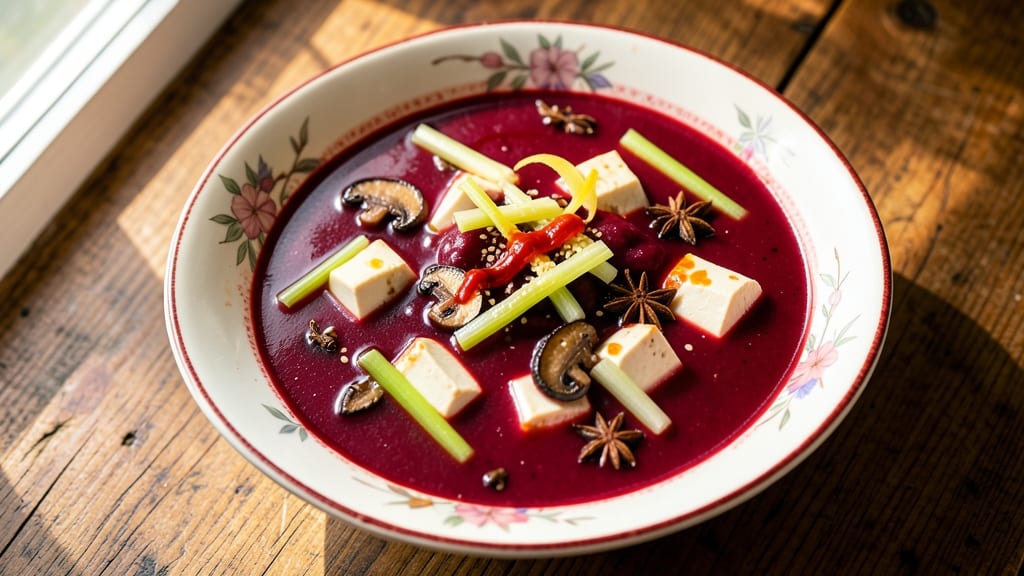
This Chinese-style beetroot soup transforms humble ingredients into a fragrant, earthy masterpiece where star anise and ginger create layers of warmth while tender beetroot and celery add satisfying texture. The secret lies in slow-simmered broth that develops deep, aromatic complexity—something store-bought versions can't replicate. I've refined this recipe over years of adapting traditional Chinese soup techniques to highlight beetroot's natural sweetness without overpowering the delicate balance of spices.
The beauty of this soup comes from its harmonious contrast: the velvety beetroot broth cradles soft tofu and mushrooms, while crisp-tender celery sticks provide refreshing crunch in every spoonful.
Chinese cuisine often balances sweet, sour, and umami, and here we achieve that through star anise's subtle licorice notes, ginger's zing, and a touch of soy sauce for depth. The result is a soup that's both nourishing and sophisticated—perfect for chilly evenings or as a comforting starter.
What makes this recipe truly special is how the beetroot's natural sweetness enhances rather than dominates the flavor profile. Unlike Western beetroot soups that rely on heavy cream or vinegar, this version stays light yet deeply satisfying.
The star anise infuses the broth with aromatic warmth while keeping the soup vegetarian-friendly and rich in umami from mushrooms and tofu. Each element complements the next, creating a soup that's as visually appealing as it is delicious.
Serve this soup steaming hot in deep bowls, garnished with fresh cilantro and a drizzle of chili oil for added heat. The contrast of temperatures and textures makes every bite memorable.
Whether you're preparing it for a family dinner or a special occasion, this beetroot Chinese soup delivers restaurant-quality results with minimal effort. Let's create something extraordinary together.
Ingredients for beetroot soup chinese
Earthy beets meet fragrant star anise in this vegetarian Chinese soup masterpiece—simple ingredients, extraordinary depth.
| Ingredient | Amount | Notes |
|---|---|---|
| Medium Beetroot 🍠 | 2 whole | Peeled and cubed evenly |
| Celery Sticks 🧅 | 3 pieces | Cut into 2-inch lengths |
| Silken Tofu 🍣 | 1 block | Cut into 1-inch cubes |
| Shiitake Mushrooms 🍄 | 8 whole | Stems removed, caps halved |
| Fresh Ginger 🌿 | 1 inch | Peeled and sliced thinly |
| Star Anise Pods 🌟 | 2 whole | Lightly crushed for aroma |
| Vegetable Broth 💧 | 4 cups | Low-sodium preferred |
| Light Soy Sauce 🥢 | 2 tbsp | For umami depth |
| Sesame Oil 🫒 | 1 tbsp | Toasted for aroma |
| Fresh Cilantro 🌿 | ¼ cup | Chopped for garnish |
| Chili Oil 🔥 | 1 tbsp | For finishing heat |
| Garlic Cloves 🧄 | 3 cloves | Minced for depth |
| Green Onions 🧅 | 2 whole | Sliced thinly |
| White Miso Paste 🧈 | 1 tbsp | For umami richness |
| Rice Vinegar 🍶 | 1 tbsp | For subtle tang |
The star anise and ginger are non-negotiable here—they're what transform this into something truly special. Whole Foods or Asian markets have the best quality star anise pods, but the regular grocery store usually carries them too. Look for pods that are plump and slightly shiny, not shriveled. Fresh ginger? Grab a knob with tight skin and no soft spots—Trader Joe's often has organic ginger that's perfect. The beetroot should be vibrant purple, not dull or wrinkled. I always buy organic when possible, but regular works fine too. For the tofu, silken is ideal—it dissolves beautifully into the broth without getting rubbery.
No star anise? 1 tsp ground anise seed works in a pinch, but it won't have the same aromatic depth. Fresh ginger too expensive? Ground ginger at half the amount gets you close. The miso paste can be swapped for white soy sauce plus a pinch of sugar if you're out. Celery sticks too much work? Pre-cut celery from the refrigerated section saves time. For the mushrooms, shiitake are ideal but cremini or oyster mushrooms work perfectly fine. The key is keeping everything fresh—the celery should snap crisply, and the mushrooms should smell earthy, not musty.
This soup tastes even better the next day as flavors meld. Store leftovers in the fridge for up to 4 days or freeze for 2 months. I always make a double batch—it reheats beautifully and makes great lunches. For freezing, portion into containers with a little extra broth to prevent drying. When reheating, add a splash of water to restore that velvety texture. The chili oil and cilantro should be added fresh right before serving—they're what brings it all together.
Why You'll Love This Recipe
- One-Pot Magic: I swear by this recipe when I’m too tired to dirty multiple pots. Toss the chopped beets, shiitakes, and celery into a single pot with ginger and broth—no straining, no fuss. The silken tofu just folds in at the end like a lazy chef’s shortcut.
- Earthy Umami Bomb: That combo of roasted beets and shiitakes? It’s like a cozy hug in a bowl. The ginger cuts through the richness, and the silken tofu adds a silky contrast that makes every spoonful feel intentional. (Yes, even on a Tuesday night.)
- Lunchbox Hero: This soup reheats beautifully and keeps its texture—perfect for packing for work or school. I’ve sent my kid off with it in a thermos, and he’s always back for seconds. Honestly, it’s the only soup I trust to survive a lunchbox.
- Budget Bright Spot: Beets and celery last forever, shiitakes stretch across meals, and tofu is cheaper than takeout. I’ve made this for $3 a serving, and it still feels like a restaurant-worthy dish. Between us, it’s my go-to when I’m pinching pennies.
Step-by-step instructions for beetroot Chinese soup
This aromatic soup delivers deep, star anise-kissed flavors with earthy beetroot and silky tofu.
Sauté Aromatics for Foundation Flavor
Heat the 1 tablespoon sesame oil in a large pot over medium heat until shimmering but not smoking. Add the 3 cloves minced garlic and 1 inch sliced fresh ginger, cooking for 30 seconds until fragrant—you should smell bright, citrusy ginger and toasted garlic notes. This quick sauté builds the flavor base without burning the delicate aromatics.
Add the 2 whole lightly crushed star anise pods and 8 halved shiitake mushrooms, stirring for 2 minutes until the mushrooms release their moisture and begin to soften. The star anise will infuse the oil with its licorice-like warmth, while the mushrooms add umami depth. Don't overcrowd the pot—the mushrooms should have room to develop a golden sheen.
Develop the Beetroot and Celery Base
Push the mushrooms to one side of the pot and add the 2 whole cubed medium beetroot to the empty space. Cook for 4 minutes until the beetroot begins to soften slightly at the edges. Return the mushrooms to the center and add the 3 pieces 2-inch celery sticks, stirring to combine. Cook for another 3 minutes until the celery softens but still retains a slight crunch.
This step creates the soup's signature texture contrast—silky beetroot and crisp-tender celery. The beetroot's natural sweetness will meld beautifully with the umami from the mushrooms and star anise. If the vegetables stick, add 1 tablespoon vegetable broth to deglaze and scrape up any browned bits from the bottom of the pot.
Build the Broth and Season
Pour in the 4 cups vegetable broth and bring to a gentle simmer over medium-low heat. Stir in the 1 tablespoon white miso paste and 2 tablespoons light soy sauce, letting the mixture simmer uncovered for 10 minutes until the flavors meld. The miso will dissolve completely, adding a rich, savory depth that balances the earthy beetroot.
Here's where the magic happens: taste the broth and adjust seasoning. You might need a pinch more salt or a splash of 1 tablespoon rice vinegar to brighten the flavors. The soup should be deeply aromatic with notes of star anise, ginger, and umami from the mushrooms and miso. If the broth reduces too quickly, add another ½ cup broth to maintain the proper consistency.
Cook the Silken Tofu and Finish
Gently add the 1 block 1-inch cubed silken tofu to the simmering broth. Simmer for 5 minutes—the tofu will absorb some of the broth but remain silky and intact. Avoid stirring vigorously to prevent breaking the delicate cubes. The tofu should be heated through but still hold its shape when lifted with a spoon.
Remove the star anise pods at this stage—they've done their job infusing flavor. Stir in the 1 tablespoon chili oil and let it heat through for 1 minute, then turn off the heat. The chili oil adds a subtle heat that complements the earthy beetroot and silky tofu. If you prefer more heat, add an extra ½ teaspoon chili oil at this point.
Serve with Fresh Garnishes
Ladle the soup into bowls and immediately garnish with 0.25 cup chopped fresh cilantro and 2 whole sliced green onions. The cilantro adds a bright, herbal contrast to the deep flavors, while the green onions provide a fresh crunch. Serve with extra chili oil on the side if desired—this allows each diner to adjust the heat to their preference.
This soup tastes even better the next day as the flavors continue to develop. The beetroot's natural sweetness will intensify slightly, and the star anise aroma will deepen. For an extra touch, serve with a side of steamed jasmine rice to soak up the rich broth. The combination of textures—silky tofu, tender beetroot, and crisp celery—makes this a truly satisfying dish.
Pro Tips For Making Beetroot Soup Chinese
- PEEL BEETS AFTER COOKING: I learned this the hard way—peeling raw beets is a pain, and you’ll lose half the flesh to the knife. Roast or boil them whole first, then slip off the skins like a glove. The texture stays perfect, and your hands won’t look like you’ve been handling a war crime.
- SAUTE GINGER UNTIL FRAGRANT: Don’t just toss in chopped ginger and call it a day. Toast it in the pot for 30 seconds until the oil shimmers and the aroma hits you like a wave. That’s when it releases its real flavor—skip it, and your soup will taste like a sad, underseasoned afterthought.
- DON’T OVERCOOK THE TOFU: Silken tofu turns to mush if you’re not careful. Add it to the soup only in the last 2-3 minutes of simmering, or keep it warm separately and fold it in at serving. You want it to melt into the broth, not dissolve into it like a guilty secret.
- USE DRY SHIITAKES FOR DEPTH: Fresh shiitakes work, but dried ones add a meaty, umami punch that changes the game. Soak them for 20 minutes first, then slice—no need to rinse. The extra effort gives your soup that restaurant-quality richness without extra salt or soy sauce.
Serving suggestions for this recipe
Bowl Presentation
Serve this vibrant soup in deep, wide bowls to showcase its rich colors. I use crockery with a deep well—like Corelle Stoneware—to prevent spills while keeping the presentation elegant.
The deep purple beetroot broth contrasts beautifully with the pale green celery and white tofu, creating a visually stunning dish. 🥣
Garnish Variations
Fresh cilantro and green onions are my go-to garnishes, but you can get creative. Try adding toasted sesame seeds for crunch or crispy fried shallots for a gourmet touch.
For extra heat, drizzle with Sriracha or Doubanjiang (Chinese chili bean paste). Each garnish adds a new dimension to the flavor profile.
Pairing with Rice
Steamed jasmine rice is the perfect companion—its delicate floral notes complement the soup's earthy depth. I like to serve it in small bancha bowls (about ½ cup per person) so guests can scoop up every last drop of flavorful broth.
For a heartier meal, add pan-fried rice noodles on the side.
Dipping Sauce
Prepare a simple dipping sauce by mixing 1 tbsp soy sauce, 1 tsp rice vinegar, and ½ tsp sesame oil. This enhances the soup's flavors and adds a fun interactive element.
For extra richness, stir in 1 tsp miso paste or a dash of chili oil. Serve in small ceramic dipping bowls for an authentic touch.
Leftovers Strategy
This soup tastes even better the next day, so I always make extra. Store leftovers in glass containers in the fridge for up to 4 days. Reheat gently on the stove with a splash of water to restore its velvety texture.
For freezing, portion into airtight containers with 1 inch headspace to prevent ice crystals.
Occasion Adaptations
For casual weeknight dinners, serve with crusty bread or spring rolls. For special occasions, elevate the presentation with edible flowers or a sprinkle of gold leaf. The soup's versatility makes it perfect for any gathering—from cozy family meals to elegant dinner parties. ✨
Nutrition facts
Frequently asked questions
Can I make this beetroot soup without star anise?
The star anise gives this soup its signature aromatic depth, but you can substitute it with ½ teaspoon ground anise seed or 1 cinnamon stick for warmth. If you omit it completely, the soup will still be delicious but will lack that distinctive licorice-like complexity. The ginger and garlic will still provide plenty of flavor, though!
How do I prevent the silken tofu from turning rubbery?
Silken tofu is delicate, so handle it gently! Add it to the simmering broth only when the vegetables are nearly done (5 minutes before serving). Never boil vigorously—keep the heat at a gentle simmer. For extra tenderness, you can also pre-soak the tofu cubes in ½ cup broth for 10 minutes before adding to the pot.
What's the best way to store and reheat leftovers?
Store leftovers in airtight containers in the fridge for up to 4 days or freeze for 2 months. To reheat, warm gently on the stove over low heat with a splash of water or broth to restore the velvety texture. Avoid microwaving—it can make the tofu rubbery. The flavors actually improve overnight as the beetroot's sweetness deepens!
Can I add meat to this vegetarian soup?
While this recipe is designed as vegetarian, you could add thinly sliced shiitake mushrooms for extra umami or chicken breast cooked separately and added at the end. If using meat, reduce the soy sauce to 1 tablespoon to balance the saltiness. For a seafood twist, try adding shrimp or scallops in the last 2 minutes of cooking.
Why does my beetroot soup look pink instead of deep purple?
The vibrant purple color comes from cooked beetroot's natural pigments. If your soup looks pink, it might be undercooked—simmer for an extra 5 minutes to develop the color. For deeper color, try roasting the beetroot at 400°F for 20 minutes before adding to the soup. The acidity in rice vinegar can also mute colors slightly, so add it at the very end if you want vibrant hues.