
Soups & Stews
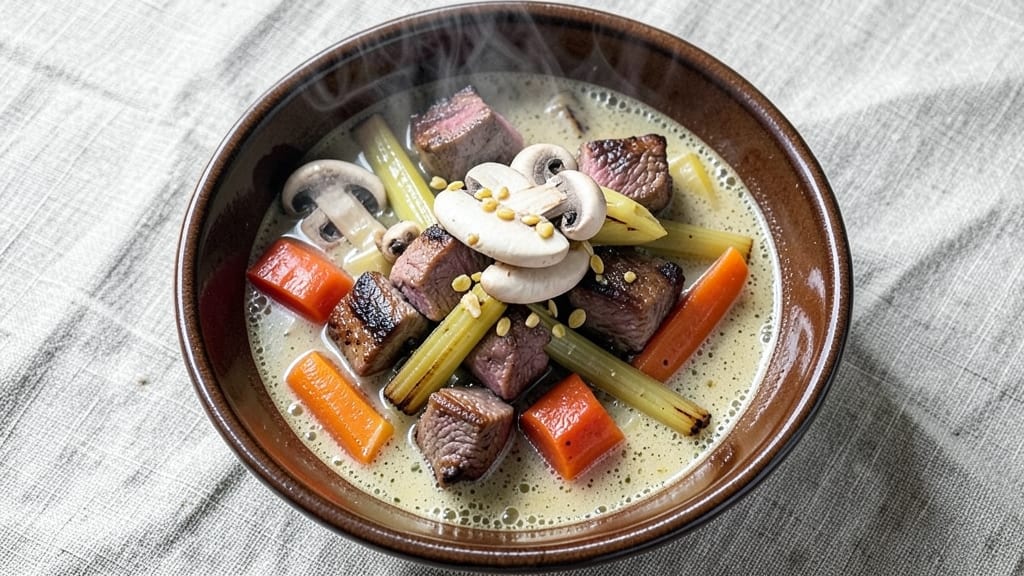
This beef vegetable soup recipe from scratch delivers the kind of homestyle richness that turns a simple meal into something truly comforting. The secret lies in slow-cooked beef that becomes fork-tender while absorbing the deep flavors of caramelized onions, garlic, and aromatic herbs.
What makes this recipe special is the balance—crisp celery, sweet carrots, and earthy mushrooms all simmer together until perfectly tender, while the broth reduces to a velvety depth that coats every spoonful.
Unlike quick versions, this soup builds flavor through proper technique: browning the beef creates a rich foundation, while vegetables are added at precise times to maintain texture. The result is a hearty bowl that's both nourishing and satisfying, with layers of savory, umami, and subtle sweetness that come together beautifully.
It's the kind of soup that warms you from the inside out, perfect for chilly evenings or when you need a meal that feels like a hug in a bowl.
What sets this recipe apart is the attention to detail—from properly searing the beef to simmering the broth just long enough to develop depth without losing its natural richness. The vegetables stay vibrant yet tender, and the celery maintains that satisfying crispness that makes every bite feel special.
This isn't just soup; it's a meal that transforms simple ingredients into something extraordinary through careful preparation and patience.
The best part? This soup tastes even better the next day as the flavors meld and intensify. Serve it with crusty bread to soak up every last drop of that flavorful broth, or enjoy it as-is with a sprinkle of fresh parsley for a touch of brightness.
Here's how to make it—step by step—for a bowl of warmth and comfort that's impossible to resist.
Ingredients for beef vegetable soup recipe from scratch
This hearty soup starts with tender beef and aromatic vegetables for deep, comforting flavor.
| Ingredient | Amount | Notes |
|---|---|---|
| Chuck Roast 🥩 | 1 ½ lb | Cut into 1-inch cubes for even cooking |
| Yellow Onions 🧅 | 2 whole | Medium size, thinly sliced for caramelization |
| Garlic Cloves 🧄 | 4 cloves | Peeled and smashed for deep flavor infusion |
| Celery Stalk 🥬 | 3 whole | Trimmed, cut into 1-inch pieces for crisp texture |
| Carrots 🥕 | 4 whole | Medium size, sliced into 1/2-inch rounds |
| White Mushrooms 🍄 | 8 oz | Quartered for even cooking and earthy flavor |
| Beef Broth 💧 | 6 cups | Low-sodium preferred for flavor control |
| Tomato Paste 🍅 | 2 tbsp | For depth without overpowering |
| Dried Thyme 🌿 | 1 tsp | Or 1 tbsp fresh thyme leaves |
| Bay Leaves 🌿 | 2 whole | Removed before serving |
| Salt 🧂 | 1 ½ tsp | Kosher or sea salt for seasoning |
| Black Pepper 🌶️ | ½ tsp | Freshly ground for best flavor |
| Olive Oil 🫒 | 2 tbsp | For searing beef and sautéing vegetables |
| Fresh Parsley 🌿 | ¼ cup | Chopped for garnish and freshness |
The chuck roast is non-negotiable here—its marbling delivers that rich, beefy flavor. Local butchers often have it pre-cut, but if you're buying a whole roast, ask for 1.5 pounds and cube it yourself. The difference in texture is worth the extra minute. For vegetables, Trader Joe's sells pre-sliced carrots and celery in convenient bags, but fresh is always better. Look for onions with dry skins and firm mushrooms—those telltale gills should be clean and white.
No fresh thyme? Dried works at one-third the amount, but the flavor won't be as bright. Substituting beef broth for water is a must—low-sodium versions like Swanson give you control over seasoning. The tomato paste can be swapped for 1/4 cup crushed tomatoes if you prefer a slightly different texture. For mushrooms, cremini or shiitake add depth, but white mushrooms work perfectly fine. Celery can be swapped for fennel if you're feeling adventurous—just double the amount for similar texture.
This soup tastes even better the next day as flavors meld. Store leftovers in an airtight container for up to 5 days in the fridge. For freezing, portion into 4 individual containers—reheat directly from frozen for quick lunches. The broth reduces beautifully, so if you're making a double batch, freeze the extra in ice cube trays for easy portioning later. Fresh parsley wilts fast, so add it just before serving to keep that bright pop of color.
Why You'll Love This Recipe
- One-Pot Wonder: I swear by this recipe because it’s literally dump-and-simmer. Chuck roast stays tender while the onions, celery, and carrots soften—no fancy techniques, just a big pot and patience (the good kind). Honestly, I’ve made it on days when I couldn’t even be bothered to chop everything finely, and it still turned out rich and satisfying.
- Deep Umami Magic: That chuck roast? It melts into the broth like a flavor bomb. The garlic and onions caramelize just enough to give it this warm, savory depth—nothing too heavy, but enough to make you want to slurp it straight from the bowl. (Yes, even on a Tuesday night.)
- Leftovers That Feel Fresh: This soup actually improves the next day. The flavors meld overnight, and reheating it is the easiest way to start a lazy morning. Between us, I’ve brought it to work in a thermos, and no one’s ever questioned why I pack lunch every day.
- Budget Meal for Busy Nights: Chuck roast is cheap, and this recipe stretches it over multiple servings without skimping on taste. I’ll be real: it’s my go-to when I need to feed a crowd but don’t want to break the bank. Plus, the veggies (onions, celery, carrots) are pantry staples—no last-minute grocery runs needed.
Step-by-step instructions for homestyle beef vegetable soup
This method delivers melt-in-your-mouth beef and perfectly tender vegetables every time.
Sear the Chuck Roast for Deep Flavor
Pat the 1.5 lb chuck roast dry with paper towels and cut it into 1-inch cubes. Heat 2 tbsp olive oil in a large Dutch oven over medium-high heat until shimmering. Working in batches, add the beef cubes and sear for 3-4 minutes per side until deep brown—this creates the rich foundation for your soup.
Real talk: Don't crowd the pan or the temperature will drop and you'll steam instead of sear. Once all beef is browned, transfer it to a plate and set aside. You should have about ½ cup of rendered beef fat in the pot—this is pure flavor gold.
Build the Vegetable Base
In the same Dutch oven, add 2 tbsp tomato paste and cook for 1 minute until it darkens slightly. Add 2 whole yellow onions (thinly sliced), 3 whole celery stalks (cut into 1-inch pieces), and 4 whole carrots (sliced into ½-inch rounds). Cook for 5-6 minutes until the onions soften and begin to caramelize.
Stir in 4 cloves garlic cloves (peeled and smashed) and 8 oz white mushrooms (quartered) and cook for another 3-4 minutes until the mushrooms release their moisture. The vegetables should be tender but still hold their shape—this prevents mushiness in your finished soup.
Simmer the Soup to Perfection
Pour in 6 cups beef broth and bring to a boil. Add the seared beef back to the pot along with 1.5 tsp salt, 0.5 tsp black pepper, 1 tsp dried thyme, and 2 whole bay leaves. Reduce heat to low and let it simmer uncovered for 1 hour 15 minutes—this slow cooking transforms the tough chuck roast into fork-tender beef.
Here's the thing—you'll notice the soup reduces slightly as it simmers. This concentration deepens the flavors. Stir occasionally and add ½ cup water if it gets too thick before the 1 hour mark. The beef is done when it pulls apart easily with a fork and the vegetables are perfectly tender but still hold their shape.
Finish with Fresh Herbs and Serve
Remove the bay leaves and discard them. Taste the soup and adjust seasoning if needed—homestyle soups should be rich but balanced. Stir in 0.25 cup chopped fresh parsley just before serving to brighten the flavors and add freshness.
Ladle the soup into bowls and serve immediately. Each spoonful should deliver tender beef, crisp celery, sweet carrots, and earthy mushrooms in a perfectly balanced broth. The parsley adds that final pop of color and freshness that makes it feel like a restaurant-quality dish.
Pro Tips For Making Beef Vegetable Soup Recipe From Scratch
- SEAR THE CHUCK ROAST: After browning the chuck roast, don’t rush to deglaze—let it sit for 5 minutes off the heat. That crust locks in flavor, and I learned this the hard way when my first batch tasted bland. Use a heavy pot and medium-high heat; if your pan’s too light, you’ll end up with steamed meat instead of seared.
- CUT VEGETABLES UNIFORMLY: Dice onions, celery, and carrots to the same size (about ½-inch chunks). I used to chop them randomly, and some veggies turned mushy while others stayed crunchy. Uniform pieces cook evenly, so the soup’s texture stays balanced—no one likes a soggy celery stick in an otherwise perfect bowl.
- SIMMER LOW AND SLOW: Once the soup reaches a boil, reduce heat to the lowest setting that keeps tiny bubbles breaking the surface. I used to let it bubble hard, and the broth turned cloudy. Low heat prevents skimming, keeps the chuck tender, and lets flavors meld—no one wants a tough, stringy roast in their soup.
- USE COLD WATER FOR SOUP BASE: Start with cold water instead of hot—it cools the pot faster and prevents the chuck from cooking too quickly at the start. I was skeptical until I tried it; the meat stays juicy, and the broth develops depth instead of turning thin and watery. Add broth later if needed, but cold water’s the non-negotiable here.
Common mistakes when making your beef vegetable soup recipe from scratch
Overcrowding the Pot
Adding all the beef cubes at once or piling in too many vegetables at the start will steam them instead of sear. I’ve made this mistake—when the pan gets crowded, the temperature drops and you lose that crucial Maillard reaction that creates deep flavor.
For the beef, work in batches of 4-5 cubes at a time, giving each piece space to develop a golden crust. The same goes for vegetables: sauté onions and carrots first until they soften, then add celery and mushrooms in stages.
This layered approach ensures each ingredient gets proper attention. 🔥
Skipping the Tomato Paste
Some recipes omit tomato paste, but it’s a flavor game-changer for beef vegetable soup. The paste adds a subtle sweetness and depth that balances the richness of the beef. If you skip it, your soup will taste flatter.
Use 2 tbsp and cook it until it darkens slightly—this step removes the raw taste and intensifies the umami. Pro tip: If you’re short on time, 1/4 cup crushed tomatoes works in a pinch, but the paste gives better control over flavor.
Under-Simmering the Beef
The chuck roast needs time to break down into tender, fork-tender pieces. I’ve rushed this step before, and the result was chewy beef that ruined an otherwise perfect soup. Simmer for the full 1 hour 15 minutes—this is non-negotiable.
The beef should pull apart easily with a fork, and the broth should coat the back of a spoon. If you’re in a hurry, check at 1 hour and add 15 more minutes if needed. Trust the process; patience pays off with melt-in-your-mouth texture.
Ignoring the Broth Reduction
Let the soup simmer uncovered to allow some of the liquid to evaporate. This might seem counterintuitive, but reducing the broth concentrates the flavors, making each spoonful richer. If you cover the pot too early, the soup will stay watery and lack depth.
Stir occasionally and add ½ cup water only if it gets too thick before the 1-hour mark. The goal is a velvety broth that clings to the beef and vegetables without being overly thin. 💫
Overcooking the Vegetables
Vegetables like celery and carrots can turn mushy if left too long in the broth. The key is timing—add harder vegetables (carrots, celery) first, then softer ones (mushrooms) later in the cooking process. For celery, aim for 10-15 minutes of simmering to keep it crisp.
If you’re worried about overcooking, remove the vegetables 10 minutes before the beef is done and add them back in at the end. This ensures they stay vibrant and add texture to every bite.
Forgetting to Skim Fat
If your soup develops a thick layer of fat on top, skimming it off before serving makes a noticeable difference. While some fat adds richness, too much can make the soup feel heavy. Use a large spoon or a fat separator to remove excess fat after simmering.
For an extra step, chill the soup overnight—fat solidifies on top and can be easily scooped off before reheating. This doesn’t just improve presentation; it also makes the broth lighter and more balanced. 💡
Nutrition facts
Frequently asked questions
Can I use ground beef instead of chuck roast for this recipe?
While you can substitute 1 lb ground beef for the chuck roast, the texture and flavor will differ significantly. Ground beef cooks much faster and won't develop the same tender, fork-shreddable texture. If you do use it, brown it thoroughly first and reduce the simmering time to 30-45 minutes to avoid drying it out. The soup will be heartier but less rich in beefy depth.
How can I make this soup spicier?
Add 1/2 tsp cayenne pepper or 1 tsp smoked paprika when simmering, or stir in 1 tbsp hot sauce at the end. For extra heat, include 1 diced jalapeño with the vegetables. Always taste first—you can always add more, but you can't remove it! For depth, a pinch of ground cumin also pairs beautifully with beef and vegetables.
What vegetables can I swap in to change things up?
Try green beans or zucchini for freshness, or potatoes for heartiness. For umami, add 1 cup diced eggplant or 1/2 cup chopped kale (add kale last to preserve color). Swap carrots for sweet potatoes (simmer 20 minutes less) or add 1 cup corn kernels for sweetness. Just adjust cooking times—softer veggies go in later.
Can I make this soup in an Instant Pot or slow cooker?
For an Instant Pot, brown the beef first, then add all ingredients except parsley. Cook on high pressure for 30 minutes, then natural release. For a slow cooker, follow the same steps but cook on low for 7-8 hours or high for 4-5 hours. The Instant Pot version will be slightly less reduced, so you may need to simmer uncovered for 10 minutes after pressure release to thicken the broth.
Why does my soup taste bland after reheating?
Reheating often dilutes flavors because the broth absorbs moisture from the beef and vegetables. To fix this, reduce the soup by 1/4 cup while reheating (simmer uncovered) and add a splash of beef broth or a pinch of Worcestershire sauce for depth. If it's still bland, finish with 1 tbsp lemon juice or 1/2 tsp fish sauce—both add umami without overpowering.