
Soups & Stews
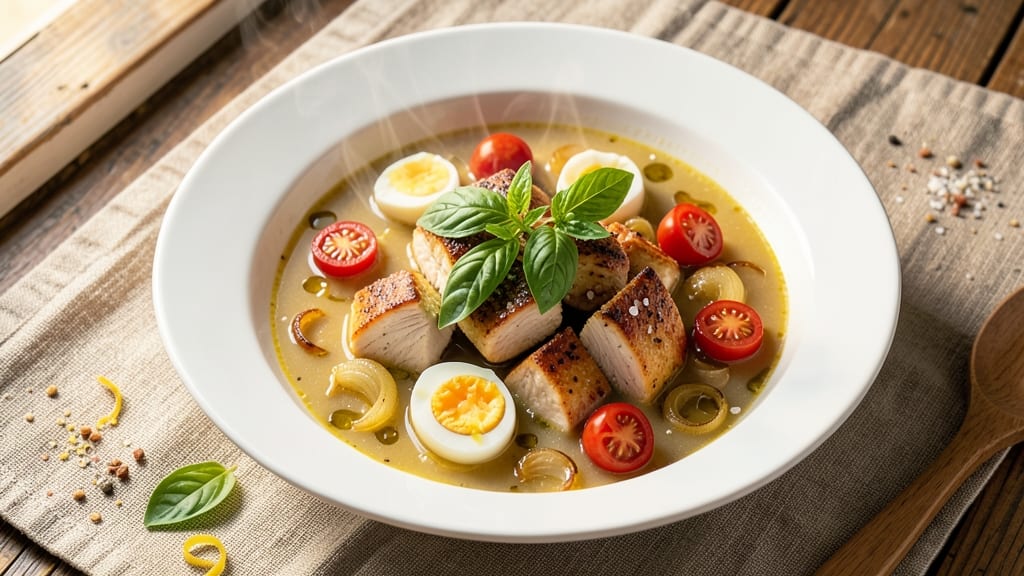
This basil chicken soup recipe transforms simple ingredients into a velvety, aromatic masterpiece that balances hearty chicken and delicate egg ribbons. The secret lies in simmering fresh basil leaves directly in the broth, infusing it with bright, herbal notes that elevate every spoonful.
With tender chicken breast and silky egg strands, this soup delivers restaurant-quality comfort without the fuss.
What sets this recipe apart is the technique of gently poaching chicken in the broth until fork-tender, then finishing with raw egg ribbons that cook just enough to create delicate, silky strands.
The result is a harmonious blend of textures—tender chicken, fragrant broth, and delicate egg—all perfectly balanced. Preparation takes just 30 minutes, but the flavors develop beautifully during the 20-minute simmering time.
The broth begins with aromatic onions and garlic, then builds depth with chicken stock and fresh basil leaves. The chicken cooks until perfectly tender, while the egg ribbons transform the soup into an elegant dish worthy of any table.
This recipe is ideal for chilly evenings when you crave warmth and comfort, yet want something lighter than traditional stews.
Pair with crusty bread to soak up every last drop of the herbed broth, or garnish with fresh basil and a drizzle of olive oil for added freshness.
The egg ribbons add a luxurious touch that makes this soup feel special, even for everyday meals. Let's create this comforting classic together.
Ingredients for basil soup recipe chicken
Fresh basil and tender chicken create a velvety soup with silky egg ribbons for restaurant-quality comfort.
| Ingredient | Amount | Notes |
|---|---|---|
| Boneless, Skinless Chicken Breast 🍗 | 1 ½ lb | Cut into 1-inch cubes for even cooking |
| Yellow Onion 🧅 | 1 whole | Diced, about 1.5 cups |
| Garlic Cloves 🧄 | 4 cloves | Minced, for aromatic base |
| Fresh Basil Leaves 🌿 | 1 cup | Packed, stems removed |
| Large Eggs 🥚 | 4 whole | Room temperature for ribbons |
| Chicken Stock 💧 | 4 cups | Low-sodium preferred |
| Extra-Virgin Olive Oil 🫒 | 2 tbsp | For sautéing aromatics |
| Dry White Wine 🍷 | ½ cup | Optional, deglaze pan |
| Salt 🧂 | 1 ½ tsp | Kosher or sea salt |
| Black Pepper 🌶️ | ½ tsp | Freshly ground preferred |
| Dried Thyme 🌿 | ½ tsp | Or 1 tbsp fresh thyme |
| Fresh Parsley 🌿 | ¼ cup | Chopped, for garnish |
The fresh basil is non-negotiable here—it's what transforms this into something special. Grab a bunch from the grocery store's produce section (look for vibrant green leaves, not wilted ones) or your local farmers market. For the chicken, boneless, skinless breasts are ideal—they stay tender and slice neatly. If you're using frozen chicken, thaw it overnight in the fridge. The chicken stock should be low-sodium (or you can reduce it later)—Great Day or Pacific Foods brands are reliable choices. Don't skip the white wine if you have it; it adds depth and brightens the broth. If you don't, just use extra chicken stock.
No fresh basil? Dried basil at half the amount works in a pinch, but the flavor won't be as vibrant. For the eggs, room temperature is key for perfect ribbons—just let them sit out for 20 minutes before using. If you're making this ahead, keep the eggs refrigerated until you're ready to finish the soup. The onion and garlic should be finely diced—no need to be precise, but smaller pieces mean more flavor infusion. For the thyme, fresh is better if you have it, but dried works fine. The parsley is just for garnish, so feel free to skip it if you're short on time.
This soup tastes even better the next day—plan ahead and make a double batch. Store leftovers in the fridge for up to 4 days in an airtight container. The egg ribbons are best made fresh, but you can prepare the broth and chicken ahead, then finish with the eggs just before serving. For freezing, only freeze the broth and chicken (without the eggs)—reheat gently and add fresh egg ribbons when serving. The basil leaves can be added back in when reheating for maximum freshness.
Why You'll Love This Recipe
- Here’s what sold me: this soup reheats perfectly for lunches, and it’s light enough for summer but hearty enough for winter. Pack it in a thermos, and you’ve got a meal that’ll make your coworkers jealous. (Yes, even on a Tuesday night.)
- One-Pot Magic: I swear by this recipe because it’s literally one pot—no chopping boards, no extra pans. Just toss in the chicken, onions, and garlic, let it simmer, then fold in those basil leaves at the end. The eggs poach right in the broth, so you’re not even scrambling (my least favorite chore).
- Herb Bomb Flavor: Between us, the basil in this soup is next-level—bright, fresh, and so aromatic it’ll make you want to take a bite before it even cools. The chicken stays tender, the eggs get that silky, custardy center, and the garlic? Oh, it’s there in the best way, like a warm hug in a bowl.
- Lunchbox Hero: Here’s what sold me: this soup reheats perfectly for lunches, and it’s light enough for summer but hearty enough for winter. Pack it in a thermos, and you’ve got a meal that’ll make your coworkers jealous. (Yes, even on a Tuesday night.)
Step-by-step instructions for basil chicken soup with silky egg ribbons
This method delivers a rich, herbed broth with perfectly poached egg ribbons—every element balanced for maximum flavor.
Sear the Chicken for Deep Flavor
Pat the 1.5 lb boneless, skinless chicken breast dry with paper towels and cut into 1-inch cubes. Heat 2 tbsp extra-virgin olive oil in a Dutch oven over medium-high heat until shimmering. Add the chicken in a single layer, leaving space between pieces—this prevents steaming and ensures a proper sear.
Cook undisturbed for 4-5 minutes until the chicken develops a golden-brown crust on all sides. You'll see the edges pull away slightly from the pan, and the internal temperature should reach 155°F when checked with an instant-read thermometer. Transfer the seared chicken to a plate and set aside. The rendered juices and crispy bits will form the soup's flavor foundation.
Build the Aromatic Base
In the same Dutch oven, add the diced yellow onion and cook for 3-4 minutes until softened and translucent. Add the 4 minced garlic cloves and 0.5 tsp dried thyme, stirring constantly for 30 seconds until fragrant—this prevents burning. Pour in the 0.5 cup dry white wine (if using) and scrape up any browned bits from the bottom with a wooden spoon.
Let the wine simmer for 2 minutes until reduced by half. This deglazing step captures all the concentrated flavors from the chicken searing. Add the 4 cups chicken stock and bring to a gentle simmer. Stir in 1.5 tsp salt and 0.5 tsp black pepper, then add the 1 cup packed fresh basil leaves. The broth should now smell like a perfect balance of herby brightness and savory depth.
Poach the Chicken and Strain
Return the seared chicken to the simmering broth and cook for 12-15 minutes until the chicken is fork-tender and registers 165°F internally. Remove the chicken pieces with tongs and transfer them to a cutting board. Using two forks, shred the chicken into bite-sized pieces—this ensures every spoonful delivers tender, flavorful meat.
Strain the broth through a fine-mesh sieve into a clean pot, pressing gently on the solids with a wooden spoon to extract maximum flavor. Discard the solids. The strained broth should be clear and aromatic, with visible basil flecks suspended throughout. Return the broth to the Dutch oven and keep it at a gentle simmer—this maintains the basil's vibrant flavor without bitterness.
Prepare the Egg Ribbons
While the broth simmers, prepare the eggs for poaching. Crack the 4 large eggs into a small bowl, ensuring no shells slip in. Add 1 tbsp cold water to the bowl and whisk gently until the whites are just combined—this helps create those signature ribbons. The eggs should be at room temperature for even cooking.
Create a gentle whirlpool in the simmering broth by stirring vigorously in one direction with a long spoon. Carefully lower one egg into the center of the whirlpool. Let it cook for 3-4 minutes until the whites are set but the yolks remain creamy and runny. Use a slotted spoon to remove the egg and transfer it to a plate. Repeat with the remaining eggs, maintaining the broth's gentle simmer between each addition.
Assemble and Finish
Return all the shredded chicken to the broth and stir gently to combine. Ladle the hot broth into serving bowls, placing one egg ribbon in each. The contrast of the silky egg yolks against the herbed broth creates the signature experience of this dish. Garnish each serving with 0.25 cup chopped fresh parsley for a pop of color and freshness.
Serve immediately while the eggs are still warm at the center. The soup should be rich but not heavy, with the basil's bright aroma cutting through the savory chicken broth. Each bite delivers a perfect balance of textures—tender chicken, silky egg, and a velvety broth infused with herby depth. The egg ribbons should hold their shape while remaining creamy, never breaking apart completely.
Pro Tips For Making Basil Soup Recipe Chicken
- SEAR CHICKEN FIRST: Hit the chicken breasts with a dry pan over medium-high heat for 3-4 minutes per side before adding liquid. I learned this the hard way—skipping the sear leaves you with bland, rubbery chicken in soup, no matter how much garlic you throw in.
- CHOP BASIL LAST: Save the basil leaves for the very end and stir them in just before serving. Tossing them in too early turns their bright green into sad, wilted brown—like throwing fresh flowers into boiling water (which, by the way, does the same thing).
- DON’T OVERCOOK EGGS: Poach or soft-boil the eggs for 6-7 minutes in simmering water, then shock in ice water immediately. Overcooked eggs turn grainy and ruin the creamy texture of the soup—like putting a rubber band in your pasta.
- SWEAT ONIONS LOW: Cook the onions over low heat for 8-10 minutes until translucent, not browned. I used to rush this, and the soup always tasted bitter—like someone left onions in the sun too long. Patience here makes a real difference.
Common mistakes when making great basil soup recipe chicken
Overcooking Chicken
One of the biggest mistakes is overcooking the chicken breast, which turns it rubbery and dry. The recipe calls for 12-15 minutes of poaching after searing—any longer and you'll end up with tough, chewy pieces.
Use an instant-read thermometer to check for 165°F internal temperature rather than guessing. I've ruined many batches by walking away and forgetting the simmering time. Set a timer to avoid this common pitfall! 🕒
Skipping the Sear
Many home cooks skip searing the chicken entirely, which means missing out on the rich, caramelized flavor that forms the broth's foundation. That 4-5 minute sear at medium-high heat creates a golden crust that releases flavorful juices into the broth.
If you're short on time, at least pat the chicken dry thoroughly before adding it to the broth—this helps it cook more evenly and prevents a watery soup.
Adding Basil Too Early
Fresh basil leaves should only be added during the final 10 minutes of simmering, not at the beginning. Adding them too early causes the leaves to turn bitter and release their oils prematurely, which can make the broth taste harsh.
I learned this the hard way when my first batch had a strange, grassy aftertaste. Always add basil when the broth is already simmering gently—this preserves its bright, sweet flavor. 🌿
Poaching Eggs Too Long
The egg ribbons are the star of this dish, and they require precise timing. Cooking them for more than 3-4 minutes will make the whites rubbery while the yolks overcook into a solid mass.
The key is creating a gentle whirlpool in the broth before adding each egg—this ensures even cooking. I recommend poaching one egg at a time to maintain consistent broth temperature, which gives you perfectly set whites with runny centers every time.
Ignoring Broth Temperature
A rolling boil will scramble the egg ribbons instead of creating delicate strands. The broth must maintain a gentle simmer—small bubbles breaking the surface but not a full boil. If your broth is too hot, reduce the heat immediately.
I use a low setting on my stovetop and stir occasionally to prevent hot spots. A thermometer reading of 180-185°F is ideal for perfect egg ribbons.
Using Cold Eggs
Room-temperature eggs are crucial for achieving those signature ribbons. Cold eggs from the fridge will create uneven cooking—some parts will be undercooked while others overcook. Let your eggs sit out for 20 minutes before using them.
I keep a bowl of eggs on my countertop for 30 minutes before starting the recipe to ensure they're ready when I need them. This small step makes a huge difference in texture! 🥚
Nutrition facts
Frequently asked questions
Can I substitute chicken thighs instead of breasts?
Yes, but adjust the cooking time! Chicken thighs are more forgiving and stay tender longer. Use 1.5 lbs bone-in, skin-on thighs and cook them for 20-25 minutes after searing until they reach 165°F internally. The skin adds richness to the broth, but remove it before shredding. For extra flavor, crisp the skin separately and crumble it over the finished soup.
How do I make this soup vegetarian?
Replace the chicken with 1 lb mushrooms (cremini or shiitake) and 1 cup chickpeas for protein. Sauté the mushrooms first until golden, then proceed with the recipe. Use vegetable stock instead of chicken stock, and add 1 tsp soy sauce to deepen the umami flavor. The egg ribbons remain the star!
Can I prepare this soup ahead of time?
Make the broth and chicken up to 2 days ahead—store in an airtight container in the fridge. Reheat gently on the stove until hot, then add fresh basil leaves for 5 minutes before serving. For the egg ribbons, cook them fresh just before serving to maintain their silky texture. The flavors actually improve overnight as the basil infuses the broth.
Why are my egg ribbons breaking apart?
This usually happens from three common issues: overcooking (more than 3-4 minutes), broth too hot (should be 180-185°F), or eggs not at room temperature. Let eggs sit out for 20 minutes before using, and maintain a gentle simmer—not a rolling boil. For extra stability, whisk the eggs with 1 tbsp cold water before poaching.
What's the best way to serve this soup?
This elegant dish pairs beautifully with crusty sourdough bread for dipping, or a sprinkle of parmesan cheese on top. For a complete meal, serve with a simple mixed green salad dressed with lemon vinaigrette. The contrast of cool greens against the warm soup creates a perfect balance. Garnish with extra basil leaves and a drizzle of olive oil for freshness.