
Soups & Stews
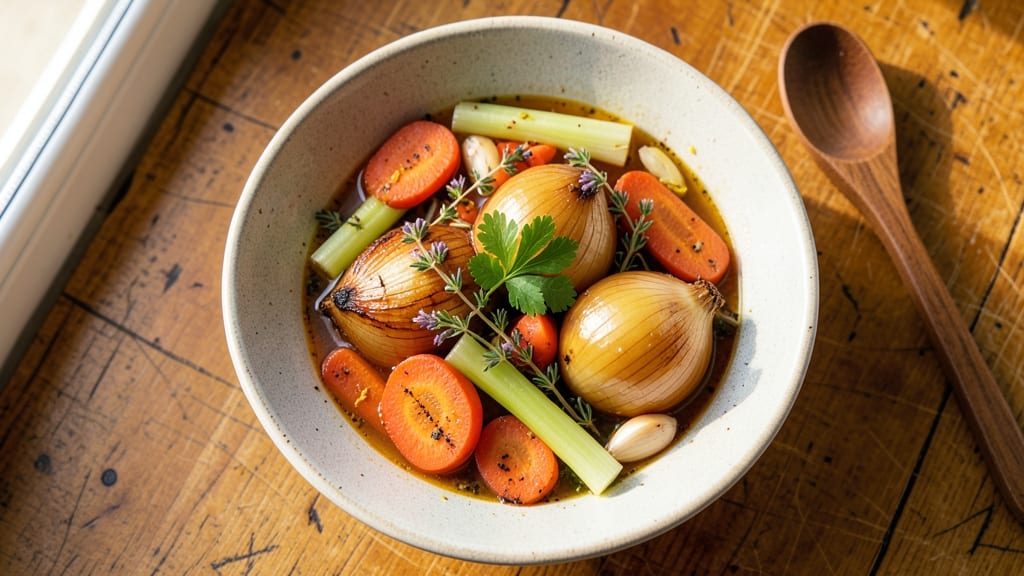
A basic soup base recipe transforms any broth from ordinary to extraordinary with just 10 minutes of prep and 30 minutes of simmering. This flavor-packed foundation builds depth through caramelized aromatics and layered spices, ensuring every soup you make starts with professional-quality flavor.
The secret lies in slow-cooking onions, garlic, and herbs until they release their natural sweetness and complexity.
This versatile base uses simple ingredients—onions, carrots, celery, garlic, and herbs—that create a balanced flavor profile you can adapt to any soup. Whether you're making a hearty chicken noodle or a light vegetable broth, this method guarantees rich, aromatic depth without requiring specialty ingredients.
The key is patience: letting the vegetables simmer until tender and golden unlocks flavors that store-bought broths can't match.
What sets this soup base apart is its ability to elevate even the simplest recipes. The caramelized vegetables form a flavorful sediment that infuses every spoonful, while the herbs add freshness that brightens the broth.
You'll notice the difference immediately—soups made with this base taste homemade, complex, and far more satisfying than anything from a carton.
Store the base in the refrigerator for up to 5 days or freeze it for months, making it perfect for meal prep. Use it as a starting point for any recipe that calls for broth or stock, and watch your soups transform from ordinary to extraordinary with minimal effort.
Ingredients for basic soup base
Caramelized aromatics and layered herbs create a flavor-packed foundation for any broth.
| Ingredient | Amount | Notes |
|---|---|---|
| Yellow Onions 🧅 | 2 whole | Thinly sliced for even caramelization |
| Carrots 🥕 | 2 lb | Peeled and cut into 1/2-inch chunks |
| Celery Stems 🧄 | 4 whole | Trimmed and cut into 1-inch pieces |
| Garlic Cloves 🧄 | 6 cloves | Peeled and lightly smashed |
| Fresh Thyme Sprigs 🌿 | 2 whole | Stems removed for flavor infusion |
| Fresh Parsley Sprigs 🌿 | 2 whole | Stems removed for brightness |
| Bay Leaves 🌿 | 2 whole | Dried or fresh for aromatic depth |
| Black Peppercorns 🌶️ | 1 tsp | Crushed for subtle heat |
| Salt 🧂 | 1 ½ tsp | Diamond Crystal preferred |
| Vegetable Oil 🫒 | ½ cup | High smoke point for caramelization |
The vegetables form the flavor backbone—yellow onions and carrots should be fresh and firm, with vibrant color indicating sweetness. Celery adds earthy depth, so choose crisp stalks without browning. For the best results, source these from a well-stocked produce section like Whole Foods or a local farmers' market during peak season. Garlic should be plump cloves with no green shoots, as they release more flavor when cooked. The herbs—thyme, parsley, and bay leaves—should be fragrant and fresh; if using dried, reduce to one-third the amount. Diamond Crystal kosher salt is ideal for its even grain distribution, though any kosher salt will work.
No fresh thyme? Dried thyme at one-third the amount works, though fresh provides superior aroma. Substitute leeks for onions if preferred, but reduce to 1.5 leeks due to their milder flavor. Celery leaves can be added fresh for extra brightness. For a deeper umami profile, add 1 tsp soy sauce or 1/2 tsp fish sauce (if vegetarian, omit or use mushroom powder). The black peppercorns can be omitted if sensitive to heat, but their crushed texture adds subtle complexity. Vegetable oil is crucial—use avocado or canola oil for high heat stability, avoiding delicate olive oil that can burn.
Store the finished base in airtight containers in the refrigerator for up to 5 days, or freeze for 3 months for long-term use. The caramelized vegetables settle at the bottom, creating a flavorful sediment—stir before each use to distribute the richest flavors. For meal prep, portion into ice cube trays and freeze for easy single-use additions to soups and sauces. The base thickens when chilled, so add 1/4 cup water when reheating if needed for proper consistency.
Why You'll Love This Recipe
- Five-Ingredient Magic: The moment I realized I only needed onions, carrots, celery, garlic, and thyme to build flavor? Life changed. No fancy prep—just chop, simmer, and let the aromatics do their thing while you actually live your day.
- Savory Umami Bomb: That deep, slow-cooked garlic and thyme? It’s the kind of flavor that makes you pause mid-sip. The onions caramelize just enough to add sweetness, while the celery brings that bright, fresh crunch—like a hug in a pot.
- Soup Starter for Days: Turn this into chili, pho, or a creamy bisque—it’s my secret weapon for weeknights. Freeze half for when you’re too tired to think, or use it to elevate a sad bag of greens into something restaurant-worthy.
- Budget-Friendly Powerhouse: Onions, carrots, celery—these are the pantry staples that never break the bank. A single batch stretches into four meals, and the leftovers? Even better the next day when the flavors meld into pure comfort.
Step-by-step instructions for flavor-packed soup base
Master this aromatic foundation for any broth-based recipe with perfect balance and depth.
Develop the Vegetable Base with Oil and Salt
Heat the 0.5 cup vegetable oil in a large, heavy-bottomed pot over medium heat. Add the 2 whole yellow onions, 2 lb carrots, and 4 whole celery stems all at once. Stir occasionally to prevent burning, and cook for 10-12 minutes until the vegetables begin to soften and the onions turn translucent.
This initial cooking step creates the foundational sweetness and caramelization. The oil should shimmer but not smoke—if it darkens too quickly, reduce the heat slightly. The vegetables will release their natural juices, which will form a light glaze on the bottom of the pot. This is where all the flavor begins to develop.
After 10 minutes, sprinkle the 1.5 tsp salt evenly over the vegetables. The salt will help draw out additional moisture and begin to season the base thoroughly. Stir once more to distribute the salt completely, then continue cooking for another 2 minutes to allow the salt to meld with the vegetables.
Add Aromatics and Build Complexity
Push the vegetables to one side of the pot to create space in the center. Add the 6 cloves garlic cloves, 2 whole thyme sprigs, 2 whole bay leaves, and 1 tsp crushed black peppercorns to the empty space. Cook for 1-2 minutes until the garlic becomes fragrant and just begins to turn golden around the edges.
The garlic should sizzle gently but not burn—this is where the magic happens. The thyme and bay leaves will infuse the base with their earthy, herbal notes, while the peppercorns add a subtle, warming heat. If the garlic starts to darken too quickly, move the pot to a slightly lower heat setting or stir to redistribute the vegetables.
Once the garlic is fragrant, stir everything together thoroughly. This ensures the garlic's flavor is evenly distributed throughout the base. Cook for another 3-4 minutes until the vegetables are softened but not yet mushy. The goal is to develop a rich, aromatic foundation without breaking down the vegetables completely.
Simmer and Infuse the Base
Add 6 cups of water to the pot—this is the standard amount for a flavorful but not overly diluted base. Bring the mixture to a gentle boil over medium-high heat, then immediately reduce the heat to low. Partially cover the pot with a lid and let it simmer for 20-25 minutes.
During this time, the vegetables will break down further, releasing their sweetness and depth into the water. You'll notice the liquid will turn a rich, golden hue and develop a fragrant aroma. Stir occasionally to prevent the vegetables from sticking to the bottom of the pot. The base should reduce slightly but remain liquid enough to pour easily.
After 20 minutes, taste the base and adjust the seasoning if needed. The vegetables should be tender but still hold their shape slightly. If the base tastes flat, add a pinch more salt or a splash of water to balance the flavors. The final product should be aromatic, slightly sweet, and deeply savory—ready to serve as-is or as the foundation for any soup or stew.
Pro Tips For Making Basic Soup Base
- Sweat the Onions First: I learned this the hard way—skipping the full 8-10 minutes of slow cooking onions until they’re deep golden (almost caramelized) means your soup will taste like it’s missing something. Use a splash of water or broth to keep them from sticking, and resist the urge to rush this step. The flavor payoff is huge.
- Chop Celery Small: Tiny dice, not thick sticks. I used to leave celery in big chunks because it looked cleaner, but it never broke down properly. Aim for ¼-inch pieces—this ensures it softens completely and releases its earthy flavor into the broth. (Your future self will notice the difference.)
- Crush Garlic, Don’t Mince: Smash those cloves with the flat side of your knife first, then give them a rough chop. Whole cloves burn easily, while minced garlic can turn bitter. Crushed cloves release flavor steadily without overpowering. (Yes, even if you’re impatient like me.)
- Add Thyme Late: Toss the thyme sprigs in at the very end—just before serving. I used to simmer them the whole time, and the flavor would fade into the background. A few minutes of steeping at the end keeps the bright, herbal notes sharp. (Skip the stems unless you’re making a fancy stock.)
Health benefits of this basic soup base
Immune-Boosting Vegetables
This soup base packs a nutritional punch with carrots, celery, and onions, all rich in vitamin C and antioxidants that support your immune system. Carrots provide beta-carotene, which converts to vitamin A for eye health and skin protection, while celery delivers flavonoids that reduce inflammation.
The combination creates a flavorful defense against seasonal illnesses—perfect for cold weather soups. 💪
Herbal Antioxidant Power
The thyme and parsley in this base aren't just for flavor—they're packed with antioxidants like thymol and apigenin that combat oxidative stress. Fresh parsley alone contains twice the vitamin K of kale and supports bone health, while thyme adds iron and manganese for energy metabolism.
Even the bay leaves contribute eugenol, a compound with antimicrobial properties that enhance digestion.
Sodium Balance Benefits
Unlike canned broths loaded with excess sodium, this homemade base lets you control the 1.5 tsp salt for better blood pressure management. The slow caramelization process actually reduces the need for additional salt while maximizing flavor.
For lower-sodium options, reduce to 1 tsp salt and boost umami with 1 tsp soy sauce or ½ tsp mushroom powder instead.
Digestive Comfort Factors
The gentle simmering of vegetables creates a prebiotic-rich base that supports gut health. Onions contain fructans, fiber compounds that feed beneficial gut bacteria, while carrots provide soluble fiber for regular digestion.
The black peppercorns add a subtle warming effect that aids circulation, making this base particularly comforting during cold seasons or after physical activity.
Hydration Advantages
This broth-based foundation helps maintain hydration better than many other soups because of its water-rich vegetable content. The 6 cups water base ensures you're getting fluids while consuming nutrients, making it ideal for post-workout recovery or when you need to replenish electrolytes.
The natural sweetness from caramelized onions also makes it more appealing to drink than plain water.
Meal Prep Nutrition
Store the base in airtight containers for up to 5 days or freeze for 3 months, preserving all its nutritional benefits. Unlike store-bought broths that often lose vitamins during processing, this homemade version retains maximum nutrients.
The caramelized vegetable sediment at the bottom becomes a flavorful, nutrient-dense concentrate when stirred back in—think of it as nature's umami booster packed with vitamins and minerals. 💫
Nutrition facts
Frequently asked questions
Can I make this soup base vegetarian?
Yes! This recipe is already vegetarian-friendly, but you can enhance the umami flavor by adding 1 tsp soy sauce or ½ tsp mushroom powder during the simmering process. For a meatier taste, consider adding 1 cup cooked lentils or ½ cup tomato paste at the end. The base works perfectly for vegetarian soups like minestrone or lentil stews.
How do I adjust the flavor if my vegetables were bitter?
Bitter vegetables often mean they were overcooked or not fresh enough. To fix this, add a pinch of sugar (½ tsp) or 1 tsp honey to balance the bitterness while simmering. For extra depth, stir in 1 tsp lemon juice or ½ tsp apple cider vinegar at the end. Always start with fresh, firm vegetables to prevent this issue in the first place.
Can I use this base for sauces instead of soups?
This aromatic base works perfectly for sauces like pasta, risotto, or gravies. Simply strain out the vegetables (or leave them in for texture), then reduce the liquid by 30-50% on the stovetop for a thicker consistency. Add 1 tbsp butter or cream at the end for richness. It's ideal for Italian-inspired dishes where you want deep vegetable flavor without added cream.
What's the best way to store leftovers?
Transfer the cooled base to airtight containers and refrigerate for up to 5 days. For longer storage, freeze in 1-cup portions using ice cube trays or small jars. Thaw overnight in the fridge before using. The caramelized vegetables will settle at the bottom—stir well before each use to redistribute the richest flavors.
How can I make this base spicier?
Add ½ tsp red pepper flakes or 1 chopped fresh chili pepper when cooking the garlic. For smoky heat, include ½ tsp smoked paprika with the black peppercorns. If you prefer subtle warmth, try ½ tsp ground cumin or 1 star anise pod (remove before serving). Always taste as you go to control the heat level.