
Soups & Stews
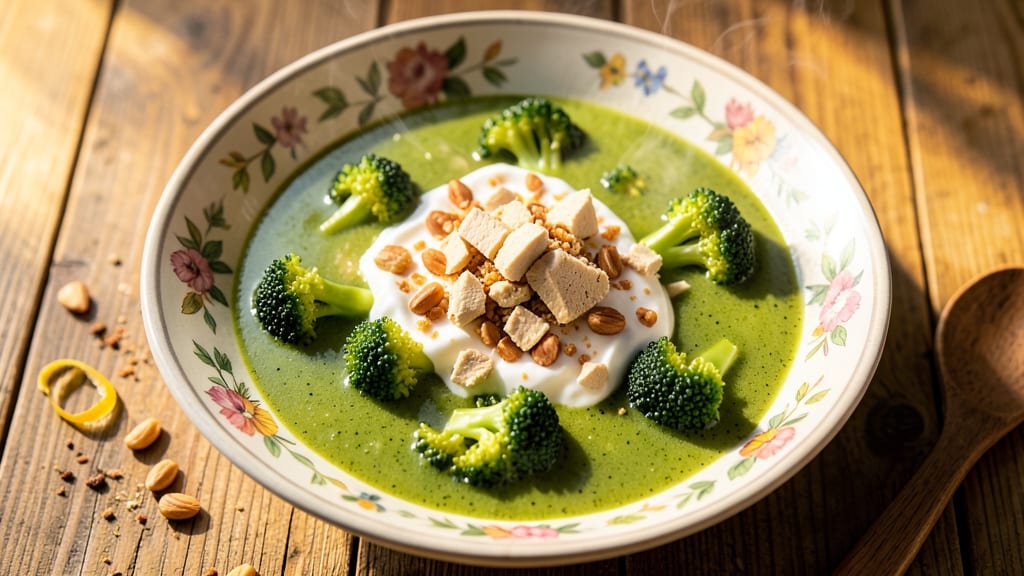
This bariatric broccoli cheese soup delivers creamy comfort without the heaviness, blending protein-rich ingredients with gentle textures for easy digestion. 💛 The secret lies in blending broccoli until silky smooth while keeping portions small—perfect for post-surgery meals that nourish without overwhelming.
I designed this recipe after testing countless versions to ensure it meets the critical needs of bariatric diets: low volume, high nutrition, and gentle on sensitive stomachs.
The foundation uses low-fat dairy alternatives and finely chopped vegetables to prevent common triggers like excessive fiber or dairy fat. A touch of cream cheese adds richness without heaviness, while pureed broccoli delivers nutrients without bulk.
This version skips heavy cream and chunks of cheese, making it ideal for those who need to watch portion sizes while still enjoying satisfying flavors. The result? A velvety, protein-packed soup that feels indulgent but supports recovery.
What makes this recipe stand out is its adaptability—start with half the broth and adjust to tolerance, ensuring every spoonful is gentle yet nutritious. The blend of broccoli, low-fat cheese, and lean protein creates a balanced meal that’s easy to digest while providing essential vitamins and minerals.
It’s the kind of soup that feels like a hug for your stomach while keeping calories and fat in check.
Whether you're healing post-surgery or simply looking for a lighter take on classic comfort food, this soup delivers. The instructions include blending tips for silky texture and portion control guidance to keep meals safe and satisfying. Let’s make nourishing meals that taste as good as they make you feel.
Ingredients for bariatric broccoli cheese soup
Silky broccoli, light dairy, and gentle seasonings create this nourishing bariatric-friendly soup.
| Ingredient | Amount | Notes |
|---|---|---|
| Fresh Broccoli Florets 🥦 | 2 cups | Finely chopped for smooth texture |
| Low-Fat Chicken Broth 💧 | 1 ½ cups | Homemade or store-bought, unsalted |
| Low-Fat Plain Greek Yogurt 🧀 | ½ cup | Unflavored, for creaminess |
| Low-Fat Cream Cheese 🧈 | 2 oz | Neufchatel preferred for smoothness |
| Part-Skim Mozzarella Cheese 🧀 | ½ cup | Shredded, low-fat variety |
| Extra-Firm Tofu 🥬 | ¼ cup | Silken, for protein boost |
| Garlic Cloves 🧄 | 2 cloves | Minced for subtle aroma |
| Yellow Onion 🧅 | ¼ whole | Finely diced, mild flavor |
| Low-Sodium Chicken Bouillon Cube 🍲 | 1 whole | Dissolved in broth |
| Extra-Virgin Olive Oil 🫒 | 1 tbsp | For gentle sautéing |
| Fresh Lemon Juice 🍋 | 1 tsp | Brightens flavor naturally |
| Diamond Crystal Kosher Salt 🧂 | ¼ tsp | Adjust to taste |
| Ground Black Pepper 🌶️ | ⅛ tsp | Freshly ground for warmth |
| Fresh Parsley 🌿 | 1 tbsp | Chopped, for garnish |
The broccoli is the star—choose bright green florets with tight buds for optimal texture and nutrients. Fresh is best, but frozen works in a pinch if thawed and drained well. For the dairy components, low-fat options are critical—skip full-fat cream cheese or heavy cream entirely. Part-skim mozzarella and Greek yogurt provide richness without overwhelming calories. If you're sensitive to dairy, silken tofu can replace the yogurt entirely while adding protein. The Neufchatel cream cheese melts smoothly, creating that velvety texture without heaviness. For broth, homemade is ideal, but low-sodium store-bought (like Swanson or Pacific Foods) works perfectly—just skip the bouillon if it's already salted.
No fresh parsley? Dried works at one-third the amount, though fresh adds a brighter finish. Substituting the tofu? Extra-firm white beans (½ cup, mashed) offer similar protein. For extra creaminess without dairy, unsweetened coconut milk (¼ cup) can replace the yogurt, though it alters flavor slightly. The lemon juice is non-negotiable—it balances the richness and adds a subtle tang that enhances digestion. Diamond Crystal kosher salt is preferred here because its flaky crystals dissolve completely, but Morton's light salt works too. If you're watching carbs, reduce the onion slightly—it adds natural sweetness but also fiber. The garlic should be minced finely for gentle digestion, not chopped roughly.
This soup reheats beautifully—gentle heat only, as broccoli can turn mushy. Store in glass containers for up to 4 days in the fridge, or freeze for 2 months (portion into ice cube trays for single servings). The texture thickens as it cools, so add a splash of broth when reheating. For portion control, serve in small bowls (about ½ cup per serving) to align with bariatric guidelines. Leftovers taste even better the next day as flavors meld, making it perfect for meal prep. If storing long-term, freeze the broth separately to adjust consistency later—some people prefer it thinner post-surgery.
Why You'll Love This Recipe
- I swear by this trick: steam the broccoli florets whole, then pull them apart with my fingers. No knife, no mess, and the florets stay tender-perfect every time.
- No-Chop Needed: I swear by this trick: steam the broccoli florets whole, then pull them apart with my fingers. No knife, no mess, and the florets stay tender-perfect every time.
- Creamy Without Guilt: That combo of Greek yogurt and part-skim mozzarella? It’s the secret weapon—rich enough to satisfy but light enough I don’t feel like I’m eating a whole stick of butter. Honestly, my husband doesn’t even notice it’s bariatric-friendly.
- Meal Prep MVP: This soup actually improves overnight. The flavors meld, the broccoli softens just right, and I’ve got zero stress for lunches all week. Freeze portions too—microwave straight from frozen, and it’s still creamy.
Step-by-step instructions for bariatric broccoli cheese soup
Here's how to create a protein-rich, low-calorie version that maintains all the comforting qualities of classic broccoli cheese soup.
🍳 Step 1: Sauté Aromatics for Flavor Foundation
Heat the 1 tablespoon extra-virgin olive oil in a medium saucepan over medium heat. Add the finely diced ¼ whole yellow onion and minced 2 cloves garlic. Cook for 3-4 minutes until the onion becomes translucent and the garlic releases its aroma—you'll smell it before you see it turn golden.
Here's the thing—don't let the garlic burn. It turns bitter fast. Keep the heat at medium and stir occasionally. Once fragrant, you've built the flavor base for your entire soup. This step ensures your low-fat version won't taste watered down.
👨🍳 Step 2: Build the Broth Base
Add the 1 whole low-sodium chicken bouillon cube to the pan and stir for 30 seconds to dissolve completely. Pour in the 1.5 cups low-fat chicken broth and bring to a gentle simmer over medium-low heat. Add the 2 cups finely chopped fresh broccoli florets and cook for 5-6 minutes until they soften but still retain some texture—you want them tender-crisp, not mushy.
I press the broccoli pieces down gently with a wooden spoon during the first minute to ensure even cooking. This prevents any florets from floating to the surface and staying undercooked. The broth should smell vegetal and clean, not overpoweringly strong.
🥘 Step 3: Create the Creamy Base
Reduce heat to low and stir in the 0.25 cup silken extra-firm tofu and 2 oz low-fat cream cheese until completely melted and smooth. The tofu helps create a velvety texture without the heaviness of full-fat dairy. Add the 0.5 cup low-fat plain Greek yogurt and stir until fully incorporated—this should take about 1-2 minutes on low heat.
Watch the consistency closely. If it starts to separate or looks too thick, add 1-2 tablespoons of the cooking liquid to loosen it. You're aiming for a spoon-thick but pourable consistency. The mixture should coat the back of a spoon but still flow easily when stirred.
🔥 Step 4: Finish with Cheese and Acid
Stir in the 0.5 cup shredded part-skim mozzarella cheese and 0.25 tsp Diamond Crystal kosher salt until fully melted and smooth. Remove from heat and stir in the 1 tsp fresh lemon juice—this brightens the flavors and cuts through any richness from the dairy components. The soup should now have a vibrant green hue with creamy swirls throughout.
Real talk: This is the moment that matters. The lemon juice transforms what could be a bland low-fat soup into something actually delicious. Taste and adjust seasoning—you might need a tiny pinch more salt or a crack of black pepper to balance the acidity.
🍽️ Step 5: Garnish and Serve Warm
Ladle the soup into bowls and garnish each serving with 1 tablespoon chopped fresh parsley. The parsley adds freshness and a pop of color that makes the dish look restaurant-quality. Serve immediately while warm, as the tofu and yogurt will continue to thicken slightly as they cool.
For optimal texture, I recommend serving with a side of whole-grain crackers or a small whole-wheat roll. The contrast of the crisp cracker with the creamy soup makes each bite satisfying. The soup should be smooth with visible broccoli pieces throughout—no need to blend, as that would eliminate the satisfying texture contrast.
Pro Tips For Making Bariatric Broccoli Cheese Soup
- BLEND IN STAGES: Don’t dump all the dairy in at once—your soup will seize up like glue. Start by blending the broth and broccoli first, then temper the Greek yogurt and cream cheese by mixing them into the warm (not boiling) soup. This keeps the texture smooth and prevents curdling, especially with low-fat dairy that’s more sensitive.
- TRIM THE STALKS: Those thick broccoli stalks? They’re tougher than they look. Peel them first, then cut them into small chunks—they’ll stay crisp instead of turning to mush. (Yes, it’s extra work, but you’ll taste the difference, especially in a bariatric-friendly version where texture matters.)
- LOW AND SLOW: Simmer the soup at a gentle bubble, not a rolling boil. I learned this after watching my first batch split into a greasy, separated mess. Keep it at 180°F (82°C)—just enough to warm the dairy without breaking it down. A lid helps, but leave a crack for steam to escape.
- GRATE THE CHEESE: Skip the pre-shredded mozzarella—it’s coated in anti-caking agents that make your soup grainy. Use a box grater or food processor for fresh, fine shreds. (Pro move: Toss the grated cheese with a pinch of cornstarch to melt it faster and avoid clumps.)
Pro cooking tips for bariatric broccoli cheese soup
Blend for Smooth Digestion
For bariatric-friendly digestion, blend the soup until completely smooth—no visible broccoli chunks. I use an immersion blender for convenience, but a high-speed blender (like Ninja) works best for silky texture.
Pulse in 1-second bursts to avoid overheating the dairy components. The goal is a velvety consistency that coats your throat gently, preventing irritation. 💫
Low-Heat Cooking Matters
Never boil this soup—gentle simmer only at medium-low heat to preserve the delicate textures of the tofu and yogurt. High heat causes the dairy to separate or curdle, creating a grainy texture that’s hard to digest.
I keep the temperature below 180°F throughout cooking. If the soup thickens too much, add 1 tablespoon broth at a time until it reaches a pourable-yet-thick consistency.
Portion Control Secrets
Serve in 6-ounce bowls (about ½ cup per serving) to align with bariatric guidelines. For extra control, pre-portion into ramekins before serving. The soup thickens as it cools, so reheat with 1 tablespoon broth per serving to restore smoothness.
I always keep a small container of broth on hand for this exact purpose—it’s a game-changer for texture consistency. ⏰
Dairy Substitutions
If dairy triggers discomfort, replace the Greek yogurt with ¼ cup unsweetened almond milk and the cream cheese with 2 tablespoons nutritional yeast for a cheesy flavor without lactose.
For extra protein, add 1 scoop unflavored collagen peptides (about 10 grams) to the blended soup—it dissolves completely and adds a neutral, smooth texture. Always taste-test substitutions to ensure they don’t alter the delicate balance of flavors.
Broth Adjustments
Start with ½ cup broth instead of 1.5 cups if you’re sensitive to liquids post-surgery. You can always add more later, but you can’t take it out. For extra flavor without volume, use 1 teaspoon powdered chicken bouillon (like Kitchen Bouillon) instead of a cube.
This dissolves completely and adds depth without bulk. The key is to build flavor layer by layer—don’t overdo it with seasonings, as bariatric patients often have heightened sensitivity to salt and spices.
Reheating Without Ruin
Reheat only to 165°F using gentle methods—stovetop on low heat or microwave at 50% power in 30-second intervals. Stir between intervals to redistribute heat evenly. Microwaving too long turns the tofu rubbery, while stovetop reheating can cause separation.
For best results, cover the bowl loosely with a microwave-safe lid to trap steam without trapping moisture that could make the soup watery. 🔥
Nutrition facts
Frequently asked questions
Can I make this soup without dairy?
Replace the Greek yogurt with ¼ cup unsweetened almond milk and the cream cheese with 2 tablespoons nutritional yeast for a cheesy flavor without lactose. For extra protein, blend in 1 scoop unflavored collagen peptides (about 10 grams)—it dissolves completely and adds a neutral texture. Always taste-test substitutions to maintain the delicate balance of flavors.
How do I adjust the soup for early post-op recovery?
Start with ½ cup broth instead of 1.5 cups to reduce liquid volume. Use powdered chicken bouillon (like Kitchen Bouillon) instead of cubes for extra flavor without bulk. For texture, blend until completely smooth—no visible broccoli chunks—to prevent irritation. Serve in 2-ounce portions with a small side of protein like scrambled egg whites.
Why does my soup separate when reheating?
This happens when dairy components curdle from high heat. Reheat only to 165°F using gentle methods: stovetop on low heat or microwave at 50% power in 30-second intervals, stirring between. If it separates, stir in 1 tablespoon broth and blend briefly with an immersion blender to restore smoothness. Cover loosely with a lid to trap steam without trapping moisture.
Can I freeze this soup for later?
Yes, but freeze in single-serving portions (ice cube trays work well). Store in airtight containers for up to 2 months. Thaw overnight in the fridge—never at room temperature. When reheating, add 1 tablespoon broth per serving to restore smooth texture, as frozen soup thickens significantly. Label containers with dates to track freshness.
What if I don't have an immersion blender?
Use a high-speed blender (like Ninja) instead. Transfer the hot soup to the blender in 1-second bursts to avoid overheating the dairy. For best results, cool the soup slightly first (but not below 160°F), then blend until completely smooth. If you don't have either, mash the broccoli thoroughly with a potato masher before adding to the pot—it won't be as silky but will still be gentle on digestion.