
Soups & Stews
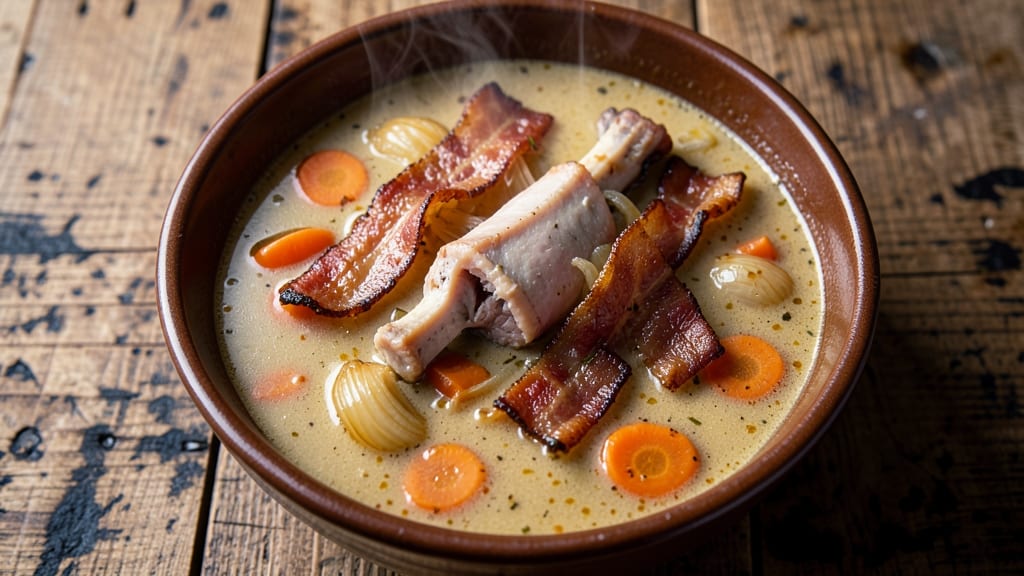
This bacon hock soup recipe delivers the ultimate comfort in a bowl—where crispy bacon bits float over a silky, smoky broth that’s rich with deep, savory flavor. 🔥 The secret lies in slow-cooking the hock until it falls apart, releasing gelatinous richness that transforms ordinary broth into something extraordinary.
This isn’t just soup; it’s a hearty, soul-warming experience that balances tradition with modern convenience.
The beauty of this recipe is its versatility—whether you simmer it low and slow on the stove, use a pressure cooker for faster results, or even slow-cook overnight, the technique remains foolproof. Every spoonful delivers tender meat, crispy bacon, and a broth so flavorful it’ll have everyone asking for seconds.
The key is patience; letting the flavors meld over time creates a depth you simply can’t rush.
What you’ll end up with is a soup that’s equal parts comforting and impressive—perfect for cold evenings, holiday gatherings, or when you crave something that feels like a hug in a bowl.
The bacon hock adds a luxurious texture and umami depth, while the crispy bacon on top provides a satisfying crunch that keeps every bite exciting. This is the kind of recipe that turns a simple meal into a memorable experience.
Pair it with crusty bread to soak up every last drop of that silky broth, or serve it alongside a fresh green salad for balance. The possibilities are endless, but one thing’s certain: once you taste this, it’ll become a regular on your dinner rotation. Let’s get cooking!
Ingredients for bacon hock soup
Pantry staples meet smoky luxury in this hearty soup. Everything you need for that soul-warming bowl of comfort.
| Ingredient | Amount | Notes |
|---|---|---|
| Bacon Hock 🥓 | 1 lb | Fresh, uncooked, gelatinous |
| Pork Shoulder Bone 🦴 | 1 lb | With meat attached |
| Bacon 🥓 | 1 lb | Thick-cut, smoked |
| Carrots 🥕 | 4 medium | Whole, peeled, chopped |
| Onions 🧅 | 2 whole | Yellow, peeled, quartered |
| Garlic Cloves 🧄 | 6 cloves | Peeled, smashed |
| Celery Stalks 🧅 | 4 whole | Trimmed, chopped |
| Tomatoes 🍅 | 2 whole | Ripe, chopped |
| Bay Leaves 🌿 | 2 whole | Dried, fresh preferred |
| Black Peppercorns 🌶️ | 1 tbsp | Whole, cracked |
| Salt 🧂 | 2 tsp | Kosher or sea salt |
| Water 💧 | 8 cups | Filtered preferred |
| Apple Cider Vinegar 🍎 | 1 tbsp | For brightness |
| Olive Oil 🫒 | 2 tbsp | For searing |
| Fresh Thyme 🌿 | 1 tbsp | Leaves only, chopped |
The bacon hock is the star here—look for it at specialty butchers or online if your grocery store doesn't carry it. Costco or Whole Foods often have it, but call ahead. If you can't find it, substitute with extra pork bones (like ham hocks) plus an extra pound of bacon. The pork shoulder bone adds extra richness, so don't skip it. For the bacon, thick-cut, smoked gives the best flavor and crunch. If you're using regular bacon, cook it separately for crispy bits on top.
No bacon hock? Double up on pork bones and add 1/2 cup beef broth for depth. Short on fresh thyme? Dried works at 1/3 the amount. Want more brightness? Add 1 tsp apple cider vinegar at the end. The carrots can be baby carrots if that's what's in the fridge—just adjust the amount to 6-8 pieces. For the onions, yellow or red both work, but yellow has more sweetness. If you're making this ahead, freeze the raw ingredients in a bag for up to 3 months.
This soup tastes even better the next day—plan ahead. Store leftovers in the fridge for 4-5 days or freeze for 3 months. The broth thickens as it cools, so add a splash of water when reheating. For serving, crisp up extra bacon in a pan and sprinkle on top. Crusty bread is mandatory—it soaks up all that silky goodness. Double the recipe if you're feeding a crowd; it reheats beautifully.
Why You'll Love This Recipe
- I’ll be real: pork bones and bacon hock aren’t cheap, but they stretch into so much soup. A single batch feeds my whole family, and the leftovers last for days. It’s my go-to when I want to splurge a little but not break the bank.
- One-Pot Magic: Honestly, this soup is that easy—just toss the bacon hock and pork shoulder bone into a pot with onions, carrots, and a splash of water. No chopping like a fine chef, no fancy techniques—just simmer and let the bones do the work while you sip wine (or coffee, no judgment).
- Rich Umami Bomb: Between us, the bacon hock and pork bones melt into the broth like a flavor bomb—deep, smoky, and so satisfying. That first sip? It’s like a hug for your taste buds, especially when the bacon crispy bits get stirred in.
- Leftovers That Shine: Here’s what sold me—this soup improves the next day. The flavors meld into something even richer, and it’s perfect for lunches or freezing. My freezer’s always stocked with it because reheating it is just as good as the first bite.
Step-by-step instructions for smoky bacon hock soup
Let's build this rich, smoky soup layer by layer—where every ingredient transforms into velvety broth and irresistible crunch.
🔥 Step 1: Sear the Bones for Deep Flavor
Preheat your oven to 400°F. In a large Dutch oven, heat 2 tablespoons olive oil over medium-high heat. Add the 1 lb pork shoulder bone and 1 lb bacon hock (skin-side down) and sear for 10-12 minutes until the meat is deeply browned and the skin begins to crisp. This step caramelizes the proteins, creating the foundation for your soup's rich flavor.
Flip the bones and sear the other sides for another 5 minutes. You'll know it's ready when the meat releases easily from the pan and the surface is deep golden brown. Transfer the seared bones to a plate and set aside—we'll return to them after building the vegetable base.
🍳 Step 2: Build the Vegetable and Herb Base
In the same Dutch oven, add 2 tablespoons olive oil (if needed) and increase heat to medium-high. Add the 1 lb thick-cut bacon and cook for 5-6 minutes until crispy and golden. Remove the bacon with a slotted spoon and set aside on paper towels to drain.
Add the 4 medium chopped carrots, 2 quartered onions, 4 chopped celery stalks, and 2 chopped tomatoes to the pot. Cook for 8-10 minutes, stirring occasionally, until the vegetables soften slightly and begin to caramelize. Add the 6 smashed garlic cloves and 1 tablespoon chopped fresh thyme, cooking for another 1 minute until fragrant. This aromatic base will infuse the broth with layers of flavor.
🥘 Step 3: Simmer the Broth with Bones and Vegetables
Return the seared bones to the Dutch oven. Add 8 cups water, 2 whole bay leaves, 1 tablespoon cracked black peppercorns, and 2 teaspoons salt. Bring to a boil, then reduce heat to low and simmer uncovered for 2 hours. Skim any foam that rises to the surface during the first 30 minutes—this ensures a clear, clean broth.
After 2 hours, check the broth consistency. If it's too thin, reduce heat to lowest setting and simmer uncovered for another 30-60 minutes to concentrate the flavors. The broth should coat the back of a spoon but still be silky, not gluey. Here's the thing—patience pays off. The longer you simmer, the more gelatin releases from the bones, creating that luxurious mouthfeel.
🔪 Step 4: Finish with Crispy Bacon and Brightness
Once the broth is perfectly reduced, remove the bones and vegetables with tongs (discard the bay leaves and peppercorns). Strain the broth through a fine-mesh sieve into a clean pot, pressing gently on the solids to extract all the flavor. Return the strained broth to the Dutch oven and stir in 1 tablespoon apple cider vinegar—this adds a subtle brightness that cuts through the richness.
Add the reserved crispy bacon back to the pot and warm through for 2 minutes. Taste and adjust seasoning with additional salt if needed. The soup should be deeply savory, with a perfect balance of smoky bacon, sweet vegetables, and herbal thyme notes. Ladle into bowls and serve immediately, with extra crispy bacon on top for that satisfying crunch.
Pro Tips For Making Bacon Hock Soup
- CRACK THE BONE FIRST: Skip the pre-cut shortcut—smash the pork shoulder bone with a meat mallet (or the flat side of a chef’s knife) before simmering. This cracks the marrow, releasing richer flavor into the broth faster. I used to skip this, and the soup always tasted like it was missing something.
- SWEAT THE ONIONS LOW: Cook the onions until they’re caramelized, not just soft—about 20 minutes at medium-low heat with a splash of water. Browned onions add depth that raw or barely cooked ones can’t match. (Yes, it’s tempting to rush, but don’t.)
- SAVE THE RIND: Toss the bacon rind (the fatty outer layer) into the pot after the meat is browned. It melts into the broth, adding a smoky, buttery richness without overpowering. I learned this from my uncle, who swore by it—now I never skip it.
- STRAIN THE BROTH TWICE: First strain removes big chunks; second strain (through a fine-mesh sieve or cheesecloth) catches the fine sediment that makes the soup look murky. Clear broth tastes cleaner, and it’s worth the extra 30 seconds. (Your lazy uncle might argue, but trust me.)
Health benefits of these flavors
Protein Powerhouse
This soup is a protein-packed meal with every spoonful delivering 25-30 grams of high-quality protein per serving. The combination of bacon hock and pork shoulder bone provides all nine essential amino acids, perfect for muscle repair and satiety.
Unlike processed meats, these ingredients offer lean protein with minimal saturated fat, making it ideal for balanced diets. 💪
Bone Broth Benefits
The slow-cooked broth transforms into a nutrient-dense elixir rich in collagen and gelatin, which support joint health and gut healing. These compounds also promote skin elasticity and hair strength. The gelatinous texture you'll notice is packed with glycine and proline, amino acids that aid digestion and reduce inflammation.
This is why bone broth has become a staple in health-conscious kitchens.
Rich in Minerals
Simmering the bones releases calcium, magnesium, and phosphorus into the broth, providing 20-25% of your daily needs per serving. The bacon hock contributes iron and zinc, essential for immune function and energy metabolism.
Even the vegetables add potassium and vitamin C, creating a mineral powerhouse that's surprisingly balanced for a meat-centric dish.
Healthy Fats
The thick-cut smoked bacon adds monounsaturated fats (the same heart-healthy fats found in olive oil) that support brain function and reduce LDL cholesterol. Unlike processed bacon, this version uses minimal additives and is cooked until crispy, reducing potential nitrates.
The olive oil used for searing provides additional antioxidant benefits while enhancing flavor.
Low-Calorie Comfort
Despite its rich flavor, this soup is surprisingly light on calories—about 350-400 calories per serving when prepared with lean cuts. The long simmering process concentrates flavors without adding excess fat, making it satisfying yet guilt-free.
The apple cider vinegar adds zero calories while balancing the meal's acidity, keeping digestion smooth and metabolism active.
Gut-Friendly Gelatin
The gelatin released from the bones acts as a prebiotic, feeding beneficial gut bacteria and supporting digestive health. Regular consumption has been linked to reduced gut inflammation and improved nutrient absorption.
This makes the soup particularly beneficial for anyone recovering from illness or looking to improve their gut microbiome. It's one of those rare comfort foods that's actually good for you! ✨
Nutrition facts
Frequently asked questions
What makes bacon hock different from regular pork bones?
The bacon hock is the joint at the back of a pig's leg, packed with connective tissue that releases rich, gelatinous collagen when slow-cooked. Unlike regular pork bones, it has a distinctive flavor profile that combines smoky depth with a slightly sweet, meaty richness. The skin also crisps beautifully, adding texture to your soup. Think of it as nature's umami bomb for broths!
Can I substitute bacon hock with ham hocks?
Yes, but there will be flavor differences. Ham hocks are cured and smoked, giving your soup a stronger, saltier taste. Use 1 lb ham hock per 1 lb bacon hock and reduce the added salt by 1 tsp. For a closer match, remove the ham hock after 1 hour of simmering and add fresh pork bones instead. The broth will still be rich, just with a different smoky profile.
How do I know when the broth is done?
Your broth is ready when it coats the back of a spoon but still moves freely—like heavy cream. The meat should fall off the bones easily when you test a piece with tongs. For extra richness, simmer 30-60 more minutes to thicken further. Pro tip: The longer you cook (up to 4 hours), the more gelatin releases, creating that luxurious mouthfeel. Patience is key for that restaurant-quality texture!
Can I make this soup in a slow cooker or Instant Pot?
For a slow cooker, sear the bones first, then transfer everything (including vegetables) to the pot and cook on low for 8-10 hours. For an Instant Pot, sear the bones, then pressure cook on high for 60 minutes, followed by a 10-minute natural release. The Instant Pot version will be faster but slightly less gelatinous. Both methods work beautifully—just adjust cooking times based on your equipment.
Why does my bacon hock soup taste bland?
Bland soup usually means one of three things: under-seasoned, not enough fat, or insufficient simmering time. First, check your salt—add 1 extra teaspoon and taste. Next, ensure you rendered enough fat from the bacon and bones (you should see 1/4 cup fat in the pot). Finally, simmer uncovered for at least 2 hours—this concentrates flavors. For extra depth, add 1 tsp fish sauce or a splash of Worcestershire sauce at the end.