
Soups & Stews
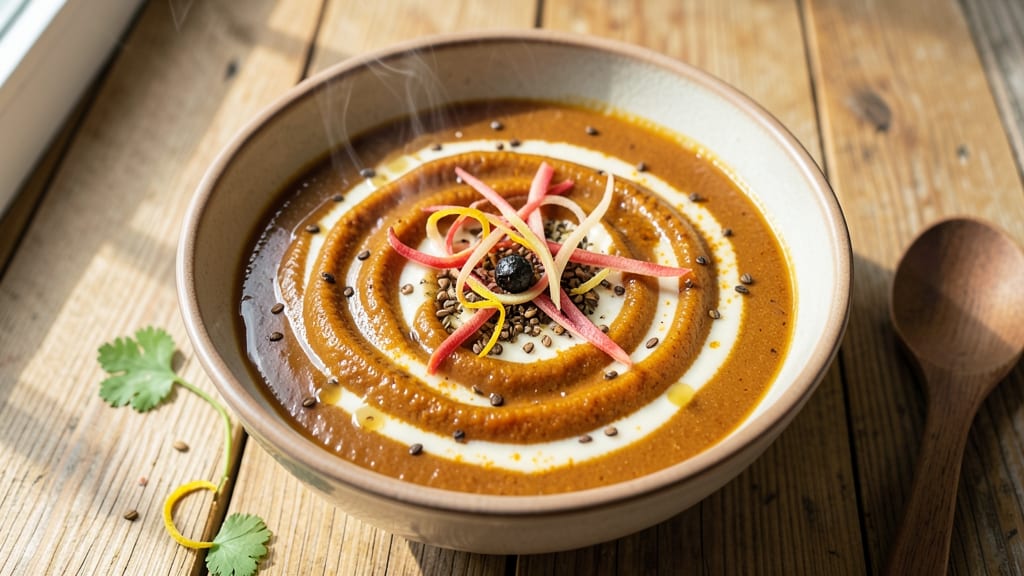
This Ayurvedic pumpkin soup recipe transforms humble ingredients into a deeply nourishing bowl of warmth, where golden turmeric meets earthy spices for both flavor and balance.
The secret lies in traditional techniques—slow simmering spices like cumin and ginger in ghee (or coconut oil) to unlock their digestive benefits while blending pumpkin into velvety perfection.
What sets this apart is the intentional harmony of Ayurvedic principles: warming spices to support digestion, cooling coconut milk to soothe, and a touch of black pepper to amplify turmeric's anti-inflammatory glow.
The process is straightforward yet transformative: roast pumpkin seeds and spices until fragrant, then simmer with fresh ginger and turmeric in aromatic broth. Blending creates a silky texture that feels both comforting and light, while finishing with coconut milk adds creaminess without heaviness.
The result is a soup that's not just delicious but actively beneficial—ideal for cooler months or anytime you crave something that nourishes body and soul.
What makes this recipe truly special is its adaptability. Use ghee for a rich, traditional touch or coconut oil for a plant-based version, and adjust spice levels to suit your constitution.
Garnish with toasted pumpkin seeds, fresh cilantro, or a drizzle of golden turmeric for both visual appeal and extra warmth. Each spoonful delivers a balance of flavors and energies, proving that comfort food can also be deeply healing.
Perfect for meal prep or last-minute gatherings, this soup scales effortlessly while maintaining its depth of flavor. The key is patience—letting spices infuse and pumpkin soften creates a complexity that store-bought versions simply can't match.
Ready in under an hour, it's the kind of dish that turns ordinary weeknights into moments of mindful nourishment.
Ingredients for ayurvedic pumpkin soup
Transform humble ingredients into a deeply nourishing Ayurvedic pumpkin soup with golden turmeric and warming spices.
| Ingredient | Amount | Notes |
|---|---|---|
| Small Sugar Pumpkin 🎃 | 2 lb | Skin removed, cubed (1-inch pieces) |
| Organic Ghee or Coconut Oil 🫒 | ½ cup | Ghee for richness, coconut oil for plant-based |
| Fresh Ginger Root 🌿 | 2 tbsp | Finely grated (peeled) |
| Turmeric Powder 🌶️ | 1 tbsp | Freshly ground preferred |
| Cumin Seeds 🌿 | 1 tbsp | Toasted until fragrant |
| Ground Black Pepper 🌶️ | ½ tsp | Freshly cracked for potency |
| Vegetable Broth 💧 | 4 cups | Low-sodium preferred |
| Full-Fat Coconut Milk 🥥 | 13 ½ oz | Canned, for creaminess |
| Pumpkin Seeds 🥜 | ¼ cup | Toasted for garnish |
| Fresh Cilantro 🌿 | ¼ cup | Chopped, for garnish |
| Sea Salt 🧂 | 1 tsp | Diamond Crystal preferred |
| Garlic Cloves 🧄 | 2 cloves | Minced for depth |
| Coriander Seeds 🌿 | ½ tsp | Toasted lightly |
The spices are the soul of this soup. Penzeys or Indian grocery stores carry the best whole spices—cumin and coriander should smell vibrant, not stale. Toast your seeds in a dry pan until fragrant (about 30 seconds) to unlock their digestive benefits. Fresh ginger and turmeric are non-negotiable; the anti-inflammatory glow comes from their union. For the pumpkin, sugar varieties like Sugar Pie work best—their natural sweetness balances the earthy spices. If using coconut oil instead of ghee, opt for organic, expeller-pressed for purity.
No fresh ginger? Powdered ginger at half the amount works in a pinch, though texture suffers. Substitute coconut milk with cashew cream for a richer alternative, though coconut's natural sweetness is ideal. The broth matters—homemade is best, but Pacific Foods or Imagine low-sodium are solid store-bought options. For extra depth, add a pinch of asafetida (hing) with the spices, though it's an acquired taste. Toasting the seeds is worth the extra minute—it transforms their flavor from bland to aromatic.
Store prepped pumpkin cubes in the fridge for 3 days or freeze for 3 months. Toasted seeds keep their crunch for 1 week in an airtight container. The soup reheats beautifully—simmer gently to preserve its velvety texture. For meal prep, portion into jars with coconut milk on top to prevent a skin from forming. Garnish with fresh cilantro and a drizzle of turmeric just before serving to maintain its golden glow.
Why You'll Love This Recipe
- One-Pot Magic: The moment you toss the cubed pumpkin into the pot with warmed ghee, cumin, and ginger, you’re basically doing 90% of the work. No chopping boards to scrub, no extra bowls—just stir, simmer, and let the spices do their thing while you sip tea.
- Golden Spice Kiss: That first sip? Warm, earthy, and just a little fiery from the fresh ginger and turmeric. The ghee gives it a richness that’s chef’s kiss—creamy without being heavy, and the cumin seeds add this subtle, toasty crunch that makes it feel special.
- Weeknight to Dinner Party: I’ve served this to my book club (with crusty bread) and my tired self on a Monday (with a sprinkle of chili flakes). It’s the kind of soup that works in a mug or a bowl, dressed up or kept simple—no one ever questions why you made it twice in a week.
- Budget Warmth: A single sugar pumpkin lasts me four soups, and the spices? A tiny pinch goes a long way. Honestly, it’s my go-to when I need something nourishing but don’t want to break the bank—plus, the leftovers taste even better the next day.
Step-by-step instructions for Ayurvedic pumpkin soup
Transform simple ingredients into a deeply nourishing soup that balances all three doshas.
Toast and Infuse the Spice Base
In a medium saucepan, combine the 1 tablespoon cumin seeds and 0.5 teaspoon coriander seeds. Toast over medium heat for 2 minutes until fragrant and lightly golden—you'll smell their earthy aroma intensify. Immediately add the 2 cloves minced garlic and cook for 30 seconds until just fragrant, being careful not to let it brown.
Lower the heat to medium-low and add the 0.5 cup organic ghee or coconut oil. Stir in the 1 tablespoon turmeric powder and 0.5 teaspoon ground black pepper, whisking constantly for 1 minute until the spices dissolve completely and the oil takes on a vibrant golden hue. This spice infusion forms the foundation of the soup's healing properties, creating a warm, anti-inflammatory base that supports digestive fire.
Sauté the Aromatics and Pumpkin
Transfer the spiced oil to a large stockpot and add the 2 tablespoons finely grated fresh ginger root. Sauté for 1 minute until the ginger becomes translucent and releases its pungent aroma. Add the 2 lb cubed small sugar pumpkin and toss to coat evenly in the spiced oil.
Cook for 5 minutes, stirring occasionally, until the pumpkin begins to soften slightly at the edges. The pumpkin should develop a faint golden color from the spices, indicating proper infusion. This step ensures the pumpkin absorbs the maximum flavor from the aromatic spices before simmering in the broth.
Simmer with Broth and Season
Pour in the 4 cups vegetable broth and bring to a gentle boil. Reduce heat to medium-low and simmer uncovered for 20 minutes, stirring occasionally. You'll notice the pumpkin softening completely and the liquid reducing slightly, creating a rich, velvety texture. The soup should smell deeply of warm spices and sweet pumpkin.
After 20 minutes, add the 1 teaspoon sea salt and taste. Adjust seasoning if needed—this soup should balance sweetness from the pumpkin with the earthy heat of the spices. The salt enhances the natural sweetness of the pumpkin while supporting electrolyte balance, making this a truly nourishing dish.
Blend and Finish with Coconut Milk
Using an immersion blender, blend the soup directly in the pot until completely smooth. For a perfectly silky texture without lumps, blend in 30-second bursts, scraping the sides of the pot between each burst. If you prefer a slightly textured version, blend for 15 seconds instead.
Return the pot to medium heat and stir in the 13.5 oz full-fat coconut milk. Warm through for 2-3 minutes, stirring constantly, until the soup reaches 185°F—just below a simmer. The coconut milk adds richness while maintaining the soup's lightness, creating a perfect balance of fats and flavors that support Kapha dosha.
Garnish and Serve Warm
Ladle the soup into bowls and garnish each serving with 1 tablespoon toasted pumpkin seeds and 1 tablespoon chopped fresh cilantro. The pumpkin seeds add a satisfying crunch and provide additional magnesium, while the cilantro brightens the dish with its fresh, citrusy notes. Serve immediately while still steaming hot to preserve all the aromatic qualities.
This soup is designed to be enjoyed as a complete meal—its balanced flavors and nourishing ingredients make it perfect for cooler months when the body craves warmth and grounding energy. The golden turmeric glow not only looks beautiful but also indicates the presence of curcumin, which supports joint health and reduces inflammation.
Pro Tips For Making Ayurvedic Pumpkin Soup
- Sear the Pumpkin First: Cut the sugar pumpkin into 1-inch chunks, toss with 1 tablespoon of ghee or coconut oil, and sear them in a dry pot over medium-high heat for 5-7 minutes until slightly charred. This step deepens the flavor and prevents the soup from tasting bland later—trust me, skipping this means missing out on that nutty, caramelized depth.
- Use a Microplane for Ginger: Fresh ginger loses its potency when grated, but a microplane keeps it fine and releases more oils. For this soup, you only need about 1 teaspoon of grated ginger, but if you’re using a knife, you’ll end up with uneven pieces that don’t blend as smoothly. (And yes, I’ve made the soup with both—it’s noticeable.)
- Don’t Rush the Simmer: After adding the pumpkin, ginger, turmeric, and cumin to the pot, let it simmer uncovered for at least 20 minutes. The longer it cooks, the more the flavors meld, and the creamier the texture becomes. I used to pull it after 15 minutes, and the soup always tasted underdeveloped—patience here is everything.
- Toast the Cumin Seeds: Dry-toast the cumin seeds in a separate pan over low heat for 30 seconds until fragrant before adding them to the soup. This simple step prevents bitterness and amplifies their warm, earthy flavor. (I learned this the hard way after burning them once—now I keep the heat low and watch them like a hawk.)
Creative variations of this recipe
Ayurvedic Dosha Adaptations
Adjust this soup to balance your unique constitution. For Vata dosha, add ½ tsp cardamom and ¼ cup cooked quinoa for grounding energy.
For Pitta dosha, reduce black pepper to ¼ tsp and add ½ cup diced cucumber with cooling properties. Kapha dosha benefits most from the original recipe, but add 1 tsp grated ginger and a pinch of black salt (kala namak) to enhance metabolism. 🌟
Seasonal Variations
Spring: Swap pumpkin for butternut squash and add fresh mint and lemon zest to brighten flavors. Summer: Use yellow squash instead of pumpkin and stir in 1 cup coconut yogurt for a refreshing twist.
Autumn: Add roasted sweet potatoes and cinnamon for deeper warmth. Winter: Keep the original recipe but add 1 tsp cinnamon and ½ tsp cloves for extra coziness.
Protein-Packed Upgrades
For a heartier meal, stir in ½ cup cooked lentils or 1 cup chickpeas during the final simmer. For a vegetarian option, blend in ½ cup silken tofu after adding coconut milk.
For a plant-based protein boost, add 1 cup cooked quinoa and 2 tbsp nutritional yeast for a cheesy flavor. These additions maintain the soup's Ayurvedic balance while adding satisfying texture. ✨
Global Spice Twists
Mexican-inspired: Add 1 tsp smoked paprika and ½ tsp cumin with the initial spices, then garnish with avocado slices and lime wedges. Thai-inspired: Stir in 1 tsp lemongrass paste and ½ tsp galangal during simmering, then top with Thai basil and chili flakes.
Moroccan-inspired: Add ½ tsp ground coriander and ¼ tsp cinnamon, then garnish with preserved lemon and toasted almonds.
Make-Ahead Magic
Prepare the soup base (through Step 3) up to 3 days ahead and store in an airtight container. Reheat gently on the stovetop, then blend and add coconut milk just before serving. For freezer-friendly versions, freeze the blended soup without coconut milk (add it fresh when reheating).
To preserve texture, reheat in a pot over low heat for 5-7 minutes, stirring constantly. Add a splash of water if needed to restore creaminess. 💫
Kid-Friendly Tweaks
For picky eaters, blend the soup extra smooth and stir in ½ cup applesauce for natural sweetness. Reduce black pepper to ⅛ tsp and add ½ tsp cinnamon for a familiar flavor. Serve with soft tortilla strips or toasted bread cubes for dipping.
Let kids customize their bowls with toppings like shredded carrots or crumbled feta cheese. The warming spices help calm tantrums while providing essential nutrients. 💛
Nutrition facts
Frequently asked questions
Can I substitute butternut squash for pumpkin in this recipe?
Yes! Butternut squash works beautifully—its natural sweetness enhances the warming spices. Use the same amount (2 lbs) and adjust cooking time to 15 minutes instead of 20 since it softens faster. For extra depth, add ½ tsp cinnamon during the simmer.
How do I make this soup vegan?
Replace the ghee with coconut oil and use vegan vegetable broth. For extra richness, stir in 2 tbsp cashew cream instead of coconut milk. The Ayurvedic benefits remain intact—just ensure all ingredients are plant-based.
Why does my soup taste bitter? How can I fix it?
Bitterness often comes from overcooking spices or using stale pumpkin. Reduce simmering time to 15 minutes and add ½ cup coconut milk earlier to balance flavors. For freshness, use fresh ginger and turmeric (not powdered) and toast spices lightly.
Is this soup safe for babies or toddlers?
Yes, but with adjustments! Skip black pepper and reduce spices to ½ tsp total. Blend until ultra-smooth and serve with ½ cup mashed sweet potato for extra nutrition. Always introduce one new ingredient at a time to monitor reactions.
Can I use canned pumpkin instead of fresh?
Canned pumpkin works in a pinch, but fresh is ideal for texture and flavor. If using canned, reduce broth to 3 cups and simmer for 10 minutes instead. For extra creaminess, add 2 tbsp coconut cream at the end. The Ayurvedic benefits remain, though fresh pumpkin offers better nutrient retention.