
Soups & Stews
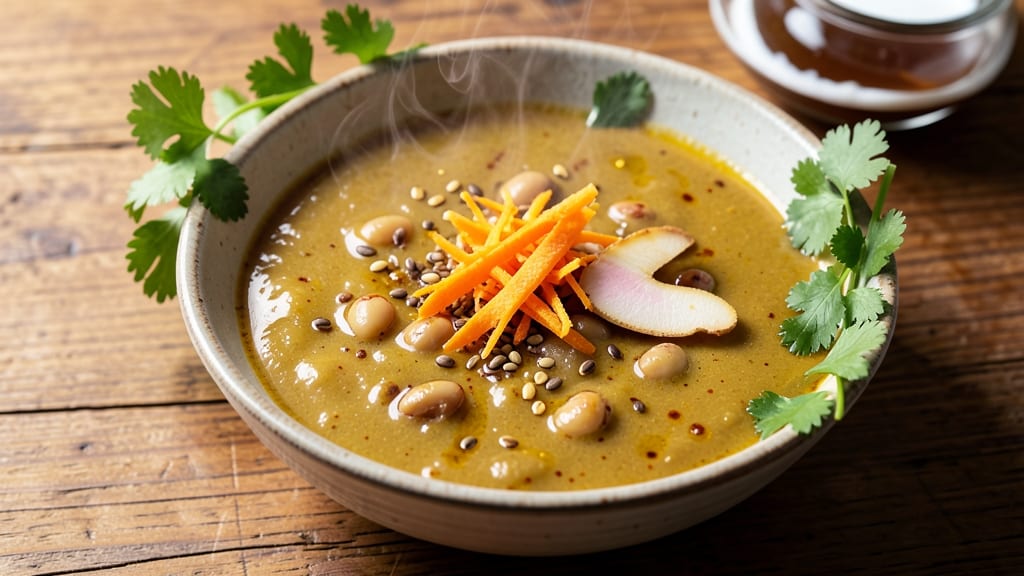
This Ayurvedic mung bean soup recipe brings warmth and balance to your table, blending ancient wisdom with simple ingredients for a dish that nourishes both body and mind. 🌿 The golden trio of turmeric, cumin, and ginger creates a spiced harmony that aligns with Ayurvedic principles, supporting digestion while delivering deep, earthy flavors.
I developed this recipe after years of studying how traditional spices can transform humble beans into a healing, plant-based meal.
What sets this soup apart is its thoughtful ingredient pairing—mung beans provide light, easy-to-digest protein, while spices like coriander and fennel add aromatic depth without overpowering. The secret lies in slow simmering, which allows flavors to meld and creates a broth that's both comforting and energizing.
Perfect for balancing Vata or Pitta doshas, this soup adapts effortlessly to seasonal vegetables, making it as versatile as it is nutritious.
The result is a velvety soup with tender beans, fragrant spices, and a subtle sweetness from fresh herbs. Each spoonful delivers warmth and satisfaction, making it ideal for cool evenings or post-workout meals.
The Ayurvedic approach ensures you're not just eating a meal, but nourishing your body's natural rhythms with every bite.
Ready in under an hour, this recipe delivers restaurant-quality results with minimal effort. Serve with a side of steamed greens or whole-grain bread to complete the meal. Let's create this nourishing bowl of goodness together.
Ingredients for ayurvedic mung bean soup
Ancient spices meet wholesome beans for a nourishing Ayurvedic bowl of warmth and balance.
| Ingredient | Amount | Notes |
|---|---|---|
| Mung Beans (Split) 🌾 | 1 ½ cups | Rinsed thoroughly before cooking |
| Fresh Turmeric Root 🌿 | 1 tbsp | Freshly grated for optimal potency |
| Ground Cumin Seeds 🌶️ | 1 tbsp | Toasted for enhanced aroma |
| Fresh Ginger Root 🧄 | ½ cup | Finely chopped, organic preferred |
| Ground Coriander Seeds 🌿 | 1 tbsp | Freshly ground for vibrant flavor |
| Fennel Seeds 🌾 | ½ tbsp | Lightly toasted for subtle sweetness |
| Fresh Cilantro Leaves 🌿 | ¼ cup | Chopped, stems removed |
| Fresh Mint Leaves 🍃 | ¼ cup | Chopped, for brightness |
| Yellow Onion 🧅 | 1 whole | Finely diced, sweet variety |
| Garlic Cloves 🧄 | 4 cloves | Minced, for aromatic depth |
| Tomatoes (Roma) 🍅 | 2 whole | Diced, San Marzano preferred |
| Coconut Milk (Full-Fat) 🥥 | 1 cup | For velvety texture |
| Vegetable Broth 💧 | 4 cups | Homemade or low-sodium |
| Extra-Virgin Olive Oil 🫒 | 2 tbsp | Cold-pressed, fruity variety |
| Sea Salt 🧂 | 1 tsp | Diamond Crystal preferred |
| Black Peppercorns 🌶️ | ½ tsp | Freshly cracked |
| Asafoetida Powder (Hing) 🌿 | ¼ tsp | Optional, for umami depth |
The foundation starts with mung beans—choose split and skinned for faster cooking and better texture. Indian or Asian grocery stores offer the best quality in bulk, often at a fraction of the cost. Fresh turmeric and ginger root are non-negotiable; organic produce sections or local farmers' markets provide the most vibrant, potent roots. Toast your whole spices—cumin, coriander, and fennel—before grinding to unlock their aromatic oils. For the coconut milk, full-fat canned versions deliver the richest creaminess without artificial additives, while the vegetable broth should be homemade for maximum flavor purity. The cilantro and mint add freshness, so look for bright green leaves with no wilting at the stems.
No fresh turmeric? Powdered turmeric at half the amount works, though fresh delivers superior potency. Substitute dried ginger for the fresh root, but reduce to one-third the quantity—it's more concentrated. Short on cilantro? Fresh parsley bridges the gap, though it lacks the same citrusy brightness. The asafoetida (hing) is optional but adds an unmistakable depth; if unavailable, garlic powder at double the amount mimics its savory punch. For the tomatoes, canned San Marzano provides consistent sweetness, while fresh Roma delivers a brighter acidity. The olive oil should be extra-virgin and cold-pressed—anything less will compromise the dish's delicate balance of flavors.
Store your split mung beans in an airtight container in a cool, dark place for up to 6 months, though they're best used within 3 months for optimal texture. Fresh ginger and turmeric keep 2 weeks in the fridge wrapped in a damp paper towel, while whole spices stay potent for 6-12 months in a sealed jar away from light. The finished soup reheats beautifully—simmer gently for 2-3 minutes to restore its velvety texture. Portion into glass containers for 4-5 days of fridge storage, or freeze for 3 months by laying flat in a single layer before transferring to a bag. The coconut milk may separate when chilled; stir vigorously before reheating.
Why You'll Love This Recipe
- No Chopping Needed: I swear by this—just toss in whole turmeric root and ginger slices, no peeling or dicing. The pot does all the work while you sip tea and pretend you’re a busy chef.
- Earthy Warmth: That first spoonful of split mung beans simmered with fresh turmeric and cumin? It’s like a hug in a bowl—bright, spicy, and just sweet enough to linger. Honestly, the ginger gives it this kick that makes it feel special without effort.
- Lunchbox Hero: Between us, this soup is my go-to for packed lunches—stays fresh for days, reheats like a dream, and my kids actually finish it. (Yes, even on a Tuesday night when they’d rather eat cereal.)
- Pantry Goldmine: Split mung beans cost pennies, and the spices last forever. I make a big batch, freeze half, and still have leftovers that taste better than takeout. Budget-friendly doesn’t mean boring—this is proof.
Step-by-step instructions for Ayurvedic mung bean soup
Transform simple ingredients into a deeply nourishing Ayurvedic-inspired soup with balanced flavors and digestive benefits.
🍳 Step 1: Toast Spices and Sauté Aromatics
Heat the 2 tablespoons extra-virgin olive oil in a heavy-bottomed pot over medium heat. Add the 1 tablespoon ground cumin seeds and 1 tablespoon ground coriander seeds, toasting for 30 seconds until fragrant—you'll smell their warm, earthy aroma. Immediately add the 0.5 tablespoon fennel seeds and toast for another 15 seconds.
Lower heat to medium-low and add the 1 whole yellow onion, cooking for 5 minutes until translucent. Stir in the 4 cloves garlic and 0.5 cup fresh ginger root, cooking for 1 minute until the garlic turns golden and the ginger softens. This foundational step builds the soup's aromatic complexity.
👨🍳 Step 2: Develop the Spiced Base
Add the 1 tablespoon freshly grated turmeric root and 0.25 teaspoon asafoetida powder to the pot, stirring for 30 seconds to bloom the spices' flavors. Pour in the 2 whole diced Roma tomatoes and cook for 3 minutes until they break down into a thick paste. This step creates the soup's vibrant color and deep umami foundation.
Carefully pour in the 4 cups vegetable broth and bring to a gentle simmer. Add the 1.5 cups rinsed split mung beans and 1 teaspoon sea salt. The soup should bubble gently—if it boils vigorously, reduce heat to maintain even cooking. This prevents the beans from splitting prematurely.
⏰ Step 3: Simmer Until Beans Are Tender
Cover the pot and simmer for 25-30 minutes until the mung beans are fork-tender but still hold their shape. Stir occasionally to prevent sticking. The beans should be soft enough to crush slightly between your fingers but not mushy. This balance ensures the soup maintains its texture while delivering maximum nutrition.
After 20 minutes, stir in the 1 cup full-fat coconut milk and 0.5 teaspoon freshly cracked black peppercorns. The coconut milk adds velvety richness while balancing the earthy spices. Taste and adjust seasoning—you may need a pinch more salt to harmonize the flavors.
🥘 Step 4: Finish with Fresh Herbs
Remove the pot from heat and stir in the 0.25 cup chopped fresh cilantro leaves and 0.25 cup chopped fresh mint leaves. These herbs add brightness and contrast to the warm spices. Let the soup sit covered for 5 minutes to allow the flavors to meld completely.
For optimal texture, use an immersion blender to lightly purée about half the soup until smooth while leaving the other half slightly chunky. This creates visual interest and varied textures. If you prefer completely smooth soup, blend until completely homogeneous. The result should be a harmonious blend of creamy and textured elements.
🍽️ Step 5: Serve Warm with Digestive Benefits
Ladle the soup into bowls and serve immediately while warm. The ideal serving temperature is 160-170°F, where the flavors are most vibrant and the digestive properties are most effective. Garnish with additional fresh cilantro and mint if desired, and serve with warm, crusty bread to soak up the flavorful broth.
This Ayurvedic-inspired soup balances all three doshas—its warming spices help with digestion, the coconut milk provides nourishment, and the fresh herbs create cooling contrast. Each spoonful delivers protein, fiber, and essential minerals, making it a complete meal that supports both body and mind.
Pro Tips For Making Ayurvedic Mung Bean Soup
- SOAK BEANS 4 HOURS MINIMUM: Split mung beans cook faster, but skipping the soak leaves them mealy—like mush you’d rather forget. I learned this the hard way when my soup turned into a sad, gluey paste. Use warm water, cover, and let them sit overnight if possible. The longer they soak, the creamier the final texture.
- GRATE TURMERIC FRESH—NO SUBSTITUTE: Ground turmeric loses its bright, peppery kick and turns bitter. Scrape the skin off fresh root first, then grate it fine—about 1 teaspoon per serving. The color will be vibrant, and the flavor will actually taste like turmeric, not cardboard. (Yes, even if you’re impatient like me.)
- TOAST SPICES LOW AND SLOW: Cumin and coriander burn faster than you’d think, especially when you’re eager to start cooking. Heat them in a dry pan over low heat for 30 seconds, stirring constantly, until they just smell aromatic—not browned or smoky. Over-toasted spices taste bitter, and nobody wants that in their soup.
- STIR THE POT AFTER 10 MINUTES: I used to walk away after adding the beans and water, only to come back to a soup that had separated into a starchy sludge and a flavorless liquid. After 10 minutes of simmering, give it a good stir—break up any clumps and scrape the bottom. This keeps the beans evenly cooked and the broth from turning cloudy.
Perfect pairings for ayurvedic mung bean soup
Ayurvedic Bread Pairings
Serve this soup with whole-grain roti or missi roti—their earthy flavors complement the spices beautifully. I love using jowar (sorghum) or bajra (millet) flatbreads for extra fiber and dosha-balancing properties. These traditional Indian breads absorb the soup's richness while adding satisfying texture. 🌾
Warming Spiced Accompaniments
Add steamed basmati rice with a sprinkle of toasted cumin seeds and fresh cilantro for a complete meal. For extra warmth, serve with sprouted moong dal—the combination creates a protein-packed duo that aligns with Ayurvedic principles of balanced nutrition. The dal's creaminess contrasts perfectly with the soup's earthy depth.
Fresh Herbed Garnishes
Top each bowl with thinly sliced red onions and crispy fried shallots for crunch and brightness. I also love adding toasted coconut flakes—just 2 tablespoons per serving—for a sweet, nutty contrast that enhances the coconut milk's richness. These garnishes elevate the dish visually and texturally while keeping it light.
Digestive Ayurvedic Additions
Include a side of pickled mango or carrot—just ¼ cup per bowl—to stimulate digestion and balance the soup's warming spices. The tangy acidity cuts through the richness while adding a refreshing contrast. For extra benefits, serve with freshly squeezed lime wedges on the side.
Herbal Tea Pairings
Pair with ginger-turmeric tea—steep ½ inch fresh ginger and ½ teaspoon turmeric in hot water for 5 minutes—to amplify the dish's warming properties. Alternatively, fennel tea aids digestion and complements the soup's anise-like notes. Both teas enhance the Ayurvedic experience by supporting the body's natural rhythms.
Seasonal Vegetable Boosters
In summer, add steamed zucchini or cucumber for cooling contrast. During winter, include roasted sweet potatoes—just ½ cup per bowl—to deepen the soup's warming qualities. These seasonal additions keep the dish versatile while maintaining its Ayurvedic balance across different climates.
Nutrition facts
Frequently asked questions
Can I use canned mung beans instead of dried?
While canned mung beans will work in a pinch, they won't provide the same texture or nutritional benefits. Fresh or dried split mung beans develop a better consistency when simmered slowly, creating that perfect tender-yet-firm bite. If you must use canned, drain and rinse thoroughly, then simmer for only 10-15 minutes to prevent mushiness.
How do I adjust this recipe for Vata dosha?
For Vata balance, increase the warming spices: add ½ teaspoon cinnamon and ¼ teaspoon cardamom during the toasting step. Use extra coconut milk (½ cup more) for grounding energy, and serve with warm, freshly baked whole wheat bread instead of store-bought. The extra fat and warmth help calm Vata's dry, cold qualities.
What's the best way to make this soup gluten-free?
This recipe is naturally gluten-free, but check your vegetable broth for hidden additives. For extra safety, use certified gluten-free tamari instead of soy sauce if adding any. The natural ingredients like mung beans, spices, and fresh herbs contain no gluten, making this an excellent option for gluten-sensitive individuals.
Can I make this soup ahead of time?
This soup actually tastes better the next day as flavors meld. Store in an airtight container in the fridge for up to 4 days. Reheat gently on the stove with a splash of water or broth to restore creaminess. For freezing, portion into single-serving containers and freeze for up to 3 months—thaw overnight in the fridge before reheating.
Why does my soup taste bitter?
Bitterness usually comes from overcooking the tomatoes or beans. To fix this, reduce simmering time by 5 minutes next time, and add ½ teaspoon sugar or 1 tablespoon lemon juice at the end to balance flavors. Also ensure your spices are fresh—old cumin or coriander can develop bitter notes. Toast your spices fresh for maximum flavor.