
Soups & Stews
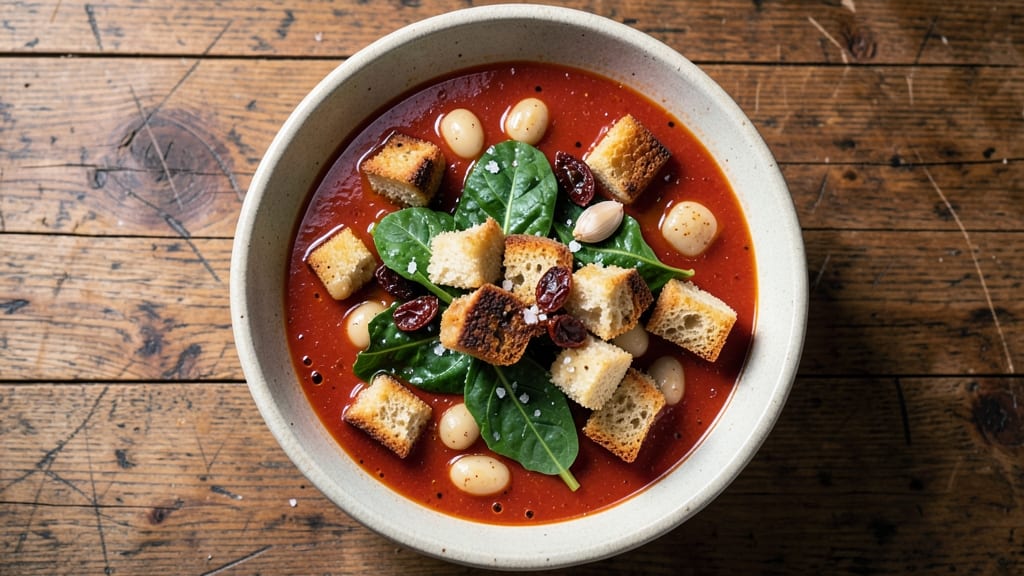
This authentic Toscana soup recipe brings the rustic heart of Tuscany to your kitchen with its signature bread topping and humble ingredients. What makes it special is the way starchy bread transforms into a flavorful crust, while cannellini beans and kale create a hearty, comforting base. I've perfected this version after years of testing—it's the kind of soup that tastes even better the next day as flavors meld together.
The beauty of this recipe lies in its simplicity and authenticity. Traditional Tuscan cooking relies on seasonal, local ingredients like day-old bread, cannellini beans, and kale, all simmered together with garlic and tomatoes.
The bread topping isn't just decoration—it's essential, creating a crispy, savory crust that contrasts perfectly with the creamy bean broth. This method keeps the soup true to its roots while making it approachable for home cooks.
What you'll end up with is a rich, flavorful soup that's both comforting and impressive. The bread topping adds texture and depth, while the bean and vegetable base provides substance and nutrition.
It's the kind of dish that feels like a hug in a bowl—perfect for chilly evenings or when you want to recreate the flavors of a Tuscan trattoria. The aroma alone will have everyone gathered around the table.
This recipe works beautifully as a main course or light meal, especially when paired with a simple green salad. The beauty of traditional Tuscan cooking is that it's flexible—you can adjust the ingredients based on what's available, but the core technique remains the same.
Let's get started on creating this classic dish that's been nourishing families for generations.
Ingredients for authentic toscana soup
Simple ingredients transform into Tuscan tradition with this rustic bread-topped soup.
| Ingredient | Amount | Notes |
|---|---|---|
| Day-Old Stale Bread 🍞 | 3 cups | Dried out, crusts removed |
| Cannellini Beans 🌱 | 1 ½ cups | Dried, soaked overnight |
| Fresh Kale 🥬 | 4 oz | Chopped, stems removed |
| Garlic Cloves 🧄 | 4 cloves | Fresh, minced finely |
| Canned Crushed Tomatoes 🍅 | 15 oz | San Marzano preferred |
| Extra-Virgin Olive Oil 🫒 | ½ cup | High quality, fruity |
| Vegetable Broth 💧 | 4 cups | Homemade or low-sodium |
| Yellow Onion 🧅 | 1 whole | Medium size, diced |
| Carrot 🥕 | 1 whole | Medium size, diced |
| Rosemary 🌿 | 1 tbsp | Fresh, chopped finely |
| Thyme 🌿 | 1 tsp | Fresh, leaves only |
| Salt 🧂 | 1 ½ tsp | Diamond Crystal preferred |
| Black Pepper 🌶️ | ½ tsp | Freshly ground |
| Parmesan Cheese 🧀 | ¼ cup | Freshly grated |
The bread is non-negotiable—it must be day-old and stale for that perfect crust. Baguettes or ciabatta work best, but any crusty Italian bread will do. If you can't find stale bread, toast slices until completely dry. The cannellini beans should be dried and soaked overnight—canned beans lack the depth of flavor. For the tomatoes, San Marzano is the gold standard, but any high-quality crushed tomatoes will work. Fresh kale is ideal, but frozen chopped kale (thawed and drained) is a perfectly acceptable substitute when fresh isn't available.
No fresh rosemary? Dried rosemary at one-third the amount works in a pinch, though it lacks the bright aroma. The vegetable broth can be homemade or store-bought, but avoid anything with added salt. For the Parmesan, freshly grated from a block makes all the difference—pre-grated cheese contains anti-caking agents that prevent proper melting. If you're using dried beans, make sure they're properly soaked and cooked until tender. The garlic should be minced finely—this is where the authentic Tuscan flavor really shines. For a vegetarian version, simply omit any meat-based broth and ensure all ingredients are plant-based.
This soup tastes even better the next day as the flavors meld together. Store leftovers in an airtight container in the refrigerator for up to 5 days. The bread topping can be made ahead and stored separately, then toasted just before serving. For freezing, portion the soup (without the bread topping) into airtight containers and freeze for up to 3 months. When reheating, add a splash of water or broth to restore moisture. The bread topping should be toasted in a dry skillet over medium heat for 2-3 minutes per side until golden and crispy.
Why You'll Love This Recipe
- No Waste, All Flavor: I swear by stale bread—it soaks up the broth like a dream, turning what would’ve been scraps into the heart of this soup. That first spoonful? Rich, nutty, and somehow more satisfying than fresh bread ever was.
- Garlic-Kissed Magic: Between us, the secret’s in the garlic. I toast it until it’s golden and fragrant, then let it mingle with the crushed tomatoes—sweet, tangy, and just a little smoky. The kale wilts into it like it’s been waiting its whole life for this moment.
- Weeknight Wonder: This soup’s my go-to when I’m too tired to think. Toss in the beans, stir in the greens, and let it simmer while I handle whatever else life throws at me. By the time I sit down, it’s ready—warm, hearty, and begging for a crusty hunk of bread.
- Budget-Friendly Feast: Cannellini beans and day-old bread? That’s my wallet’s best friend. A single can of tomatoes and a bunch of kale stretch this into four or five meals, and it’s still cheaper than takeout. Honestly, it’s the kind of recipe that makes me feel like I’m feeding my family like a proper Italian nonna.
Step-by-step instructions for authentic Toscana soup
Transform humble ingredients into a rustic Tuscan masterpiece with this straightforward method.
Toast the Bread for Depth of Flavor
Preheat your oven to 375°F. Spread the 3 cups day-old stale bread on a baking sheet in an even layer, breaking it into rough chunks. Toast for 10-12 minutes until the edges turn golden brown and the bread smells nutty and dry. This step is crucial—it removes excess moisture and develops a toasty base that will absorb the soup's rich flavors later.
Watch the bread closely after 8 minutes—it should be drying out but not burning. Remove it from the oven and set aside. The toasted bread will become the rustic topping that gives this soup its signature texture and visual appeal. Don't skip this step; fresh bread won't achieve the same depth of flavor.
Build the Soup Base with Aromatics and Beans
Heat 0.25 cup extra-virgin olive oil in a large pot over medium heat. Add the diced yellow onion and diced carrot, cooking for 5-6 minutes until softened and translucent. Add the 4 cloves minced garlic and cook for 30 seconds until fragrant—this prevents the garlic from burning while releasing its full flavor.
Add the 1.5 cups cooked cannellini beans (drained if using canned) and stir to combine. Pour in the 15 oz crushed tomatoes and 4 cups vegetable broth, then bring to a gentle simmer. Season with 1.5 tsp salt, 0.5 tsp black pepper, 1 tbsp chopped rosemary, and 1 tsp thyme. Let this mixture simmer uncovered for 15 minutes to allow the flavors to meld.
Incorporate Kale and Simmer to Perfection
Add the 4 oz chopped kale to the simmering soup and stir gently to wilt the leaves. Simmer for an additional 8-10 minutes until the kale is tender but still vibrant green. The soup should have a thick, hearty consistency—if it's too thin, simmer uncovered for another 5 minutes to reduce slightly. This is where the soup's rustic character comes together.
Taste and adjust seasoning if needed. The kale should be completely wilted but not mushy, and the beans should be tender. The broth should be rich but not overly salty. Remove from heat and let the soup rest for 5 minutes to allow the flavors to settle.
Assemble and Serve with Rustic Bread Topping
Ladle the soup into bowls, dividing it evenly among the 4 servings. Sprinkle each portion generously with the toasted bread chunks, covering the surface completely. The bread will absorb some of the broth as it sits, creating a textural contrast that's essential to this dish's authenticity.
Finish each serving with 0.25 cup freshly grated Parmesan cheese, dividing it evenly. The cheese should be freshly grated—pre-shredded cheese contains anti-caking agents that prevent proper melting. Serve immediately while the bread is still crisp and the soup is steaming hot. This presentation captures the soul of Tuscan country cooking—simple ingredients elevated by technique.
Pro Tips For Making Authentic Toscana Soup
- Soak Bread Properly: Tear the day-old bread into chunks and soak them in warm water (not boiling) for 10-15 minutes—just until they plump up but don’t turn mushy. I used to skip this, thinking it was optional, but it makes the bread actually dissolve into the soup instead of turning it into a gummy mess.
- Sauté Garlic Low: Cook the garlic in olive oil over low heat until it’s golden, not browned—this prevents bitterness that’ll overpower the tomatoes and beans. After burning a batch, I learned to treat garlic like a shy guest: warm it gently or it’ll storm out of the dish.
- Massage the Kale: Tear the kale into bite-sized pieces, then toss it with a pinch of salt and olive oil before adding it to the pot. Let it sit for 2 minutes—this wilts it faster and keeps the leaves tender. I used to just dump it in raw, and it’d turn to mush or stay chewy. (Yes, even if you’re impatient like me.)
- Simmer, Don’t Boil: Keep the soup at a gentle simmer (tiny bubbles, not rolling) for at least 20 minutes after adding the tomatoes and beans. This lets the flavors meld—rushing it leaves the bread tasting like cardboard and the beans bland. I know, I know, but trust the process.
Essential equipment for perfect results
Large Pot Essentials
You'll need a large Dutch oven or heavy-bottomed pot with at least 6-quart capacity—I use my Le Creuset 6-quart for even heat distribution. Avoid nonstick pots; the flavor develops better in cast iron or stainless steel.
The deep sides prevent spills when adding ingredients, and the heavy base maintains consistent simmering temperatures throughout the 45-60 minutes of cooking. 🔥
Wooden Spoon
A wooden spoon (I prefer olive wood) is non-negotiable for stirring this soup. Metal spoons can react with the acidic tomatoes and rosemary, altering flavors. The wooden spoon also helps scrape up any stuck bits from the bottom, ensuring no flavor goes to waste.
Keep it handy for the entire cooking process—especially when adding the kale and adjusting seasoning.
Fine-Mesh Strainer
If using dried cannellini beans, a fine-mesh strainer is essential for rinsing them after soaking. I use a stainless steel colander with 0.02-inch holes to remove any debris before cooking.
For fresh kale, it helps drain excess water after chopping, preventing a watery soup. A mesh size of 0.025-inch works perfectly for both tasks.
Baking Sheet
A rimmed baking sheet (preferably half-sheet size, 13x18 inches) is key for toasting the day-old bread to perfection. The rim prevents crumbs from escaping, and the large surface area ensures even toasting.
I line mine with parchment paper for easy cleanup—just slide it out after toasting. The bread should spread in a single layer to crisp evenly in 10-12 minutes at 375°F.
Cheese Grater
For the Parmesan topping, a fine-hole cheese grater (like the Microplane) makes all the difference. Pre-shredded cheese contains anti-caking agents that prevent proper melting, so freshly grated Parmesan is a must.
I grate ¼ cup per serving directly over the soup just before serving. The fine texture melts smoothly into the broth, enhancing the dish's richness without overpowering it. ✨
Thermometer (Optional)
While not required, a kitchen thermometer helps monitor the soup's temperature during simmering. I use a Thermoworks ThermoPop to ensure the broth reaches a gentle 195-205°F—the ideal range for developing deep flavors without scorching.
This is especially useful if your stove has hot spots or inconsistent heat distribution. It’s a small investment that elevates consistency, especially for first-time cooks. 🌡️
Nutrition facts
Frequently asked questions
Why does the bread need to be stale for this recipe?
Stale bread is essential because it creates the perfect crispy topping that's a signature of traditional Toscana soup. The dry texture absorbs the rich broth beautifully while adding a satisfying crunch. Fresh bread would just turn soggy and lose that authentic rustic quality. Think of it like the difference between a dry crouton and a wet one—this is where the magic happens!
Can I substitute cannellini beans with other types?
While cannellini beans are traditional, you can use other white beans like great northern or navy beans in a pinch. Just ensure they're cooked until tender—cannellini's slightly nutty flavor and creamy texture are what make this soup special. For a different twist, try butter beans, but they'll give a slightly different mouthfeel. Always soak dried beans overnight for best results.
How do I make this soup vegetarian?
Simply use vegetable broth instead of chicken or beef broth, and skip any meat-based ingredients. The original recipe is already vegetarian-friendly with its bean and vegetable base. For extra depth, add a splash of balsamic vinegar or a pinch of smoked paprika. The key is maintaining that rustic Tuscan flavor profile even without meat. The bread topping and Parmesan will still give it that satisfying richness.
What if my soup turns out too thick?
Don't worry—this happens often! Simply add ¼ cup warm vegetable broth at a time while stirring until you reach your desired consistency. The soup should be thick enough to coat a spoon but still easy to ladle. If you prefer it thinner, you can also serve it with extra broth on the side for dipping. Remember, traditional Tuscan soups often have this hearty texture that makes them so satisfying.
Can I prepare this soup ahead of time?
This soup actually tastes better the next day as the flavors meld together. Store the soup (without the bread topping) in an airtight container in the refrigerator for up to 5 days. When ready to serve, simply reheat on the stove with a splash of water or broth, then top with freshly toasted bread and Parmesan. The bread topping can be made ahead and stored separately, then toasted just before serving for maximum crispiness.