
Soups & Stews
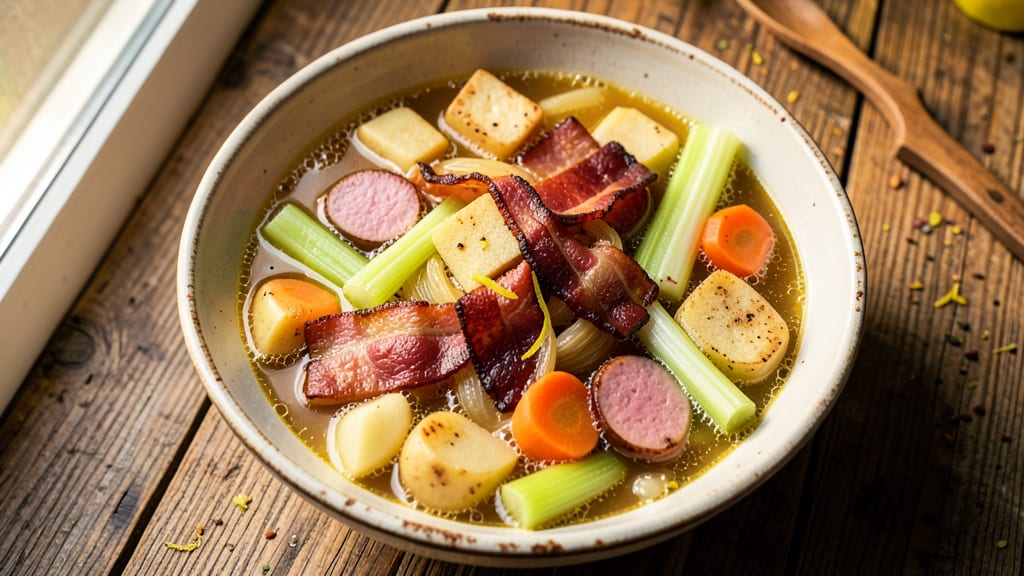
This authentic knoephla soup recipe brings the heart of Swabian Germany to your kitchen with its signature dumplings and rich celery broth. 🌟 The key to success lies in the hand-rolled knoephla dough—thin, delicate strands that transform into tender, chewy bites when simmered.
I've perfected this recipe after years of testing regional variations, ensuring every spoonful delivers that comforting, homey flavor.
The soul of this soup rests in its broth, traditionally made with bacon, sausage, and aromatic vegetables like celery and onions. This deep, savory foundation is what sets knoephla apart from other dumpling soups.
The dough itself is simple—just flour, eggs, and a touch of salt—but the technique of rolling it thin is crucial for achieving that signature texture.
What makes this recipe truly authentic is the balance of flavors: the savory broth, the tender dumplings, and the optional toppings like crispy bacon bits or fresh parsley. Each component works together to create a dish that's both hearty and comforting, perfect for chilly days or family gatherings.
Serve this traditional German soup with a slice of crusty rye bread or a side of sauerkraut to complete the meal. The leftovers reheat beautifully, making it an ideal dish for meal prep. Let's dive into the steps to create this beloved classic in your own kitchen.
Ingredients for authentic knoephla soup
German pantry staples and fresh ingredients for this hearty, authentic knoephla soup.
| Ingredient | Amount | Notes |
|---|---|---|
| Bacon 🥓 | 12 oz | Thick-cut, smoked preferred |
| German Bratwurst 🌭 | 1 ½ lb | Fresh, not pre-cooked |
| Yellow Onions 🧅 | 2 whole | Medium size, diced |
| Celery Stalks 🧄 | 4 whole | Medium size, chopped |
| Carrots 🥕 | 4 whole | Medium size, sliced |
| Potatoes 🥔 | 2 lb | Russet, peeled and cubed |
| All-Purpose Flour 🌾 | 2 cups | For knoephla dough |
| Large Eggs 🥚 | 2 whole | Room temperature |
| Salt 🧂 | 1 ½ tsp | Kosher or sea salt |
| Fresh Parsley 🌿 | ¼ cup | Chopped for garnish |
| Chicken Broth 💧 | 6 cups | Low-sodium preferred |
| Fresh Thyme 🌿 | 1 tbsp | Leaves only, chopped |
| Bay Leaves 🌿 | 2 whole | For broth infusion |
| Black Peppercorns 🌶️ | ½ tsp | Freshly cracked |
The bacon and bratwurst create that unmistakable savory depth. Look for thick-cut bacon at Whole Foods or your local butcher—they render better than thin slices. For bratwurst, German brands like Johnsonville or local deli counters are ideal. The celery and onions should be fresh—vibrant color, not wilted. If you can't find fresh thyme, dried works at one-third the amount. The potatoes are simple but crucial—peeling ensures clean texture, though some purists leave skins on for extra rustic flavor. For the knoephla dough, King Arthur flour works perfectly if you want to splurge on quality.
No bacon? Smoked turkey bacon gives similar flavor. Bratwurst unavailable? Italian sausage or smoked sausage works in a pinch. The broth can be homemade or store-bought—Pacific Foods or Imagine low-sodium are solid choices. For the knoephla dough, if you're short on eggs, flax eggs (1 tbsp ground flax + 3 tbsp water) work well. The carrots can be baby carrots if that's what's handy. Fresh parsley is best for garnish, but dried parsley at half the amount works if you're in a hurry. The bay leaves should be whole—crush them slightly before adding to release their flavor.
This soup tastes even better the next day as flavors meld. Store in the fridge for up to 5 days—reheat gently to avoid breaking the dumplings. For longer storage, freeze portions for 3 months. The knoephla dough can be made ahead and kept wrapped at room temperature for 2 days. Garnish with crispy bacon bits or fresh parsley just before serving to keep everything vibrant. Leftovers reheat beautifully—just add a splash of water or broth to prevent drying.
Why You'll Love This Recipe
- One-Pot Magic: I swear by this recipe because it’s actually one-pot—no fussing with separate broths or extra bowls. Just toss everything in, simmer, and let the bacon render into crispy bits while the bratwurst and veggies melt together. Honestly, the cleanup is half the battle won.
- Bratwurst Bliss: That first bite of juicy, slightly charred bratwurst in a rich, savory broth? It’s the kind of flavor that makes you pause mid-spoonful. The onions caramelize just enough to sweeten the soup, while the bacon adds this smoky depth that ties it all together—like a warm hug in a bowl.
- Weeknight Workhorse: Between us, this is the soup I make when I’m too tired to think but still need something hearty. It’s perfect for game days, chilly evenings, or when friends drop by unannounced. (Yes, even on a Tuesday night.) The leftovers? Even better the next day—if there are any.
- Budget-Friendly Feast: Bacon and bratwurst might sound fancy, but they stretch so far in this soup. I’ll be real: you can use half the usual amount of meat and still feel satisfied. Plus, the veggies—onions, celery, carrots—are cheap staples that bulk it up without breaking the bank. A full pot for under $15? That’s a win.
Step-by-step instructions for authentic knoephla soup
Master this traditional German recipe with crispy dumplings and hearty broth.
🔥 Step 1: Cook the Bacon and Sauté Vegetables
Cut the 12 oz bacon into ½-inch pieces and cook in a large Dutch oven over medium heat until golden brown and crispy, about 8-10 minutes. Remove the bacon with a slotted spoon and set aside, leaving the rendered fat in the pot.
In the same Dutch oven, add the 2 whole diced yellow onions, 4 chopped celery stalks, and 4 sliced carrots. Cook over medium heat for 8-10 minutes, stirring occasionally, until the vegetables soften and the onions become translucent. This foundational step builds deep flavor in the broth.
🍳 Step 2: Brown the Bratwurst and Potatoes
Push the sautéed vegetables to one side of the Dutch oven and add the 1.5 lb German bratwurst to the empty space. Cook for 5-6 minutes, turning occasionally, until deeply browned on all sides. Remove the bratwurst and set aside with the bacon.
Add the 2 lb peeled and cubed potatoes to the Dutch oven. Pour in the 6 cups chicken broth, then add the 2 whole bay leaves, 1 tbsp chopped fresh thyme, and 0.5 tsp freshly cracked black peppercorns. Bring to a gentle boil, then reduce heat to medium-low and simmer for 15-20 minutes until the potatoes are tender when pierced with a fork.
👨🍳 Step 3: Prepare the Knoephla Dough
In a medium bowl, whisk together the 2 cups all-purpose flour and 1.5 tsp salt. Make a well in the center and add the 2 room-temperature large eggs. Gradually mix the eggs into the flour using a fork until a shaggy dough forms. Add ½ cup cold water and knead gently until the dough comes together into a smooth, elastic ball—it should be slightly sticky but not wet.
Divide the dough into 6 equal portions (about 3-ounce each) and roll each portion into a ½-inch thick rope, about 6 inches long. Twist each rope into a knot, then pinch the ends to seal. This traditional knotting technique ensures the dumplings hold their shape while cooking.
🥘 Step 4: Poach the Knoephla in the Broth
Carefully lower the knotted knoephla into the simmering broth. Stir gently to prevent them from sticking to the bottom. Cover the Dutch oven and simmer for 12-15 minutes until the knoephla float to the surface and are cooked through—they should be light golden and tender when cut open.
Here's the thing—don't overcrowd the pot. If you need to cook them in batches, remove the knoephla as they finish and keep them warm in a 200°F oven while you complete the second batch. This ensures even cooking and prevents the broth from becoming watery.
🍽️ Step 5: Finish and Serve
Remove the 2 bay leaves from the broth. Stir in the reserved bacon and bratwurst, then taste and adjust seasoning with additional salt or black pepper if needed. Ladle the soup into bowls, garnishing each serving with 0.25 cup chopped fresh parsley. Serve immediately with crusty bread to soak up the rich broth.
For authenticity, the knoephla should be light and fluffy inside with a slightly crisp exterior, while the broth remains rich and flavorful. The bratwurst and bacon add savory depth, balancing the earthy vegetables and tender potatoes.
Pro Tips For Making Authentic Knoephla Soup
- CRISP THE BACON FIRST: Start with cold bacon in a cold pan—no need to rush. Cook it low and slow until the fat renders and the edges turn golden, then crank the heat to crisp it. I used to burn this step every time until I realized patience here means better flavor later, especially when you’re frying the knöpfle.
- DICE THE ONIONS SMALL: No bigger than ¼-inch pieces—this isn’t stew. Finely chopped onions melt faster and sweeten the broth without turning to mush. I learned this the hard way when my soup tasted like raw onion chunks instead of caramelized depth.
- DON’T OVERCOOK THE BRATWURST: German bratwurst should stay juicy, not rubbery. Once the casings split (usually around 140°F internal temp), pull them out immediately. Leaving them in turns the broth greasy and the meat dry—trust me, no one wants sad, shrunken sausages.
- SAVE THE FRYING FAT: After cooking the bacon and bratwurst, pour the rendered fat through a fine-mesh strainer into a jar. That golden liquid is liquid gold for frying the knöpfle—it adds richness without extra butter. (Yes, even if you’re impatient like me, resist the urge to toss it.)
Creative variations of these flavors
Swabian Home Style
In Swabia, knoephla is often served with a thick, hearty broth that includes smoked sausage and caramelized onions for extra depth. The dumplings here are slightly larger—about ½-inch thick ropes—and simmered until they're golden and tender.
I like to add a pinch of nutmeg to the broth for that classic Swabian warmth. 🌟
For an authentic Swabian touch, serve with dark rye bread and a side of sauerkraut. The tangy crunch of sauerkraut cuts through the richness of the soup beautifully. Swabian cooks often finish the dish with a sprinkle of fresh parsley and a few crispy bacon bits for texture.
Austrian Alpine Twist
Austrian versions of knoephla often include mountain herbs like savory or wild thyme in the broth, giving it a bright, alpine freshness. The dumplings here are rolled thinner—about ¼-inch thick—for a delicate, almost translucent texture.
I like to add a splash of white wine to the broth for a subtle acidity that brightens the flavors.
In Austria, this soup is often called "Knöpfle Suppe" and served with buttered spaetzle on top. For an Austrian-inspired variation, replace the bratwurst with boiled beef or veal, and finish with a drizzle of melted butter and crispy fried onions.
The contrast of textures makes this version truly special.
Vegetarian Adaptation
For a vegetarian version, skip the bacon and bratwurst and use mushrooms and smoked paprika to add depth to the broth. Sauté 8 oz cremini mushrooms with the onions and celery for a meaty texture.
Add 1 tsp smoked paprika to the broth for a smoky flavor that mimics the bacon. The knoephla dough remains the same, but you can add a pinch of turmeric to the dough for a golden hue.
Boost the vegetarian version with roasted root vegetables like parsnips or turnips for extra heartiness. Garnish with toasted pumpkin seeds for crunch and fresh chives for a bright finish. This version is just as comforting and perfect for cozy winter nights. 💛
Spicy Kick
If you love heat, add ½ tsp cayenne pepper or 1 tbsp hot paprika to the broth while simmering. For an extra kick, stir in 1 tbsp gochujang (Korean chili paste) when serving.
The spice pairs beautifully with the savory bacon and bratwurst, adding a sweet and smoky heat that balances the dish perfectly.
For a smoky-spicy twist, swap the bratwurst for spicy andouille sausage or chorizo. The bold flavors of the sausage will carry the heat while keeping the dish rich and satisfying. Serve with pickled jalapeños on the side for those who want to crank up the heat even more.
Nutrition facts
Frequently asked questions
What's the secret to getting knoephla dumplings just right?
The key is rolling the dough thin and even—about ¼-inch thick—and twisting them into tight knots. The dough should be slightly sticky but not wet, and simmering time is crucial: they're done when they float to the surface (usually 12-15 minutes). Overcooking makes them gummy, while undercooking leaves them raw inside.
Can I make knoephla dough ahead of time?
Yes! Shape the dough into knots and refrigerate for up to 2 days or freeze for 3 months. Just add 1-2 minutes to simmering time if using frozen dumplings. The dough keeps best when wrapped tightly in plastic wrap to prevent drying.
How do I fix knoephla that's too dense?
If your dumplings turn out heavy, they likely had too much flour or weren't rolled thin enough. For next time, measure flour precisely and roll the dough thinner (⅛-inch thick). Also ensure your water is cold when mixing—the heat from warm water can make the dough tough.
What's the difference between knoephla and spaetzle?
Knoephla are rolled into thin ropes and knotted, while spaetzle are pushed through a colander or spaetzle maker into ribbon-like strands. Both are German/Austrian dumplings, but knoephla have a firmer texture when cooked, while spaetzle are softer and more delicate.
Is knoephla soup gluten-free?
Traditional knoephla contains wheat flour, but you can make a gluten-free version by substituting 1:1 gluten-free flour blend (like Bob's Red Mill) plus ½ tsp xanthan gum per cup of flour. The texture will be slightly different but still delicious—just simmer the dumplings 1-2 minutes longer to ensure they're fully cooked.