
Soups & Stews
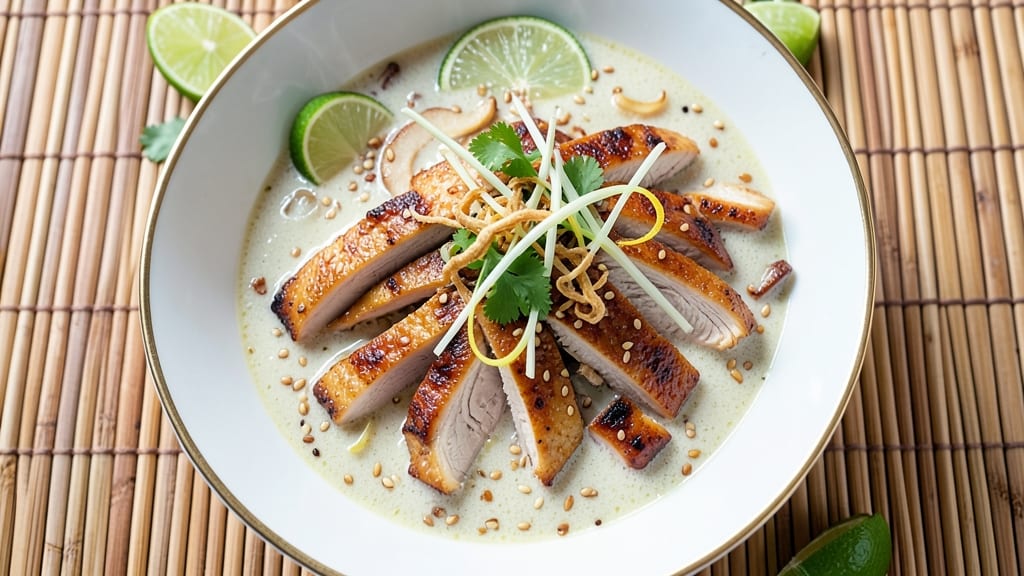
This Asian turkey soup recipe transforms simple ingredients into a fragrant, comforting bowl that blends traditional techniques with modern flavors. The secret lies in poaching turkey with aromatic spices—ginger, star anise, and cinnamon—while building a rich coconut-lime broth that’s both creamy and bright.
I developed this recipe after craving something hearty yet light, and the balance of tender turkey, silky broth, and fresh herbs makes it a weeknight staple.
The foundation is a slow-simmered broth infused with lemongrass, galangal, and a touch of soy sauce for depth. Unlike heavy pho or miso-based soups, this version uses coconut milk for creaminess without overpowering the turkey’s natural flavor.
The turkey shreds easily after poaching, absorbing the broth’s complex spices while staying tender. This method ensures every spoonful delivers layers of warmth and brightness.
What sets this recipe apart is the fusion of textures and aromas: crisp scallions, toasted sesame seeds, and a squeeze of lime at the end elevate the dish to restaurant-quality. Serve it with steamed jasmine rice or soft dumplings to soak up the fragrant broth.
The result is a soup that’s equally satisfying as a light lunch or a cozy dinner—perfect for chilly evenings or when you need comfort in a bowl.
Whether you’re adapting a classic pho or experimenting with coconut-lime flavors, this recipe delivers restaurant-worthy results with minimal effort. The key steps—properly poaching the turkey and balancing the broth—are simple but critical for that signature depth. Ready to make a bowl that feels like a hug? Let’s get started.
Ingredients for asian turkey soup
These aromatic ingredients transform simple turkey into a restaurant-worthy Asian-inspired bowl.
| Ingredient | Amount | Notes |
|---|---|---|
| Turkey Breast 🦃 | 1 ½ lb | Boneless, skinless, cut into strips |
| Coconut Milk 🥥 | 1 can | Full-fat, 13.5 oz can |
| Fresh Ginger Root 🌿 | ½ cup | Peeled, roughly chopped |
| Lemongrass Stalk 🌿 | 2 whole | Bruised, cut into 2-inch pieces |
| Galangal Root 🌿 | 1 piece | 2-inch piece, peeled |
| Fresh Lime Juice 🍋 | ¼ cup | Freshly squeezed |
| Low-Sodium Soy Sauce 🍶 | 2 tbsp | For umami depth |
| Star Anise Pods 🌶️ | 2 whole | Lightly crushed |
| Cinnamon Sticks 🌿 | 1 whole | 2-inch length |
| Garlic Cloves 🧄 | 4 cloves | Peeled, smashed |
| Scallions 🧅 | ¼ cup | Thinly sliced, for garnish |
| Toasted Sesame Seeds 🥜 | 1 tbsp | For garnish |
| Vegetable Oil 🫒 | 2 tbsp | For searing turkey |
| Salt 🧂 | 1 ½ tsp | Kosher or sea salt |
| Black Pepper 🌶️ | ½ tsp | Freshly ground |
The galangal and star anise are non-negotiable for authentic depth—look for fresh galangal at Asian markets or substitute with extra ginger if unavailable. Coconut milk should be full-fat for richness; Thai Kitchen brand is widely available and reliable. Fresh ginger and lemongrass should be vibrant, not fibrous or discolored. For the turkey, boneless, skinless breast ensures even cooking and easy shredding. If you can't find galangal, increase ginger to 0.75 cup and add 1 tsp of ground allspice for complexity.
No galangal? Substitute with 1 tsp of ground galangal powder (if available) or double the ginger. Fresh lemongrass can be swapped for lime zest plus extra lime juice, though the texture will differ. The coconut milk can be reduced for a lighter broth—simmer uncovered for 10 minutes to evaporate excess creaminess. For extra umami, add 1 tsp of fish sauce (if not vegetarian) or an additional 1 tbsp of soy sauce. The scallions and sesame seeds are purely for garnish, so adjust to taste—toasted sesame oil drizzled at the end adds another layer of flavor.
This soup reheats beautifully—simmer gently for 5-7 minutes to restore richness. Store in the fridge for 4-5 days or freeze for 3 months. The broth thickens when chilled, so add a splash of water when reheating. For meal prep, portion the turkey separately and reheat it in the broth for 2-3 minutes to maintain tenderness. Garnishes like cilantro or Thai basil can be added fresh when serving for a brighter finish.
Why You'll Love This Recipe
- I’ll be real: most soups turn sad after day two. Not this one. The coconut milk keeps it velvety, and the ginger’s warmth actually deepens overnight. I’ve reheated portions for five days straight, and it’s still the star of my weeknight dinners. (Yes, even on a Tuesday night.)
- One-Pot Magic: I swear by this—just slice the turkey, simmer everything in one pot, and walk away. No chopping boards full of scraps, no multiple pans. That creamy coconut milk and ginger blend right in while you're still deciding what to watch on TV.
- Flavor Bomb: The galangal and lemongrass give it that je ne sais quoi—earthy, citrusy, with just a hint of spice. Add the coconut milk, and suddenly you’ve got a soup that tastes like a hug from a Thai street food vendor. Honestly, the first time I made it, my husband stole half before I could even taste it.
- Lunchbox Hero: Between us, this is my secret weapon for meal prep. The turkey shreds perfectly, the broth stays rich even after reheating, and I pack it in jars all week. Toss in some rice or noodles, and boom—you’ve got a lunch that feels fancy but costs next to nothing.
Step-by-step instructions for ginger-spiced turkey soup
Master this aromatic broth with tender turkey and aromatic spices—each step builds layers of flavor.
Sear the Turkey for Deep Flavor
Heat the 2 tablespoons vegetable oil in a large Dutch oven over medium-high heat until shimmering. Add the 1.5 lb turkey breast strips in a single layer, working in batches if needed. Sear undisturbed for 3-4 minutes per side until the turkey develops a golden-brown crust. This step creates the Maillard reaction that forms the soup's rich foundation.
Remove the turkey and set aside. The residual fat in the pot will become the base for your aromatic broth—don't wipe it clean. If the fat becomes too dark, carefully pour off all but 1 tablespoon to maintain flavor while controlling heat. This technique ensures your soup has depth without excess oiliness.
Build the Aromatic Base
In the same Dutch oven, add the 0.5 cup fresh ginger root, 2 whole lemongrass stalks, 1 piece galangal root, 4 cloves garlic, 2 whole star anise pods, and 1 whole cinnamon stick. Cook over medium heat for 5 minutes, stirring occasionally, until the ginger and galangal soften and release their essential oils. You'll notice the kitchen filling with an intoxicating aroma—this is where the soup's signature complexity begins.
Add the 2 tablespoons low-sodium soy sauce and 1.5 teaspoons salt, stirring to combine. The soy sauce enhances umami while balancing the bright citrus notes we'll add later. Let the mixture simmer for 2 minutes to allow the spices to meld into the oil and turkey fat. This step prevents a harsh, disjointed flavor profile in the finished soup.
Simmer the Broth with Coconut Milk
Pour in 1 can coconut milk and 0.25 cup fresh lime juice, stirring gently to incorporate. Return the turkey to the pot, along with 6 cups water (enough to cover the turkey by about 1 inch). Bring to a gentle boil, then reduce heat to low and simmer uncovered for 45-50 minutes, until the turkey is fork-tender and the broth has reduced slightly. The coconut milk should create a velvety texture while maintaining the broth's aromatic depth.
Here's the thing—don't rush this step. The coconut milk needs time to fully emulsify with the broth, creating that signature creamy yet light texture. If the broth reduces too much, add ½ cup water to maintain balance. The turkey should shred easily with two forks, indicating perfect tenderness without falling apart.
Finish with Garnishes and Adjustments
Remove the turkey from the broth and shred it using two forks directly in the pot. Discard the lemongrass, galangal, cinnamon stick, and star anise pods—they've done their job. Return the shredded turkey to the broth and stir in 0.5 teaspoon black pepper. Taste and adjust seasoning: add more soy sauce for umami or lime juice for brightness if needed.
Ladle the soup into bowls and garnish each serving with 0.25 cup scallions and 1 tablespoon toasted sesame seeds. The sesame seeds add a nutty crunch that contrasts beautifully with the creamy broth. For optimal flavor, serve immediately while the soup is steaming hot—this ensures the aromatic oils are at their peak intensity.
Pro Tips For Making Asian Turkey Soup
- Sear the Turkey First: Hit the turkey breast with a quick sear in a hot pan before simmering—just 2-3 minutes per side until golden. I learned this the hard way: skipping it leaves the soup tasting flat and the meat dry. The caramelized crust adds depth, and it keeps the turkey from falling apart later when you’re stirring in the coconut milk.
- Slice Ginger and Galangal Thin: Use a mandoline or sharp knife to slice the ginger and galangal paper-thin—about 1/16-inch thick. Thick chunks sit like rocks and won’t infuse properly. Pro move: Toast the slices in the pot for 30 seconds before adding broth; it wakes up their flavors without burning.
- Don’t Rush the Coconut Milk: Whisk the coconut milk into the simmering soup last—when the turkey’s nearly done and the broth is hot but not boiling. Cold milk curdles like a science experiment gone wrong. If you’re worried, temper it first: stir a spoonful of hot broth into the milk before adding the whole can.
- Char the Lemongrass: Split the lemongrass stalks lengthwise and lightly char the pale inner part over a gas flame (or under a broiler for 1-2 minutes) before adding to the pot. The smoky edge cuts through the richness of the coconut milk and adds a complexity you won’t get otherwise. Yes, it’s an extra step—but it’s worth it.
Make-ahead tips for asian turkey soup
Broth Prep Ahead
Make the aromatic broth base 2 days in advance—it tastes even better after flavors meld. Simmer all ingredients except turkey and coconut milk, then cool completely and store in an airtight container in the fridge.
When ready to serve, reheat gently with the turkey and coconut milk. This step saves 30 minutes of active cooking time on busy days. 💡
Turkey Prep Shortcut
Cut and sear the turkey 1 day ahead—store it in the fridge in a sealed container. When you're ready to cook, simply reheat the seared turkey in the pot with the broth for 5 minutes before adding coconut milk.
This keeps the meat juicy and cuts prep time by half. I always do this when hosting—it’s a game-changer for stress-free meals. ✨
Freezer-Friendly Components
Freeze the shredded turkey separately in 1-cup portions for up to 3 months. Thaw overnight in the fridge, then reheat in the broth for 3-4 minutes to restore tenderness. The broth itself freezes beautifully for 2 months—just add fresh coconut milk when reheating.
Label containers with dates to track freshness. This method turns leftovers into quick future meals. ❄️
Garnish Prep Kit
Toast sesame seeds and slice scallions ahead of time, storing them in small jars. Keep them at room temperature for up to 5 days—they’ll stay fresh and ready to garnish.
For extra convenience, pre-portion garnishes into single-serving containers so you can sprinkle directly from the jar. This adds restaurant-style presentation with zero last-minute effort. 🥜
Slow Cooker Adaptation
Use a 6-quart slow cooker for hands-off cooking. Sear the turkey, add all broth ingredients, then cook on LOW for 6-7 hours or HIGH for 3-4 hours.
The slow cooker maintains even heat, ensuring tender turkey without constant monitoring. Just shred and garnish before serving—ideal for meal prep Sundays. 🍲
Reheating Perfection
Reheat soup gently on the stovetop over low heat for 5-7 minutes, stirring occasionally. Avoid microwaving—the texture becomes grainy. If the broth thickens upon reheating, add 2-3 tablespoons of water to restore consistency.
For extra richness, stir in 1 tablespoon of coconut milk before serving. This keeps every bowl as flavorful as the first. 🔥
Nutrition facts
Frequently asked questions
Can I substitute chicken for turkey in this recipe?
Yes, you can use chicken breast or thigh in a 1:1 ratio, but adjust cooking time to 30-35 minutes for breast or 40-45 minutes for thighs. Chicken breast cooks faster than turkey and may dry out if overcooked. For thighs, remove them when they reach 165°F internally. The broth flavors will adapt beautifully to either protein!
What if I can't find galangal or lemongrass?
No problem! For galangal, use extra ginger (0.75 cup total) plus 1 tsp ground allspice for depth. For lemongrass, substitute with lime zest (1 tbsp) + extra lime juice (0.5 cup). The dish will still be flavorful—these swaps just tweak the aromatic profile slightly. Fresh herbs make the biggest difference, but dried spices work in a pinch!
How can I make this soup lighter (less coconut milk)?
Reduce the coconut milk to ½ can and add ½ cup low-sodium chicken broth instead. Simmer the broth uncovered for 10 minutes to evaporate excess creaminess. For extra brightness, add 1 tsp fish sauce (if not vegetarian) or a splash of rice vinegar. The result will be a lighter, more broth-forward version with the same aromatic depth.
Why did my turkey turn out dry?
Overcooking is the most common cause. Turkey breast dries out quickly—remove it when it reaches 160°F internally, then let it rest in the broth for 5 minutes before shredding. For extra moisture, add ½ cup water or broth during the final 10 minutes of simmering. Always start with fresh, high-quality turkey breast for best results.
Can I add noodles or rice to this soup?
For noodles, add 4 oz rice noodles or udon during the last 5 minutes of cooking. For rice, serve it on the side or cook ½ cup jasmine rice separately (1:1.5 rice-to-water ratio). Both work beautifully—just adjust portion sizes to avoid a soggy bowl. The broth's coconut-lime flavor pairs perfectly with either!