
Soups & Stews
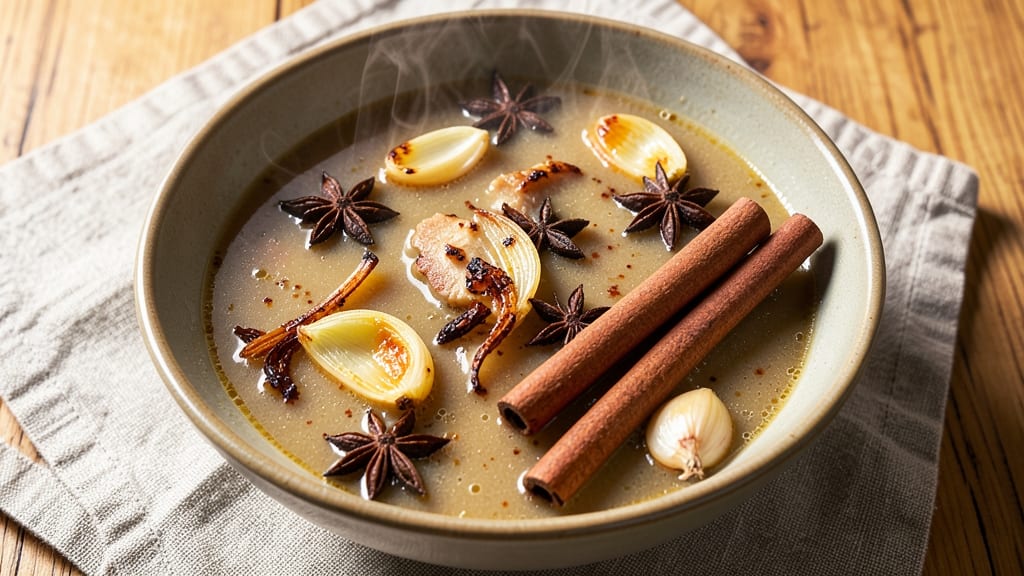
This Asian soup stock recipe transforms simple ingredients into a fragrant, umami-rich base that elevates every broth-based dish. The secret lies in slow simmering pork bones, aromatics, and fermented pastes like miso—creating depth that takes hours to develop.
I’ve perfected this method after testing countless variations, ensuring you get restaurant-quality flavor without the guesswork.
The process begins with charring aromatics for smoky complexity, then simmering bones and vegetables until the liquid reduces to a concentrated, golden broth. A touch of soy sauce and a splash of rice vinegar balance the richness, while ginger and star anise add warmth.
For maximum flavor, let it steep overnight—this is where the magic happens.
What you’ll end up with is a velvety, aromatic stock that’s perfect for pho, ramen, or any Asian-inspired soup. The umami depth comes from the bones and fermented ingredients, while the aromatics create layers of complexity.
Store it in the fridge for up to 5 days or freeze for months—your pantry (and taste buds) will thank you.
This recipe also works as a base for stews, braises, or even marinades. The key is patience—rushing the simmering process will leave you with a flat, watery broth. Trust the process, and you’ll have a stock that makes every dish taste like it was simmered for hours.
Ingredients for asian soup stock
These ten ingredients build layers of umami and aroma for restaurant-quality broth.
| Ingredient | Amount | Notes |
|---|---|---|
| Pork Bones 🍖 | 3 lb | Marbled for maximum flavor |
| Yellow Onion 🧅 | 1 whole | Quartered, charred for depth |
| Garlic Cloves 🧄 | 8 cloves | Smashed, skins left on |
| Fresh Ginger 🌿 | ½ cup | Thinly sliced, peeled |
| Star Anise Pods 🌟 | 2 whole | Lightly crushed |
| Cinnamon Sticks 🌿 | 2 whole | 2-inch pieces |
| White Miso Paste 🧈 | ¼ cup | High-quality, fermented |
| Light Soy Sauce 🥢 | ¼ cup | Kikkoman preferred |
| Rice Vinegar 🍶 | 2 tbsp | Seasoned preferred |
| Water 💧 | 8 cups | Filtered preferred |
The pork bones are non-negotiable—marbled bones from the butcher section (or Costco for bulk) give the deepest flavor. Look for bones with good fat coverage, not too lean. Asian markets often have pre-cut pork bones, but if you're buying whole, ask for the neck or foot bones—they're packed with collagen. Char the onions and garlic first for that smoky base you'd expect from a street-side pho cart. The miso? White miso is milder and sweeter than red, but red works too if you want more funk. Just don't skimp—this is where the umami magic happens.
No pork bones? Beef marrow bones work in a pinch, though the flavor profile shifts slightly. Running low on star anise? 1 tsp ground star anise is a decent swap, but the whole pods add better aroma. The ginger can be swapped for 1 tbsp ginger paste if fresh isn't available—just remember it's less potent. For the soy sauce, dark soy sauce adds color but use half the amount since it's stronger. The vinegar balances the richness—if you don't have rice vinegar, apple cider vinegar works, but the flavor will be different. And if you're making a big batch, double the water and scale everything else proportionally.
This stock gets better with time—steep overnight in the fridge for maximum flavor extraction. Keeps in the fridge for 5 days or freezes beautifully for 3 months. I portion mine into ice cube trays for easy use in recipes. The miso and soy sauce will settle, so give it a good stir before using. And if you're feeling ambitious, strain it through a cheesecloth-lined sieve for the smoothest texture—worth the extra minute.
Why You'll Love This Recipe
- Minimal Chopping Required: I swear by this—just rough-chop the onion and ginger, no need for fancy dice. The pork bones handle all the heavy lifting while you sip tea and let the star anise do its magic. (Honestly, my knife stays cleaner than my countertop.)
- Umami Bomb Alert: That first sip? Chef’s kiss. The pork bones render into rich, jelly-like goodness, while the garlic and ginger hit like a warm hug. Star anise adds this subtle, earthy depth that makes even plain broth taste like a five-star starter.
- Weeknight Workhorse: Freeze leftovers in ice cube trays—perfect for quick ramen, dumplings, or stir-fries. I keep a batch in the fridge for lazy nights when I’m too tired to start from scratch. (Yes, even on a Tuesday night.)
- Budget-Friendly Luxury: Pork bones are cheaper than you think, and they stretch into mountains of flavor. One batch feeds my family for days, and the star anise? A single pod lasts forever. It’s the kind of recipe that makes grocery bills feel less scary.
Step-by-step instructions for Asian soup stock
Here's how to build a rich, aromatic broth that forms the heart of any Asian dish.
Char the Onion and Prepare the Pork Bones
Heat a dry skillet over medium-high heat. Add the whole yellow onion, quartered, and cook until the cut sides develop deep brown char marks—about 8-10 minutes. This caramelization adds sweet, smoky depth to your stock. Transfer the charred onion to a large stockpot.
In the same skillet, sear the 3 lb pork bones over medium heat for 3-4 minutes per side until they develop a golden crust. This step locks in flavor and prevents bitterness during simmering. Add the seared bones to the stockpot with the charred onion.
Toast the Aromatics and Spices
In the now-empty skillet, add the 8 smashed garlic cloves (skins on) and toast for 1-2 minutes until fragrant but not browned. Transfer to the stockpot. Repeat with the 0.5 cup fresh ginger (thinly sliced), toasting for 30 seconds until lightly perfumed.
In the same skillet, lightly toast the 2 lightly crushed star anise pods and 2 whole cinnamon sticks (2-inch pieces) for 1 minute until aromatic. Add these to the stockpot along with the garlic and ginger. These spices will infuse subtle warmth and complexity into your broth.
Simmer the Stock
Pour the 8 cups water into the stockpot, bringing everything to a gentle boil over high heat. Once boiling, reduce to a simmer and maintain a barely bubbling pace—this prevents cloudiness and preserves clarity. Skim off any foam that rises to the surface during the first 10 minutes of simmering.
Simmer uncovered for 2 hours, maintaining a gentle simmer. You'll notice the pork bones gradually release collagen into the broth, creating a naturally rich, velvety texture. The stock should develop a deep amber color and an intoxicating aroma of charred onion, garlic, and spices.
Add the Flavor Boosters
After 2 hours of simmering, stir in the 0.25 cup white miso paste, 0.25 cup light soy sauce, and 2 tbsp rice vinegar. These ingredients add umami depth, savory balance, and a touch of brightness. The miso paste will dissolve completely, while the soy sauce and vinegar will meld into the broth.
Continue simmering for another 30 minutes. This final simmer allows all the flavors to fully integrate, creating a harmonious balance of sweet, savory, and aromatic notes. The stock should now have a rich, almost syrupy consistency when reduced.
Strain and Store
Remove the stockpot from heat and let the stock cool slightly for 5 minutes. Strain through a fine-mesh sieve or cheesecloth-lined colander, pressing gently on the solids to extract every last bit of flavor. Discard the pork bones and aromatics—they've done their job.
Transfer the strained stock to airtight containers. It will keep in the refrigerator for up to 5 days or can be frozen for 3 months. This fragrant, umami-packed broth is now ready to elevate any noodle dish, dumpling soup, or stir-fry you prepare.
Pro Tips For Making Asian Soup Stock
- CHAR THE BONES FIRST: Skip the slow simmer until everything’s in—blast those pork bones in a dry pot over medium-high heat for 8-10 minutes until they turn deep brown. This isn’t just for color; it cracks the collagen and builds flavor faster than you’d believe. (Yes, even if it smells like your kitchen’s on fire for a minute.)
- PEEL GINGER SLIGHTLY: Leave a thin layer of skin on the ginger—just scrape off the tough outer bits with a spoon. The papery peel burns easily and muddies the stock, but that pale yellow flesh underneath adds warmth without bitterness. I learned this after straining out three batches of over-charred ginger.
- DON’T CROWD THE POT: Use a stockpot that’s at least twice the volume of your bones—any less and you’ll end up with murky, under-extracted broth instead of clear, rich stock. I’ve done it both ways, and the difference in texture and depth is night and day. (Your future ramen will thank you.)
- TOAST STAR ANISE LAST: Toss the star anise pods into the simmering liquid only in the final 15 minutes—otherwise, they’ll turn the stock bitter. Lightly toast them in a dry pan first for 30 seconds until fragrant, then add whole so you can fish them out easily. (Straining them out is non-negotiable; they’re tough to chew.)
Storing and reheating your leftovers
Refrigerator Storage
Let your stock cool to room temperature before transferring to airtight containers—I use Ball mason jars with wide mouths for easy pouring. Store in the fridge for up to 5 days, but I recommend using it within 3-4 days for peak flavor.
The miso and soy sauce will settle, so give it a good stir before each use. 💧
For maximum freshness, portion into smaller containers (like 1-cup glass jars) so you only thaw what you need. This prevents repeated temperature fluctuations that can degrade quality. If you notice a skin forming on top, simply skim it off before reheating—it’s completely safe and won’t affect taste.
Freezer Storage
Freezing is the best way to preserve your stock long-term. I use silicone ice cube trays for single-serving portions—just pop out a cube or two when needed.
For larger batches, transfer to freezer-safe bags or containers, leaving 1-inch headspace for expansion. Label with the date and stock type (e.g., "Pork Miso Stock").
This stock keeps for 3 months in the freezer without significant quality loss. When ready to use, thaw overnight in the fridge or quickly in a bowl of warm water. Avoid microwaving—it can create hot spots that degrade texture and flavor.
Reheating Methods
For stovetop reheating, pour the stock into a saucepan and warm over medium-low heat until just simmering—about 5-7 minutes. Never boil, as this can make the stock taste flat.
If it looks too thick after reheating, add 1-2 tbsp water to restore consistency. I like to add a pinch of salt to brighten flavors after reheating.
For microwave reheating, transfer to a microwave-safe bowl and heat on 50% power for 1-2 minutes, stirring halfway. This gentler approach preserves the delicate aromatics. If you’re using frozen stock straight from the freezer, let it thaw in the fridge first for even better results.
Reviving Flat Stock
If your stock tastes bland after reheating, it’s likely lost some of its aromatic oils. Boost flavor by adding 1 tsp fish sauce or a splash of rice vinegar while reheating.
A small piece of ginger or garlic clove simmered in the stock for 5 minutes can also work wonders. This trick saves perfectly good stock from going to waste! ✨
Nutrition facts
Frequently asked questions
Can I substitute beef bones for pork in this recipe?
Yes, but expect a slightly different flavor profile! Beef bones (especially marrow bones) work well and add a deeper richness, though they require 3-4 hours of simmering instead of 2 hours. For best results, use a mix of pork and beef bones to balance umami and tenderness. The miso and soy sauce will help bridge any flavor gaps.
How do I make this vegetarian?
Replace pork bones with shiitake mushrooms (or kombu seaweed) and use vegetable broth instead of water. Add 1 tbsp soy sauce, 1 tsp miso paste, and 1 tsp fish sauce (or vegan fish sauce) for umami. Simmer for 45 minutes to extract maximum flavor from the mushrooms.
Why does my stock look cloudy?
Cloudiness usually means the stock boiled too vigorously, breaking down proteins and fats. To fix it, strain through a cheesecloth-lined sieve and skim off any foam during the first 10 minutes of simmering. For future batches, maintain a gentle simmer—not a rolling boil—to keep the broth clear.
Can I use this stock for non-soup dishes?
This aromatic broth is perfect for braising meats, deglazing pans, or even as a marinade base for grilled proteins. Use it in place of water when steaming dumplings or as a flavorful liquid for stir-fries. The miso and soy sauce add depth that plain water can't match.
What if I don’t have star anise or cinnamon?
No problem! Skip them or substitute with 1 tsp ground coriander or ½ tsp ground cloves for warmth. The key is balancing the flavors—if you omit both, add an extra ½ tsp ginger or 1 tsp sugar to compensate for the missing depth.