
Soups & Stews
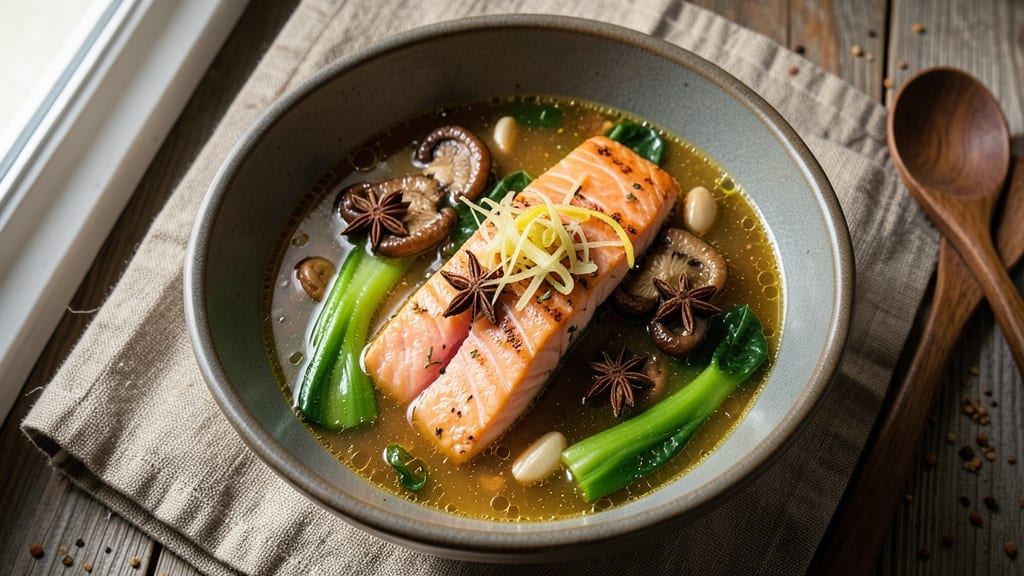
This Asian salmon soup recipe transforms simple ingredients into a velvety, aromatic bowl that balances sweet, sour, and umami in every spoonful. The secret lies in the coconut-lime broth—where star anise and ginger simmer until the kitchen fills with its warm, earthy perfume.
I developed this version after years of testing different Asian-inspired soups, and it finally delivers that perfect harmony of textures: silky salmon ribbons, tender mushrooms, and just enough heat to linger on the tongue.
The broth starts with a fragrant base of ginger, garlic, and star anise, then builds depth with coconut milk and lime juice for that signature tangy richness. Salmon is poached gently to maintain its delicate texture, while mushrooms and bok choy add layers of umami and freshness.
What makes this recipe stand out is how it adapts to different Asian flavors—whether you lean toward Japanese miso, Thai-inspired tom yum, or Korean doenjang.
By the time you finish this soup, you'll have a dish that's elegant yet approachable, packed with protein and nutrients while still feeling indulgent. The salmon flakes effortlessly into delicate ribbons, the broth coats your spoon with every flavor, and the aroma alone makes it worth the effort.
This is the kind of soup that transforms a simple weeknight into a memorable dining experience.
Perfect for pescatarians, meal preppers, or anyone craving comfort food with a global twist. The recipe scales easily for a crowd, and leftovers reheat beautifully—if there are any left. Let's get cooking.
Ingredients for asian salmon soup
Simple ingredients that pack global flavors—think fragrant broth, tender salmon, and fresh herbs.
| Ingredient | Amount | Notes |
|---|---|---|
| Wild-Caught Salmon Fillet 🐟 | 12 oz | Skin-on, center-cut preferred |
| Shiitake Mushrooms 🍄 | 8 whole | Stems removed, sliced |
| Bok Choy 🥬 | 2 whole | Baby variety, quartered |
| Fresh Ginger 🧄 | 2 tbsp | Grated, peeled |
| Garlic Cloves 🧄 | 4 cloves | Minced, fresh preferred |
| Star Anise 🌶️ | 2 whole | Lightly crushed |
| Coconut Milk 🥥 | 1 can | Full-fat, 13.5 oz can |
| Lime Juice 🍋 | ¼ cup | Freshly squeezed |
| Fish Sauce 🍶 | 1 tbsp | Red Boat preferred |
| Vegetable Broth 💧 | 4 cups | Low-sodium preferred |
| Sesame Oil 🫒 | 1 tbsp | Toasted, for finishing |
| Green Onions 🧅 | 3 whole | Thinly sliced, for garnish |
| Cilantro 🌿 | ¼ cup | Chopped, for garnish |
| Salt 🧂 | 1 tsp | Kosher or sea salt |
| Black Pepper 🌶️ | ½ tsp | Freshly ground |
The salmon makes this dish shine, so wild-caught, center-cut fillets are worth the splurge. Look for skin-on pieces—the skin adds texture and keeps the fish intact while poaching. Trader Joe's and Whole Foods often carry high-quality salmon, but any reputable seafood counter will do. If you can't find shiitake mushrooms fresh, dried shiitake rehydrated in warm broth works beautifully. The star anise is non-negotiable—it's what gives that signature Asian warmth. Penzeys Spices sells it whole, which is perfect for this recipe since you only need two pods.
No fish sauce? Soy sauce at half the amount gets you close, though it won't have that same umami depth. Fresh ginger and garlic are ideal, but if you're using dried, reduce to one-third the amount—ginger powder loses a lot of its punch. The coconut milk can be light or full-fat, but full-fat gives that creamy richness the soup needs. For a lighter version, swap in unsweetened almond milk plus 1 tbsp coconut cream. Bok choy is versatile—use whatever's freshest, whether it's baby bok choy or regular heads cut into wedges.
This soup tastes even better the next day as flavors meld. Store in an airtight container for 3-4 days in the fridge, or freeze for up to 3 months. I like to portion it into jars so I can grab a bowl straight from the fridge—just add a splash of water to loosen the broth. The salmon poaches perfectly in the broth, so no need to pre-cook it separately. If you're prepping ahead, keep the fish sauce and lime juice separate until serving to preserve their bright flavors.
Why You'll Love This Recipe
- One-Pot Magic: I swear by this recipe when I’m too tired to scrub pots—just toss everything into one pot, simmer, and walk away. The salmon flakes apart like it’s been poaching for hours, but honestly? Ten minutes of active time is all it takes.
- Umami Bomb: That combo of shiitake mushrooms and fresh ginger? It’s like a flavor explosion in your mouth. The mushrooms add this deep, earthy richness, while the ginger cuts through with a bright, zesty kick—no heavy cream or weird additives needed.
- Lunchbox Hero: Between us, this soup is my secret weapon for meal prep. I make a big batch on Sundays, portion it into jars, and boom—healthy lunches for the week. The bok choy stays crisp, the salmon holds together, and it reheats like a dream (no soggy greens here).
- Budget-Friendly Luxury: Wild salmon might sound fancy, but a single fillet stretches across two servings, and the rest of the ingredients are pantry staples. I’ll be real: it feels like a restaurant meal without the price tag. Plus, leftovers taste just as good the next day—if there are any.
Step-by-step instructions for Asian salmon soup
Let's build this fragrant coconut-lime broth with silky salmon ribbons together.
Sauté Aromatics Until Fragrant
Heat a large pot over medium heat and add the 2 tablespoons fresh ginger and 4 minced garlic cloves. Sauté for 2-3 minutes until the ginger becomes translucent and the garlic releases its aroma—you'll smell that wonderful pungent sweetness. Add the 2 lightly crushed star anise and stir for another 30 seconds to toast them gently.
This step is where all the magic begins. The ginger and garlic form the flavor base, while the star anise adds that subtle anise-like depth that makes this soup uniquely Asian. Don't rush this part—properly developed aromatics make a huge difference in the final flavor.
Build the Coconut-Lime Broth
Pour in the 4 cups vegetable broth and bring to a gentle simmer. Add the 1 can coconut milk and stir well to combine. The mixture will look slightly curdled at first, but keep stirring for 2-3 minutes until it smooths out. Add the 1 tablespoon fish sauce and 1 teaspoon salt, stirring to dissolve completely.
Now add the 8 sliced shiitake mushrooms and 2 quartered bok choy. Simmer for 5-6 minutes until the mushrooms soften and the bok choy wilts slightly. The broth should be fragrant and slightly thickened from the coconut milk. Taste and adjust seasoning if needed—this is your flavor foundation.
Prepare and Cook the Salmon
While the broth simmers, cut the 12 oz wild-caught salmon fillet into ½-inch thick ribbons against the grain. Add the salmon to the pot and gently stir to submerge it in the warm broth. Simmer for 3-4 minutes until the salmon turns opaque and flakes easily with a fork—it should be just cooked through but still tender.
Here's the thing—salmon cooks fast, and overcooking turns it rubbery. Watch for the edges to become opaque and the center to lose its translucent look. The salmon should be delicate enough to pull apart with minimal resistance. Remove the salmon with a slotted spoon and set aside, leaving the broth in the pot.
Finish with Lime and Garnishes
Return the broth to a gentle simmer and stir in the ¼ cup lime juice. The acidity brightens all the flavors and balances the richness of the coconut milk. Simmer for 1-2 minutes to let the lime mingle with the other ingredients. Taste and adjust seasoning with additional salt or pepper if needed.
Remove the pot from heat and stir in the 1 tablespoon toasted sesame oil. This adds a nutty depth and beautiful sheen to the soup. Ladle the soup into bowls and arrange the salmon ribbons on top. Garnish with thinly sliced green onions and chopped cilantro—these add freshness and visual appeal.
Pro Tips For Making Asian Salmon Soup
- Sear Salmon First: Hit the salmon with a quick sear in a dry pan—just 2 minutes per side—before adding liquid. This locks in flavor and keeps the fillet from turning to mush when it hits the simmering broth. (Yes, even if you’re impatient like me, resist the urge to rush this.)
- Prep Ginger Like a Pro: Use a microplane for the ginger—no peeling needed—and pack it tight into the pan with garlic to bloom the aromatics. I learned this the hard way: grating it into the broth later means you’re just stirring in watery pulp.
- Don’t Overcrowd Mushrooms: Sauté shiitake mushrooms in batches if needed—they release their moisture like crazy. A crowded pan turns them soggy, and you’ll end up with a watery soup instead of a rich, umami-packed base.
- Add Bok Choy Late: Toss in the bok choy just 2–3 minutes before serving—it wilts faster than you think. If you let it sit too long, it’ll turn to mush and steal the spotlight from the salmon’s texture. (Your future self will thank you.)
Perfect pairings for this dish
Thai-Inspired Tom Yum Twist
Transform this soup into a Thai tom yum by adding 2 tbsp fish sauce (instead of 1 tbsp), 1 tbsp lime zest, and 1-2 Thai bird's eye chilies (adjust to taste). Swap the star anise for 1-inch galangal slice and 3 kaffir lime leaves for that signature tangy heat.
The coconut milk remains, but add 1 cup tomato juice for a lighter broth. Garnish with extra lime wedges and chopped Thai basil. 🌶️
Japanese Miso-Ginger Fusion
For a Japanese-inspired version, replace the fish sauce with 2 tbsp white miso paste and reduce the salt to ½ tsp. Add 1 tbsp mirin and 1 tsp grated daikon radish to the broth for depth.
Use dashi broth instead of vegetable broth, and finish with toasted sesame seeds and thinly sliced scallions. The miso adds a fermented umami that pairs beautifully with the salmon.
Korean Doenjang Broth
Give it a Korean doenjang flavor by replacing the vegetable broth with 4 cups doenjang broth (or sub 2 tbsp doenjang paste + 4 cups water). Add 1 tbsp gochujang for heat and 1 tsp toasted sesame seeds to the broth.
Swap the bok choy for 1 cup baby spinach and garnish with thinly sliced Korean pear (for sweetness) and sesame oil drizzle. The doenjang gives a deep, savory-sweet profile.
Vegetarian Adaptation
Skip the salmon and use 12 oz king oyster mushrooms (sliced) or firm tofu (pressed and cubed) for protein. Boost umami with 1 tbsp soy sauce and 1 tsp mushroom powder.
The coconut-lime broth still shines, and the mushrooms absorb the flavors beautifully. Garnish with extra herbs to keep it vibrant. Perfect for pescatarians or vegetarians craving this dish! 🌱
Herb and Spice Garnishes
Elevate your bowl with these garnish combos: Thai basil + crushed peanuts (for crunch), shiso leaves + yuzu zest (for citrusy brightness), or micro cilantro + chili crisp (for heat).
A drizzle of chili oil or spicy mayo adds another layer of flavor. The key is freshness—always add garnishes right before serving to preserve texture and aroma. 💫
Beverage Pairings
Pair this soup with a japanese junmai sake (like Dassai) for its clean, crisp profile that cuts through the coconut richness. For Thai-inspired versions, try a light lager (like Singha) to balance the heat.
Korean adaptations? A soju cocktail (mixed with grapefruit juice) complements the doenjang depth. Avoid heavy red wines—they’ll overpower the delicate broth. 🍶
Nutrition facts
Frequently asked questions
Can I substitute salmon with another fish?
While salmon is ideal for its delicate texture, you can use cod, halibut, or sea bass as substitutes. These firm white fish hold up well to poaching and won't fall apart as easily. Avoid flaky fish like tilapia—they'll disintegrate in the broth. If using, adjust cooking time to 2-3 minutes maximum to prevent overcooking.
How do I make this soup spicier?
Add 1-2 teaspoons of chili flakes or 1-2 slices of fresh chili (like Thai bird's eye) when sautéing the aromatics. For heat depth, stir in 1 tablespoon of chili oil or 1 teaspoon of gochujang at the end. Start with less—you can always add more, but you can't remove heat once it's in!
Can I prepare this soup ahead of time?
Assemble the broth, mushrooms, and bok choy 1 day ahead and store in an airtight container. When ready to serve, reheat gently and add the salmon just before eating—it should cook for 3-4 minutes in the hot broth. Keep the fish sauce and lime juice separate until serving to preserve their bright flavors. Garnishes should always be added fresh.
What if I don't have star anise?
Don't worry—star anise adds warmth but isn't essential. Substitute with ½ teaspoon ground anise or ½ teaspoon ground cinnamon for a similar depth. For a more complex flavor, use 1 bay leaf + ½ teaspoon fennel seeds. The soup will still taste delicious, though the aroma will be slightly different. The ginger and garlic will carry most of the flavor.
How do I adjust the consistency of the broth?
For a thicker broth, simmer uncovered for 5-10 extra minutes to reduce the liquid. For a lighter broth, add ½ cup warm water or ½ cup vegetable broth while reheating. Avoid adding cold liquid directly—it can cause the coconut milk to separate. Stir gently and return to a simmer until fully combined.