
Soups & Stews
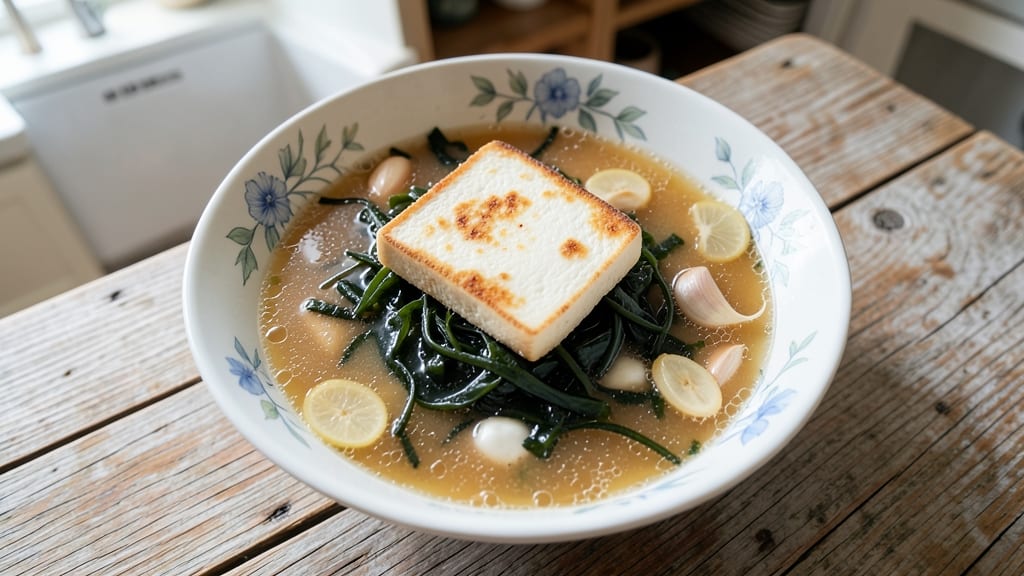
This Asian miso soup recipe delivers restaurant-quality umami depth with a silky broth, crispy tofu, and delicate seaweed—all in 25 minutes. The secret lies in dissolving miso paste properly and balancing fermented richness with fresh aromatics.
I developed this version after years of testing, ensuring each ingredient plays its part without overpowering the others.
The foundation is a light dashi broth infused with ginger and garlic, where miso paste dissolves gently to avoid bitterness. Thinly sliced tofu pan-fries until golden for that satisfying crunch, while wakame seaweed adds oceanic sweetness. Green onions and shiitake mushrooms contribute earthy depth that rounds out the bowl.
What you'll end up with is a crispy-edged tofu floating in velvety broth, topped with vibrant greens that add both color and texture. The aroma alone—steaming miso, toasted ginger, and umami-rich broth—will have everyone at the table reaching for seconds.
This version stays true to traditional techniques while being adaptable for dietary preferences.
Perfect for chilly evenings, meal prep, or as a light lunch, this soup scales beautifully. Serve with steamed rice or as a starter before heartier dishes. The leftovers actually taste better the next day as flavors meld further. Let's make this comforting classic!
Ingredients for asian miso soup
Silky broth, crispy tofu, and delicate seaweed—these 13 ingredients create restaurant-quality miso soup in minutes.
| Ingredient | Amount | Notes |
|---|---|---|
| Extra-Firm Tofu 🥬 | 14 oz | Pressed, thinly sliced lengthwise |
| White Miso Paste 🍶 | 2 tbsp | High-quality, preferably organic |
| Dashi Granules 🍲 | 2 tsp | Or 1.5 cups homemade dashi broth |
| Fresh Ginger 🧄 | 1 tbsp | Finely grated, aromatic |
| Garlic Cloves 🧄 | 2 cloves | Minced, fresh preferred |
| Wakame Seaweed 🍃 | 1 oz | Dried, rehydrated in broth |
| Shiitake Mushrooms 🍄 | 4 whole | Stems removed, sliced |
| Green Onions 🧅 | 3 whole | Thinly sliced, white/light green parts |
| Sesame Oil 🫒 | 1 tsp | Toasted, for finishing |
| Rice Vinegar 🍶 | 1 tbsp | For brightness |
| Neutral Oil 🫒 | 1 tbsp | Avocado or vegetable oil |
| Water 💧 | 4 cups | Filtered preferred |
| Diamond Crystal Kosher Salt 🧂 | ½ tsp | For seasoning |
The tofu is non-negotiable for texture—extra-firm holds its shape best. Press it for 20 minutes before slicing to remove excess water, or grab pre-pressed from Trader Joe's. For miso, Miso Master or Hodo brands deliver consistent quality, but any reputable white miso works. The dashi granules simplify broth-making, but if you prefer homemade, simmer kombu and bonito flakes (vegetarian-friendly) in water. Fresh ginger and garlic are essential—organic from the produce section ensures vibrant flavor without bitterness.
No dashi granules? Vegetable broth with a pinch of nori flakes mimics umami depth. Substitute wakame with dried kombu (soak 5 minutes), though texture differs. Shiitake mushrooms can be swapped for cremini, but shiitake's earthiness is ideal. Green onions? Scallions or chives work, but green onions' sharpness cuts through richness. For crispy tofu, cornstarch-dredged slices (toss in 1 tsp cornstarch before pan-frying) elevate texture. Sesame oil is optional but adds nutty aroma—toasted sesame seeds on top are a great alternative.
Broth reheats beautifully—3-4 days in the fridge or 3 months frozen. Store tofu separately if prepping ahead to maintain crispness. For meal prep, freeze broth in ice cube trays—thaw and reheat as needed. The tofu's crispiness diminishes after 2 days, so plan to cook fresh or reheat quickly in a dry pan. Garnishes like toasted nori strips or extra green onions keep bowls vibrant. Leftovers taste richer the next day as flavors meld.
Why You'll Love This Recipe
- No-Chop Necessary: Honestly, the only prep I do is press tofu and grate ginger—no dice, no mincing, no fuss. That crispy tofu edge? Just pan-fry for two minutes while the soup simmers. (Yes, even on a Tuesday night.)
- Umami Bomb: The miso and dashi alone make this rich, but add garlic and ginger? It’s that perfect balance—savory, a little spicy, with none of the bitterness I hate in other soups. One sip and you’ll reach for seconds.
- Lunchbox Hero: Between us, this is my go-to for meal prep. Tofu stays firm, broth stays flavorful for days, and I just reheat portions with a splash of water. My kids grab it straight from the fridge—no complaints, just empty bowls.
- Pantry Magic: Dashi granules and miso paste last forever, and tofu’s one of the cheapest proteins out there. I’ve made this for $1.50 a bowl, and it’s still the most satisfying thing on my table. Budget-friendly doesn’t mean boring—this proves it.
Step-by-step instructions for silky miso soup with crispy tofu
Master this balance of umami depth and delicate textures in just four essential steps.
Prepare and Press the Extra-Firm Tofu
Begin by draining the 14 oz extra-firm tofu and wrapping it tightly in a clean kitchen towel. Place a heavy object like a cast-iron skillet on top to press out excess moisture for 20 minutes. This step is crucial—it ensures your tofu will develop that signature crispy exterior when cooked. After pressing, slice the tofu lengthwise into ¼-inch thick strips, keeping them uniform for even cooking.
While the tofu presses, rehydrate the 1 oz wakame seaweed by soaking it in ½ cup hot water for 5 minutes. The seaweed should soften and expand—this prepares it to contribute its signature briny depth to the broth. Drain before using, reserving the soaking liquid for later if desired. The wakame's texture transforms from chewy to tender, making it ready to blend seamlessly into the soup's harmony.
Build the Umami-Packed Broth Base
In a medium saucepan, combine the 4 cups water with the 2 tsp dashi granules, stirring until fully dissolved. Bring to a gentle simmer over medium heat, then add the 1 tbsp finely grated fresh ginger and 2 minced garlic cloves. Let the aromatics steep for 3 minutes until fragrant—this infuses the broth with their bright, pungent notes before they're incorporated into the miso.
Reduce heat to low and whisk in the 2 tbsp white miso paste, stirring continuously for 2 minutes until completely dissolved. The miso should create a velvety sheen in the broth, signaling its proper integration. Avoid boiling—the miso's delicate flavors degrade at high temperatures. Once smooth, add the drained wakame seaweed and simmer for an additional 5 minutes to meld all flavors.
Cook the Crispy Tofu and Aromatics
Heat the 1 tbsp neutral oil in a separate skillet over medium-high heat until shimmering. Add the sliced tofu strips in a single layer, cooking undisturbed for 3-4 minutes until the edges develop a golden-brown crust. Flip carefully and cook another 2-3 minutes until evenly crispy. Remove tofu and set aside—it should hold its shape when transferred.
In the same skillet, add the 4 sliced shiitake mushrooms and cook for 4-5 minutes until their edges soften and release moisture. Add the 3 sliced green onions (white parts first) and cook for 1 minute until just wilted. Pour in the 1 tbsp rice vinegar and cook for an additional 30 seconds, allowing the acidity to brighten the mushrooms' earthy flavor.
Assemble and Finish the Soup
Return the miso broth to a simmer, then carefully ladle 3 cups into each of four bowls. Distribute the crispy tofu strips evenly among the bowls, followed by the cooked mushrooms and green onions. The contrast between the silky broth and crispy tofu creates the dish's defining texture.
Drizzle each serving with ¼ tsp sesame oil and sprinkle with a pinch of 0.125 tsp diamond crystal kosher salt (¼ of the total amount). The sesame oil adds a nutty aroma, while the salt enhances all flavors without overpowering. Serve immediately while the tofu remains crisp and the broth retains its velvety texture.
Pro Tips For Making Asian Miso Soup
- CRACK THE TOFU FIRST: Press that extra-firm tofu for 20 minutes under a heavy pan—no need to wrap it in towels, just let the weight do the work. I learned this the hard way when my tofu crumbled into soup instead of holding its shape.
- STIR THE MISO LAST: Dissolve the dashi granules in hot water first, then remove from heat before adding miso paste. Stirring it in while simmering kills the delicate umami—your miso will taste flat if you don’t cool the broth slightly.
- GRATE THE GINGER FINE: Use the smallest holes on your grater and don’t skip the zest—it’s where the real flavor hides. I used to chop it and wondered why my soup lacked that bright kick.
- UPGRADE WITH GARLIC OIL: Sauté 2-3 minced garlic cloves in 1 tablespoon neutral oil until golden, then pour that fragrant oil into your soup at the end. It adds depth without overpowering—trust me, it’s worth the extra 3 minutes.
Wine and beer pairings for this asian miso soup
Light White Wine
Miso soup's fermented umami pairs beautifully with crisp, dry white wines that won't overpower its delicate flavors. A Japanese Koshu from Yamanashi Prefecture is my top pick—its floral notes and subtle acidity complement the soup's earthy depth.
If you can't find Koshu, try a German Riesling (off-dry variety) for its honeyed sweetness that balances the miso's saltiness. 🍷
Sake Pairings
For an authentic experience, serve with dry junmai sake chilled to 45-50°F. The sake's clean, slightly nutty profile enhances the tofu's crispiness without competing. I recommend Dassai 23—its smooth finish lets the soup's flavors shine.
Warm sake (110°F) works too, especially in colder months when you want something comforting.
Light Beer Options
If wine isn't your thing, opt for a Japanese pilsner like Asahi Super Dry or Sapporo. Their crisp, clean profiles won't clash with the miso's complexity. For a local twist, try a wheat beer with a touch of citrus—like Blue Moon—to cut through the richness.
Avoid heavy lagers or dark beers that could muddle the soup's delicate balance. 🍺
Non-Alcoholic Choices
For those skipping alcohol, sparkling yuzu soda (like Suntory Yuzu Sparkling) adds bright citrus notes that refresh the palate. Alternatively, a cucumber-mint infused water with a squeeze of lemon enhances the soup's fresh elements. Iced genmaicha tea (green tea with roasted brown rice) provides earthy warmth without alcohol's heaviness.
Regional Variations
In Kyoto, locals often serve miso soup with sake-lees (kasu) broth—try pairing it with a sake cocktail made from the lees themselves. For Korean-inspired versions (with added kimchi), a light soju or chilled makgeolli complements the funky tang.
Always match the drink's acidity to the soup's depth—bright wines and beers work best for lighter miso, while richer versions pair with bolder options.
Nutrition facts
Frequently asked questions
Can I substitute white miso with red miso?
Yes, but expect a richer, deeper flavor. Use 1 tbsp red miso and 1 tbsp white miso for balance, as red miso has a stronger, slightly sweeter taste. Red miso also has a firmer texture, so whisk it in thoroughly to avoid gritty bits. This works well for heartier versions or when serving with meat.
How do I make my miso soup broth clearer?
For a silky, crystal-clear broth, strain the miso mixture through a fine-mesh sieve after dissolving the paste. Use a cheesecloth-lined sieve for extra refinement. Avoid adding wakame or mushrooms to the broth if clarity is your goal—add them directly to individual bowls instead. The key is straining while the broth is still hot but not boiling.
Why did my tofu turn rubbery instead of crispy?
Overcooking or insufficient pressing causes rubbery tofu. Press the tofu for at least 20 minutes and cook it at medium-high heat for 3-4 minutes per side max. Use a nonstick pan and avoid crowding the tofu—cook in batches if needed. Extra-firm tofu is non-negotiable for crispiness, and cornstarch-dredged slices (toss in 1 tsp cornstarch before frying) make all the difference.
Can I make this soup ahead of time?
The broth tastes even better the next day as flavors meld. Store components separately: broth in the fridge for 3-4 days or freeze for 3 months; tofu loses crispness after 2 days, so cook fresh or reheat quickly in a dry pan. Reheat broth gently over low heat, then add tofu and aromatics just before serving. Garnishes like green onions should always be added fresh.
What's the difference between Japanese and Korean miso soup?
Japanese miso soup is lighter, using white miso and dashi broth, while Korean versions often feature red miso or fermented soybean paste (doenjang) with a deeper, sweeter profile. Korean versions may include kimchi, zucchini, or tofu stewed in the broth. Japanese versions prioritize delicate umami, while Korean miso soup leans heartier with more vegetables and sometimes meat.