
Soups & Stews
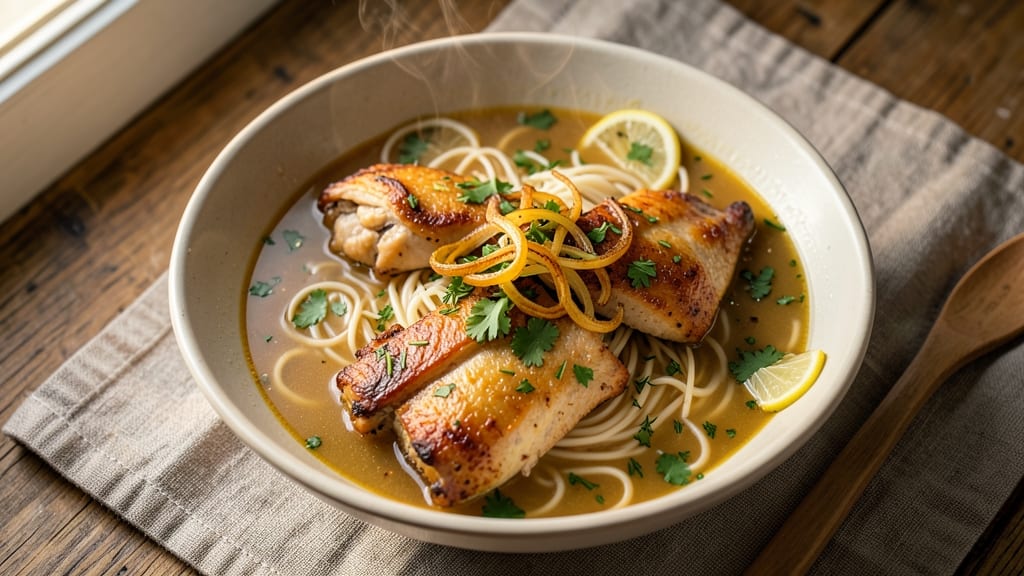
This ash reshteh soup recipe transports you straight to Persian kitchens with its fragrant broth, tender noodles, and vibrant herb swirls—each spoonful tells a story of tradition. 🌟 The secret lies in the slow-simmered broth, where bone-in chicken and aromatic spices meld into a deeply flavorful base, while fresh herbs transform the noodles into delicate ribbons of color and texture.
The dish begins with a rich, savory broth infused with turmeric and saffron, then layered with toasted noodles and a swirl of fresh herbs. This isn’t just soup—it’s a celebration of Persian hospitality, where every ingredient plays a role in creating a harmonious balance of flavors.
The noodles, lightly toasted for extra depth, soak up the broth while maintaining their subtle bite.
What you’ll end up with is a bowl of comforting warmth, where the golden broth cradles the noodles and herbs, creating a visual and culinary masterpiece. The dish is traditionally served with a sprinkle of fried onions or a soft-boiled egg, adding another layer of texture and richness.
Perfect for family dinners or cozy gatherings, this soup brings a taste of Persia to your table.
Ready in about 45 minutes, this recipe delivers restaurant-quality results with minimal effort. The key is patience—letting the broth develop its depth and the herbs release their bright, fresh flavors. Once you try it, you’ll understand why ash reshteh holds a special place in Persian cuisine.
Ingredients for ash reshteh soup
Persian spices, fresh herbs, and tender noodles—this is your shortcut to restaurant-style ash reshteh.
| Ingredient | Amount | Notes |
|---|---|---|
| Bone-In Chicken Thighs 🍗 | 1 ½ lb | Skin-on for richer flavor |
| Reshteh Noodles 🍜 | ½ lb | Persian noodles or angel hair |
| Fresh Parsley 🌿 | ¼ cup | Chopped, stems removed |
| Fresh Cilantro 🌿 | ¼ cup | Chopped, stems removed |
| Fresh Dill 🌿 | ¼ cup | Chopped, stems removed |
| Yellow Onion 🧅 | 1 whole | Diced, medium size |
| Garlic Cloves 🧄 | 4 cloves | Minced, fresh preferred |
| Turmeric Powder 🌶️ | 1 tsp | Freshly ground preferred |
| Saffron Threads 🌼 | ⅛ tsp | High-quality, soaked in 1 tbsp warm water |
| Ground Cumin 🌿 | ½ tsp | Toasted for deeper flavor |
| Salt 🧂 | 1 ½ tsp | Kosher or sea salt |
| Black Pepper 🌶️ | ½ tsp | Freshly ground preferred |
| Olive Oil 🫒 | ¼ cup | For toasting noodles |
| Chicken Broth 💧 | 4 cups | Homemade or quality low-sodium |
| Lemon Juice 🍋 | 1 tbsp | Freshly squeezed |
The saffron is non-negotiable here—look for high-quality threads (not powder) at specialty stores or Persian markets. Saigon or Badia brands are my go-tos, but even a tiny amount makes a difference. Fresh herbs are key too: grab the brightest parsley, cilantro, and dill you can find—they should smell vibrant, not wilted. For the chicken, bone-in thighs give the broth depth, but skinless, boneless thighs work in a pinch. The reshteh noodles? Middle Eastern markets carry them, but angel hair pasta in a pinch (though texture won’t be identical).
No saffron? Turmeric plus a pinch of paprika mimics the color (though not the flavor). Swap dried herbs? Use one-third the amount of fresh—dried dill and parsley work best. Short on chicken broth? Vegetable broth with a splash of soy sauce gets you close. The noodles need toasting for that nutty depth—don’t skip it! (Pro tip: Toast them in olive oil over medium-low heat until golden, stirring constantly.)
The broth keeps 3-4 days in the fridge—make extra! Store noodles separately and toast fresh before serving. Herbs stay brightest if wrapped in damp paper towels for up to 3 days. Freeze saffron in ice cube trays with water for easy use later. This soup tastes even better the next day as flavors meld—double the batch if you can.
Why You'll Love This Recipe
- No-Chop Herbs: I swear by the fresh parsley, cilantro, and dill here—but honestly, you can get away with just two if you’re in a rush. The noodles do most of the flavor work, so I often grab pre-chopped herbs from the store. Still tastes like I slaved over it.
- Rich Without Fuss: Bone-in chicken thighs turn tender and juicy while the broth simmers, but here’s the secret: the reshteh noodles soak up all the collagen and fat, turning the soup into a creamy, hearty hug. No heavy cream, no fancy techniques—just pure, satisfying depth.
- Leftovers That Shine: This soup actually improves the next day. The noodles soften perfectly, the herbs mellow into the broth, and the chicken falls off the bone. I make a double batch on Sundays because it’s the easiest lunch for the week—no reheating drama, just reheat and serve.
- Budget-Friendly Feast: Chicken thighs and dried reshteh noodles stretch this recipe to feed four for under $10. Between us, I’ve made it for potlucks, sick-day dinners, and even a last-minute dinner party—no one ever guesses how cheaply I pulled it off.
Step-by-step instructions for Persian herb swirl soup
Here's how to create this aromatic Persian masterpiece with perfectly toasted noodles and rich chicken broth.
🔥 Step 1: Sear the Chicken Thighs for Deep Flavor
Pat the 1.5 lb bone-in chicken thighs dry with paper towels—this ensures maximum crispiness. Heat 0.25 cup olive oil in a large pot over medium-high heat until shimmering. Add the chicken thighs skin-side down and sear for 5-6 minutes until the skin turns deep golden brown and crispy.
Flip the thighs and cook for another 5-6 minutes until the skin is golden on both sides. The chicken should release easily from the pan—if it sticks, you're not ready to flip. Remove the thighs and set aside on a plate, leaving the rendered fat in the pot. Real talk: this fat is liquid gold for your soup's richness.
👨🍳 Step 2: Sauté Aromatics and Toast the Noodles
In the same pot, reduce heat to medium and add the diced yellow onion. Cook for 5 minutes until softened and translucent. Add the 4 minced garlic cloves and 0.5 tsp ground cumin, stirring constantly for 30 seconds until fragrant—you'll smell that earthy cumin aroma filling your kitchen.
Now for the noodles: add the 0.5 lb reshteh noodles and toast them for 2-3 minutes, stirring frequently, until they turn a beautiful golden brown color. This toasting step is crucial—it gives the noodles their signature nutty flavor and prevents them from turning mushy. Don't walk away; watch them closely to avoid burning.
🍳 Step 3: Build the Herb-Infused Broth
Pour in the 4 cups chicken broth, scraping up any browned bits from the bottom of the pot with a wooden spoon. This deglazing captures all those flavorful fond particles. Bring to a gentle simmer, then add the 1 tsp turmeric powder and 1.5 tsp salt. Stir well to dissolve the turmeric—it'll give your soup that signature golden color.
Here's where the magic happens: add the soaked 0.125 tsp saffron threads (with their soaking liquid), 0.25 cup chopped fresh parsley, 0.25 cup chopped fresh cilantro, and 0.25 cup chopped fresh dill. Simmer gently for 10 minutes—this allows the herbs to infuse their bright flavors into the broth without turning bitter. The soup should smell like a Persian garden in a pot.
🥘 Step 4: Cook the Chicken and Finish the Soup
Return the seared chicken thighs to the pot, skin-side up. Cover and simmer for 25-30 minutes until the chicken is fork-tender and the meat pulls away from the bone easily. The broth should now be infused with all those beautiful herb flavors and have a rich, golden hue from the turmeric.
Remove the chicken thighs and let them cool slightly, then shred the meat using two forks. Discard the bones and skin. Return the shredded chicken to the pot and stir in the 1 tbsp freshly squeezed lemon juice and 0.5 tsp freshly ground black pepper. Taste and adjust seasoning if needed—this is your chance to perfect the balance of flavors.
🍽️ Step 5: Serve with Herb Swirls
Ladle the soup into bowls, making sure each serving gets a generous portion of those beautifully toasted noodles. The key to presentation (and flavor!) is the herb swirl: take a small amount of the broth from each bowl and whisk it with 1 tablespoon of chopped herbs (parsley, cilantro, and dill) in a small bowl. Then, using a spoon, create elegant swirls on top of each serving.
Serve immediately while the noodles are still warm and the herbs are vibrant. Each spoonful should deliver a perfect balance of tender chicken, aromatic herbs, and that beautiful golden broth. The toasted noodles add a delightful textural contrast that makes this soup truly special. Enjoy with warm crusty bread to soak up every last drop!
Pro Tips For Making Ash Reshteh Soup
- Brown the Chicken First: Skip the slow start—sear those bone-in thighs in a hot pot for 4-5 minutes until deep golden. I learned this the hard way: skipping this step means flavorless broth, no matter how long you simmer. The crust locks in juices and builds the soup’s depth.
- Rinse Reshteh Twice: Cold water rinse, then a quick shake in a colander—do this before adding to the pot. Reshteh absorbs like a sponge, and soggy noodles turn to mush. Trust me, your soup will thank you when they stay firm and chewy.
- Don’t Overcrowd the Pot: Layer the herbs (parsley, cilantro, dill) after the chicken and noodles are mostly cooked. Too early, and they’ll turn to sludge. Add them in the last 5 minutes—just enough to wilt, not dissolve.
- Save the Chicken Fat: Strain the broth but don’t toss the rendered fat from the thighs. Swirl it back in at the end—it coats the noodles and herbs with richness. Yes, it’s messy, but that’s the magic. (Use a fine-mesh strainer if you’re squeamish.)
Regional styles of this recipe
Tehran-Style Ash Reshteh
In Tehran, this soup is a staple for family gatherings, where the broth is often made with bone-in chicken thighs and extra saffron for that signature golden hue. The key difference? A generous sprinkle of fried shallots on top, adding a crispy contrast to the tender noodles.
I like to use Persian saffron from local markets—it’s more potent than the generic kind. For an extra touch, serve with a side of barberry jam (torsh) to cut through the richness. 🌟
Isfahan’s Herb Variation
Isfahan’s version keeps the same base but amplifies the herb swirls—here, they use extra dill and a splash of lemon juice right before serving. The noodles are toasted longer for a deeper nutty flavor, and the broth is simmered with a pinch of cardamom for warmth.
I’ve found that adding a few crushed rose petals (if you can find them) adds a floral note that’s uniquely Isfahan. 🌸
Northern Iran’s Lamb Twist
Up north, especially in Tabriz, ash reshteh often includes ground lamb instead of chicken, giving the broth a richer, earthier taste. The noodles are toasted with garlic and cumin for extra depth, and the herb swirls include chives alongside parsley and dill.
For a true northern touch, finish with crumbled feta cheese and a drizzle of pomegranate molasses. This version is heartier and perfect for colder months. ❄️
Tabriz’s Spiced Broth
Tabriz’s take on ash reshteh is all about the spiced broth—they add star anise and cinnamon sticks while simmering, which infuse the broth with a subtle warmth. The noodles are toasted with sesame seeds for crunch, and the herb swirls are made with extra cilantro for brightness.
I love this version because the spices add complexity without overpowering the fresh herbs. 🌶️
Modern Persian Fusion
For a contemporary twist, some chefs in Tehran are blending ash reshteh with modern techniques—like adding miso paste for umami depth or swapping saffron for turmeric and a pinch of smoked paprika.
The noodles might be toasted with chili flakes for a spicy kick, and the herb swirls could include basil or mint for a fresh, unexpected twist. This fusion keeps the soul of the dish while making it feel new. 🔥
Nutrition facts
Frequently asked questions
What makes ash reshteh different from other Persian soups?
Ash reshteh stands out with its signature toasted noodle ribbons and vibrant herb swirls that create a visual masterpiece in each bowl. Unlike other Persian soups like ghormeh sabzi (which uses kidney beans) or fesenjan (walnut-pomegranate), ash reshteh relies on its delicate herb-infused broth and nutty noodles for texture and flavor. The saffron and turmeric give it that distinctive golden hue, while the fresh herbs add a bright, refreshing contrast to the rich chicken broth.
Can I substitute the reshteh noodles with regular pasta?
You can use angel hair pasta or vermicelli as a substitute, but the texture won't be identical. Reshteh noodles are thinner and more delicate, designed to swirl beautifully in the broth. Toast them for 1-2 minutes less than reshteh to avoid burning, and they'll still add that nutty depth. For best results, try to find Persian reshteh noodles at Middle Eastern markets—they're worth seeking out for the authentic experience.
How do I get the herb swirl to look perfect?
The secret is in the technique: whisk 1 tablespoon of chopped herbs (parsley, cilantro, dill) with 1 tablespoon of broth in a small bowl until smooth, then gently spoon it over the soup in circular motions. Use a spoon with a slight angle to create those elegant swirls. Work quickly—herbs lose their vibrant color when exposed to air. For extra flair, sprinkle with fried shallots or a pinch of crumbled feta cheese right before serving.
Can I make ash reshteh without saffron?
Yes, but the dish will lose its signature golden color and floral notes. Replace the saffron with ½ teaspoon turmeric plus ¼ teaspoon smoked paprika for color, and add 1 teaspoon lemon zest to mimic the bright, citrusy undertones. For flavor depth, consider adding a pinch of cardamom or a bay leaf while simmering. The soup will still be delicious—just slightly different in character.
Why does my broth taste bland after simmering?
Bland broth usually means insufficient seasoning or rushed simmering. First, ensure you're using bone-in chicken (the bones add depth). Deglaze the pot thoroughly after searing the chicken to capture all the flavorful browned bits. Simmer uncovered for at least 20 minutes to let flavors develop, and taste frequently to adjust salt and acidity. A splash of lemon juice or a pinch of saffron at the end can also brighten the flavor.