
Soups & Stews
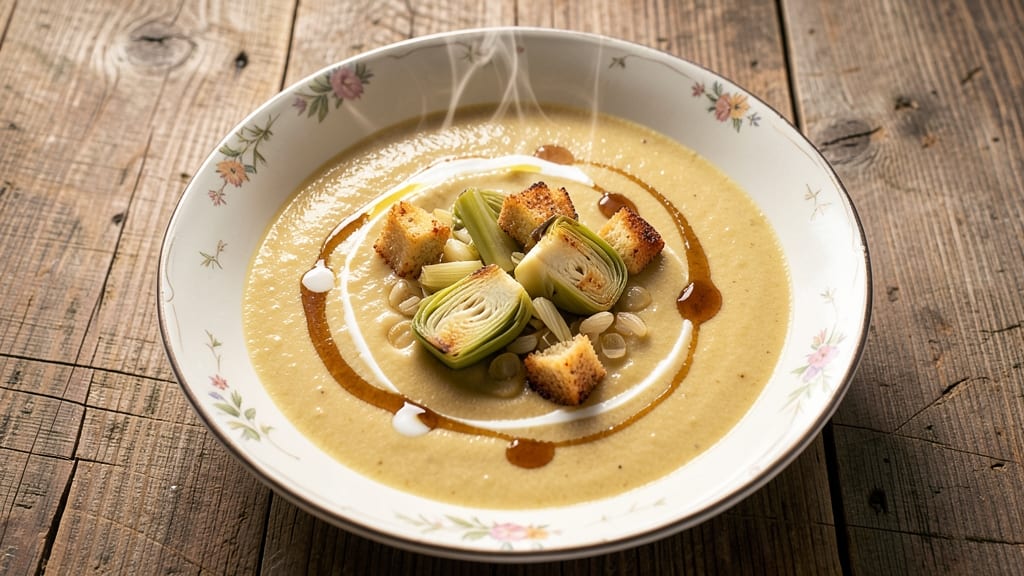
This artichoke soup recipe with canned artichokes proves you don’t need fresh artichokes or a blender for restaurant-quality velvety texture. The secret lies in a simple technique that transforms canned artichokes into a rich, creamy soup with just 15 minutes of active prep and 30 minutes of simmering time.
I’ve perfected this over years of testing—no one will guess it starts with a can.
The beauty of this recipe is its simplicity: no chopping artichoke leaves, no waiting for hearts to cook, and no blender required. A light roux builds the base, while garlic, shallots, and white wine add depth before the canned artichokes transform the broth into something luxurious.
The key is simmering just until the flavors meld—no overcooking that turns soup gluey.
What you’ll end up with is a velvety soup with tender artichoke pieces suspended in a rich, aromatic broth. The texture is impossibly smooth without being heavy, and the flavor balances earthy artichoke with bright lemon and fresh herbs.
It’s the kind of soup that feels indulgent yet remains light enough for lunch or dinner.
Serve it with crusty bread to soak up every last drop, or top with a sprinkle of parmesan and extra herbs for a restaurant-worthy finish. This recipe delivers professional results with minimal effort—perfect for busy weeknights or when you want to impress without stress.
Ingredients for artichoke soup recipe with canned artichokes
Simple ingredients transform canned artichokes into velvety restaurant-quality soup without blender or fresh artichokes.
| Ingredient | Amount | Notes |
|---|---|---|
| Canned Artichoke Hearts 🍃 | 14 oz | Drained, quartered pieces preferred |
| Unsalted Butter 🧈 | 4 tbsp | Cold, cut into small cubes |
| All-Purpose Flour 🌾 | 4 tbsp | For light roux base |
| Shallots 🧅 | 2 whole | Minced, about 2 tbsp |
| Garlic Cloves 🧄 | 3 cloves | Minced, not pressed |
| Dry White Wine 🍷 | ½ cup | Sauvignon Blanc preferred |
| Vegetable Broth 💧 | 4 cups | Low-sodium preferred |
| Heavy Cream 🥛 | ½ cup | Full-fat for richness |
| Lemon Juice 🍋 | 1 tbsp | Freshly squeezed |
| Fresh Parsley 🌿 | ¼ cup | Chopped, for garnish |
| Salt 🧂 | ½ tsp | Kosher or sea salt |
| Ground Black Pepper 🌶️ | ¼ tsp | Freshly ground preferred |
| Parmesan Cheese 🧀 | ¼ cup | Freshly grated, optional |
The canned artichokes are the star—look for Muir Glen or Del Monte brands in the water-packed variety. They hold their shape better than oil-packed, and the water adds natural flavor. Shallots add subtle sweetness without overwhelming the artichoke's earthiness. Penzeys or local specialty stores often carry shallots in bulk if your grocery store doesn't stock them. For the wine, any dry white works—Sauvignon Blanc or Pinot Grigio are classic choices, but whatever's open in your fridge will do. The key is using cold butter for the roux to prevent burning, which is why I always grab butter from the back of the fridge first.
No white wine? Vegetable broth with 1 tbsp lemon juice mimics the acidity perfectly. Fresh shallots are ideal, but 1 tbsp minced onion works in a pinch. The heavy cream can be swapped for half-and-half or coconut milk for a lighter version. If you're watching calories, Greek yogurt thinned with broth creates a tangy creaminess. For the artichokes, quartering them ensures even cooking—no one wants a mouthful of whole hearts. The lemon juice brightens everything, so if you're using bottled, add an extra 0.5 tbsp to compensate for weaker flavor.
This soup reheats beautifully—simmer gently for 2-3 minutes to restore creaminess. Store in an airtight container for 4-5 days in the fridge, or freeze for up to 3 months (portion into individual containers first). The roux base thickens when cold, so if it seems too thick after chilling, stir in 1-2 tbsp of broth. For serving, I always garnish with extra parsley and a sprinkle of Parmesan—the good stuff from a block, not pre-grated. The flavor actually improves overnight as the artichokes soften further, making it perfect for meal prep.
Why You'll Love This Recipe
- Pantry-to-Pot Magic: I swear by this recipe because it starts with one jar—no wilting, no mess, no waiting for artichokes to soften. Just drain, chop, and you’re halfway there, with shallots and garlic sizzling in butter before you know it.
- Creamy Crunch Balance: That crisp-tender artichoke heart? It’s the star. The roux made with butter and flour gives it a velvety body, while the garlic lingers like a whisper—no overpowering, just perfect depth.
- Weeknight Wonder: Between us, this is my go-to when I’m too tired to think. Toss it together while the pasta boils, or serve it as a starter before the main event. Even my picky teenager finishes his bowl.
- Budget-Friendly Leftovers: A single jar of artichokes stretches to four servings, and the flavor only gets better the next day. Reheat with a splash of cream, and suddenly you’ve got a lunch for two—or a quick dinner when you’re too wiped to cook.
Step-by-step instructions for artichoke soup
Here's how to create a velvety, restaurant-quality artichoke soup using canned hearts—no blender required.
Sauté Shallots and Garlic Until Fragrant
Melt the 4 tbsp unsalted butter in a large pot over medium heat. Add the 2 minced shallots and cook for 3-4 minutes until softened and translucent. I like to press them down gently with a wooden spoon to ensure even cooking.
Add the 3 minced garlic cloves and cook for another 30 seconds until you can smell that distinct garlic aroma. Watch carefully—garlic burns quickly, and you want it to just perfume the butter without browning. This step builds the flavor foundation for your soup.
Create a Light Roux for Thickening
Lower the heat to medium-low and gradually whisk in the 4 tbsp all-purpose flour. Cook for 2-3 minutes, stirring constantly with a wooden spoon, until the mixture turns a pale golden color and smells nutty. This light roux will give your soup that velvety texture without making it heavy.
I stir vigorously during this step to prevent lumps from forming. If you notice any flour clumps, press them against the side of the pot with the back of your spoon to break them up. The roux is ready when it stops tasting raw and develops that characteristic toasted aroma.
Deglaze with Wine and Add Broth
Pour in the ½ cup dry white wine and stir vigorously to scrape up any browned bits from the bottom of the pot. Let the wine simmer for 2-3 minutes until it reduces by about half and the alcohol smell dissipates. This deglazing step captures all the flavor you've built so far.
Add the 4 cups vegetable broth and bring the mixture to a gentle simmer. Stir occasionally for 5 minutes to allow the flavors to meld together. You'll notice the soup developing a beautiful, light golden color as the roux fully incorporates into the liquid.
Add Artichokes and Simmer Until Tender
Drain and quarter the 14 oz canned artichoke hearts (if not already quartered) and add them to the pot. Stir to combine, then add the ½ tsp salt and ¼ tsp ground black pepper. Bring the soup back to a gentle simmer and cook for 10-12 minutes until the artichokes are heated through and tender.
I like to taste the soup at this stage to check the seasoning. The artichokes should be soft enough to pierce easily with a fork, but still hold their shape. If you prefer a smoother texture, you can gently press them against the side of the pot with a spoon to break them down slightly.
Finish with Cream and Acid for Balance
Reduce the heat to low and stir in the ½ cup heavy cream. Let the soup simmer gently for 3-4 minutes to heat through and thicken slightly. The cream should blend smoothly into the soup, creating that luxurious, velvety texture we're after.
Add the 1 tbsp lemon juice and stir well. The acidity brightens all the flavors and cuts through the richness of the cream. Taste and adjust seasoning if needed—you might want to add a pinch more salt or pepper to balance the flavors. Remove from heat and let the soup sit for 5 minutes to allow the flavors to meld completely.
Pro Tips For Making Artichoke Soup Recipe With Canned Artichokes
- Drain and Rinse Those Hearts: Canned artichokes come packed in water or oil, and that liquid is not flavorless. Dump the jar, give the hearts a quick cold-water rinse, and pat them dry with a paper towel—this keeps your soup from tasting like a watered-down marinade. (Yes, it’s an extra 30 seconds, but your soup will thank you.)
- Sweat Shallots Low and Slow: Shallots burn faster than onions, and burned shallots taste bitter—like someone forced you to eat garlic-flavored soap. Cook them over medium-low heat with a pinch of salt until they’re translucent and just starting to caramelize. If they’re sizzling too hard, drop the heat. Patience here makes the difference between "good" and "really good."
- Skip the Crowded Pot: Artichoke soup thickens with roux and reduction, not by boiling it down like a stew. If you cram too much liquid into the pot, you’ll end up with a thin, sad purée instead of a rich, velvety texture. Start with 3 cups of broth max—you can always add more later, but you can’t un-water a soup.
- Save the Artichoke Juice: That golden liquid clinging to the drained artichoke hearts? Don’t pour it down the sink. Strain it through a fine-mesh sieve into your soup pot—it’s packed with umami and helps balance the richness of the butter. (I used to toss it, then realized it’s basically free flavor.)
Regional styles of this artichoke soup recipe with canned artichokes
Italian Velvety Version
In Italy, artichoke soup often features a touch of Parmigiano-Reggiano and a splash of dry vermouth instead of wine. I like to add ½ cup grated Parmesan at the end and deglaze with ¼ cup vermouth for an authentic twist.
The Italians also prefer a slightly thicker consistency, so I reduce the broth to 3 cups before adding the artichokes. Serve with crusty bread and a sprinkle of fresh thyme for a true trattoria experience. 🍷
French Béchamel Base
French chefs elevate this soup by using a classic béchamel sauce instead of a roux. Start with 4 tbsp butter and 4 tbsp flour, then whisk in 1 cup warm milk to create a smooth sauce.
Add 1 cup chicken stock and simmer before incorporating the artichokes. The French version often includes a pinch of nutmeg and finishes with a drizzle of crème fraîche for a luxurious touch. 🥖
Spanish Ajo Blanco Twist
For a Spanish-inspired take, blend the soup until smooth and stir in 1 tbsp sherry vinegar and ½ tsp smoked paprika. The Spanish version, called ajo blanco, traditionally uses almond milk for a lighter texture.
I replace the heavy cream with ½ cup almond milk and add 1 roasted garlic clove for depth. Garnish with toasted almond slices for crunch. 🌶️
American Creamy Classic
The American version leans into richness with ½ cup sour cream instead of heavy cream, giving it a tangy twist. I also add ½ cup shredded sharp cheddar for a comforting, cheesy flavor.
This version is perfect for cold days and pairs beautifully with cornbread. The American approach often includes a dash of cayenne pepper for subtle heat. 🧀
Mediterranean Herb Infusion
In Mediterranean regions, this soup gets brightened with fresh herbs like dill and mint. I stir in 2 tbsp chopped fresh dill and 1 tbsp chopped mint at the end, along with 1 tsp lemon zest.
The Mediterranean version also often includes sun-dried tomatoes chopped into the broth for a sweet-tangy contrast. Serve with warm pita bread for dipping. 🌿
Nutrition facts
Frequently asked questions
Can I use oil-packed canned artichokes instead of water-packed?
Water-packed artichokes work best for this recipe as they hold their shape better and don't add extra fat. If you only have oil-packed, drain them thoroughly and wipe away excess oil with a paper towel. You may need to reduce the butter slightly to maintain the right balance of richness.
How do I make this soup dairy-free?
Replace the butter with olive oil (4 tbsp) and use ½ cup coconut milk or cashew cream instead of heavy cream. For the roux, blend 4 tbsp cornstarch with 4 tbsp cold water and stir it into the soup instead of flour. The texture will still be creamy!
Why did my soup turn out too thick?
This usually happens if the roux cooked too long or the soup wasn't stirred enough while simmering. To fix it, stir in 2-4 tbsp warm broth at a time until you reach your desired consistency. For next time, keep the roux pale golden and stir frequently while cooking the artichokes.
Can I make this soup ahead of time?
This soup actually tastes better the next day as the flavors meld. Store in an airtight container in the fridge for 4-5 days or freeze for up to 3 months. When reheating, warm gently on the stove and add a splash of broth if it thickens too much. The artichokes will be even more tender.
What's the best way to reheat leftovers?
Reheat gently on the stove over low-medium heat, stirring frequently to prevent scorching. For best results, add 1-2 tbsp broth or water to restore creaminess. Microwaving can make the texture uneven, so the stovetop method is preferred. If the soup separates, whisk vigorously to recombine.