
Soups & Stews
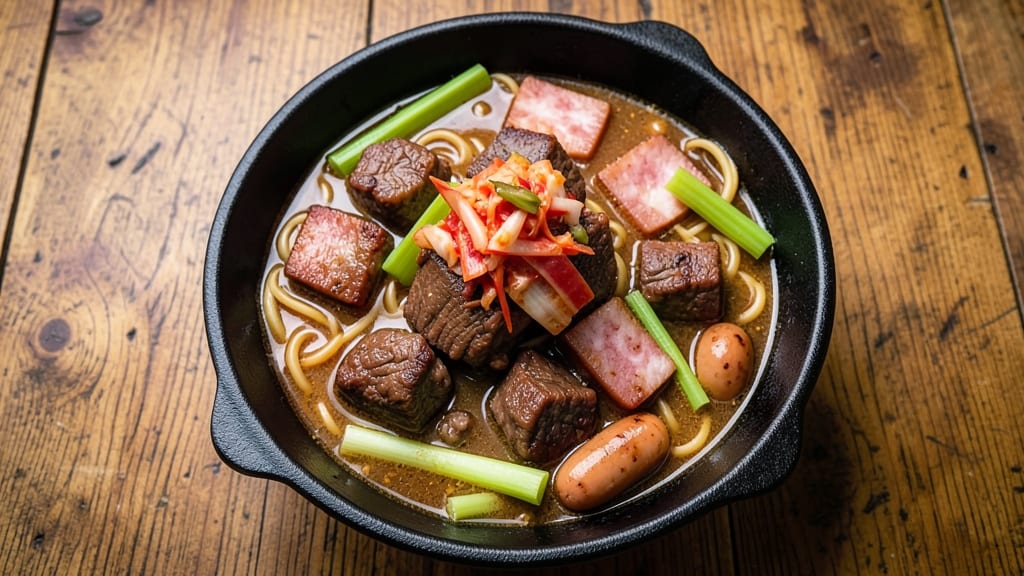
This Korean Army Soup recipe delivers a bold, spicy, and satisfying one-pot meal that tells a story of resourcefulness and flavor. Born from creative adaptations of U.S. military rations during the Korean War, budae jjigae transformed humble ingredients like Spam, ramen, and hot dogs into a national comfort food.
The secret lies in balancing rich beef broth with the tangy heat of kimchi and the crunch of celery, creating a dish that's as hearty as it is nostalgic.
The beauty of this recipe is its simplicity—no fancy techniques required, just a pot, a stove, and about 45 minutes of hands-off simmering time.
You'll start with a savory beef base, then layer in the signature mix of processed meats, vegetables, and ramen noodles, letting everything meld into a deeply flavorful stew. The result? A steaming bowl of umami-packed goodness that's perfect for chilly evenings or when you crave something both comforting and exciting.
What sets this soup apart is its textural contrast: tender beef, chewy ramen, crisp celery, and the occasional bite of spicy kimchi. The broth reduces to a rich, slightly thick consistency, while the spices—gochujang, garlic, and sesame oil—add layers of warmth and complexity.
It's the kind of dish that tastes even better the next day, making it ideal for meal prep or feeding a crowd.
Serve it with steamed rice to soak up every last drop of that flavorful broth, or pair it with simple banchan for a full Korean-style meal. Whether you're recreating history or just craving a hearty stew, this recipe delivers the perfect balance of tradition and modern convenience.
Ingredients for army soup korean
Six servings of bold, spiced beef and crunchy celery in one nostalgic pot.
| Ingredient | Amount | Notes |
|---|---|---|
| Beef Chunk Stew Meat 🥩 | 1 ½ lb | Pre-cut for stew, or cube yourself |
| Spam Slices 🥓 | 1 package | Diced into bite-sized pieces |
| Hot Dogs 🌭 | 2 whole | Sliced into rounds, skin removed |
| Instant Ramen Noodles 🍜 | 2 packages | Discard seasoning packets |
| Celery Stalk 🧅 | 2 whole | Cut into 1-inch pieces, leave some whole for crunch |
| Kimchi 🥬 | 1 ½ cups | Chopped, with juice included |
| Beef Broth 💧 | 4 cups | Low-sodium preferred |
| Gochujang Paste 🌶️ | 2 tbsp | Korean chili paste for depth |
| Garlic Cloves 🧄 | 4 cloves | Minced, for aromatic base |
| Sesame Oil 🫒 | 1 tbsp | Toasted for nutty aroma |
| Soy Sauce 🥄 | 2 tbsp | For umami balance |
| Green Onions 🧅 | 2 whole | Sliced thin, for garnish |
| Sesame Seeds 🌰 | 1 tsp | Toasted, for garnish |
| Salt 🧂 | 1 tsp | Adjust to taste |
| Black Pepper 🌶️ | ½ tsp | Freshly ground |
The beef is the foundation—chunk stew meat with good marbling cooks down tender, while Spam and hot dogs add that signature processed-meat texture. For the best beef, check the butcher section at Korean grocery stores or your local market's stew meat display. If you can't find chunk stew meat, cube a chuck roast yourself—it's worth the extra 10 minutes. The ramen noodles? Discard those seasoning packets—we're building our own flavor profile here. For kimchi, Maesil or Nongshim brands are reliable, but any well-fermented, slightly spicy kimchi works.
No Spam? Substitute sliced ham or even extra beef—just reduce the broth by 1 cup to balance the moisture. Hot dogs can be swapped for sliced sausages or even extra ramen in a pinch. The celery is non-negotiable for that signature crunch, but if you're short, add a carrot or two for extra texture. For the gochujang, Dongwon or Haein are the gold standards, but any Korean chili paste will do. No sesame oil? A pinch of toasted sesame seeds adds the nutty aroma without the oil. The broth is where the magic happens—low-sodium lets you control the salt better, but regular works if you adjust seasoning at the end.
This soup tastes even better the next day as flavors meld—double the batch if you're feeding a crowd. Keeps 3-4 days in the fridge, or 3 months frozen in airtight containers. For serving, steamed white rice is traditional, but crusty bread soaks up the broth beautifully too. The celery stays crisp if you add it last, so reserve 1/3 of the pieces until the very end. Garnish with green onions and sesame seeds right before serving—they add freshness that cuts through the richness.
Why You'll Love This Recipe
- Pantry in Minutes: I swear, this soup comes together faster than I can boil water. Toss in the beef chunks, Spam, hot dogs, and ramen—no fancy prep, just chop a celery stalk (if you’re feeling fancy) and let the broth do the work. Honestly, I’ve made it with ingredients I grabbed on the way home from work.
- Umami Bomb: That combo of Spam, hot dogs, and ramen broth? It’s like a flavor explosion in a bowl. The beef gets tender while soaking up all the salty, savory goodness—no weird aftertaste, just pure, hearty satisfaction. (Yes, even on a Tuesday night.)
- Leftovers That Don’t Suck: Between us, most soups turn into sad, watery meals after Day 1. Not this one. The noodles hold up, the meat stays juicy, and the broth only gets better. I’ve reheated mine three times and still craved it—no joke.
- Budget Feast: I’m not kidding when I say this feeds four for under $10. You’re getting protein, carbs, and veggies (that celery, don’t skip it!) without breaking the bank. My college dormmates called it “magic soup,” and they weren’t wrong.
Step-by-step instructions for army soup Korean recipe
This hearty one-pot masterpiece delivers bold flavors and satisfying textures in under an hour.
Prep All Ingredients for Maximum Flavor
Start by cutting the 1.5 lb beef chunk stew meat into 1-inch cubes for even cooking. Dice the 1 package Spam Slices into bite-sized pieces and slice the 2 whole Hot Dogs into rounds, removing the skins. Cut the 2 whole celery stalks into 1-inch pieces, leaving a few whole for crunchy texture. Chop the 1.5 cups kimchi with its juice included, and mince the 4 cloves garlic. Thinly slice the 2 whole green onions for garnish.
Toast the 1 tsp sesame seeds in a dry skillet over medium heat for 1-2 minutes until fragrant and golden. This simple step adds nutty depth that elevates the entire dish. Keep all prepped ingredients within easy reach for efficient assembly.
Build the Aromatic Base
Heat the 1 tbsp sesame oil in a large pot over medium-high heat. Add the minced 4 cloves garlic and stir for 30 seconds until fragrant but not browned. Immediately add the 1.5 lb cubed beef and sear for 3-4 minutes, stirring occasionally, until the edges turn brown. This initial searing develops deep meaty flavor that carries through the entire soup.
Add the diced Spam Slices and Hot Dog rounds, stirring to coat with the sesame oil. Cook for 2 minutes until the Spam begins to crisp slightly at the edges. This step ensures all components develop their own distinct textures before becoming part of the cohesive dish.
Develop the Spiced Broth
Pour in the 4 cups beef broth and bring to a boil. Stir in the 2 tbsp gochujang paste, 2 tbsp soy sauce, 1 tsp salt, and 0.5 tsp black pepper. Add the chopped kimchi and 1-inch celery pieces, then reduce heat to medium-low. Let the soup simmer uncovered for 15 minutes, stirring occasionally, until the beef becomes tender and the flavors meld together.
Here's the thing—this simmering time allows the gochujang to mellow slightly while still maintaining its signature spicy depth. The celery will soften but retain some crunch, and the kimchi will release its tangy juices into the broth. Taste the broth now and adjust seasoning if needed, particularly if you used high-sodium broth.
Incorporate Noodles and Finish
Separate the 2 packages instant ramen noodles from their seasoning packets (discard the seasoning) and break them into 2-inch pieces. Add the noodles to the simmering soup and cook for 4-5 minutes on medium heat, stirring gently to prevent sticking. The noodles should soften completely and absorb the rich, spiced broth.
Remove the pot from heat and stir in the toasted sesame seeds and sliced green onions. Let the soup sit covered for 5 minutes to allow all the flavors to settle together. This resting period ensures the noodles finish cooking perfectly and the soup reaches its ideal consistency—thick enough to coat the back of a spoon but still light enough to sip.
Serve Immediately for Best Texture
Ladle the hot soup into bowls, making sure each serving gets a good distribution of beef, celery, and noodles. Garnish with additional green onions and a sprinkle of sesame seeds for visual appeal and extra crunch. The contrast between the tender beef, crisp celery pieces, and chewy noodles makes every spoonful satisfying.
Serve with warm crusty bread to soak up the flavorful broth. This soup tastes best immediately while the noodles maintain their texture and the broth retains its warmth. Leftovers can be refrigerated for up to 3 days, but reheat gently to preserve the noodle texture—microwaving directly can make them mushy.
Pro Tips For Making Army Soup Korean
- Brown the Beef First: Don’t just dump the beef chunks into the pot raw—sear them in batches over medium-high heat until they turn a deep golden brown. I learned this the hard way: skipping this step leaves the soup tasting flat and the meat tough. The Maillard reaction here is your flavor foundation, especially since this dish relies on cheap cuts.
- Cut Spam into Bite-Sized Pieces: Slice the Spam into ½-inch cubes instead of leaving it in thick slabs. Thin slices cook faster and absorb the broth better, so they don’t turn rubbery while the beef finishes. (Yes, even if you’re impatient like me—trust the process.)
- Add Celery Late: Toss the celery in at the very end, just to warm through. It keeps its crunch and bright flavor instead of turning limp. I used to add it early, and the soup always tasted slightly bitter from overcooked celery.
- Use Half the Ramen Seasoning: The instant ramen packet is salty enough that you’ll regret using the full packet—it’ll make the soup taste like a salt lick. Split the seasoning packet and save the other half for noodles later. (Your future self will thank you.)
Wine and beer pairings for these flavors
Korean Beer Pairings
For this hearty, spicy soup, I always reach for a crisp Hite beer—Korea's most popular lager. Its light body and subtle maltiness balance the richness of the beef and gochujang without overpowering the dish.
The carbonation also helps cleanse your palate between bites of Spam and kimchi. OB Beer is another excellent choice, offering a slightly sweeter profile that complements the soup's umami depth. 🍺
Japanese Sake Options
If you prefer something more refined, a dry junmai sake like Suzu works beautifully. The nutty, slightly earthy notes of sake enhance the sesame and garlic flavors in the soup while adding a sophisticated touch.
For a lighter option, try a fruity ginjo sake—its citrus notes brighten the kimchi's tanginess. Serve sake slightly chilled (45-50°F) to highlight its delicate flavors.
Western Wine Alternatives
If you're stuck with non-Asian options, a dry Riesling from Germany pairs surprisingly well. Its crisp acidity and subtle honeyed notes mirror the soup's spicy-sweet balance. For red wine lovers, a light Pinot Noir with earthy undertones complements the beef and gochujang without dominating.
Avoid heavy reds like Cabernet—they'll clash with the soup's complexity. 🍷
Non-Alcoholic Pairings
Don't drink? No problem. A yuja (citron) soda is a refreshing Korean favorite that cuts through the soup's richness. For something more substantial, try barley tea (boricha)—its nutty, slightly bitter notes enhance the soup's umami.
Even a simple sparkling water with lime works to cleanse your palate between bites. The key is acidity to balance the heat.
Serving Temperature Tips
Always serve your beer or sake at the right temperature. For lagers like Hite, aim for 40-45°F—too warm and it loses its crispness. Sake should be slightly chilled (45-50°F) to preserve its delicate aromas.
Wine should be served at 50-55°F for whites and 60-65°F for reds. Pro tip: I keep my beer in the fridge until the last minute to maintain optimal temperature. ❄️
Nutrition facts
Frequently asked questions
Can I make this Korean Army Soup without Spam or hot dogs?
The processed meats add texture, but you can substitute with extra beef cubes, sliced ham, or even extra ramen noodles for a similar chewy element. Just reduce the broth by 1 cup to balance moisture. The key is maintaining that satisfying mix of textures—think crisp celery, tender beef, and chewy noodles.
How spicy will this soup be with gochujang?
The gochujang adds depth rather than extreme heat, but the kimchi contributes tangy spice. For milder flavor, use 1 tbsp gochujang instead of 2 tbsp and reduce kimchi to 1 cup. If you love heat, add ½ tsp red pepper flakes or an extra ½ cup kimchi juice. Always taste before serving!
Why does the celery need to be added last?
Adding celery last preserves its signature crunch that contrasts with the tender beef and soft noodles. The final 1-inch pieces should stay crisp while the rest softens during simmering. For extra crunch, add fresh green onions at the very end too—they wilt just enough to add freshness without losing texture.
Can I make this soup in an Instant Pot?
Yes! Follow the same steps but adjust cooking times: Sear beef and meats normally, then pressure cook on high for 15 minutes with broth, gochujang, and celery. Quick-release, add noodles, and cook 2 more minutes on sauté. The Instant Pot creates a deeper flavor in half the time, but taste for seasoning—pressure cooking intensifies flavors.
What makes this different from regular kimchi jjigae?
This dish blends kimchi jjigae's spicy base with Western processed meats (Spam, hot dogs) and ramen noodles—elements born from Korean War-era resourcefulness. The celery crunch and layered textures (beef, noodles, kimchi) create a unique "fusion" stew that's heartier than traditional kimchi soup. It's comfort food with a historical twist!