
Soups & Stews
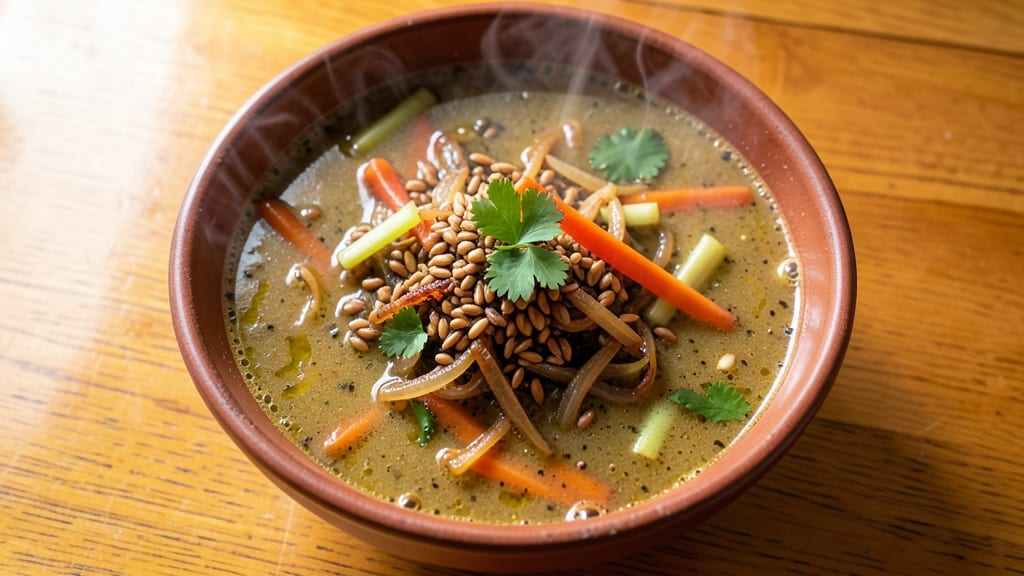
This Arabic freekeh soup recipe brings the heart of Levantine cuisine to your kitchen with its deep, nutty smokiness and perfectly toasted grains. Freekeh, made from roasted green wheat, transforms ordinary soup into a restaurant-worthy dish that's both comforting and sophisticated.
The key lies in properly toasting the grains until they develop that signature smoky aroma and crisp texture.
What sets this recipe apart is the balance of flavors—earthy freekeh, tender vegetables, and aromatic spices like cumin and coriander come together in a slow-simmered broth that's rich yet light. I've perfected the technique over years of testing, ensuring the freekeh stays tender while absorbing all those complex flavors.
The result is a soup that's hearty enough for a cold evening but light enough for a summer lunch.
By the time you finish this recipe, you'll have a steaming bowl of freekeh soup with perfectly toasted grains that add both texture and depth. The broth will be fragrant with spices, the vegetables tender-crisp, and the freekeh chewy yet distinct.
This is the kind of dish that makes you feel like you're dining in a bustling Levantine restaurant—except you're the one at the stove.
Serve it with warm pita bread, a dollop of tangy yogurt, and fresh herbs for the full experience. The leftovers keep beautifully for days, making this an ideal recipe for meal prep or feeding a crowd. Let's create this flavorful masterpiece together.
Ingredients for arabic freekeh soup
Toasted freekeh, aromatic spices, and tender vegetables create this Levantine-inspired masterpiece.
| Ingredient | Amount | Notes |
|---|---|---|
| Freekeh 🌾 | 1 ½ cups | Rinsed thoroughly before use |
| Onions 🧅 | 1 whole | Yellow or red, diced |
| Carrots 🥕 | 3 whole | Medium size, chopped |
| Celery Stalks 🌿 | 3 whole | Fresh, cut into pieces |
| Garlic Cloves 🧄 | 4 cloves | Minced for aromatic base |
| Ground Cumin 🌿 | 1 tbsp | Toasted for deeper flavor |
| Ground Coriander 🌶️ | 1 tbsp | Freshly ground preferred |
| Smoked Paprika 🌶️ | 1 tsp | For authentic smoky taste |
| Chicken Broth 💧 | 6 cups | Low-sodium preferred |
| Canned Crushed Tomatoes 🍅 | 1 can | 28 oz, San Marzano if available |
| Fresh Parsley 🌿 | ¼ cup | Chopped, for garnish |
| Lemon Juice 🍋 | 1 tbsp | Freshly squeezed |
| Olive Oil 🫒 | 2 tbsp | Extra-virgin for richness |
| Salt 🧂 | 1 tsp | Diamond Crystal preferred |
| Black Pepper 🌶️ | ½ tsp | Freshly ground |
Freekeh is the star here, so look for it in Middle Eastern markets or specialty grocery stores—the Al Wadi brand is my go-to. If you can't find it, toasted buckwheat works in a pinch, though the flavor won't be identical. The key is toasting it properly: spread on a dry skillet over medium heat and stir constantly until it's dark and fragrant—about 8-10 minutes. Don't walk away! The onions, carrots, and celery form the aromatic base, so chop them evenly for consistent cooking. Trader Joe's often carries pre-chopped mirepoix if you're short on time.
No smoked paprika? Regular paprika plus a pinch of liquid smoke mimics the flavor, though it won't be quite the same. Fresh parsley is ideal, but dried parsley at one-third the amount works if you're in a bind. The tomatoes can be fresh if you prefer—just chop them finely. For extra depth, add a splash of pomegranate molasses at the end. The broth matters too: homemade chicken broth gives the best flavor, but low-sodium store-bought is fine. Just remember to taste and adjust the salt at the end—the spices pack a punch.
This soup tastes even better the next day as the flavors meld. Store in an airtight container in the fridge for up to 4-5 days. For freezing, portion into individual containers—3 months max. The freekeh stays chewy when reheated, but add a splash of water if it seems too thick. I always make double batches: one for dinner, one for lunches. The toasted grains keep you full for hours, making this perfect for meal prep.
Why You'll Love This Recipe
- Minimal Chopping Required: I swear, the veggies here are so forgiving—big chunks of onion, carrots, and celery? Perfect. No one will notice if they’re not julienned. The freekeh soaks up all the flavor anyway.
- Earthy, Smoky Depth: That toasted freekeh brings a nutty, almost charred richness that’s next level. Add a splash of lemon or cumin at the end, and it’s like sunshine in a bowl—simple but impossible to resist.
- Meal Prep MVP: Between us, this soup tastes better the next day. I make a big batch on Sundays, and by Wednesday, it’s my go-to lunch—just reheat, add a dollop of yogurt, and boom. Zero stress.
- Budget-Friendly Powerhouse: Freekeh might sound fancy, but it’s cheaper than quinoa per serving, and the veggies stretch it into a hearty, filling meal. Honestly? It’s my wallet’s favorite recipe—no guilt, all flavor.
Step-by-step instructions for Arabic freekeh soup
Here's how to transform freekeh into a hearty, smoky soup with layers of nutty flavor.
Toast the Freekeh for Maximum Flavor
Heat a large, heavy-bottomed pot over medium-high heat and add the 1.5 cups freekeh. Toast it for 3-4 minutes, stirring constantly with a wooden spoon, until it turns a deeper golden color and releases a nutty aroma. This step develops the freekeh's natural toasted flavor and prevents it from becoming mushy later.
I like to press the freekeh against the sides of the pot occasionally to ensure even toasting. Once it's fragrant and just starting to turn a rich amber color, remove it from heat and set it aside. Don't skip this step—it's what gives the soup its signature nutty depth and prevents a bland, grainy texture.
Sauté the Aromatic Vegetables
In the same pot, add 2 tablespoons olive oil and heat over medium heat. Add the diced onion, chopped carrots, and cut celery stalks. Sauté for 5-6 minutes until the vegetables soften and the onion becomes translucent, stirring occasionally.
Next, add the 4 minced garlic cloves and cook for 30 seconds until fragrant. This is where the magic happens—the garlic should sizzle slightly but not burn. If you notice the vegetables sticking, add a splash of water and scrape up any browned bits from the bottom of the pot. These bits pack serious flavor.
Build the Spiced Base
Stir in the 1 tablespoon ground cumin, 1 tablespoon ground coriander, and 1 teaspoon smoked paprika. Cook for 1 minute until the spices are fragrant and the raw aroma disappears. This is your flavor foundation—don't rush it.
Add the 1 can crushed tomatoes and stir well to combine. Let it simmer for 3-4 minutes until the tomatoes break down slightly and the mixture thickens. You want to create a rich, tomatoey base that will carry the freekeh and vegetables. If the mixture looks too thick, add ½ cup water to loosen it.
Combine and Simmer the Soup
Return the toasted freekeh to the pot, along with the 6 cups chicken broth. Stir well to combine, then bring the mixture to a boil. Once boiling, reduce heat to low and let it simmer for 30-35 minutes, stirring occasionally. You want the freekeh to soften and absorb the flavors without breaking apart.
After 25 minutes, taste the soup and adjust seasoning with 1 teaspoon salt and ½ teaspoon black pepper. The freekeh should be tender but still hold its shape—if it's falling apart, it's overcooked. If it still feels firm, simmer for another 5-10 minutes. The soup should be thick but still spoonable, with a rich, nutty aroma.
Finish and Serve
Remove the pot from heat and stir in the 1 tablespoon lemon juice. This brightens the flavors and cuts through the richness of the freekeh and spices. Taste again and adjust seasoning if needed—sometimes the lemon juice makes the soup taste saltier, so you might need to add a pinch more salt.
Ladle the soup into bowls and garnish with the ¼ cup chopped fresh parsley. Serve immediately while hot, with crusty bread or a side salad. The soup should have a perfect balance of smoky, nutty freekeh, sweet tomatoes, and aromatic spices, with a bright finish from the lemon. Each spoonful should be hearty, flavorful, and satisfying—exactly what you'd expect from a traditional Arabic freekeh soup.
Pro Tips For Making Arabic Freekeh Soup
- TOAST THE FREEKEH FIRST: Skip the raw soak—toss freekeh in a dry skillet over medium-high heat for 3-4 minutes until it smells nutty and darkens slightly. This toasting deepens the smoky flavor and cuts the cooking time later. (Yes, it’s worth the extra 5 minutes—your soup will taste like it simmered all day.)
- CHOP VEGETABLES UNIFORM: Carrots and celery should be cut into ¼-inch dice, not rough chunks. Onions? Thinly slice them—this ensures everything softens at the same time without mushy bits. (I learned this after serving a soup where celery stalks were still crunchy.)
- DON’T BOIL THE SOUP DRY: Freekeh absorbs liquid like a sponge. Start with enough broth (or water) to cover it by at least 1 inch, then add more as needed. Skimping here means gummy, undercooked grains. (Trust me, the extra 10 minutes stirring is better than sad, dry freekeh.)
- SAUTÉ GARLIC LAST: Add minced garlic only in the final 2 minutes of cooking—it burns fast and turns bitter. If you’re using raw garlic, crush it first so it infuses faster. (This is the difference between fragrant and "medicine cabinet" soup.)
Best sauces and condiments for these flavors
Yogurt Drizzle
Thick, tangy yogurt is a must for balancing the rich freekeh flavors. I whisk ½ cup plain Greek yogurt with 1 teaspoon lemon juice and a pinch of salt, then drizzle it over each bowl just before serving.
The cool yogurt contrasts beautifully with the warm soup, adding creaminess and brightness. For extra depth, fold in ½ teaspoon ground cumin into the yogurt before drizzling. 💛
Harissa Swirl
For a spicy kick, add a swirl of harissa paste to each serving. Mix 1 tablespoon harissa with 1 teaspoon olive oil and swirl it into the soup using the back of a spoon.
This creates a marbled effect that adds heat and complexity. I recommend Al Wadi harissa for its authentic North African flavor. Start with less if you're sensitive to spice—you can always add more.
Pickled Vegetable Topping
Quick-pickled vegetables add a refreshing crunch and tangy contrast. Thinly slice ½ cup red onion and ½ cup cucumber, then toss with 2 tablespoons rice vinegar, 1 teaspoon sugar, and a pinch of salt.
Let sit for 15 minutes before scattering over the soup. The acidity cuts through the richness, making each bite more vibrant. 🥒
Toasted Pine Nuts
For a nutty crunch that echoes the freekeh's toasted flavor, toast 2 tablespoons pine nuts in a dry skillet over medium heat for 2-3 minutes, stirring constantly. Sprinkle them over the soup just before serving—they add texture and a subtle sweetness that pairs perfectly with the smoky spices.
If you're allergic to nuts, swap for toasted pumpkin seeds instead.
Fresh Herb Garnish
Beyond parsley, experiment with other fresh herbs to elevate the dish. A sprinkle of chopped cilantro adds a bright, citrusy note, while thinly sliced mint leaves introduce a refreshing contrast.
For a more Mediterranean touch, try chopped dill. I often mix all three for a vibrant, aromatic finish that ties the dish together beautifully.
Nutrition facts
Frequently asked questions
Why does freekeh need toasting before cooking?
Toasting freekeh is essential to develop its signature nutty, smoky flavor and prevent it from turning mushy during cooking. The dry heat caramelizes the grains, creating a deeper, more complex taste that transforms ordinary soup into something truly special. Skipping this step results in bland, grainy texture rather than the chewy, flavorful bite you want.
Can I substitute freekeh with another grain?
While nothing replicates freekeh's unique flavor, you can use toasted buckwheat or quinoa in a pinch. For the closest texture, toast quinoa first (like freekeh) and simmer for 15-20 minutes instead of 30. The flavor won't be identical, but it'll still create a hearty, nutty base. For authentic results, seek out freekeh at Middle Eastern markets or specialty stores.
How do I know when the freekeh is properly cooked?
The freekeh is done when it's tender but still holds its shape—like al dente pasta. Press a grain between your fingers: it should be soft inside with a slight resistance. If it crumbles easily, it's overcooked. For best results, simmer gently for 30-35 minutes and taste at 25 minutes to adjust. The soup should have a thick, creamy consistency with distinct grains.
Can I make this soup vegetarian?
Replace the chicken broth with vegetable broth and add 1 cup cooked chickpeas or ½ cup lentils for protein. For extra depth, stir in 1 teaspoon soy sauce or ½ teaspoon miso paste at the end. The umami boost helps balance the dish without meat. Just ensure your broth is well-seasoned—vegetarian versions often need more salt.
Why does my freekeh soup taste bitter?
Bitterness usually comes from over-toasting the freekeh or burning the spices. For future batches, toast the freekeh just until fragrant (3-4 minutes) and keep spices on medium heat for only 1 minute. If it's already bitter, balance it with 1 extra tablespoon lemon juice or a dollop of yogurt. Fresh herbs like parsley or mint can also help mask the bitterness.