
Soups & Stews
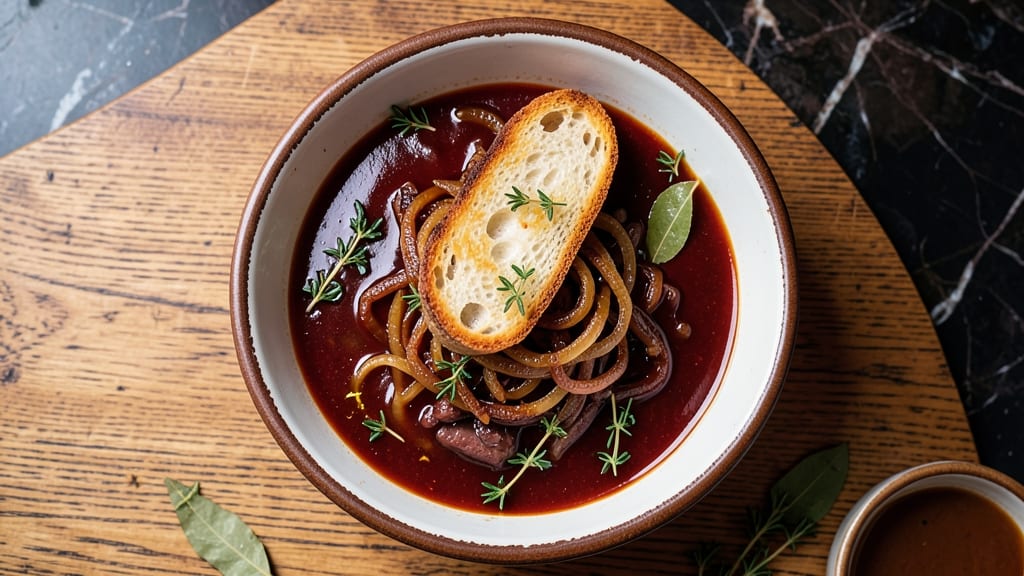
Anthony Bourdain's French onion soup recipe transforms humble ingredients into a dish that feels like a warm embrace after a long day. 🔥 The secret lies in slow-cooking onions until they're deep golden, creating layers of sweetness that form the soul of this classic.
Bourdain's approach—patient, flavorful, and deeply respectful of tradition—turns a simple soup into something extraordinary.
What makes this recipe special is the balance of textures and flavors: tender beef broth infused with caramelized onions, crispy toasted bread, and melted Gruyère cheese bubbling on top. The key steps—slow caramelization, proper broth reduction, and careful bread toasting—ensure every spoonful delivers restaurant-quality depth.
This isn't just soup; it's comfort in a bowl, the kind Bourdain would appreciate for its authenticity and soul.
The result is a dish that's rich, aromatic, and impossible to resist—perfect for chilly evenings or when you crave something hearty yet refined. The onions develop a complex sweetness that pairs beautifully with the savory broth, while the Gruyère creates those iconic golden bubbles that make the soup irresistible.
Bourdain's philosophy of "taste as travel" shines through in every bite, transporting you to Parisian bistros with minimal effort.
For an optional modern twist, you can use vegetable broth for a vegetarian version or finish with a drizzle of truffle oil for added luxury.
The beauty of this recipe is its versatility—whether you stick to tradition or experiment with variations, the foundation remains the same: slow, deep flavor built layer by layer. Let's get started on creating something truly memorable.
Ingredients for anthony bourdain french onion soup
Slow-cooked onions, rich broth, and golden Gruyère bubbles create Bourdain's iconic French onion soup experience.
| Ingredient | Amount | Notes |
|---|---|---|
| Yellow Onions 🧅 | 4 whole | Peeled, halved lengthwise |
| Unsalted Butter 🧈 | ½ cup | High-fat content preferred |
| Beef Broth 🥫 | 6 cups | Homemade or high-quality store-bought |
| Dry White Wine 🍷 | ½ cup | Sauvignon Blanc or Chardonnay |
| Fresh Thyme 🌿 | ¼ cup | Leaves only, finely chopped |
| Fresh Bay Leaves 🌿 | 2 whole | Removed before serving |
| Salt 🧂 | 2 tsp | Diamond Crystal preferred |
| Black Pepper 🌶️ | ½ tsp | Freshly cracked |
| Baguette 🍞 | 1 whole | Crust removed, sliced 1/2-inch thick |
| Gruyère Cheese 🧀 | 1 ½ cups | Freshly grated, aged 12+ months |
| Extra-Virgin Olive Oil 🫒 | 2 tbsp | For bread toasting |
The onions are the heart of this dish, so don't cut corners. Yellow onions with crisp outer layers caramelize best—avoid red or white. For maximum depth, slow-cook them for 45 minutes until deep golden brown, stirring occasionally. The butter should foam and turn nutty brown, adding richness. If you're short on time, substitute onion powder at half the amount, but fresh caramelization is non-negotiable for authenticity. Whole Foods or specialty markets often carry the best quality onions for this purpose.
The broth and wine combination is where Bourdain's philosophy of 'taste as travel' shines. Homemade beef broth delivers the deepest flavor, but Kitchen Basics or Pacific Foods brands are excellent shortcuts. For wine, a dry Sauvignon Blanc or Chardonnay works best—avoid anything too sweet. Fresh thyme and bay leaves infuse subtle earthiness, but if you're in a pinch, dried thyme at one-third the amount will suffice. The Gruyère must be freshly grated; pre-shredded cheese lacks the proper melt and texture. Imported French Gruyère from La Tour Anglaise or Whole Foods is ideal.
This soup tastes even better the next day as flavors meld. Store leftovers covered in the fridge for up to 4 days, but the bread should always be toasted fresh before serving. For make-ahead convenience, caramelize the onions and reduce the broth ahead of time, then assemble just before baking. The Gruyère should bubble dramatically under the broiler—watch closely to avoid burning. Freeze portions without the bread for up to 3 months for quick future meals.
Why You'll Love This Recipe
- One-Pot Magic: I swear by this—just onions, butter, and broth in one pot, then a splash of wine to wake it up. No extra dishes, no stress, and that golden caramelized crust? It’s all happening in that same pan.
- Wine-Infused Depth: That dry white wine isn’t just for show—it cuts through the richness of the butter and beef broth, leaving behind layers of savory, slightly tangy flavor. Honestly, the first sip of that broth after simmering? I’ll take it over takeout any day.
- Weeknight to Dinner Party: Same recipe, totally different vibes. Slurp it straight from the bowl on a Tuesday with crusty bread, or dress it up with Gruyère and toast under the broiler for guests. The broth alone is a statement—no one will guess it’s this unfussy.
- Budget-Friendly Luxury: Onions and butter are cheap, but they taste like you spent hours. The beef broth adds richness without breaking the bank, and a bottle of wine splits into multiple meals. Leftovers? Even better—reheat and top with extra cheese for a lazy lunch. My wallet and taste buds win.
Step-by-step instructions for anthony Bourdain's French onion soup
Here's how to build the perfect French onion soup—deep caramelized onions, rich broth, and that magical Gruyère bubble on top.
🔥 Step 1: Caramelize the Onions Slowly
Heat the 0.5 cup unsalted butter in a large Dutch oven over medium-low heat. Add the 4 whole yellow onions, peeled and halved lengthwise, cut-side down. The key here is patience—you want the onions to cook undisturbed for 30 minutes until they're deeply golden and jammy.
I like to press down gently on the onions with a wooden spoon during the first 10 minutes to ensure even contact with the pan. After 20 minutes, you'll see the onions release from the pan easily—that's your signal to flip them cut-side up. Keep cooking until they're deep mahogany brown with a caramelized sheen. This slow process develops the complex sweetness that defines this dish.
🍳 Step 2: Deglaze and Build the Broth
Once the onions are perfectly caramelized, remove the pot from heat and carefully pour in the 0.5 cup dry white wine. Scrape up all the browned bits from the bottom of the pot with a wooden spoon—this is where the flavor lives. Return the pot to medium heat and let the wine simmer for 3-4 minutes until reduced by half.
Add the 6 cups beef broth, 2 whole fresh bay leaves, 0.25 cup fresh thyme, 2 tsp salt, and 0.5 tsp black pepper. Bring to a gentle simmer, then reduce heat to low and let it cook uncovered for 20-25 minutes. You want the broth to reduce slightly, intensifying the onion flavor and creating a rich, concentrated base.
🥘 Step 3: Prepare the Bread and Assemble
While the broth simmers, slice the 1 whole baguette into ½-inch thick pieces and remove the crusts. Brush both sides of each slice with the 2 tbsp extra-virgin olive oil, then toast them in a 375°F oven for 5-7 minutes until golden and crisp. The oil gives them extra flavor and helps them hold up under the cheese.
Ladle the hot broth into oven-safe bowls, placing 2-3 slices of toasted baguette in each. The bread should float just below the surface of the broth—this ensures it gets fully saturated and crispy when baked.
🔥 Step 4: Melt the Gruyère to Perfection
Sprinkle each bowl generously with the 1.5 cups Gruyère cheese, using about ⅓ cup per serving. Place the bowls in a 425°F oven and bake for 3-5 minutes until the cheese is fully melted and bubbling. Watch closely—the cheese should turn a beautiful golden brown with crispy bubbles on top, but it should never burn.
Here's the thing about Gruyère—it melts beautifully but can separate if overcooked. Remove the bowls as soon as you see those golden bubbles forming. Let them rest for 1 minute before serving to allow the cheese to set slightly. The contrast of the crispy bread, creamy cheese, and rich broth is what makes this dish unforgettable.
🍽️ Step 5: Serve Immediately with Confidence
Remove the 2 whole fresh bay leaves before serving. The soup should be piping hot, with the cheese forming a thick, golden crust on top. Each spoonful should deliver layers of caramelized onion, savory broth, and that perfect blend of crispy bread and melted Gruyère.
I always serve this with a simple green salad and a glass of the same dry white wine used in the recipe. The acidity cuts through the richness beautifully. And remember—this soup tastes even better the next day, so make extra if you can. The flavors deepen as the onions continue to mellow in the broth.
Pro Tips For Making Anthony Bourdain French Onion Soup
- Sweat, Don’t Burn: Start onions in a cold pan with butter—no high heat at first. Let them melt in slowly, then crank it up to medium-low once they’re soft. I learned this the hard way after charring three batches and ending up with bitter, acrid onions instead of sweet, caramelized gold.
- Use Real Wine: Skip the cooking wine. A cheap but decent dry white (like a Sauvignon Blanc) adds depth the stuff in the red aisle never will. Pour it in after the onions soften, let it reduce by half, then add broth—this concentrates the flavor without overpowering the dish.
- Skim the Scum: As the onions cook, a dark, gritty foam will rise to the surface. Lift it out with a spoon—yes, it’s gross, but it’s also the difference between a clean, bright soup and one that tastes like it’s fighting off a cold. Do it every few minutes, especially in the first 15 minutes.
- Toast the Thyme: Strip the thyme leaves from the stems and toss them in the pan with the onions before adding wine. Let them sizzle for 30 seconds—this releases their oils and amplifies their aroma. Fresh thyme is non-negotiable here; dried won’t cut it.
Wine and beer pairings for this recipe
Bourdain's Wine Classics
Anthony Bourdain would absolutely approve of a dry Sauvignon Blanc from the Loire Valley—think Sancerre or Pouilly-Fumé. The crisp acidity and citrus notes cut through the richness of the caramelized onions and Gruyère, cleansing your palate with every sip.
I love Domaine Vacheron Sancerre for its bright, mineral-driven profile that mirrors the soup's depth. 🍷
For a richer pairing, a Chardonnay from Burgundy—like Meursault or Pommard—adds a creamy texture that complements the melted cheese. Bourdain often raved about Burgundy's ability to stand up to hearty dishes. Avoid oaked Chardonnays here; stick to unoaked or lightly oaked styles to preserve the soup's purity.
Unexpected Beer Pairings
You might not expect beer with French onion soup, but a Belgian witbier like Hoegaarden or St. Bernardus Wit works surprisingly well. The citrusy coriander and peppery notes in these beers echo the caramelized onions and thyme in the soup. Serve it well-chilled to contrast the warm soup. 🍺
For a malty option, a German Dunkelweizen (dark wheat beer) provides a caramel sweetness that harmonizes with the onions. Look for Weihenstephaner Dunkel—its roasted malt notes bridge the gap between the soup's richness and the beer's complexity. Avoid heavy stouts or IPAs, which would overpower the delicate flavors.
Red Wine for Bold Lovers
If you're serving this to a crowd that prefers red, a light-bodied Pinot Noir from Burgundy—like Gevrey-Chambertin—can work. Its earthy undertones and red fruit flavors complement the thyme and Gruyère without competing. Keep it cool (around 55-60°F) to maintain freshness. 🍷
Bourdain would caution against heavy reds like Cabernet Sauvignon—they'd clash with the soup's delicate balance. If you must go red, opt for a Northern Italian Pinot Noir from the Alto Adige region, where the cool climate produces lighter, more elegant wines.
Non-Alcoholic Options
For those skipping alcohol, a sparkling apple cider like Martinelli's adds a refreshing acidity that mimics wine's cleansing effect. The bubbles also help cut through the soup's richness. Serve it well-chilled for the best contrast. 🍏
Another great choice is a cucumber-mint infused water—muddle 4 cucumber slices and 6 fresh mint leaves with ½ cup cold water, then top with ice and club soda. The cool, herbal notes refresh your palate between bites of the warm, cheesy soup.
Nutrition facts
Frequently asked questions
Can I make this soup vegetarian?
Replace the beef broth with a rich vegetable broth (homemade or high-quality store-bought) and use mushroom stems or carrots along with the onions for extra depth. The caramelization process remains the same, and the Gruyère will still melt beautifully.
Why does Bourdain emphasize slow caramelization?
Slow caramelization (at least 45 minutes) develops complex sweetness and depth that rushed cooking can't match. Bourdain believed in letting flavors unfold naturally—this process transforms simple onions into the soul of the soup, creating that signature sweet-savory balance that defines French onion soup.
What's the best way to store leftovers?
Store the soup (without bread) in an airtight container in the fridge for up to 4 days. The flavors actually improve overnight as the onions continue to meld. Toast the bread fresh before reheating—never store the bread in the soup. For longer storage, freeze portions for up to 3 months, but always toast bread separately when serving.
Can I substitute other cheeses for Gruyère?
Gruyère is ideal for its perfect melt and nutty flavor, but you can use Comté or Emmental in a pinch. Avoid pre-shredded cheese—it contains anti-caking agents that prevent proper melting. For a sharper flavor, try Parmigiano-Reggiano, but it won't bubble as dramatically. Always grate fresh!
How do I fix bread that gets soggy?
If your bread loses crispness, try toasting it again under the broiler for 1-2 minutes before serving. For extra insurance, brush slices with olive oil before placing them in the soup. Bourdain's trick was using stale baguette—it absorbs broth better and stays crispier than fresh bread.