
Soups & Stews
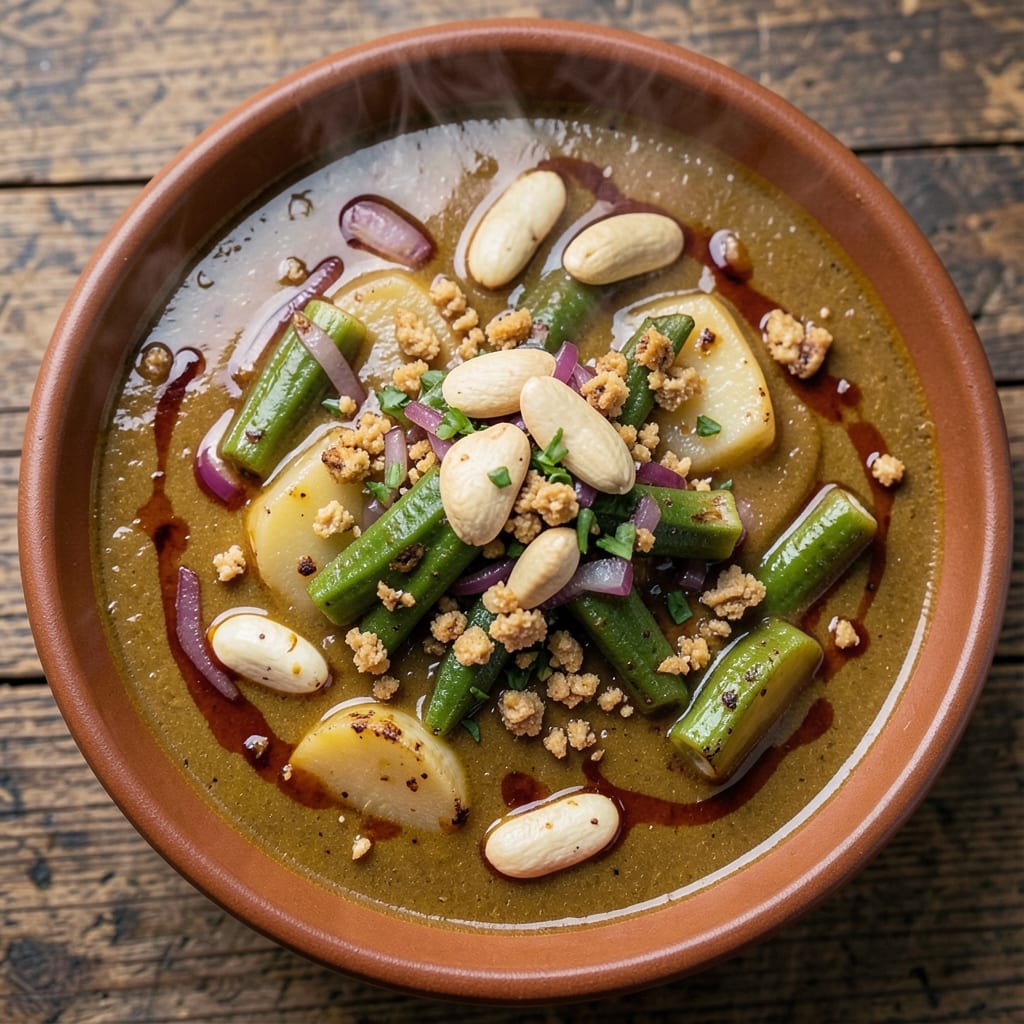
This African yam soup recipe brings the heart of West African cuisine to your kitchen with its rich peanut base, smoky palm oil, and tender yams. The dish is a celebration of tradition, packed with earthy spices like thyme and ginger that create layers of warmth and depth. What makes this recipe special is its vegetarian-friendly nature while still delivering bold, satisfying flavors that feel like a hug in a bowl.
The foundation of this soup lies in its three key components: the yam, which must be peeled and cut precisely for even cooking; the okra-infused broth that thickens beautifully as it simmers; and the peanut paste that transforms the soup into something creamy yet still light. Each element plays a role in creating a balance of textures—silky yams, crisp-tender okra, and a velvety peanut sauce that ties everything together.
What you’ll achieve is a soup that’s naturally hearty and deeply flavorful, perfect for family gatherings or cozy weeknight dinners. The aroma of palm oil and roasted peanuts alone will draw everyone to the table, while the combination of spices and fresh herbs ensures every spoonful is packed with character. This isn’t just a meal—it’s a taste of home, no matter where you are.
The best part? This recipe scales effortlessly, whether you’re serving a crowd or meal prepping for the week. The flavors only deepen as it sits, making leftovers taste even better the next day. Let’s get started on creating this restaurant-quality African yam soup that’s as nourishing as it is delicious.
Ingredients for african yam soup
Peanuts, palm oil, and yams—this trio creates soulful African flavors in every spoonful.
| Ingredient | Amount | Notes |
|---|---|---|
| Yams 🍠 | 2 lbs | Peeled and cut into 1-inch chunks |
| Dried Okra 🌿 | ½ cup | Whole pods, rinsed well |
| Raw Peanuts 🥜 | 1 cup | Unsalted, roasted for peanut paste |
| Palm Oil 🫒 | ¼ cup | Red palm oil preferred |
| Yellow Onion 🧅 | 1 whole | Diced, medium size |
| Fresh Ginger 🌿 | 2 tbsp | Grated, fresh preferred |
| Garlic Cloves 🧄 | 4 cloves | Minced, fresh preferred |
| Fresh Thyme 🌿 | ¼ cup | Leaves only, chopped |
| Vegetable Oil 🫒 | 2 tbsp | For roasting peanuts |
| Vegetable Broth 💧 | 4 cups | Low-sodium preferred |
| Sea Salt 🧂 | 1 ½ tsp | Adjust to taste |
| Black Pepper 🌶️ | ½ tsp | Freshly ground |
| Bay Leaves 🌿 | 2 whole | Fresh preferred |
| Scotch Bonnet Pepper 🌶️ | 1 whole | Seeds removed for mild heat |
| Fresh Cilantro 🌿 | ¼ cup | Chopped, for garnish |
The yams are your canvas here. Orange-fleshed yams (like those from African markets) have the best texture, but regular yams work too. Peel them first—the skin doesn't soften—and cut into even chunks so they cook uniformly. For the peanuts, raw unsalted peanuts from the bulk section at Whole Foods or Trader Joe's give the best flavor. Toast them until golden—this is non-negotiable, as raw peanuts taste bland in the soup. Palm oil? African markets or specialty stores carry the real red stuff, but if you can't find it, smoked paprika mixed with olive oil works in a pinch.
No fresh thyme? Dried thyme at one-third the amount will do, but fresh is ideal. The okra is magical—it thickens the soup naturally. If you're nervous about sliminess, blanch it first in boiling water for 2 minutes. For heat, if Scotch bonnet is too spicy, substitute jalapeño or even less heat with a pinch of cayenne. The broth is where the soup's depth lives—low-sodium vegetable broth keeps the flavors from getting lost. Pro tip: Toast your spices (cumin, coriander) for 30 seconds in a dry pan before adding—it unlocks their aroma.
This soup tastes even better the next day as flavors meld. Store in an airtight container for up to 5 days in the fridge. Freeze portions for 3 months—just thaw overnight in the fridge. Garnish with fresh cilantro right before serving (it wilts fast). For extra richness, stir in a spoonful of peanut butter at the end. The okra thickens as it cools, so add a splash of broth if it's too thick when reheating.
Why You'll Love This Recipe
- No-Chop Needed: The dried okra just soaks and thickens—no tedious slicing or peeling. I toss in whole raw peanuts too, and they soften right in the pot while you stir. Honestly, the only prep is peeling the yams, and even that’s a breeze with a knife.
- Rich, Earthy Magic: That palm oil swirls in like liquid gold, giving it a deep, nutty warmth. The onions caramelize slowly, and when you add the yams? Pure comfort—creamy, slightly sweet, with just enough peanut crunch to keep it interesting.
- Weeknight to Gathering Star: It’s my go-to for lazy nights and when Auntie’s over. Serve it with crusty bread for a quick meal, or double the batch for a potluck—everyone asks for the recipe, and I never say no.
- Leftovers That Beg for More: Between us, this soup only gets better the next day. The flavors meld into something even richer, and it reheats like a dream. Plus, peanuts and yams stretch it far—perfect for stretching groceries without sacrificing taste.
Step-by-step instructions for African yam soup
Here's how to create this rich, smoky soup with perfect texture every time.
Prepare the Peanut Paste Base
In a dry skillet over medium heat, toast the 1 cup raw peanuts for 5-7 minutes, stirring constantly until they turn a rich golden brown and smell nutty. This step develops deep flavor and prevents the peanuts from turning bitter. Transfer the toasted peanuts to a food processor and pulse until they resemble coarse meal.
Add the 0.25 cup palm oil and process until completely smooth, scraping down the sides as needed. This peanut paste is the soul of your soup—it should be thick enough to coat the back of a spoon but still blend easily with the broth. If it's too thick, add 1 tablespoon vegetable broth at a time until you reach the right consistency. Keep this mixture warm while you prepare the rest of the ingredients.
Build the Flavor Foundation
Heat the 2 tablespoons vegetable oil in a large pot over medium heat. Add the 1 whole yellow onion and cook for 5 minutes until softened and translucent. Stir in the 2 tablespoons fresh ginger and 4 cloves garlic cloves, cooking for another 2 minutes until the garlic becomes fragrant and just begins to turn golden.
Add the 0.25 cup fresh thyme and 1 whole Scotch bonnet pepper (seeds removed), stirring for 30 seconds to release their essential oils. This aromatic base is where all the magic happens—don't rush this step. You'll know it's ready when the mixture smells intensely aromatic and the onions are completely softened.
Simmer the Yam and Okra Mixture
Pour in the 4 cups vegetable broth and bring to a gentle boil. Add the 2 lbs peeled yams cut into 1-inch chunks, 0.5 cup dried okra, 2 whole bay leaves, 1.5 teaspoons sea salt, and 0.5 teaspoon black pepper. Reduce heat to low-medium and let it simmer uncovered for 20-25 minutes, stirring occasionally, until the yams are fork-tender and the okra has softened.
The okra will release its natural thickening properties as it cooks, creating a naturally rich texture. If the soup looks too thin after 20 minutes, you can mash a few yam pieces against the pot's side to release more starch. This is normal and actually enhances the soup's body—just don't overdo it.
Finish with Peanut Paste and Garnish
Remove the pot from heat and stir in the peanut paste you prepared earlier. The soup should immediately take on a rich, nutty hue. Return the pot to low heat and simmer gently for 5-7 minutes, stirring occasionally, until the peanut paste is fully incorporated and the soup has thickened to your desired consistency.
Taste and adjust seasoning with additional salt if needed. Remove the bay leaves and Scotch bonnet pepper before serving. Ladle the soup into bowls and garnish with 0.25 cup fresh cilantro. The cilantro adds a bright contrast to the rich, smoky flavors and looks beautiful on top. Serve immediately with warm crusty bread to soak up every last drop of this comforting soup.
Pro Tips For Making African Yam Soup
- SOAK DRY OKRA FIRST: I learned this the hard way—tossing dried okra straight into the pot makes it clump like rubber. Soak it in warm water for 15 minutes first, then squeeze out excess moisture. This guarantees a smooth, velvety texture instead of gummy lumps fighting for space in your soup.
- PEEL YAMS AFTER COOKING: Peeling raw yams is a mess, and you’ll lose half the flavor. Boil them whole with their skins on until tender (about 20 minutes), then peel and mash. The skins soften easily this way, and you avoid the starchy cloud that comes from rough peeling.
- TOAST PEANUTS LOW AND SLOW: Raw peanuts burn faster than you’d think. Spread them on a dry pan over medium-low heat, stirring constantly until they’re just golden—not brown. Overcooking turns them bitter, and you want that nutty aroma to sing in the soup, not taste like smoke.
- STIR PALM OIL CONSTANTLY: Palm oil separates faster than you’d expect. Once you add it to the pot, keep stirring for the first 5 minutes—especially if your heat’s high. This prevents a greasy layer from forming on top, which ruins the rich, blended texture you’re going for.
Troubleshooting this dish
Okra Too Slimy?
If your okra releases too much slime and makes the soup gluey, don’t panic! Start by blanching the dried okra in boiling water for 2 minutes before adding it to the pot. This reduces the mucilage content. For extra insurance, strain the soup through a fine-mesh sieve after simmering, then stir in the peanut paste. If it still seems too thick, add ½ cup warm broth to loosen it up. 🌿
Peanut Paste Issues
If your peanut paste separates or tastes bitter, you likely toasted the peanuts too long. For future batches, toast them just until golden (5-7 minutes) and keep an eye on them. If the paste is too thick, thin it with 1 tablespoon broth at a time. For a smoother texture, blend the toasted peanuts with 1 tablespoon water before adding the palm oil. Always use raw unsalted peanuts—roasted or salted peanuts will alter the flavor.
Yams Not Cooking Evenly
Unevenly cooked yams happen when chunks vary in size. Peel and cut them into 1-inch uniform pieces before cooking. If some pieces are still firm after 20-25 minutes, remove them, mash a few against the pot’s side to release starch, then return them to thicken the broth. Avoid overcrowding the pot—simmer in batches if needed. For extra tenderness, add a splash of broth to the pot and cover with a lid for the last 5 minutes of cooking. 🍠
Broth Too Weak
If the broth lacks depth, it’s likely because the spices weren’t toasted enough. Before adding them to the pot, dry-toast ½ teaspoon cumin seeds and ½ teaspoon coriander seeds in a pan for 30 seconds until fragrant. Stir them into the broth along with the bay leaves. For an instant boost, add 1 tablespoon tomato paste or a pinch of smoked paprika to enhance umami. Always use low-sodium broth—high-sodium versions can overpower the delicate flavors.
Soup Too Thin After Cooking
If the soup isn’t thickening enough, the okra may not have released enough starch. After simmering, remove ½ cup yams, mash them against the pot’s side, then stir them back in. Let the soup simmer uncovered for another 5-10 minutes to thicken naturally. If it’s still too thin, mix 1 tablespoon cornstarch with 2 tablespoons cold water, stir it into the soup, and simmer for 2 minutes until thickened. Avoid adding too much at once—start with ½ teaspoon cornstarch and adjust gradually. 💡
Nutrition facts
Frequently asked questions
Can I substitute fresh okra for dried in this recipe?
You can, but the texture will differ. Fresh okra releases more slime, so use ½ cup chopped fresh okra and blanch it for 3 minutes first to reduce sliminess. For best results, stick with dried okra—it thickens the soup more predictably and adds a deeper earthy flavor.
What’s the best way to store leftover African yam soup?
Store in an airtight container in the fridge for up to 5 days. The flavors actually improve overnight! For longer storage, freeze portions for 3 months. Thaw in the fridge before reheating—never microwave directly from frozen. Stir in a splash of broth if the soup thickens upon reheating.
Is palm oil essential, or can I use something else?
Palm oil gives the signature smoky, rich flavor, but you can substitute ½ cup olive oil + 1 tsp smoked paprika for a similar effect. For a nutty depth, try ¼ cup peanut oil, though it won’t replicate the exact taste. If using a lighter oil, increase the peanut paste slightly for balance.
How do I adjust this recipe for a spicier heat level?
For extra heat, add ½ tsp cayenne pepper or 1 extra Scotch bonnet pepper (seeds in). If using milder peppers, increase to 2 jalapeños or 1 habanero for a fiery kick. Always taste before serving—you can tone down heat with a splash of coconut milk if needed.
Why does my peanut paste turn bitter?
Over-toasting the peanuts causes bitterness. Toast them for 5-7 minutes until golden, not dark brown. For smoother paste, blend toasted peanuts with 1 tbsp water before adding oil. Always use raw unsalted peanuts—roasted or salted versions alter the flavor.