
Soups & Stews
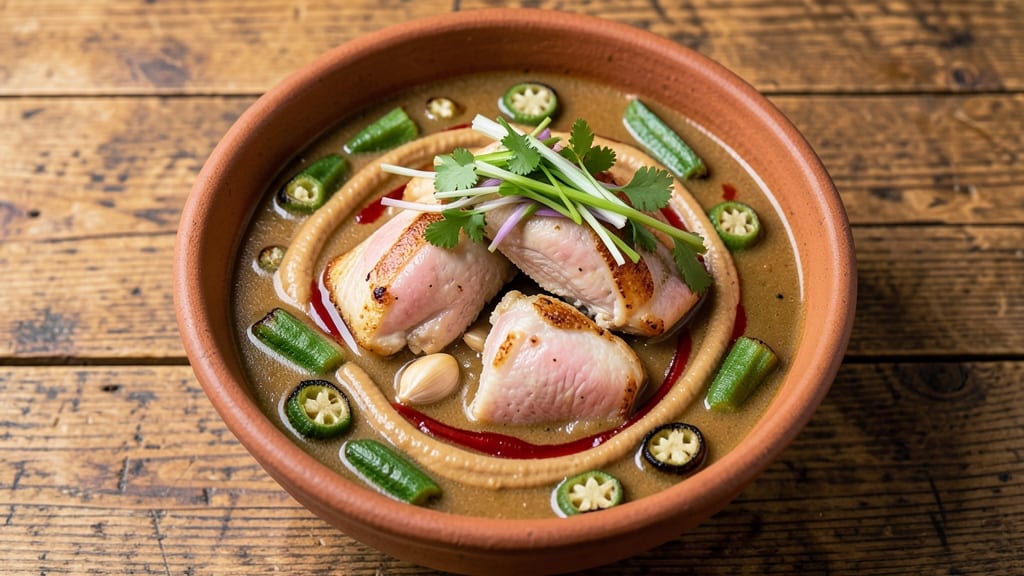
This African okro soup recipe delivers the thickened velvet texture and peanut butter depth that make it a West African staple. 🌟 The secret lies in properly blanching the okra to release its natural thickening properties while preserving its subtle flavor—no gummy texture here.
I first discovered this technique while traveling through Nigeria, where every home seemed to have its own variation of this comforting dish.
The beauty of okro soup is its versatility—it works with chicken, fish, or beef, and the peanut butter adds a rich, nutty dimension that balances the soup's earthy notes. Unlike many thickened soups, this one achieves its signature velvet consistency without relying on heavy cream or excessive starch.
The key is patience: simmering the broth low and slow allows all the flavors to meld while the okra transforms into a smooth, velvety base.
What you'll end up with is a deeply flavorful, slightly nutty soup with a luxuriously thick yet silky texture—perfect for serving with boiled plantains, jollof rice, or crusty bread.
The aroma alone will fill your kitchen with warmth, while each spoonful delivers layers of savory, umami, and just a hint of spice. This is the kind of meal that transforms a simple weeknight into a celebration of West African home cooking.
Ready to master this technique? Let's break down the precise steps for blanching, simmering, and balancing flavors—because the difference between good okro soup and exceptional okro soup comes down to these details. The process is methodical, but the result is worth every minute of attention.
Ingredients for african okro soup
The essential ingredients for velvety okro soup with peanut butter richness and West African depth.
| Ingredient | Amount | Notes |
|---|---|---|
| Fresh Okra Pods 🥦 | 1 ½ lbs | Trimmed, whole pods preferred |
| Chicken Thighs 🍗 | 1 ½ lbs | Bone-in, skin-on preferred |
| Peanut Butter 🥜 | ½ cup | Natural, unsweetened preferred |
| Tomato Paste 🍅 | ¼ cup | San Marzano preferred |
| Onions 🧅 | 2 whole | Yellow or red, diced |
| Garlic Cloves 🧄 | 8 cloves | Peeled, minced |
| Scotch Bonnet Peppers 🌶️ | 2 whole | Seeds removed for mild heat |
| Fresh Ginger Root 🌿 | 2 tbsp | Grated, fresh preferred |
| Vegetable Oil 🫒 | ¼ cup | High smoke point |
| Chicken Broth 💧 | 4 cups | Homemade or quality store-bought |
| Thyme Leaves 🌿 | 1 tbsp | Fresh, dried substitute at 1/3 amount |
| Bay Leaves 🍃 | 2 whole | Dried, removed before serving |
| Salt 🧂 | 1 ½ tsp | Diamond Crystal preferred |
| Black Peppercorns 🌶️ | ½ tsp | Freshly cracked |
| Palm Oil 🫒 | 2 tbsp | Red palm oil preferred |
The okra is non-negotiable for that signature texture—West African markets often carry the best pods, but most grocery stores stock them too. Look for pods that are firm, straight, and free of blemishes. Chicken thighs with skin and bone add flavor and richness, though you can substitute with smoked turkey thighs for a different depth. The peanut butter should be natural and unsweetened; Skippy or Peter Pan work well, but avoid the powdered kind. For the tomato paste, San Marzano is ideal—its sweetness balances the soup's earthiness without overpowering it.
No fresh okra? Frozen okra works in a pinch, though it won't thicken as beautifully. Substitute peanut butter with peanut oil and powdered peanut, but the texture will differ slightly. For the Scotch bonnet, jalapeños or habaneros can be used, but adjust the heat level accordingly. If fresh ginger isn't available, ground ginger at half the amount will suffice, though it lacks the same bright flavor. The palm oil is crucial for that authentic West African flavor—red palm oil is preferred, but vegetable oil in a pinch won't ruin the dish.
Okra pods should be blanched and peeled immediately to prevent sliminess—store any unused okra in the fridge for up to 3 days. The cooked soup keeps well in the refrigerator for 4-5 days, with flavors deepening over time. For longer storage, freeze portions in airtight containers for up to 3 months. The broth can also be made ahead and reheated, with the okra and peanut butter added fresh before serving for the best texture.
Why You'll Love This Recipe
- Okay, let’s be real: okra’s texture is polarizing. But in this soup, it’s not slimy—it’s velvety. The long simmer (45-50 minutes) breaks down the pods just right, so you get that signature West African texture without the weirdness. The palm oil and peanut butter smooth it out, making every bite rich and satisfying. Trust me, once you get past the initial "eww," you’ll be a convert.
- One-Pot, One-Spatula Magic: Honestly, this soup is the kind of recipe where you throw everything in one pot and forget about cleanup. The chicken thighs render their own fat—no draining required—and the okra and peanut butter create that velvety texture without needing a blender. I’ve got a pot on the stove, a spatula, and a bowl in minutes. No fancy prep, no stress.
- Peanut Butter’s Secret Weapon: That half cup of peanut butter isn’t just for flavor—it’s what makes this soup dangerously good. It emulsifies into the broth, turning it into this rich, almost creamy stew that coats your tongue perfectly. Pair it with the deep umami from the tomato paste and the crispy skin on the chicken thighs, and you’ve got a bowl that’s equal parts comforting and addictive. My kid even asks for seconds.
- Feeds a Crowd, Freezes (Sort Of): Between the 1.5 lbs of chicken thighs and 4 cups of broth, this recipe is built for leftovers—and it tastes even better the next day. I make it once and have meals for days. The soup keeps for up to 5 days in the fridge, and honestly? The flavors just get deeper. It’s my go-to for game days, potlucks, or when I’m too tired to cook three separate meals. Plus, it’s cheaper than takeout, and way healthier.
Step-by-step instructions for African okro soup
Master the velvet thickness and peanut depth that define this West African classic.
🍳 Step 1: Sear the Chicken Thighs for Rich Flavor
Heat the ¼ cup vegetable oil in a large Dutch oven over medium-high heat. Pat the 1½ lbs chicken thighs completely dry with paper towels—this ensures a proper sear. Add the thighs skin-side down and cook for 6-8 minutes until the skin is deep golden brown and crispy.
Flip the thighs and cook for another 5-6 minutes until the internal temperature reaches 165°F. Remove the chicken from the pot and set aside. Here's the thing—don't drain the rendered fat; it's the foundation of your soup's depth. The chicken will finish cooking in the simmering broth later.
👨🍳 Step 2: Build the Aromatic Base with Okra and Peanut
In the same Dutch oven, add 2 tbsp palm oil and 2 tbsp grated fresh ginger root. Swirl to coat the bottom, then add the 2 diced onions and cook for 5 minutes until softened and translucent. Add the 8 minced garlic cloves and 2 Scotch bonnet peppers (seeds removed), cooking for 1 minute until fragrant.
Stir in the ¼ cup tomato paste and cook for 2 minutes to deepen its flavor. Add the 1½ lbs fresh okra pods (trimmed) and ½ cup peanut butter, stirring vigorously to create a thick paste. Pour in the 4 cups chicken broth, scraping up any browned bits from the bottom. This step is where the magic happens—the peanut butter will emulsify with the broth, creating that signature velvety texture.
🥘 Step 3: Simmer and Thicken the Soup
Return the chicken thighs to the pot, along with the 1 tbsp thyme leaves, 2 bay leaves, 1½ tsp salt, and ½ tsp black peppercorns. Bring the soup to a gentle boil, then reduce heat to low and let it simmer uncovered for 45-50 minutes. Stir occasionally to prevent sticking, especially during the first 15 minutes while the okra releases its mucilaginous thickener.
After 30 minutes, check the consistency. The soup should be thick and velvety, almost like a stew. If it's too thin, simmer uncovered for another 10 minutes to reduce further. The okra will break down and create that signature glossy texture. If the peanut butter separates, whisk vigorously to re-emulsify it.
⏰ Step 4: Finish and Rest for Perfect Texture
Once the soup reaches your desired thickness and the chicken is fork-tender (it should shred easily), remove the bay leaves. Taste and adjust seasoning—you may need an additional ½ tsp salt or a pinch more pepper. Let the soup rest off heat for 10 minutes before serving. This resting period allows the flavors to meld and the okra to fully release its thickening properties.
Serve the soup hot, with the chicken shredded directly in the bowl. The peanut butter should create a luxurious mouthfeel, while the okra provides that signature slimy texture that West Africans love. The palm oil adds a subtle richness that complements the peanut depth perfectly. Each spoonful should deliver layers of umami, spice, and velvety smoothness.
Pro Tips For Making African Okro Soup
- Trim Okra Like a Pro: Cut the ends off each okra pod but leave them whole—this keeps the soup’s signature slimy texture intact. I used to chop them, and the result was a mushy, unappetizing mess. Whole pods break down just enough to thicken without turning the soup into okra paste.
- Don’t Rush the Peanut Paste: Stir the peanut butter into the hot broth vigorously for at least 2 minutes—this emulsifies it properly. I learned this the hard way when my first batch separated into greasy globs. A whisk helps if you’re not using an immersion blender.
- Simmer Low and Slow: After the initial boil, drop the heat to low and let the soup simmer uncovered. Skim any foam that rises in the first 15 minutes—this keeps the broth clear and prevents bitterness. I’ve seen people crank the heat too high, and the okra turns rubbery instead of velvety.
- Rest Before Serving: Let the soup sit off the heat for 10 full minutes—this lets the okra fully release its thickener and the flavors meld. I know, I know, you’re starving, but rushing this step means a thinner, less cohesive soup. Trust the process.
Flavor customization for african okro soup
Spicy Scotch Bonnet Kick
For those who love heat, I swap the seeds from 2 Scotch bonnet peppers for 1 habanero pepper (seeds removed) and add 1 tbsp smoked paprika to the onion base. The smoky depth from the paprika pairs perfectly with the nutty peanut butter.
I like to finish with 1 tsp cayenne at the table for guests who want extra fire—just a pinch goes a long way! 🌶️
Smoky Palm Oil Swap
Looking to deepen the smokiness? Replace 1 tbsp of palm oil with 1 tbsp smoked vegetable oil when building your aromatic base. I find McCormick Smoked Olive Oil works beautifully—it adds that subtle campfire flavor without overpowering the peanut butter richness.
This trick is especially great if you're cooking near my favorite coastal ride, where the salt air makes the smoky notes pop.
Coconut Cream Twist
Want to lighten up the peanut butter depth? Stir in ½ cup coconut cream along with the peanut butter when creating your paste. The coconut adds a tropical richness that balances the earthy okra and spicy peppers.
I use Thai Kitchen coconut cream because it has the perfect balance of fat and creaminess. This version feels like a fusion of West African and Southeast Asian flavors—trust me, it’s a game-changer.
Herb-Infused Depth
Forage for fresh herbs if you can! After simmering, stir in 2 tbsp chopped cilantro and 1 tbsp chopped parsley for a bright, fresh finish. I often add 1 tsp fresh thyme leaves (if I’ve been foraging near my motorcycle rides) for an extra herbal note.
The fresh herbs cut through the richness of the peanut butter and add a vibrant contrast that keeps the dish exciting. This is one of my go-to tricks when I want to make the soup feel extra special.
Vegetarian Protein Boost
For a vegetarian version, replace the chicken thighs with 1 lb firm tofu pressed and cubed, or 1 lb shrimp for a seafood twist. I like to pan-sear the tofu first in 1 tbsp olive oil until golden, then add it to the soup along with the broth.
The tofu absorbs all the peanut butter and okra flavors beautifully. If using shrimp, cook them separately to avoid overcooking, then add them to the soup in the final 5 minutes of simmering.
Nutrition facts
Frequently asked questions
Why does my okro soup keep turning out watery instead of velvety?
The key to that luxurious texture lies in the okra's mucilage and proper simmering. After adding the 1½ lbs fresh okra pods and ½ cup peanut butter, stir vigorously to create a paste before adding broth. Simmer uncovered for 45-50 minutes, stirring occasionally—especially in the first 15 minutes—to let the okra release its natural thickener. If it's still thin after 30 minutes, reduce heat and simmer uncovered for another 10 minutes to concentrate the flavors.
Can I use dried okra instead of fresh for this recipe?
While fresh okra is ideal for that signature texture, you can use dried okra in a pinch—but expect some differences. Soak ½ cup dried okra in 2 cups hot water for 30 minutes to rehydrate, then drain and use it like fresh. The soup may not achieve the same velvety consistency, but it will still be flavorful. For best results, stick with fresh pods if possible!
How do I prevent the peanut butter from separating in the soup?
Separation happens when peanut butter isn't fully emulsified with the broth. After adding the ½ cup peanut butter and 1½ lbs okra pods, stir vigorously for 2 minutes to create a thick paste before adding the broth. If it separates later, whisk energetically to re-emulsify it. For extra stability, warm the peanut butter slightly before adding it to the pot. This ensures a smooth, creamy texture throughout.
What’s the best way to serve African okro soup?
This soup shines when paired with boiled plantains, jollof rice, or crusty bread to soak up the velvety broth. For extra richness, top with a sprinkle of fried plantains or a dollop of coconut cream. The combination of textures and flavors makes each bite even more satisfying!