
Soups & Stews
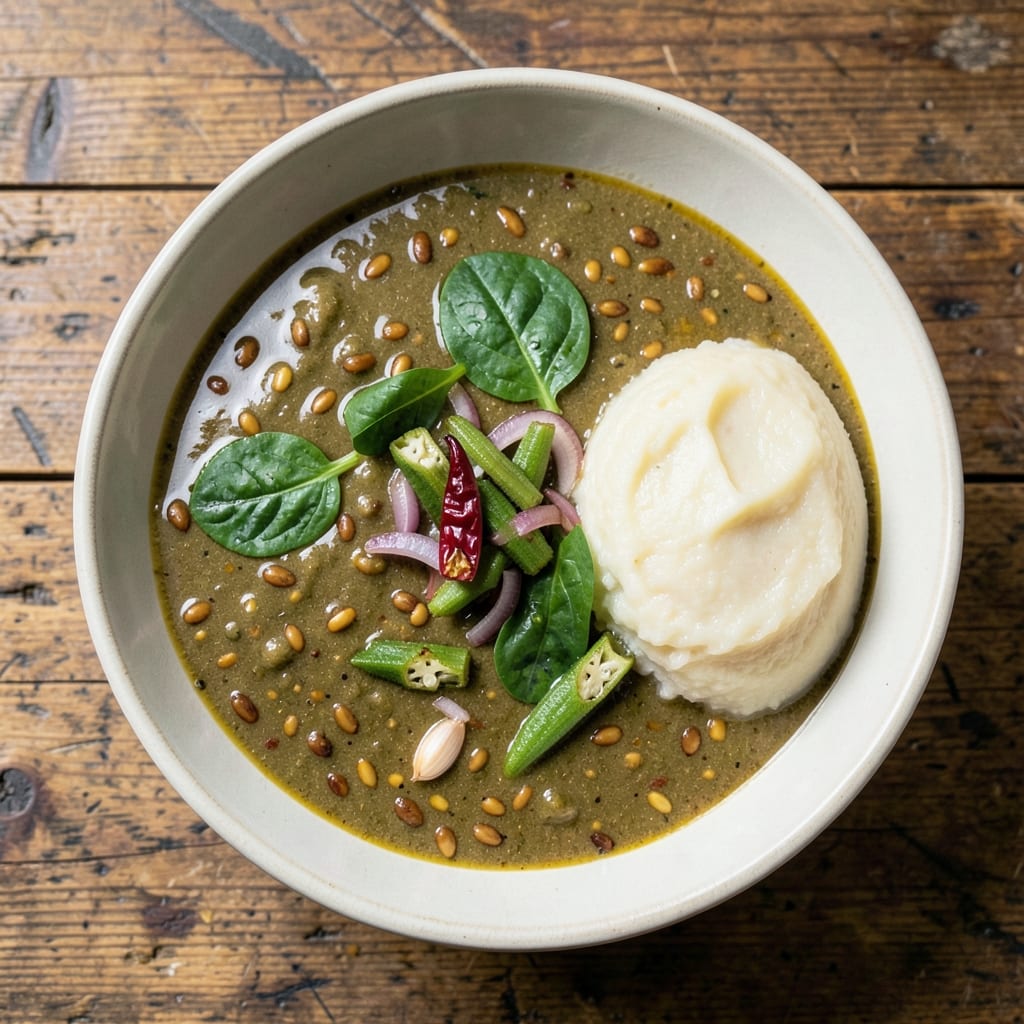
African Egusi soup and fufu represent a perfect balance of nutty depth and comforting texture that defines West African cuisine. This traditional dish combines earthy egusi seeds with leafy greens and protein, paired with smooth, stretchy fufu made from cassava or yam. The nutty flavor of the soup complements the pillowy fufu, creating a meal that's both hearty and satisfying.
The egusi soup requires careful preparation to develop its rich, nutty flavor. Toasting the melon seeds until fragrant unlocks their full potential, while simmering with leafy greens and protein creates a harmonious broth. Meanwhile, the fufu demands patience—boiling and pounding the cassava or yam until it reaches that signature stretchy consistency is key to achieving the perfect texture.
What makes this dish truly special is its cultural significance. Egusi soup is a staple in many West African homes, often served with fufu as a complete meal. The combination of flavors and textures creates a deeply comforting experience, perfect for family gatherings or special occasions. Each bite delivers a balance of earthy, nutty, and savory notes that make this dish unforgettable.
Whether you're preparing it for a celebration or a weeknight dinner, this recipe delivers restaurant-quality results at home. The egusi soup's depth and the fufu's smooth texture come together to create a meal that's as visually appealing as it is delicious. Let's get started on this flavorful journey through West African cuisine.
Ingredients for african egusi soup and fufu
These earthy, nutty ingredients create the perfect West African harmony of flavors and textures.
| Ingredient | Amount | Notes |
|---|---|---|
| Egusi Seeds (Melon Seeds) 🌰 | 1 cup | Toasted until fragrant for nutty flavor |
| Fresh Spinach 🌿 | 10 oz | Or sub with bitter leaf greens |
| Fresh Okra 🥒 | 1 cup | Sliced into rounds for texture |
| Onion 🧅 | 1 whole | Medium yellow, finely chopped |
| Garlic Cloves 🧄 | 4 cloves | Minced for aromatic base |
| Scotch Bonnet Peppers 🌶️ | 2 whole | Seeds removed for mild heat |
| Tomato Paste 🍅 | 2 tbsp | For rich, concentrated flavor |
| Chicken Stock 🍲 | 4 cups | Homemade or quality store-bought |
| Fresh Cilantro 🌿 | ¼ cup | Chopped for fresh finish |
| Fresh Cassava 🥔 | 2 lbs | Peeled and boiled for fufu |
| Vegetable Oil 🫒 | ½ cup | For frying and fufu shaping |
| Salt 🧂 | 1 ½ tsp | Adjust to taste |
| Ground Black Pepper 🌶️ | ½ tsp | Freshly cracked for heat |
| Smoked Paprika 🌶️ | 1 tsp | For subtle smoky depth |
| Palm Oil (optional) 🫒 | ¼ cup | For traditional richness |
The egusi seeds are the heart of this dish—toast them in a dry pan for 5-7 minutes until fragrant, then grind into a fine powder (or buy pre-ground). African markets or specialty stores often carry them, but online retailers like AfricanFoodsDirect.com ship them fresh. For the greens, bitter leaf (ewedu) or pumpkin leaves take this to the next level if you can find them. The scotch bonnet peppers add heat—adjust by removing seeds or using habanero instead. Palm oil, if using, should be unrefined and red for authentic flavor, available at international markets or online.
No fresh okra? Substitute with frozen peas or chopped zucchini—they won't mimic the texture but work in a pinch. Ran out of cassava? Yam or green plantains make excellent fufu too, though cassava gives the classic stretch. The chicken stock can be swapped for vegetable stock if vegetarian, but traditionalists swear by the chicken for depth. For a quicker prep, pre-chop all veggies and store in airtight containers—they'll keep for 3 days in the fridge. The tomato paste? San Marzano is ideal, but any quality paste works.
Toasted egusi seeds keep for 3 months in an airtight container in a cool, dark place. The fufu dough should be used immediately after pounding—it hardens fast. Portion and freeze any extras in ziplock bags by flattening into thin discs (they reheat beautifully). The soup reheats well too—simmer gently for 5 minutes, adding a splash of water if needed. For a crowd of 12, simply double the egusi, greens, and stock while tripling the fufu ingredients. Leftovers? Freeze the soup for 2 months and fufu for 1 month.
Why You'll Love This Recipe
- No-Fuss Staple: I swear by this for nights when I’m too tired to fuss—just toast the egusi seeds in a dry pot until they smell nutty, then toss them in boiling water with onions and garlic. The soup practically cooks itself while I chop spinach and okra, which I add in the last 10 minutes for that perfect tender-crisp bite.
- Umami Bomb: That moment when the garlic and onions caramelize at the bottom of the pot? Pure magic. The egusi seeds add this deep, nutty richness that balances the spinach’s earthiness, while the okra gives it that signature silky texture. One bite and you’ll understand why this is my go-to when I want something ridiculously satisfying.
- Leftovers That Don’t Suck: Between us, most soups turn sad after day two. Not this one. The fufu stays fresh for days if you wrap it tightly in foil, and the soup actually improves—the flavors meld even better. I’ve reheated portions for lunch all week, and it’s still the star of the meal. (Yes, even on a Tuesday night.)
- Budget Meal for Crowds: Egusi seeds and spinach are cheap, and this recipe stretches to feed four or more without breaking the bank. I’ve made it for potlucks, family dinners, and even as a side for guests—everyone clears their plate, and I don’t have to stress about leftovers going to waste. Plus, fufu feels fancy, but it’s just boiled cassava and yam. Clever, right?
Step-by-step instructions for African egusi soup and fufu
This dish combines rich, nutty egusi soup with smooth cassava fufu—simple steps for a restaurant-quality meal.
Toast the Egusi Seeds for Maximum Flavor
Heat a dry skillet over medium heat and add the 1 cup egusi seeds (melon seeds). Toast them for 3-4 minutes, stirring constantly, until they release their nutty aroma and turn a deeper golden color. This step is crucial—it enhances the flavor and prevents bitterness in your soup. Watch closely as they toast quickly and can burn easily.
Once toasted, immediately transfer the seeds to a clean bowl. Let them cool for 2 minutes before grinding. This cooling period prevents the oil from cooking out during grinding, which could make your soup greasy. I like to use a high-speed blender for this—it creates a fine, paste-like consistency perfect for traditional African soups.
Sauté the Aromatic Base
In a large pot, heat 0.5 cup vegetable oil over medium heat. Add the 1 whole onion (finely chopped) and cook for 3-4 minutes until softened and translucent. Add the 4 cloves garlic (minced) and 2 whole Scotch bonnet peppers (seeds removed)—cook for another 1-2 minutes until fragrant but not browned.
Here's where it gets flavorful: stir in the 2 tbsp tomato paste and cook for 2 minutes until it darkens slightly. This creates the rich foundation for your soup. If using the 0.25 cup palm oil (optional), add it now and stir to combine with the other oils. The palm oil adds that traditional African richness that makes this soup truly special.
Build the Soup with Vegetables and Seasonings
Pour in the 4 cups chicken stock and bring to a gentle boil. Gradually whisk in the toasted and ground egusi seeds, stirring constantly to prevent clumping. Add the 1 cup fresh okra (sliced into rounds) and 10 oz fresh spinach, stirring until the spinach wilts completely.
Season with 1.5 tsp salt, 0.5 tsp ground black pepper, and 1 tsp smoked paprika. Let the soup simmer uncovered for 20-25 minutes on medium-low heat, stirring occasionally. You'll know it's ready when the okra is tender and the soup has thickened to a rich, stew-like consistency. The aroma should be deeply nutty with hints of smokiness from the paprika.
Prepare the Cassava Fufu
While the soup simmers, peel the 2 lbs fresh cassava and cut into 1-inch chunks. Boil them in salted water for 20-25 minutes until fork-tender. Drain well and return to the pot.
Using a potato masher or clean hands, pound the cassava into a smooth, dough-like consistency. This is the traditional method—it creates that signature stretchy, elastic texture. If the mixture is too dry, add 1-2 tablespoons of the boiling water you used for cooking. The fufu should be smooth enough to form into balls without sticking to your hands.
Shape and Serve Together
Divide the fufu into 6 equal portions and shape each into smooth balls. Traditionally, fufu is served with the hands—it's a communal meal! Keep the fufu covered with a damp towel to prevent drying as you serve.
Ladle the hot egusi soup into bowls and place a ball of fufu beside each serving. The contrast of the nutty, rich soup with the smooth, neutral fufu is what makes this dish so satisfying. Serve immediately while the fufu is still warm and pliable—it's best enjoyed fresh from the pot! The combination of textures and flavors creates a truly authentic African dining experience.
Pro Tips For Making African Egusi Soup And Fufu
- Roast the Egusi First: I learned this the hard way—tossing raw egusi seeds straight into boiling water makes for a gritty, underdeveloped soup. Instead, dry-roast them in a pot over medium heat for 3-4 minutes until they smell nutty and fragrant. This step softens the seeds and deepens their flavor without burning them.
- Slice Okra Thinly: Thick okra chunks turn mushy and disappear into the soup, leaving you guessing where the texture went. Use a sharp knife to slice them into paper-thin rounds—almost like shaving them. They’ll cook fast, stay crisp, and add that signature slimy bite without overpowering the dish.
- Simmer Spinach Separately: Dumping spinach into the hot soup at the end often results in a watery, sad pile of leaves. Instead, blanch it in boiling water for 30 seconds, then drain and shock in ice water. When you fold it in at the very end, it’ll stay vibrant and hold its shape—no more sad, wilted greens.
- Crush Garlic with Salt: Freshly crushed garlic with a pinch of salt before adding it to the pot makes a real difference. The salt breaks down the garlic’s cell walls, releasing more flavor instantly. Skip the pre-minced jar—this simple step adds depth that jarred garlic can’t match. (Yes, even if you’re impatient like me.)
Wine and beer pairings for african egusi soup and fufu
Bold African Red Wines
For egusi soup’s rich, nutty depth, I reach for bold African reds like South African Pinotage or Tanzanian Mwanga. These wines have earthy, berry-forward profiles that complement the egusi’s toasted notes and the smoky paprika in the soup. A glass of 2018 D’Aria Pinotage from South Africa—with its dark fruit and spice—pairs beautifully with the soup’s complexity. Serve slightly chilled to enhance the wine’s freshness against the dish’s warmth. 🍷
Light Beers for Balance
If you prefer beer, opt for crisp, light-bodied options like Nigerian Guinness or Kenyan Tusker Lager. The malty sweetness of Guinness cuts through the soup’s richness, while Tusker’s citrus notes refresh your palate between bites of fufu. For a local twist, try Ethiopian Tella—a honey wine with floral notes that harmonize with the dish’s earthy flavors. Serve the beer slightly cooler than room temperature to highlight its crispness. 🍺
Palm Wine for Authenticity
For an authentic African touch, serve palm wine (like Nigerian Ogogoro or Ghanaian Akpeteshie). This lightly fermented, slightly sweet wine mirrors the dish’s tropical roots and adds a refreshing contrast to the nutty soup. Palm wine’s effervescence cleanses the palate between bites of fufu, making it a perfect traditional pairing. If unavailable, a dry Riesling with its citrus and mineral notes works as a substitute. 🌿
Non-Alcoholic Pairings
For non-alcoholic options, hibiscus tea (zobo) or ginger-infused water brighten the meal. Zobo’s tartness balances the soup’s richness, while ginger water’s spice echoes the Scotch bonnet peppers. For a festive touch, serve mango lassi—its creaminess softens the dish’s earthy flavors. All these pairings enhance the dish’s West African roots without overpowering its natural taste. ✨
Nutrition facts
Frequently asked questions
Can I make fufu without cassava? What are good substitutes?
If you can't find cassava, use green plantains or yam instead. Boil them until tender, then pound into a smooth dough. For a quicker version, mix 1 cup mashed potatoes with 1/2 cup cornstarch and 1/4 cup water—this creates a similar stretchy texture. The key is achieving that pillowy consistency that pairs perfectly with the nutty soup.
Why did my egusi soup turn bitter? How can I prevent it?
Bitter flavor usually means the seeds weren't toasted enough or burned. Always toast 1 cup egusi seeds in a dry pan for 3-4 minutes until fragrant—this unlocks their nutty flavor. Cool them completely before grinding to prevent oil release that causes bitterness. If using store-bought ground egusi, check the expiration date as old seeds lose flavor quickly.
How do I store leftovers to maintain the best texture?
Store the soup in an airtight container for up to 3 days in the fridge or 2 months in the freezer. For fufu, wrap portions in plastic wrap and freeze immediately—it reheats beautifully when steamed. To serve, simply reheat the soup on the stove and steam the frozen fufu balls in a microwave with a damp paper towel for 1-2 minutes until pliable.
What protein works best with egusi soup?
Traditionally, chicken, beef, or fish are used. For chicken, poach 2 bone-in thighs separately and shred before adding to the soup. For a vegetarian option, add 1 cup chickpeas or 1 block firm tofu (pressed and cubed) during the last 10 minutes of simmering. The protein should be tender but not falling apart to maintain the soup's integrity.
Can I make this soup without palm oil?
Yes! Skip the palm oil or substitute with 1 tbsp coconut oil or extra vegetable oil. While palm oil adds traditional richness, the dish still shines with just the toasted egusi and other seasonings. For a smoky depth without palm oil, add an extra 1/2 tsp smoked paprika or a dash of liquid smoke (just 1/4 tsp is enough).