
Soups & Stews
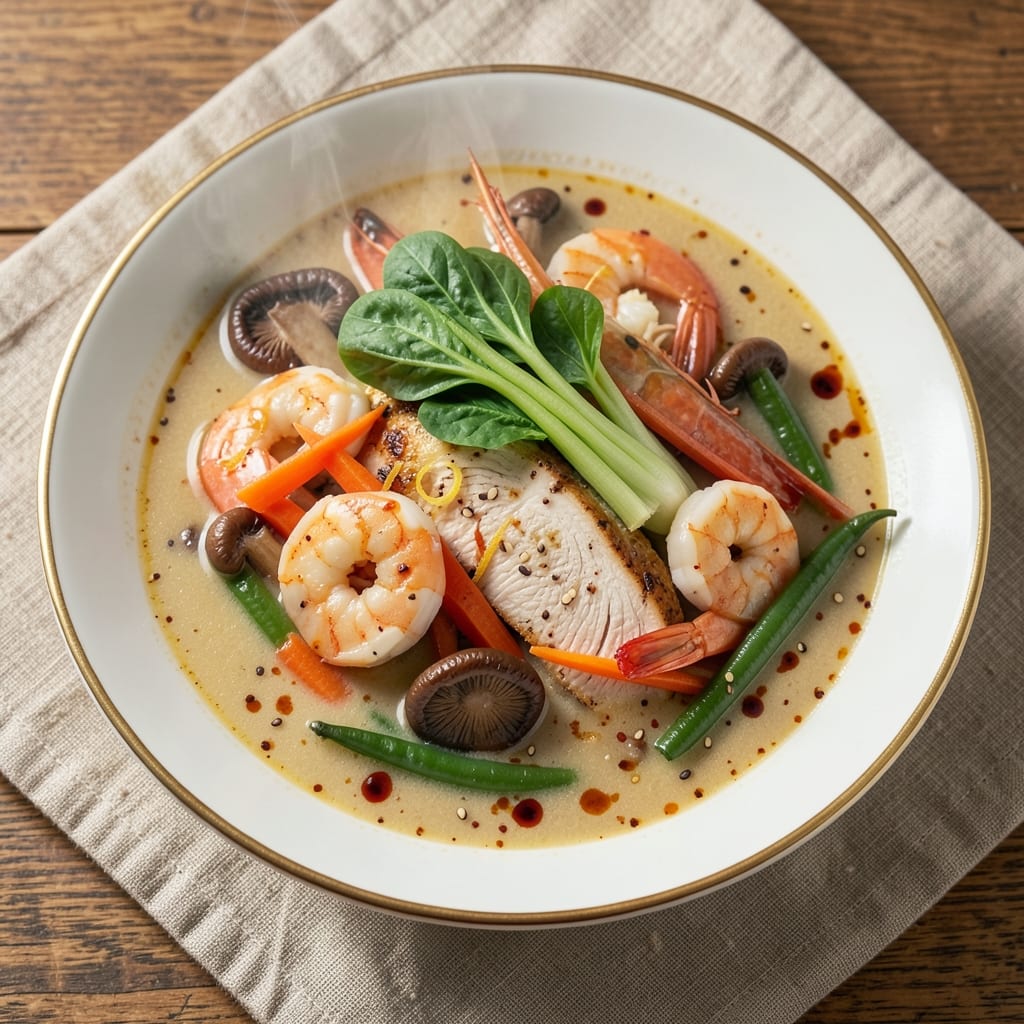
This Eight Treasure Soup recipe brings the rich, layered flavors of Cantonese cuisine to your kitchen with a harmonious blend of eight essential ingredients. 🌟 The secret lies in balancing textures and flavors—silky chicken, tender seafood, and fresh vegetables all simmered in a fragrant broth that’s both comforting and deeply satisfying.
Traditionally, this soup features a clear or lightly seasoned broth as its foundation, allowing each ingredient to shine. We’ll start with protein—chicken and shrimp—before adding vegetables and mushrooms for depth. The result? A bowl of umami-packed goodness that’s perfect for family dinners or special occasions.
What makes this recipe special is its versatility. While the classic version includes chicken, shrimp, fish balls, mushrooms, and more, you can easily adapt it to vegetarian preferences by swapping in tofu, water chestnuts, or extra vegetables. The key is patience—letting everything simmer just long enough to meld into a cohesive, flavorful dish.
Serve it steaming hot with a side of steamed rice or dumplings for the full Cantonese experience. The aroma alone will draw everyone to the table, and the first spoonful delivers that perfect balance of savory, tender, and aromatic. Let’s get cooking!
Ingredients for 8 treasure soup
Eight essential ingredients transform into a fragrant Cantonese masterpiece—silky proteins, earthy mushrooms, and vibrant vegetables.
| Ingredient | Amount | Notes |
|---|---|---|
| Chicken Breast 🍗 | 1 ½ lb | Boneless, skinless, cut into bite-sized pieces |
| Large Shrimp 🦐 | 1 lb | Peeled, deveined, tails on |
| Dried Shiitake Mushrooms 🍄 | ½ oz | Rehydrated in hot water |
| Baby Bok Choy 🥬 | 4 whole | Trimmed, quartered lengthwise |
| Carrots 🥕 | 2 medium | Peeled, cut into 1-inch pieces |
| Green Beans 🌱 | 1 cup | Trimmed, cut into 1-inch pieces |
| Fish Balls 🐟 | 6 whole | Store-bought or homemade |
| Dried Wood Ear Mushrooms 🍄 | ¼ oz | Rehydrated in hot water |
| Chicken Broth 💧 | 6 cups | Low-sodium preferred |
| Light Soy Sauce 🥢 | 1 tbsp | For seasoning |
| Sesame Oil 🫒 | 1 tsp | For finishing |
| Fresh Ginger 🌿 | 1 inch | Sliced thinly |
| Garlic Cloves 🧄 | 3 cloves | Minced |
| Cornstarch 🌾 | 1 tbsp | For thickening |
| Salt 🧂 | 1 tsp | Adjust to taste |
The mushrooms are non-negotiable for authentic depth—dried shiitake and wood ear from Asian markets deliver the best umami. Look for plump, firm mushrooms without cracks. Rehydrate them in hot water for 20 minutes before using. For chicken, boneless, skinless breasts ensure tender results, while shrimp should be large (41/50 count) for a satisfying bite. Fresh ginger and garlic should be organic if possible, as their vibrant color indicates peak freshness. The fish balls can be store-bought (Kung Pao brand is reliable) or homemade for authenticity.
No dried mushrooms? Fresh shiitake at half the amount works, but the texture differs slightly. Substitute shrimp with firm tofu cubes for a vegetarian twist, though the dish will be less rich. Short on bok choy? Baby spinach or napa cabbage both work well. The soy sauce should be light-colored—dark soy adds color but overpowers the delicate broth. For a gluten-free option, replace cornstarch with arrowroot powder. If using pre-made broth, Kitchen Basics or Swanson brands offer reliable low-sodium options.
Prep ingredients in this order: rehydrate mushrooms first, then chop vegetables and proteins. Store mushrooms and ginger in airtight containers in the fridge for up to 2 weeks. The broth can be made ahead and kept in the fridge for 3 days or frozen for 3 months. Leftover soup reheats beautifully—simmer gently to avoid breaking down the proteins. For extra flavor, reserve some broth and reduce it with cornstarch before adding back to the finished soup.
Why You'll Love This Recipe
- No-Chop Necessary: I swear by this—just slice the chicken and shrimp into big chunks, toss them in, and let the broth do the work. The bok choy and carrots barely need prep, either.
- Umami Bomb: Between the dried shiitake mushrooms (soaked overnight, trust me) and the shrimp, every spoonful packs that deep, savory punch. The chicken stays tender while the mushrooms add earthy richness—no fancy seasoning needed.
- Lunchbox Hero: This soup reheats beautifully and keeps for days, making it my go-to for meal prep. Pack it in jars for work or school, and the flavors only get better as it sits—especially the bok choy, which gets just tender enough.
- Budget Flex: Chicken and shrimp stretch across multiple servings, and dried shiitake mushrooms are a steal compared to fresh. I’ve made this for under $1.50 per serving, and it still feels like a special meal.
Step-by-step instructions for eight treasure soup
Here's the method for crafting this Cantonese classic with perfect umami balance.
🍳 Step 1: Rehydrate and Prep the Dried Ingredients
Begin by rehydrating the 0.5 oz dried shiitake mushrooms and 0.25 oz dried wood ear mushrooms separately in small bowls of hot water for 20 minutes. These mushrooms will absorb water and expand significantly—drain them well before using, keeping the soaking liquid for later use if desired.
While they rehydrate, trim the 4 whole baby bok choy by cutting them lengthwise into quarters, and peel the 2 medium carrots, cutting them into 1-inch pieces. Trim the 1 cup green beans and cut them into 1-inch segments. The vegetables should be uniform in size to ensure even cooking throughout the soup.
🍳 Step 2: Sauté Aromatics and Build the Umami Base
Heat 2 tablespoons neutral oil in a large pot or wok over medium-high heat. Add the 1-inch sliced fresh ginger and 3 minced garlic cloves, cooking for 30 seconds until fragrant. The aroma should fill your kitchen—this is your signal that the aromatics are ready to release their flavors.
Add the 1.5 lb bite-sized chicken breast pieces and 1 lb peeled shrimp to the pot. Sear for 2-3 minutes until the chicken turns opaque and the shrimp begin to curl slightly at the edges. Remove the protein from the pot and set aside temporarily—we'll return them to the pot later.
🥘 Step 3: Simmer the Vegetables and Broth
In the same pot, add 6 cups chicken broth and bring to a gentle boil. Add the rehydrated mushrooms (drained), carrots, green beans, and baby bok choy. Stir once to combine, then reduce heat to medium-low and let the vegetables simmer for 5-6 minutes until they begin to soften but remain vibrant in color.
Here's the thing—vegetables in Eight Treasure Soup should retain their texture. Overcooking will turn them mushy, so watch closely. The carrots should be tender but still hold their shape, and the green beans should be bright and slightly crisp.
🍳 Step 4: Add Protein and Season
Return the chicken and shrimp to the pot, along with the 6 fish balls. Add the 1 tbsp light soy sauce and 1 tsp salt, stirring gently to combine. The soup should now have a rich, savory aroma with hints of umami from the mushrooms and soy sauce.
Simmer for another 5-7 minutes until the chicken reaches an internal temperature of 165°F and the shrimp turn opaque throughout. The fish balls should float to the surface, indicating they're cooked through. Taste the soup at this point and adjust seasoning if needed—this is your final opportunity to balance the flavors.
🥘 Step 5: Thicken and Finish
In a small bowl, mix the 1 tbsp cornstarch with 2 tablespoons cold water to create a slurry. Slowly pour this mixture into the simmering soup while stirring constantly. The soup will begin to thicken immediately—this is the moment that matters. Continue stirring for 1-2 minutes until the soup reaches your desired consistency, which should be slightly thick but still easy to ladle.
Remove the pot from heat and stir in the 1 tsp sesame oil. This final touch adds a delicate nutty aroma and depth of flavor that ties all the ingredients together. Ladle the soup into bowls immediately and serve hot, garnished with extra green onions or cilantro if desired.
Pro Tips For Making 8 Treasure Soup
- PARBOIL SHRIMP FIRST: The shrimp in 8 treasure soup can turn rubbery if thrown in raw—my grandmother’s trick was to blanch them in boiling water for 30 seconds, then shock in ice water. This locks in juiciness and keeps them from curling into sad little question marks while the soup simmers.
- SOAK MUSHROOMS 20 MINUTES: Dried shiitake mushrooms need a proper soak (not just a quick rinse) or they’ll stay tough and chewy. Use 2 cups hot water per 10g mushrooms, and let them sit covered—this also gives you mushroom broth for the soup base. (Yes, I’ve burned my tongue on under-soaked mushrooms. Don’t be me.)
- CUT CHICKEN SMALLER THAN YOU THINK: Chicken breast stays dry if you leave it in big chunks—slice it into 1-inch dice, then pound each piece lightly with the flat of your knife. It cooks faster and absorbs the broth like a sponge, so you don’t end up with a sad, stringy mess.
- ADD BOK CHOY LAST MINUTE: Baby bok choy wilts into sad, limp leaves if it sits in hot broth too long. Toss it in only 2-3 minutes before serving—just enough to warm through and brighten the soup. (I learned this after serving a bowl where the greens looked like they’d been steamed for an hour.)
Troubleshooting this dish
Broth Too Thin?
If your soup ends up too watery, don’t panic—it’s easily fixable. The key is the cornstarch slurry technique. Mix 1 tbsp cornstarch with 2 tbsp cold water and whisk vigorously until smooth. Pour it into the simmering soup while stirring constantly. For extra thickness, add another ½ tbsp cornstarch if needed, but go slow to avoid clumping. 💡
Mushrooms Overcooked
Dried mushrooms can turn mushy if simmered too long. The trick is timing—add them to the broth after the vegetables and simmer for just 3-4 minutes max. For extra insurance, rehydrate them in boiling water for 15 minutes (not 20) to keep them firmer. Remove them with a slotted spoon if they soften too quickly. 🍄
Shrimp Turning Rubbery
Overcooked shrimp is a common issue, but you can prevent it by monitoring the soup’s temperature. Once the shrimp are added back, simmer on low heat and check them at 3 minutes. They’re done when they curl and turn opaque—no need to wait for the full 5-7 minutes if they’re ready earlier. 🦐
Vegetables Mushy
Baby bok choy and green beans lose their texture when overcooked. The solution? Add them to the broth last, just 2-3 minutes before the soup is done. If they’re already too soft, remove them with a slotted spoon and serve them on the side. For extra crunch, blanch them separately for 1 minute before adding to the soup. 🥬
Broth Too Salty
If your soup tastes overly salty, dilute it with ¼ cup hot water or broth and adjust seasoning. For a more natural fix, add 1 tbsp cornstarch slurry to thicken the broth slightly—this helps balance the saltiness. Avoid adding extra water directly, as it dilutes the flavors. Taste as you go! 🧂
Fish Balls Falling Apart
Store-bought fish balls can disintegrate if simmered too long. Add them last, just 2-3 minutes before serving. For homemade fish balls, ensure they’re fully cooked before adding to the soup. If they start breaking, remove them with a slotted spoon and serve them separately. 🐟
Nutrition facts
Frequently asked questions
What are the "eight treasures" in this soup?
This recipe traditionally includes eight key ingredients: chicken, shrimp, fish balls, shiitake mushrooms, wood ear mushrooms, baby bok choy, carrots, and green beans. Each component brings unique texture and flavor—silky proteins, earthy mushrooms, and crisp vegetables create the perfect balance.
Can I make this soup vegetarian?
Swap the chicken for firm tofu cubes and use shrimp substitute like king oyster mushrooms or extra-firm tofu. Replace fish balls with vegetable balls or extra mushrooms. The umami from dried mushrooms and soy sauce will still shine.
How long can I store leftovers?
Store leftovers in an airtight container in the fridge for up to 3 days. For longer storage, freeze the soup (without thickening) for up to 3 months. Reheat gently on low heat—never microwave directly from frozen to preserve texture.
Why does my soup taste bland?
Blandness often comes from insufficient umami or seasoning. Boost flavor by adding 1 extra tablespoon soy sauce or a splash of fish sauce (for non-vegetarian). For depth, simmer with 1 piece of dried tangerine peel or 1 star anise pod during cooking, then remove before serving.
What's the best way to serve this soup?
Serve hot with steamed jasmine rice or egg noodles to soak up the broth. Garnish with green onions or cilantro for freshness. For a complete meal, pair with dumplings or spring rolls. The aroma alone makes it irresistible!