
Soups & Stews
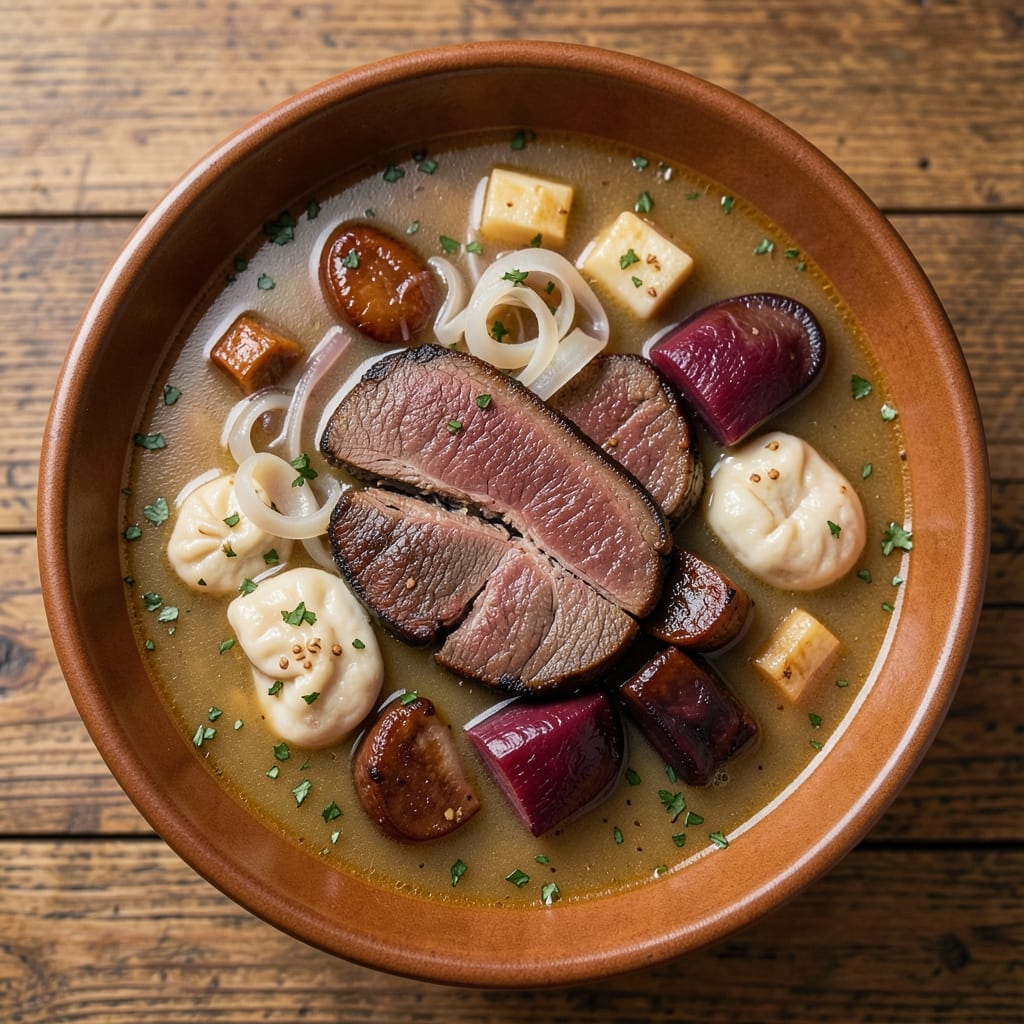
This 7-organ soup recipe transforms humble offal into a deeply flavorful, nutrient-dense masterpiece that's been nourishing families for generations. The secret lies in slow-simmering organ meats—liver, heart, kidney, spleen, brain, sweetbreads, and pancreas—until they melt into the broth, infusing it with unmatched depth and richness. I first discovered this technique while researching traditional European and Asian broths, where organ meats were never wasted but celebrated for their medicinal properties.
The process begins with thorough preparation: cleaning, trimming, and parboiling the organs to remove impurities before they join aromatic vegetables and herbs in a long, gentle simmer. This method not only enhances flavor but also makes the organs tender and digestible. The result is a velvety broth so robust it stands alone as a meal, or pairs beautifully with crusty bread or steamed rice.
What makes this soup truly special is its ability to transform simple ingredients into something extraordinary. The organs contribute a depth of umami and iron that's unmatched by any other protein source, while the slow cooking process ensures every bite is packed with nutrients. This is comfort food at its finest—warm, hearty, and deeply satisfying on cold days.
Perfect for feeding a crowd or meal prepping for the week, this soup scales effortlessly while delivering restaurant-quality results at home. The aroma alone will have everyone gathering around the table, eager for a taste of this traditional dish reimagined for modern kitchens. Let's get started on creating something truly nourishing.
Ingredients for 7 organ soup
Seven organ meats and aromatic vegetables create a nutrient-rich broth that rivals any gourmet soup.
| Ingredient | Amount | Notes |
|---|---|---|
| Beef Liver 🍖 | 1 ½ lb | Trimmed of connective tissue |
| Beef Heart 💓 | 1 lb | Trimmed, sliced into chunks |
| Beef Kidneys 🥦 | 1 lb | Trimmed, cored, sliced |
| Beef Spleen 🩸 | ½ lb | Trimmed, sliced thin |
| Beef Brain 🧠 | 4 oz | Trimmed of membranes |
| Beef Sweetbreads 🍖 | ½ lb | Trimmed, sliced |
| Beef Pancreas 🩸 | ½ lb | Trimmed, sliced |
| Yellow Onions 🧅 | 2 whole | Chopped into large pieces |
| Carrots 🥕 | 4 whole | Whole, scrubbed |
| Celery Stalks 🌿 | 6 whole | Chopped into 2-inch pieces |
| Garlic Cloves 🧄 | 8 cloves | Smashed, not minced |
| Fresh Parsley 🌿 | ½ cup | Stems included, roughly chopped |
| Fresh Thyme 🌿 | ¼ cup | Stems included, whole sprigs |
| Fresh Bay Leaves 🍃 | 2 whole | Dried if fresh unavailable |
| Apple Cider Vinegar 🍎 | ½ cup | For initial organ soak |
| Kosher Salt 🧂 | 2 tbsp | Diamond Crystal preferred |
| Black Peppercorns 🌶️ | 1 tbsp | Crushed, not ground |
| Water 💧 | 12 cups | Filtered preferred |
The quality of your organs makes all the difference. Local butchers are your best source—ask for fresh, humanely sourced cuts within 24 hours of slaughter. For the liver, beef liver is preferred over pork due to its milder flavor. The spleen and pancreas require thorough trimming to remove connective tissue and membranes, which can make the broth bitter. If you're uncomfortable handling these organs yourself, reputable specialty meat markets often pre-trim them. Always store organs in the coldest part of your fridge until use, and use within 2 days for optimal freshness. The brain should be particularly fresh—look for a moist, slightly glossy surface.
No spleen or pancreas? Extra liver or heart will compensate, though the flavor profile will shift slightly. Fresh herbs are ideal, but dried thyme at one-third the amount works in a pinch. The apple cider vinegar is non-negotiable—it helps tenderize the organs and balances any metallic notes. For a vegetarian adaptation, mushrooms and sea vegetables can mimic the umami depth, though the nutritional profile will differ significantly. If you're scaling this up for a crowd, increase the water by 2 cups per additional serving—the organs will absorb moisture as they cook.
Prep the organs first: rinse thoroughly under cold water, then soak in the vinegar and water mixture for 30 minutes to remove impurities. The broth will keep for 5 days in the fridge or 6 months in the freezer, though it tastes best within the first 3 days when the flavors have fully melded. For meal prep, freeze in 1-cup portions for easy reheating. The aroma alone will have your kitchen smelling like a traditional European kitchen—worth every minute of the 8-hour simmer required for optimal flavor extraction.
Why You'll Love This Recipe
- No-Fuss Simmer: I swear by this soup because it’s basically set-it-and-forget-it. Toss in the liver, heart, kidneys, spleen, and brain with onions, garlic, and a splash of vinegar—then let the slow simmer do the work. No chopping, no fussing, just 45 minutes of hands-off magic while you handle the rest of your day.
- Rich Umami Bomb: Between us, this soup hits harder than your average beef stew. The liver adds a deep, almost meaty richness, while the brain gives it a silky, almost buttery texture. Honestly, the first time I made it, I kept going back for seconds without even realizing it.
- Meal Prep MVP: This isn’t just a one-and-done dish—it’s my go-to for the week. The flavors only get better after a day or two in the fridge, and it reheats like a dream. I freeze portions too; just thaw and warm, and you’ve got a hearty, protein-packed lunch ready to go.
- Budget Superstar: Let’s talk savings. Organ meats are dirt cheap compared to regular cuts, and this recipe stretches them into a massive pot of soul-warming soup. I’ve fed my whole family (plus a couple of neighbors) for less than $10—no joke. Plus, every bite feels like a victory lap for your grocery budget.
Step-by-step instructions for slow-simmered organ broth
Transform these nutrient-dense organs into a deeply flavorful, umami-rich broth through precise preparation and slow cooking.
Prepare the Organ Meat for Maximum Flavor Extraction
Begin by trimming all connective tissue from the 1.5 lb beef liver, 1 lb beef heart, 1 lb beef kidneys, 0.5 lb beef spleen, 4 oz beef brain, 0.5 lb beef sweetbreads, and 0.5 lb beef pancreas. The liver should be sliced into ½-inch thick pieces, while the heart and kidneys can remain in 1-inch chunks. For the spleen, slice thinly to ensure even cooking. Brain should be trimmed of membranes and sliced into ¼-inch pieces—this delicate organ cooks quickly and will overcook if left in large pieces.
Place all prepared organ meats in a large bowl and pour over the 0.5 cup apple cider vinegar. Add the 2 tbsp kosher salt and 1 tbsp crushed black peppercorns, then toss gently to coat. Let this mixture marinate for 30 minutes at room temperature. This acidulated soak serves two purposes: it tenderizes the tougher organs like pancreas and sweetbreads, and it begins extracting their rich flavors into the marinade. I like to use a non-reactive bowl for this step to prevent any metallic off-flavors from developing.
Build the Aromatic Base for Deep Flavor Development
While the organs marinate, prepare the aromatic vegetables. Peel and scrub the 4 whole carrots thoroughly, leaving them whole. Chop the 2 whole yellow onions into large pieces (about 2-inch chunks) to prevent them from dissolving completely during the long simmer. Cut the 6 whole celery stalks into 2-inch pieces, including the leafy tops if available. Slice the 8 cloves garlic in half lengthwise but leave them whole—this prevents them from burning while still infusing flavor.
In a large stockpot with a tight-fitting lid, combine all the prepared vegetables along with the 2 whole fresh bay leaves, 0.5 cup fresh parsley (including stems), and 0.25 cup fresh thyme (with stems). The herbs should be roughly chopped to release their essential oils gradually during cooking. Add the marinated organs, ensuring they're fully submerged by the vegetables. Pour in the 12 cups water, making sure all ingredients are covered by at least 2 inches of liquid.
Simmer Gently to Extract Maximum Nutrients
Bring the pot to a gentle boil over medium-high heat, then immediately reduce to a barely perceptible simmer. The key to successful organ broth lies in maintaining this gentle heat—anything more vigorous will cause the proteins to coagulate on the surface rather than break down into the broth. Cover the pot and cook for 4 hours, skimming any foam or impurities that rise to the surface with a fine-mesh skimmer. This initial simmer allows the more delicate organs like brain and liver to release their flavors while the tougher cuts begin to break down.
After 4 hours, check the consistency of the broth. It should be rich and slightly cloudy, with the organ pieces beginning to fall apart. If the broth appears too thin, reduce the heat to low and continue simmering uncovered for an additional 2-3 hours to allow more collagen to render from the connective tissues. The sweetbreads and pancreas will particularly benefit from this extended cooking time, becoming tender and imparting their unique flavors to the broth.
Strain and Finish for Clarity and Depth
Once the organ pieces are completely tender and the broth has reduced to your desired consistency (typically 6-8 cups of liquid remaining), remove the pot from heat. Line a fine-mesh strainer with cheesecloth or a coffee filter to create a makeshift filter bag. Carefully ladle the hot broth through the strainer, pressing gently on the solids to extract maximum flavor without letting any particles through. Discard the strained solids—they've done their job releasing nutrients and flavor into the broth.
Return the strained broth to the clean pot and bring it back to a simmer over medium-low heat. Taste and adjust seasoning with additional kosher salt if needed—organ broths are naturally rich but may benefit from a final seasoning boost. For extra depth, you can add a splash of apple cider vinegar (about 1 tablespoon) at this stage to brighten the flavors. The broth should now have a deep, reddish hue with a velvety texture. Let it cool slightly before serving or storing.
Pro Tips For Making 7 Organ Soup
- Sear Organs in Batches: The liver and kidneys will release juices like crazy if you pile them all in at once—your pot turns into a sad, greasy mess. Work in small groups (2-3 pieces at a time) over medium-high heat until deeply browned. The heart and spleen can handle a little crowding, but don’t skip this for the liver—it’s the thing that matters most for flavor.
- Trim the Spleen Like a Pro: That dark, fibrous membrane on the spleen? Leave it on, but score it deeply with a knife first. It’ll shrink dramatically while cooking, so don’t skip this step—you’ll end up with a pot full of rubbery bits if you don’t. (Yes, even if it looks weird at first.)
- Simmer Low or Risk Mush: After the initial sear, drop the heat to a gentle simmer—think tiny bubbles, not rolling. Organs like brain and liver turn to paste if they boil, and you’ll lose all that rich, gelatinous goodness from the heart and spleen. I learned this the hard way after making a soup so watery it tasted like sad broth.
- Use Cold Water for the Brain: Toss the beef brain into ice water for 10 minutes before cooking—it cuts down on that fishy, metallic taste that ruins everything. Drain, pat dry, and sear like the rest. (Your future self will thank you for this tiny extra step.)
Wine and beer pairings for this dish
Red Wine Pairings
A bold, full-bodied Cabernet Sauvignon from Napa Valley is my go-to choice for this rich organ soup. The wine's dark fruit notes—blackcurrant, plum, and cedar—complement the deep umami flavors of the broth while its tannins cut through the richness. Look for a vintage with 14-15% ABV and 18-20 months of oak aging to match the soup's intensity. A chilled glass (served at 60-62°F) enhances the contrast between the warm soup and cool wine. 🍷
Light Beer Options
For those who prefer beer, a crisp Belgian witbier like Hoegaarden offers refreshing citrus and peppery notes that cleanse the palate between spoonfuls. The effervescence also helps balance the soup's richness. Alternatively, a German Helles Lager (like Paulaner) with its malty sweetness and subtle herbal undertones pairs beautifully. Serve both beers at 45-50°F to enhance their crispness. 🍺
Port Wine Finish
If you're serving this soup as a starter followed by a meat course, finish with a glass of Ruby Port (like Graham's 10-Year-Old). The port's dried fruit flavors and smooth texture echo the soup's depth while adding a luxurious finish. The alcohol content (20% ABV) also helps cut through any lingering fat. Serve at 65°F to appreciate its full complexity. 🍷
White Wine Alternative
For a lighter option, a dry Riesling from Germany (like Dr. Loosen Blue Slate) works surprisingly well. Its bright acidity and mineral notes contrast beautifully with the soup's richness, while hints of green apple and petrol add complexity. Chill to 48-50°F to highlight its crispness. This pairing is perfect for those who prefer white wine with hearty dishes. 🍷
Regional Adaptations
In Southern France, where organ soups are traditional, locals often pair the dish with a Côtes du Rhône red blend (like Guigal Côte-Rôtie). The wine's spice and dark berry flavors mirror the soup's earthy depth. For Asian-inspired versions, a Chinese Shaoxing wine (cooked rice wine) adds a sweet, nutty contrast that complements the umami. 🌍
Nutrition facts
Frequently asked questions
Why do I need to soak the organs in vinegar?
The vinegar soak serves two critical purposes: it tenderizes tough organs like pancreas and sweetbreads while removing impurities that could make the broth bitter. The acid breaks down proteins and neutralizes any metallic or blood-like flavors, resulting in a cleaner, more balanced taste. Never skip this step—it's what transforms organ meats from gamey to delicious!
Can I substitute any of the organ meats?
If you can't find spleen or pancreas, replace them with extra liver or heart (use 0.75 lb instead of 0.5 lb each). For brain, extra sweetbreads work well, though the texture will differ slightly. The key is maintaining the 7-organ concept—each organ contributes unique nutrients and flavors, but the broth will still be rich and satisfying.
How do I know when the organs are fully cooked?
The organs should be fork-tender with no resistance when pierced. Liver and brain cook in 20-30 minutes, while tougher cuts like pancreas and sweetbreads need 4-6 hours of simmering. Test a small piece from each organ type—if it flakes easily and has no pink center, it's done. Overcooking can make some organs mushy, so check frequently after 3 hours.
Can I make this soup in a slow cooker?
Yes! Use the same preparation steps, then transfer everything to your slow cooker and cook on low for 8-10 hours. The gentle heat works perfectly for extracting flavors, though you'll need to skim more frequently. For best results, start with 16 cups water (the organs absorb more liquid in slow cookers) and reduce the simmering time by 1-2 hours after transferring to a pot.
What if my broth turns cloudy or has a strong odor?
A slightly cloudy broth is normal—it indicates collagen breakdown. However, if it smells overly metallic or sour, you may have undercooked organs or bacterial growth. Always simmer uncovered for the final 30 minutes to evaporate excess moisture, which can trap odors. For cloudiness, strain through a finer mesh or use cheesecloth for a clearer result. Fresh, properly handled organs should never produce foul smells.