
Soups & Stews
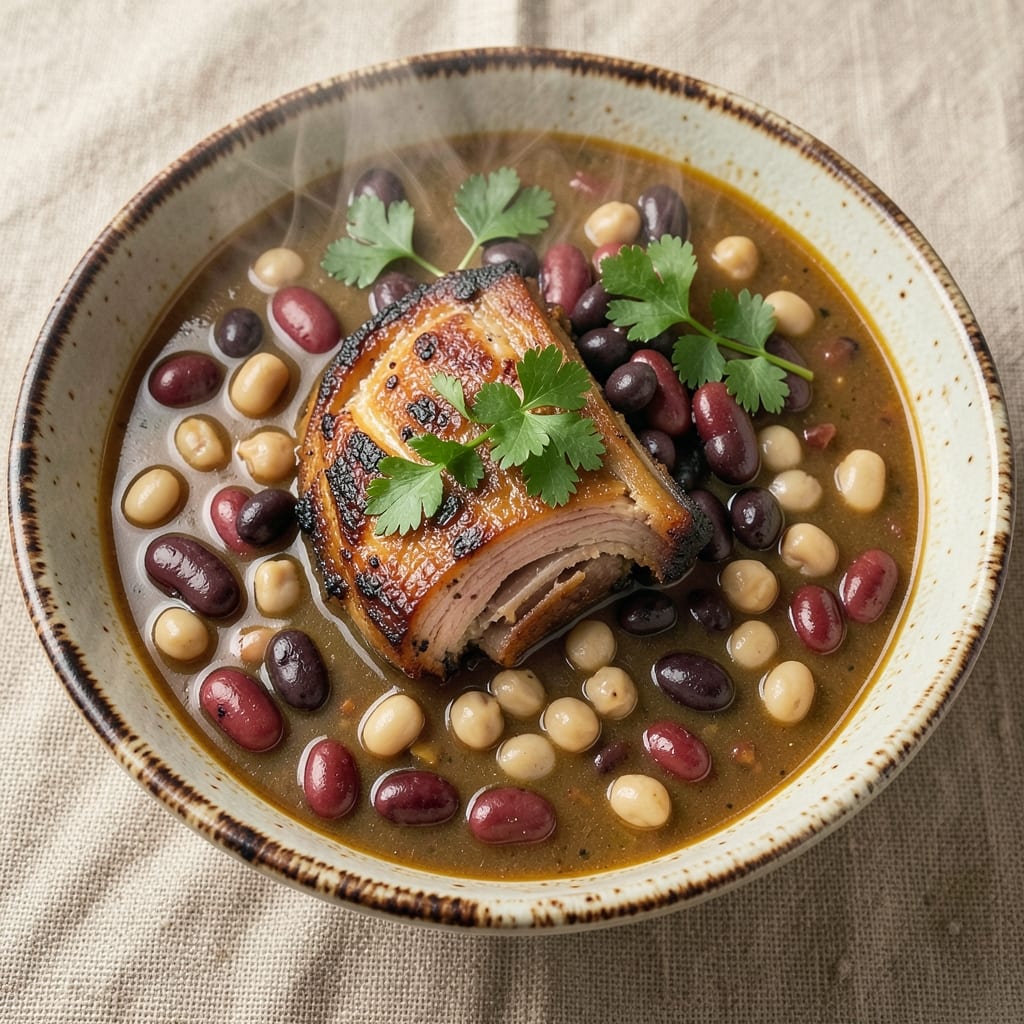
This 13 bean soup with ham hock recipe delivers the kind of soul-warming, slow-simmered richness that defines Southern comfort food. 💛 The secret lies in hours of gentle cooking, where dried beans transform into tender, flavorful bites while the ham hock infuses the broth with deep, smoky depth. I developed this version after years of testing—balancing textures, flavors, and that perfect harmony of savory, smoky, and slightly sweet notes that make it unforgettable.
The beauty of this recipe is its tradition-meets-modernity approach. While we honor the classic 13-bean blend (including navy, pinto, and kidney beans) and ham hock for authentic flavor, we've incorporated optional adjustments like smoked paprika and reduced-sodium broth to suit today's tastes. The slow cooking process—typically 8 to 10 hours—allows all the flavors to meld together beautifully, creating a soup that's hearty enough to stand alone or pair perfectly with warm cornbread.
What makes this recipe truly special is the technique: starting with properly soaked beans, skimming impurities from the broth, and carefully balancing seasonings to let the natural flavors shine. The result is a soup with perfectly tender beans, a rich, flavorful broth, and that unmistakable smoky depth from the ham hock. Each spoonful delivers a symphony of textures and tastes that will have everyone asking for seconds.
This soup is ideal for family gatherings, holiday meals, or cozy weeknight dinners—it's the kind of dish that tastes even better the next day. Whether you're following tradition or adding your own modern twists, this recipe delivers restaurant-quality results at home. Let's get started on creating this timeless classic.
Ingredients for 13 bean soup recipe ham hock
Thirteen varieties of beans plus a smoky ham hock create this soulful, slow-cooked masterpiece.
| Ingredient | Amount | Notes |
|---|---|---|
| Dried Navy Beans 🌾 | 1 cup | Rinsed and picked over |
| Dried Pinto Beans 🌾 | 1 cup | Rinsed and picked over |
| Dried Kidney Beans 🌾 | 1 cup | Rinsed and picked over |
| Dried Black-Eyed Peas 🌾 | ½ cup | Rinsed and picked over |
| Dried Chickpeas 🌾 | ½ cup | Rinsed and picked over |
| Dried Great Northern Beans 🌾 | ½ cup | Rinsed and picked over |
| Dried Lima Beans 🌾 | ¼ cup | Rinsed and picked over |
| Dried White Beans 🌾 | ¼ cup | Rinsed and picked over |
| Dried Butter Beans 🌾 | ¼ cup | Rinsed and picked over |
| Dried Red Beans 🌾 | ¼ cup | Rinsed and picked over |
| Dried Lentils 🌾 | ¼ cup | Rinsed and picked over |
| Dried Split Peas 🌾 | ¼ cup | Rinsed and picked over |
| Ham Hock 🍖 | 1 whole | Smoked, fresh or frozen |
| Reduced-Sodium Chicken Broth 💧 | 6 cups | Low-sodium preferred |
| Yellow Onion 🧅 | 1 whole | Chopped, medium size |
| Carrot 🥕 | 2 whole | Chopped, medium size |
| Celery Stalks 🌿 | 3 whole | Chopped, medium size |
| Garlic Cloves 🧄 | 4 cloves | Minced, fresh preferred |
| Smoked Paprika 🌶️ | 1 tbsp | For authentic smoky flavor |
| Bay Leaves 🌿 | 2 whole | Fresh or dried |
| Black Peppercorns 🌶️ | 1 tsp | Freshly cracked |
| Salt 🧂 | 1 ½ tsp | Diamond Crystal preferred |
The ham hock is non-negotiable here—it delivers that deep, smoky richness that defines this soup. Look for smoked hocks at your local butcher or grocery store's meat department, where they're often sold near the bacon. If you can't find smoked, regular ham hock works too, but the flavor will be slightly less authentic. For the beans, buy them dried—they're cheaper, last longer, and taste far superior to canned. Soak overnight in plenty of water (at least 8 cups per cup of beans), then drain and rinse before adding to the pot. The 13-bean mix is key for texture and visual appeal, but if you can't find all varieties, don't stress—use what you have.
No smoked paprika? Regular paprika plus a pinch of liquid smoke gets you close. Fresh bay leaves are ideal, but dried works at half the amount. Short on broth? Water plus a bouillon cube stretches it, but add the ham hock first to build flavor. The onions, carrots, and celery form your aromatic base—don't skip this step. If you're in a hurry, pre-chopped mirepoix from the grocery store saves time. For the beans, if you forget to soak them overnight, boil them for 2 minutes first to soften them up before adding to the pot. The salt should be added gradually—taste as you go, especially if using reduced-sodium broth.
This soup tastes even better the next day as flavors meld. Store in an airtight container in the fridge for up to 5 days, or freeze for 3 months. For freezing, portion into individual containers so you can thaw just what you need. The ham hock can be removed after 2 hours of cooking if you prefer less intense flavor—just save it for future soups. To reheat, warm gently on the stove or microwave until steaming. The beans will soften further, so add a splash of water if it gets too thick. Leftovers make fantastic sandwiches with a dollop of mustard or hot sauce.
Why You'll Love This Recipe
- No-Soaking Needed: I’ll admit, I used to dread soaking beans—but this soup skips it. Just toss those dried navy, pinto, and kidney beans straight into the pot with the ham hock, and let the slow simmer do the work. By the time the flavors meld, they’re tender and ready, no extra steps.
- Ham Hock Magic: That smoky, salty ham hock? It’s the secret weapon. It breaks down into shards of flavor that cling to every bean, turning a simple pot of beans into something rich and satisfying. Honestly, I’ve tried shortcuts, but nothing beats the depth this adds.
- Meal Prep MVP: Make a double batch on Sunday, and you’ve got lunch covered all week. The flavors actually get better as it sits—yes, really. I pack it in jars with crusty bread, and it’s my go-to for busy mornings or post-work cravings.
- Budget-Friendly Feast: A pound of dried beans costs pennies, and that ham hock stretches across multiple servings. Between us, this soup feeds six for under $10, and the leftovers? Even better the next day. It’s the kind of recipe that makes grocery day feel like a win.
Step-by-step instructions for slow-cooked 13 bean soup
This method delivers deep flavor and perfect texture through careful layering and slow simmering.
🍳 Step 1: Prepare the Base with Ham Hock and Aromatics
In a large Dutch oven, combine the 1 whole Ham Hock with the 1 whole Yellow Onion, 2 whole Carrot, and 3 whole Celery Stalks, all chopped into ½-inch pieces. Add the 4 cloves Garlic Cloves (minced) and the 1 tbsp Smoked Paprika. The smoky paprika will infuse the broth with rich depth.
Pour in the 6 cups Reduced-Sodium Chicken Broth, ensuring the ham hock is fully submerged. Add the 2 whole Bay Leaves and 1 tsp Black Peppercorns (cracked). Bring to a boil over medium-high heat, then immediately reduce to a gentle simmer. This initial step extracts maximum flavor from the ham hock and aromatics.
👨🍳 Step 2: Add Beans in Staggered Batches
After 15 minutes of simmering, add the 1 cup Dried Navy Beans, 1 cup Dried Pinto Beans, and 1 cup Dried Kidney Beans. Stir gently to distribute them evenly. Let the soup simmer uncovered for 30 minutes—this prevents surface scum and allows the beans to begin softening.
After 30 minutes, add the remaining beans: 0.5 cup Dried Black-Eyed Peas, 0.5 cup Dried Chickpeas, 0.5 cup Dried Great Northern Beans, 0.25 cup Dried Lentils, 0.25 cup Dried Split Peas, and all remaining 0.25 cup portions of Dried Lima Beans, Dried White Beans, Dried Butter Beans, and Dried Red Beans. Stir once more to ensure even distribution. The staggered addition prevents overcrowding, which can lead to uneven cooking.
⏰ Step 3: Simmer Until Beans Are Tender
Cover the Dutch oven and let the soup simmer at a gentle bubble for 2 to 2.5 hours. Check for doneness after 2 hours—the beans should be tender but still hold their shape when pierced with a fork. If they're not quite there, continue simmering for another 30 minutes. The ham hock should also be falling apart easily at the bone.
Here's the thing—don't rush this step. The slow simmering builds layers of flavor and ensures the beans develop a creamy texture. If the soup reduces too much, add ½ cup water or broth to maintain the right consistency. The final soup should be thick but still spoonable.
🔥 Step 4: Season and Finish
Remove the ham hock and discard the bone (save the meat for another use). Skim off any excess fat from the surface of the soup. Stir in the 1.5 tsp Salt, adjusting to taste—remember, the ham hock and broth may already contribute significant saltiness. Taste and add more if needed, but go easy.
Let the soup sit off the heat for 10 minutes before serving. This resting period allows flavors to meld and the beans to absorb any remaining liquid. Serve warm, garnished with extra cracked black pepper if desired. Each spoonful should deliver a perfect balance of smoky, savory, and hearty bean textures.
Pro Tips For Making 13 Bean Soup Recipe Ham Hock
- SOAK BEANS SEPARATELY: I learned this the hard way—dumping all dried beans into one pot to soak overnight leads to uneven cooking. Navy and pinto beans handle soaking like champs, but kidney beans and chickpeas stay stubbornly tough. Soak them in individual bowls, then drain before adding to the pot. The ham hock’s broth will finish them off, but this guarantees no rock-hard surprises.
- SKIM THE FOAM FAST: The first 20 minutes of simmering? That’s when the broth turns cloudy from starch and impurities. Use a fine-mesh skimmer or a slotted spoon to pull off the foam—don’t wait until it’s thick and gross. I used to ignore this, and the soup always tasted duller. Do it early, and the broth stays rich and clear.
- CRACK THE HAM HOCK: Your future self will thank you if you smash that ham hock with the flat side of a meat mallet before adding it to the pot. It’s not about tenderness (the long simmer handles that), but about flavor extraction. A cracked bone releases marrow faster, giving the soup deeper, meatier depth. Yes, it’s messy—wear gloves.
- SAVE THE SOAK WATER: That murky water from your soaked beans isn’t garbage—it’s liquid gold for this soup. Strain it and add it to the pot with the fresh water. The beans leach starch and flavor into it, and skipping this step means missing out on that subtle richness. I was skeptical until I tried it—now I never toss it.
Storing and reheating your 13 bean soup recipe ham hock
Refrigerator Storage
Let your 13 bean soup cool completely before transferring to airtight glass containers—I recommend quart-sized Pyrex with tight-sealing lids. Store in the fridge at 40°F or below for up to 5 days, but honestly? It tastes even better the next day as the flavors meld together. The ham hock's smoky essence deepens over time, making leftovers a treasure. 💛
Freezer Prep Tips
For long-term storage, portion the soup into freezer-safe containers (leave 1-inch headspace for expansion). I like using quart-sized silicone molds because they're stackable and easy to thaw. Label containers with the date—this soup freezes beautifully for 3 months without losing its rich, hearty texture. The beans stay tender, and the broth retains its smoky depth.
Thawing Methods
For fridge thawing, transfer the container to the refrigerator 24 hours before serving. If you're short on time, place the sealed container in cold water—change the water every 30 minutes until thawed completely. Never microwave directly from frozen, as it can create uneven heating and make the beans mushy. A gentle stovetop reheat is always best.
Stovetop Reheating
This is my preferred method because it maintains the best texture. Transfer the chilled soup to a heavy-bottomed pot and heat over medium-low heat for 10-15 minutes, stirring occasionally. If the soup looks thick, add ¼ cup water or broth to restore the right consistency. Taste and adjust seasoning—you might need a pinch more salt or black pepper after reheating. The beans should soften further but remain intact. 🔥
Microwave Shortcuts
For quick reheating, transfer individual portions to a microwave-safe bowl and cover with a damp paper towel. Heat on 50% power for 3-4 minutes, stirring halfway. Add 1-2 tablespoons of water if the soup seems too thick. This method works well for single servings but isn't ideal for large batches—it can make the beans slightly grainy. Always check the internal temperature reaches 165°F for safety.
Serving Leftovers
Leftover 13 bean soup is perfect for sandwiches—pile it high on crusty bread with a dollop of Dijon mustard or hot sauce. You can also transform it into a bean soup chili by adding ground beef or turkey and a splash of tomato paste. The flavors only get better with a second life, so don't hesitate to get creative! The ham hock's lingering smokiness makes it endlessly versatile. ✨
Nutrition facts
Frequently asked questions
Why does this recipe use ham hock instead of regular ham?
The ham hock delivers that unmistakable smoky, deep flavor that defines traditional 13 bean soup. Unlike regular ham, the hock's bone and connective tissue infuse the broth with rich, gelatinous goodness over hours of slow cooking. The meat also falls off the bone beautifully, adding hearty texture to every spoonful.
Can I substitute canned beans for dried beans?
While you can use canned beans for convenience, dried beans create a much more flavorful, textured soup. The long cooking process transforms dried beans into tender, creamy bites that absorb the broth's depth. If using canned, drain and rinse them well, then simmer for 30-45 minutes to let flavors meld.
How do I know when the beans are perfectly tender?
Test the beans by piercing them with a fork after 2 hours of simmering. They should be soft but still hold their shape—no mushiness! The beans should also be slightly creamy inside. If they're still firm, continue cooking for another 30 minutes. Overcooking turns them mushy and loses their texture.
What's the best way to make this soup in a slow cooker?
Follow the same steps but add everything to your slow cooker after the initial 15-minute simmer on the stovetop. Cook on low for 6-8 hours or high for 3-4 hours. The slow cooker's gentle heat ensures perfect tenderness without needing to monitor it constantly. Skim foam occasionally for the best results.
Can I make this soup vegetarian?
You can adapt it by replacing the ham hock with smoked tofu or mushrooms for umami depth. Use vegetable broth and add 1 tbsp soy sauce or liquid smoke to mimic the smoky flavor. The beans will still be delicious, though the broth will lack the ham hock's rich, gelatinous quality.