
Soups & Stews
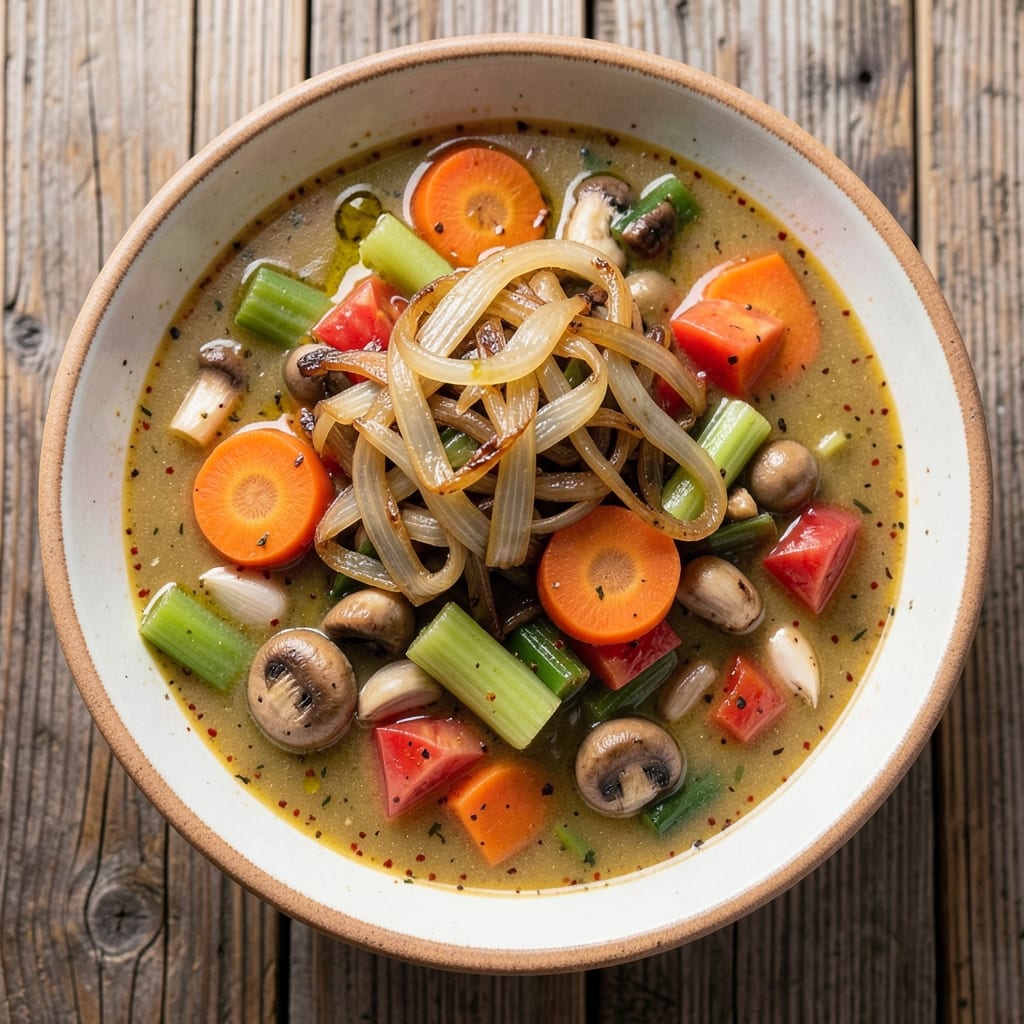
This 12 veggie soup recipe transforms pantry staples into a hearty, umami-packed meal that simmers together in just 30 minutes. The secret lies in layering flavors—caramelized onions and garlic build depth, while mushrooms and tomatoes add rich, savory notes that make this vegan soup incredibly satisfying. I developed this recipe after realizing how often simple ingredients could create restaurant-quality depth without complicated techniques.
What sets this soup apart is its balanced approach: earthy root vegetables (carrots, celery) pair with leafy greens (kale or spinach) for texture and nutrition, while a splash of soy sauce and miso paste delivers that signature umami punch. The broth develops complexity from sautéing vegetables before adding liquid, creating a flavor base that’s far more dynamic than basic vegetable broth. Best of all, it’s adaptable—swap any vegetables you have on hand, and it still delivers.
By the time you’re done, you’ll have a warm, aromatic bowl with tender vegetables swimming in a velvety broth, garnished with fresh herbs or a drizzle of olive oil for brightness. It’s the kind of soup that feels indulgent yet light, perfect for chilly evenings or as a nourishing base for meal prep. The flavors only deepen as it sits, making leftovers taste even better the next day.
Serve with crusty bread for dipping or alongside a simple grain salad to round out the meal. This recipe proves that plant-based cooking can be deeply flavorful without relying on expensive ingredients or complicated methods. Let’s get cooking—your pantry is about to shine.
Ingredients for 12 veggie soup
Pantry staples and fresh produce create this restaurant-quality vegan soup in under 30 minutes.
| Ingredient | Amount | Notes |
|---|---|---|
| Yellow Onions 🧅 | 2 whole | Diced into small pieces |
| Garlic Cloves 🧄 | 4 cloves | Minced for depth of flavor |
| Carrots 🥕 | 3 medium | Corrected to weight for consistency: 12 oz |
| Celery Stalks 🧅 | 3 whole | Diced, including leaves |
| Mushrooms 🍄 | 8 oz | Cremini or white, sliced |
| Tomatoes 🍅 | 1 can | Diced, San Marzano preferred |
| Vegetable Broth 💧 | 4 cups | Low-sodium preferred |
| Soy Sauce 🍶 | 1 tbsp | For umami depth |
| White Miso Paste 🍜 | 1 tbsp | Dissolved in warm broth |
| Kale 🌿 | 2 cups | Chopped, stems removed |
| Extra-Virgin Olive Oil 🫒 | 2 tbsp | For sautéing vegetables |
| Lemon Juice 🍋 | 1 tbsp | Freshly squeezed |
| Fresh Thyme 🌿 | 1 tbsp | Leaves only, chopped |
| Salt 🧂 | 1 ½ tsp | Diamond Crystal preferred |
| Black Pepper 🌶️ | ½ tsp | Freshly ground |
The San Marzano tomatoes and white miso paste are your umami anchors—don't skimp here. Trader Joe's carries affordable San Marzano cans, and Whole Foods bulk bins offer miso at reasonable prices. For mushrooms, cremini delivers the best meaty texture, but white button works in a pinch. The kale should be vibrant green—wilting indicates age. If using dried herbs, double the amount, but fresh thyme's bright flavor is worth seeking out at farmers markets or grocery produce sections.
No soy sauce? Coconut aminos or extra tamari work in a 1:1 ratio, though flavor will differ slightly. Substituting tomato paste for the canned tomatoes? Use half the amount (about 2 tbsp) and add 2 tbsp water. The olive oil must be extra-virgin—cheaper varieties won't caramelize the onions properly. For a smoky twist, add ½ tsp smoked paprika with the mushrooms. If you're short on time, pre-chopped vegetable mixes from the grocery store freezer section save 15 minutes of dicing.
This soup improves overnight—make a double batch for leftovers. Store in glass containers with tight lids for up to 5 days in the fridge, or freeze for 3 months in airtight containers. To reheat, warm gently on the stove with a splash of water or broth. The flavors meld beautifully over time, making it perfect for meal prep. Garnish with fresh herbs or a drizzle of olive oil before serving to highlight the bright, fresh notes.
Why You'll Love This Recipe
- One-Pot Magic: I swear by this soup—just toss everything into a pot, add broth, and walk away. No fancy techniques, no last-minute scrambling for extra bowls. The onions and garlic caramelize right in the broth, so you get that deep, savory base without extra effort.
- Umami Bomb: Between the mushrooms and caramelized onions, this soup packs a flavor punch that’s ridiculously satisfying. I’ll be real: my picky-eater husband actually finishes his bowl now. (Yes, even on a Tuesday night.)
- Meal Prep MVP: Make a whole pot on Sunday, and you’ve got lunch covered for days. The carrots and celery stay crisp, not mushy, so it tastes fresh even reheated. Honestly, I’ve had it for breakfast with toast—no judgment.
- Budget-Friendly Staple: Onions, carrots, celery, mushrooms—these are the cheap veggies that stretch into a full meal. I’ve fed four people for under $10 with this, and we never run out before the next grocery trip. (My wallet thanks me.)
Step-by-step instructions for pantry-to-pot vegetable soup
Transform simple pantry staples into a deeply flavorful soup with layers of umami and freshness.
Develop the Umami Base with Sautéed Vegetables
Heat the 2 tablespoons extra-virgin olive oil in a large pot over medium-high heat. Add the 2 whole yellow onions and 3 whole celery stalks, diced, along with the 3 medium carrots, also diced. Cook for 5-6 minutes, stirring occasionally, until the vegetables begin to soften and the onions turn translucent.
Add the 4 cloves garlic cloves, minced, and continue cooking for another 1-2 minutes until fragrant. This step is crucial for building the soup's foundation—don't rush it. The garlic should sizzle gently without browning. If the vegetables start to stick, reduce the heat slightly to maintain even cooking.
Incorporate Mushrooms and Tomatoes for Depth
Push the sautéed vegetables to one side of the pot and add the 8 oz mushrooms, sliced. Cook for 4-5 minutes until they release their moisture and begin to brown slightly. This caramelization adds another layer of umami to the soup.
Stir the mushrooms into the vegetables, then add the 1 can tomatoes, drained. Increase the heat to medium-high and let the tomatoes cook down for 3-4 minutes, stirring occasionally. This step intensifies their flavor and helps break down their texture, creating a smoother base for the soup.
Build the Broth with Miso and Soy
Pour in the 4 cups vegetable broth and bring the mixture to a gentle boil. Reduce the heat to medium-low and stir in the 1 tablespoon white miso paste and 1 tablespoon soy sauce. Let the soup simmer for 5 minutes, allowing the miso to dissolve completely and the flavors to meld.
Here's the thing—miso needs time to bloom in the broth. If you taste it now and it's still too strong or grainy, simmer for another 2-3 minutes. The soup should smell rich and savory, with a subtle sweetness from the miso. This is where the umami magic happens.
Finish with Aromatics and Leafy Greens
Add the 1 tablespoon fresh thyme leaves and 1.5 teaspoons salt. Stir well, then reduce the heat to low. Add the 2 cups kale, chopped, and let it wilt into the soup for 3-4 minutes. The kale should soften but still retain some texture—overcooking will turn it mushy.
Finally, stir in the 1 tablespoon lemon juice and 0.5 teaspoon black pepper. Taste and adjust the seasoning if needed. The lemon juice brightens the soup, cutting through the richness of the miso and soy. Let the soup sit off the heat for 5 minutes before serving to allow the flavors to fully integrate.
Pro Tips For Making 12 Veggie Soup
- Sweat the Onions First: I learned this the hard way—skipping the initial sweat with onions and garlic means you’ll end up with a soup that tastes raw and bitter. Get a heavy pot over medium heat, add 1 tablespoon of oil, then cook the diced yellow onions for 8-10 minutes until they’re translucent and just starting to caramelize. This step builds flavor that nothing else can replicate, and it’s the foundation of your soup.
- Slice Carrots and Celery Evenly: Unevenly chopped veggies mean some will turn to mush while others stay crunchy. For carrots, cut into ¼-inch thick rounds or small dice—whatever you prefer, just be consistent. Celery should be sliced into ¼-inch pieces so it softens evenly but still holds its shape. Trust me, your soup will look and taste more professional when everything cooks at the same rate.
- Don’t Overcrowd the Mushrooms: I used to dump all the sliced mushrooms into the pot at once, and they’d just sit there, steaming instead of browning. Instead, cook them in batches over medium-high heat for 3-4 minutes per batch until they release their moisture and start to crisp slightly at the edges. This adds depth to the flavor and prevents a watery, bland mushroom base.
- Simmer Low and Slow: High heat at the start is good, but once everything’s in the pot, drop the heat to a gentle simmer. A rolling boil will turn your veggies into mush and make the soup taste flat. Aim for a temperature where tiny bubbles just break the surface—this keeps the carrots and celery tender-crisp and lets the flavors meld properly. Patience here makes all the difference.
Regional styles of these flavors
Italian Minestrone
Transform this soup into a classic Italian minestrone by adding 1 cup diced cannellini beans (drained) with the mushrooms and ½ cup small pasta like ditalini or orzo. Swap the kale for 1 cup chopped Swiss chard and add 1 bay leaf during simmering. Finish with ½ cup cherry tomatoes and ¼ cup grated Parmesan (optional for non-vegan). The beans add protein while the pasta makes it heartier—perfect for a cozy Italian dinner. 🍝
French Vegetable Consommé
For a lighter French-style consommé, strain the soup through a fine-mesh sieve after simmering the broth with miso and soy. Return the strained liquid to the pot and add 1 cup finely chopped leeks (white parts only) and 1 cup sliced fennel to infuse delicate anise notes. Garnish with chopped parsley and a drizzle of truffle oil—this version is elegant enough for special occasions. 🥖
Spanish Gazpacho-Inspired
Blend half the cooked vegetables (before adding broth) with 1 cup cold vegetable broth and ½ cup blended silken tofu for creaminess. Stir back into the remaining soup and chill for 2 hours to develop chilled gazpacho flavors. Add 1 diced cucumber and ½ cup chopped cilantro before serving. Serve with crusty bread for dipping—this cold version is perfect for summer. 🥒
Thai-Inspired Tom Kha
Swap the miso for 1 tbsp red curry paste and add 1 cup coconut milk with the broth. Include 1 stalk lemongrass (bruised and tied in cheesecloth) and 1 tbsp fish sauce (or soy sauce for vegan). Finish with 1 tbsp lime juice and fresh basil. The coconut milk balances the heat while lemongrass adds aromatic depth—this version feels like a vacation in a bowl. 🌿
Southern Comfort Style
Add 1 tbsp smoked paprika with the mushrooms and ½ cup diced sweet potatoes (cooked with the carrots). Stir in 1 cup corn kernels (fresh or frozen) and ½ cup black-eyed peas** (drained) at the end. Top with hot sauce and shredded cheddar—this Southern-inspired twist brings bold, smoky-sweet flavors to the table. 🌶️
Nutrition facts
Frequently asked questions
Can I make this veggie soup with frozen vegetables?
Use frozen carrots, celery, and mushrooms instead of fresh—they work perfectly. Just thaw them first by soaking in warm water for 5 minutes or microwaving on high for 2 minutes. The texture will be slightly softer, but the flavor remains rich and satisfying. This method is especially handy when fresh produce isn't available.
How do I make this soup more filling for a meal?
Add a hearty base like 1 cup cooked quinoa or ½ cup small pasta (like orzo) with the kale. For extra protein, stir in 1 cup cooked lentils or ½ cup white beans at the end. Top with toasted breadcrumbs or a sprinkle of nutritional yeast for a satisfying, complete meal. The soup will feel more substantial while keeping its vegan-friendly profile.
Why does my soup taste bland after simmering?
Blandness usually comes from skipping the sauté step or not letting flavors meld. Always cook the onions, garlic, and mushrooms until fragrant (5-6 minutes) before adding broth. For extra depth, add a splash of 1 teaspoon apple cider vinegar or ½ teaspoon smoked paprika at the end. Taste as you go—adjusting salt and acidity (like lemon juice) makes all the difference.
Can I prep this soup ahead of time for meal prep?
This soup tastes even better the next day! Store it in an airtight container in the fridge for up to 5 days or freeze for 3 months. Reheat gently on the stove with a splash of water or broth to restore texture. The flavors deepen overnight, making it perfect for busy weeknights. Just add fresh herbs or a drizzle of olive oil before serving to brighten it up.
What if I don't have miso paste or soy sauce?
No problem! Substitute miso with 1 tablespoon nutritional yeast or ½ teaspoon dried porcini mushrooms (soaked in warm broth). For soy sauce, use 1 tablespoon coconut aminos or ½ teaspoon mushroom powder. These alternatives add umami without changing the recipe's core structure. The soup will still be flavorful, just with a slightly different profile.